
I get asked this weekly by manufacturers, wholesalers, and brand owners who are balancing cost, consistency, and performance. In my experience across China, India, Southeast Asia, and Latin America, the “best” hair isn’t a single origin or label—it’s the right combination of origin, processing level, and drawing grade matched to your market promise and price point. The nuance is real: the same “Brazilian” bundle from two suppliers can perform very differently depending on cuticle preservation, acid exposure, and drawing ratio.
The most commonly used human hair in wig manufacturing falls into three quality tiers: Remy hair (premium, cuticles aligned) for mid-to-high-end wigs; virgin hair (never chemically processed) for luxury lines; and non-Remy hair (often acid-treated) for budget segments. Popular origins include Indian (abundant, versatile), Brazilian (denser, voluminous), Malaysian (silky, style-holding), Peruvian (soft yet full), and European/Russian (fine denier for luxury). Grades like single-, double-, and super-double-drawn determine fullness and should be specified alongside origin and processing level.
As you read on, I’ll break down how to choose origins when you prioritize consistency and volume, when to spec virgin vs. Remy vs. non-Remy for B2B orders, how to mix origins within one collection without diluting quality, and how to set drawing grades that align with your market’s standards. I’ll also flag sourcing realities, processing red flags, and QC checkpoints that keep returns low.
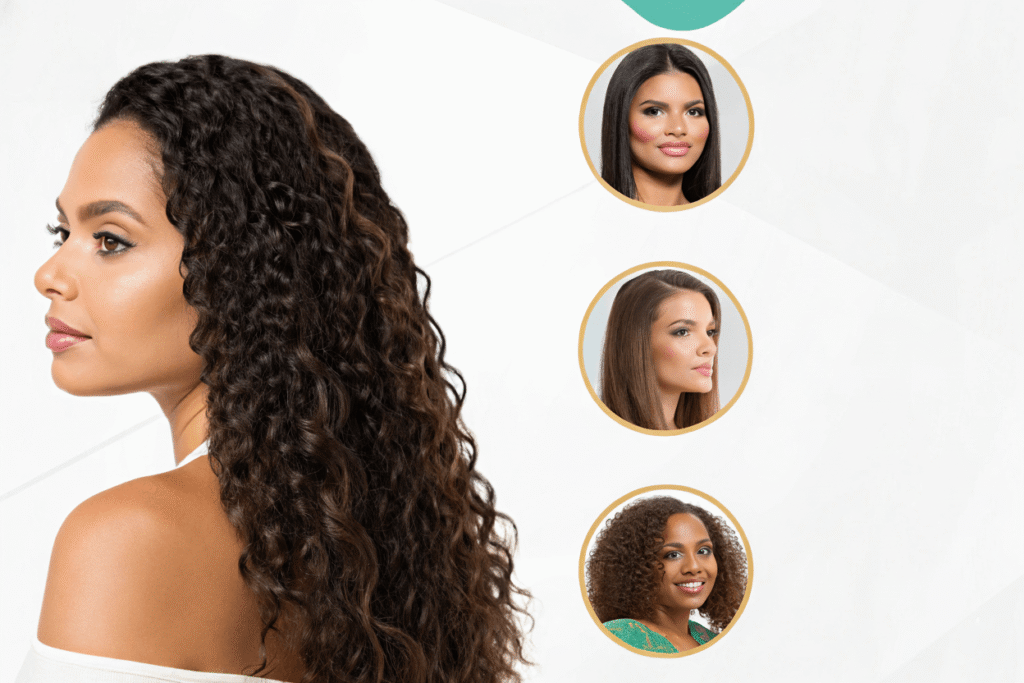
Which human hair origins should I choose for my wigs if I prioritize consistency and volume?
When consistency and volume are top priorities, I prioritize supply stability, predictable texture, and minimal batch variance. Practically, that has led me to three dependable pillars:
- India (temple and floor-collect mix managed well)
- China/Indochina processing hubs sourcing South/Southeast Asian hair
- Brazil/Peru/Indonesia networks that can deliver “Brazilian/Peruvian texture” at scale
Origins assessment for scale buyers
Use this as a decision guide when negotiating annual supply:
- Indian hair: Best for volume and versatility
- Typical traits: Medium denier, natural wavy to straight, easy to steam-texture.
- Supply: Strong, consistent, large length range (8–30″+).
- Notes: Temple-sourced Remy offers stable performance; floor-collect requires careful de-acid QC.
- Brazilian-labeled hair: Best for body and density
- Typical traits: Thicker strands, fuller look with less bulk, holds curls.
- Supply: Often a blend of South American/Asian origins processed to “Brazilian” specs—audit vendors for transparency.
- Notes: Great for textured SKUs (body wave, deep wave) where visual volume sells through.
- Malaysian/Indonesian hair: Best for silky feel and smooth styling
- Typical traits: Silky, smooth cuticle, good style memory after steam processing.
- Supply: Indonesia offers stable volumes with competitive pricing; Malaysia labeled hair is often SEA-sourced and finished in China.
- Notes: Good for straight/sleek lines with heat-styling endurance.
- European/Russian hair: Best for luxury lines, not volume
- Typical traits: Fine denier, naturally lighter shades.
- Supply: Scarce, price-sensitive, length-limited.
- Notes: Reserve for premium SKUs and custom orders.
Quick comparison (consistency + volume focus)
| Origin (label) | Texture baseline | Volume stability | Color range out of box | Best use case |
|---|---|---|---|---|
| Indian | Natural wavy/straight | High | Dark 1B–2 | Core SKUs, mid-tier Remy |
| Brazilian (labeled) | Full, slightly coarse feel | High (with QC) | Dark 1B–2 | Voluminous textures, curls/waves |
| Indonesian | Smooth, straight to wavy | High | Dark 1B–2 | Cost-effective Remy, sleek lines |
| Malaysian (labeled) | Silky, smooth | Medium–High | Dark 1B–2 | Silky straight, body wave |
| European/Russian | Fine, soft | Low | Medium–light | Luxury, hand-tied premium wigs |
What I watch out for:
- Over-acidized “non-Remy upgraded” sold as Remy: ends feel glassy, initial slip is high, but tangles after a few washes.
- Over-bleached Asian hair marketed as “European grade”: undertones and elasticity don’t match true Euro origin.
- “Brazilian” as a marketing texture, not a geographic truth: insist on cuticle test reports and fiber tensile data.
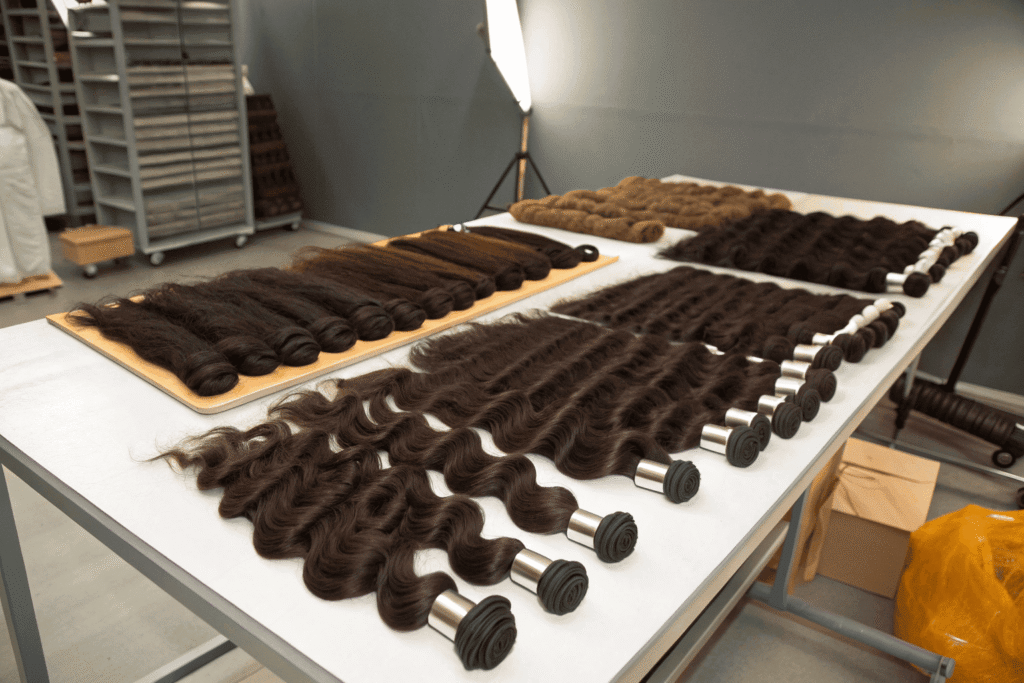
How do I decide between virgin, Remy, and non-Remy hair for my B2B orders?
I align this decision with brand promise, expected service life, and styling requirements.
Definitions that matter in production
- Virgin hair: Never chemically processed. Natural color, intact cuticles, no perms/dyes. Highest elasticity and longevity. Price premium.
- Remy hair: Cuticles aligned, may be minimally processed (sanitation, gentle dye/steam). The mainstream premium choice for mid-to-high tier.
- Non-Remy hair: Mixed directions; often acid-bathed to strip cuticle then silicone-coated. Attractive first-wear look, but shorter lifecycle.
Decision matrix by product tier
| Product tier / promise | Recommended hair | Why it fits | Typical lifespan (consumer use) |
|---|---|---|---|
| Luxury (hand-tied, bespoke) | Virgin (Euro/Russian or SEA Virgin) | Maximum natural look, bleach-friendly, minimal shedding | 12–24+ months |
| Premium ready-to-wear | True Remy (Indian/SEA), light color processing | Balance of performance and cost; reliable QC | 9–18 months |
| Fashion/color-first collections | Remy for naturals; non-Remy for bold colors under $ | Non-Remy accepts heavy dye cheaply; Remy keeps naturals | 3–12 months (non-Remy shorter) |
| Budget/high-turnover | Non-Remy improved (silicone-finished) | Lowest cost, acceptable first-wear aesthetics | 1–6 months |
My rule of thumb:
- If your customers heat-style weekly or expect 9+ months of wear, default to Remy or Virgin.
- If you sell fast-fashion shades/perm textures under aggressive price points, non-Remy with honest labeling can work, but lock down after-wash testing to avoid spike in returns.
Process checks I require from suppliers:
- Cuticle direction verification (float test + microscopy photos) for Remy/Virgin.
- Tensile strength (gF/denier) pre- and post-bleach level 8 for premium lines.
- Silicone presence check (xylene rub test) on “Remy” claims—excess silicone masks damage.

Can I mix different hair origins in one collection without compromising quality?
Yes—if you mix by texture strategy and control the processing window. I frequently design collections that blend origins to hit price/style targets while keeping quality intact.
Smart mixing models
- Texture-led segmentation:
- Straight/sleek SKUs: Indonesian or Malaysian-labeled Remy for silkiness.
- Body wave/deep wave: Brazilian-labeled Remy for density and curl memory.
- Natural wavy daily wear: Indian Remy for versatility and length availability.
- Price-led segmentation:
- Premium SKUs: Virgin/true Remy with tighter length tolerance and double-drawn.
- Value SKUs: Non-Remy improved for bold fashion colors, single- to mixed-drawn.
- Component mixing (advanced):
- Use higher-grade hair at the perimeter/parting and mid-grade in back wefts to optimize cost without affecting perceived quality.
- For lace fronts: specify virgin/true Remy around the hairline for knot integrity and bleachability, with Remy in bulk areas.
What to avoid:
- Mixing Remy and non-Remy in the same wig without clear zoning—post-wash behavior diverges (matting in nape).
- Blending origins without harmonizing denier—fine European hair with thick Brazilian-labeled strands can look inconsistent.
- Inconsistent steam-texture cycles—if wave patterning times differ by origin, curls will relax unevenly.
QC controls for mixed-origin collections:
- Batch-map each texture to a single finishing recipe (time, temp, steam).
- Cross-comb tests after three wash cycles for each blend scenario.
- Color-fastness test if combining pre-dyed and natural bundles.
What hair grades (e.g., single/double drawn) should I specify to meet my market’s standards?
Drawing grade is the most overlooked lever for perceived quality. It determines how full the ends look and how uniform the length is across a bundle or weft.
Practical definitions
- Single-drawn: Natural taper; more short hairs mixed in. Fuller at roots, slimmer ends. Lowest cost.
- Double-drawn: Most short hairs removed; fuller ends, consistent length. Higher labor cost.
- Super double-drawn (or premium double): Very tight length tolerance; near-salon blunt ends. Highest cost.
Grade selection guide by market
| Market positioning | Recommended grade | Notes on look and cost |
|---|---|---|
| Budget e-commerce/value retail | Single-drawn or 60/40 mix | Natural taper hides lower density; keep specs honest |
| Mid-tier salon/pro ready-to-wear | Double-drawn | Visibly full ends, better reviews and repeat purchase |
| Luxury/custom hand-tied | Super double-drawn | Clean ends improve ventilation, knotting, and longevity |
Spec language I include on POs:
- Length tolerance: “85% of hairs within ±2 cm of labeled length.”
- Ratio: “No less than 70% long strands for double-drawn; 85% for super double.”
- Nits/foreign matter: “Zero tolerance; pre-disinfection documentation required.”
Integrating your market’s texture and color goals:
- High-blonde lines (level 9–12): Prefer virgin or high-grade Remy with double-drawn to reduce fuzzy ends post-bleach.
- Curly lines (steam/deep curl): Double-drawn prevents thin ends that look sparse when curled.
- Yaky/kinky textures: Consider slightly looser draw to preserve natural taper aesthetics, but specify minimum end density.
Where your notes fit into specs
- Remy human hair is my default premium choice for most B2B lines due to aligned cuticles and lower tangle rates.
- Virgin hair I reserve for high-end wigs demanding durability, natural look, and aggressive color services.
- Non-Remy remains viable for budget ranges; ensure you declare acid-treatment history and manage customer expectations.
- Brazilian, Indian, European (including Russian), Malaysian, and Peruvian-labeled hairs all have a place—match them to your texture goals and supply stability.
- Processed blends (human hair + synthetic) can lower cost while keeping basic heat-styling, but disclose heat limits and lifespan.
- Pre-colored/permed human hair is common to achieve specific SKUs—specify maximum shade variance (ΔE) and curl recovery after 3 washes.
Final sourcing checklist I use before locking a program:
- Origin and processing declaration (including any acid bath and silicone).
- Cuticle alignment evidence for Remy/Virgin.
- Drawing grade ratios and length tolerance.
- Tensile/elasticity data pre/post color.
- Batch retention samples for 12 months.