
I’ve spent years sitting in wig factories, helping brands tighten their QA and reduce costly post-shipment surprises. I know how hard it is to balance speed-to-market with the non-negotiables: hair integrity, lace durability, cap fit, and documentation that your buyers can trust. When QA is built for real use—sweat, friction, heat styling, color processing—it protects margin and reputation. When it’s not, returns spike and wholesale relationships wobble.
Before shipment, I run a layered QA program that starts with incoming material verification, continues through in‑process controls, and finishes with functional, environmental, and compliance tests on statistically sampled units. I validate shedding, tangling, curl retention, colorfastness/bleaching behavior, lace and knot robustness, and cap fit—then document everything with photos, measurements, AQL reports, and traceability links. Only lots that pass the checklist, sampling plan, and pre‑shipment documentation audit are released.
Below, I map the exact tests and methods I use for wigs and hair extensions, how I simulate real customer use, and the documentation package buyers expect at PO close.
How do I test shedding, tangling, and curl retention under real-use conditions?
I simulate salon and daily-wear stress, not lab-perfect handling. The point is to expose weak wefts, misaligned cuticles, over-processed fibers, and unstable curl sets before a pallet ships.
Shedding tests
- Dry brush cycles: 50 strokes with a vent brush, then 50 with a paddle brush, applied root-to-tip and tip-to-root. I count shed strands by weight (mg) and piece count, normalized per 100 g hair.
- Wet comb cycles: After soaking with lukewarm water + mild sulfate-free shampoo, 30 detangling passes. Excessive loss often indicates low knot tightness, poor weft stitching density (<3 rows), or silicone masking over acid-bath hair.
- Weft pull test: Firm tension along the stitch line; failure modes are stitch breakage or hair pull-through. I record stitch spacing (mm) and thread type (polyester vs nylon).
What buyers should watch for:
- Remy claims with high dry shedding usually signal cuticle reversal or mixed origins.
- Single-donor units should be consistently low-shed; mixed bundles raise variability.
Tangling tests
- Sweat+friction simulation: Apply an artificial sebum solution (light leave-in + saltwater mist), then 30 minutes of abrasion using a fabric cylinder (cotton/poly blend) to mimic collar friction.
- Humidity chamber: 8–12 hours at 75–85% RH, 24–26°C; then finger-detangle time is scored. Tangling after humidity often exposes cuticle stripping or high acid bath.
- Twist-and-rest test: Two-strand twist, secured for 2 hours; evaluate reversion and snarl points when untwisted.
Root causes I look for:
- Misaligned cuticles (non-Remy mixes) or heavy silicone coating; both tangle under sweat and humidity.
- Over-bleached or porous fibers that snag on themselves.
Curl retention tests
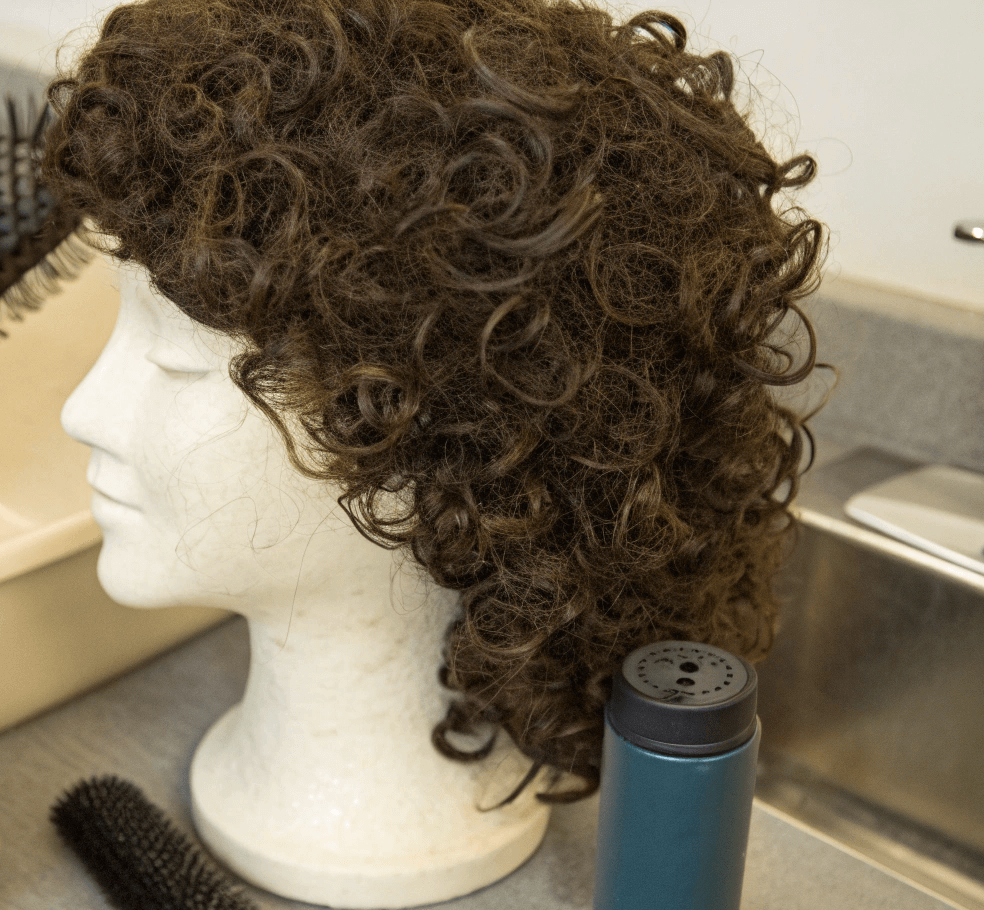
- Steam-set retention: For curly units, I log curl diameter pre-test, then wash-condition-air dry, diffuse at low heat, and re-measure. Retention of ≥85% after one full cycle is my minimum for premium SKUs.
- Heat exposure: 15 minutes under 50–60°C hood dryer, then 24-hour rest. If curls collapse below the retention threshold, steam profile or fiber origin is suspect.
- Memory test for wavy textures: I load-test with light tension (200–300 g pull for 10 seconds) and check rebound to baseline diameter.
What colorfastness and bleaching tests should I run for blonde/highlighted units?
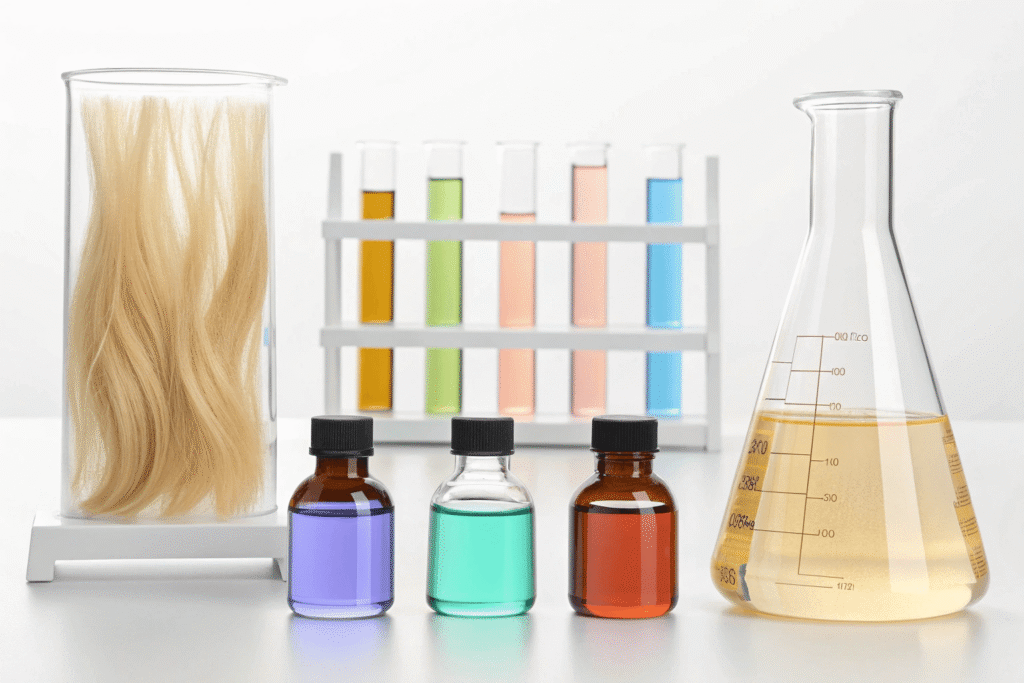
Blonde and highlighted units are least forgiving. Over-bleaching inflates porosity, shifts undertones, and increases breakage. I separate tests by colorfastness (hold under wear) and bleaching behavior (future lift at salons).
Colorfastness
- Wash fastness: 3 wash cycles with 37–40°C water, mild shampoo. I measure effluent color with a simple spectro or visually against a white card; any noticeable bleed flags unstable dye or poor post-dye neutralization.
- UV exposure: 8 hours under UV-A lamp approximating sunlight; compare ΔE color change against control hair. Rapid warmth shift in ash blondes signals unstable toners.
- Sweat/skin oil test: 0.9% saline + light sebum blend mist, 12-hour rest, then blot test. Yellowing indicates insufficient post-tone rinse or reactive brassiness.
Bleaching behavior (future lift feasibility)
- Controlled lift swatch test: 1:2 bleach-to-developer (20 vol) on a hidden 1 g swatch for 20 minutes. I evaluate:
- Lift potential (levels achieved, undertone direction)
- Elasticity/breakage after rinse (simple stretch-to-break)
- Cuticle integrity via slip feel and frizz development
- Toner stability check: Apply a salon-standard violet/blue toner and re-wash. If brass returns aggressively, the fiber is too porous or unevenly processed.
Buyer guidance:
- If a unit won’t safely lift 1–2 levels without excessive breakage, label it “no further lift” for retail clarity.
- Document undertone behavior (gold, peach, green cast) to set realistic salon expectations.
Comparison table:
| Test category | Method | Pass criteria | Common failure signal |
|---|---|---|---|
| Wash fastness | 3× 40°C washes | No visible dye bleed; ΔE < 2 | Toner runoff, shade dulling |
| UV stability | 8h UV-A exposure | ΔE < 3; no brass shift | Yellowing of ash tones |
| Bleach lift | 20 vol, 20 min swatch | 1–2 levels with low breakage | Elastic snap, straw feel |
| Toner hold | Apply, rewash | Minimal re-brass | Rapid warm reversion |
Which checks verify lace durability, knot security, and cap fit?
Lace, knots, and cap architecture are where returns happen. I validate mechanical durability, knotting quality, and ergonomic fit on statistically sampled units.
Lace durability
- Tensile and tear test: Measure force to first tear on 1 cm strips of HD/Swiss/French lace (record N). HD lace should pass minimum tensile benchmarks; if not, re-spec yarn count or weave density.
- Abrasion cycles: 5,000 rubs with a Martindale pad equivalent; rate pilling and fray. Premature fray indicates weak finishing or poor edge binding.
- Adhesive compatibility: 24-hour dwell with water-based and solvent glues; check residue and warp.
Knot security
- Pull-through test: Apply controlled tension (e.g., 1.0–1.5 kg) on knotted hair strands; count pull-outs per 100 knots.
- Knot inspection: Under 10× magnification, check knot size uniformity, bleach penetration, and hair angle. Over-bleached knots break; under-bleached are too visible.
- Bleached knot stress: Post bleach-neutralization, run a light tug test. If failure rate spikes, adjust bleach time or knotting hair grade.
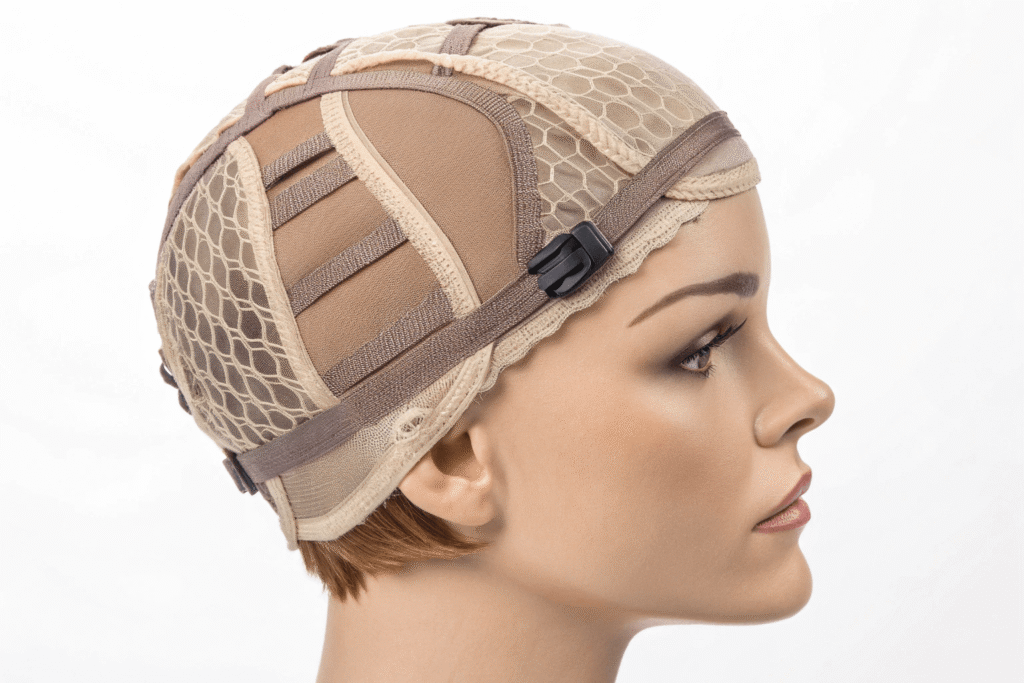
Cap fit and construction
- Dimensional verification: Circumference, ear-to-ear, front-to-nape, temple-to-temple compared to spec tolerances (±3–5 mm depending SKU).
- Elastic and strap integrity: Stretch cycles (50×) and buckles/snaps load test (5 kg for 10 seconds); record deformation.
- Pressure mapping: Fit on standardized mannequins and two human testers per size to check hot spots at temple and nape.
- Ventilation and comfort: Airflow proxy via differential pressure across cap; higher resistance correlates with heat discomfort in summer markets.
Quick comparison table:
| Component | Test | Minimum expectation | Action on fail |
|---|---|---|---|
| Lace | Tensile/tear, abrasion | No tear below spec; low fray | Change weave/denier; reinforce edges |
| Knots | Pull-through, magnified review | <3 pull-outs/100 knots | Adjust knotting tension; reduce knot bleach time |
| Cap | Dimensional + strap load | Within ±3–5 mm; no strap slip | Retrain sewing; upgrade hardware |
How do I document QA with photos, measurements, and AQL reports for buyers?
Documentation closes the loop. I build a package that aligns to the PO, the spec, and the sampling plan—so buyers can approve quickly and auditors can trace any claim.
Core documentation set
- Incoming material inspection: Certificates (origin, composition), bundle weight checks, lace type confirmation, and visual defect logs against the approved spec.
- In‑process inspections: Control-point records for weft density, knotting sections, bleaching timings, and critical dimensions to prevent downstream defects.
- Functional and reliability: Shedding/tangling/curl retention data; lace/knot/cap results; humidity and light heat exposure notes.
- Final inspection and sampling: AQL plan (e.g., ISO 2859‑1), lot size, sample size, inspection level, acceptance numbers, defect classification (critical/major/minor), and pass/fail outcome.
- Compliance: If electrical accessories ship with units (e.g., heated styling tools in kits), include voltage/current/insulation/ground continuity test reports and compliance marks as applicable.
- Traceability: Unit/batch IDs linked to test results, equipment calibration certificates, and materials batches—recall-ready mapping.
- Nonconformance handling: NCR logs, segregation photos, rework/disposition records, corrective action closure before shipping.
- Pre-shipment verification: COC, test summaries, carton labeling confirmation, barcodes, packing lists, and logistics readiness.
Photo and measurement standards
- Photos: Consistent angles—front laceline, parting, hairline knots, interior cap construction, weft stitching, curl pattern close-up, color reference against neutral grey card, and any defect examples.
- Measurements: Use calibrated tools; record circumference and key cap dimensions, hair length consistency (±5 mm tolerance), weft density (rows/cm), and lace tear test values (N).
- File naming and metadata: Include PO, SKU, batch, unit ID, date, inspector initials. Keep a master index for quick retrieval.
AQL sampling guidance for wigs and extensions
- Typical: Inspection Level II, AQL 2.5 for major, 4.0 for minor; critical defects set to 0.
- Tailor by tier: Premium single-donor or HD lace units often drop to AQL 1.0–1.5 for majors.
What buyers should expect:
- A single PDF or dashboard containing the checklist, defect tally, photos, measurements, and pass/fail decision.
- A traceability map to resolve any post-shipment complaint within 48 hours.
Final notes on QA program design
- Sequence matters: Incoming inspection → defined in‑process controls → functional/real-use tests → environmental reliability → final audit → pre-shipment documentation.
- Calibrate for market reality: High-humidity geos demand stronger anti-tangle and ventilation checks; salon-focused lines need robust bleaching behavior data.
- Train for consistency: Knotting tension, bleach timing, and weft stitching density are the three skills that most impact returns; standardize and audit them.
If you want, I can share a ready-to-use QA checklist template and a photo shot list tailored to your SKUs and AQL levels.