
I get this question from buyers and stylists almost weekly—especially my wholesale clients planning seasonal stock. I’ve worn, installed, and stress-tested all three lace constructions on real customers and on myself: long workdays, high ponytails, gym sessions, and photo shoots. If you’ve ever wondered which lace type is better for ventilation, which wins on value, or how to explain cost-performance to your B2B customers, I’ve been there—and I’ll break it down without the fluff.
Full lace wigs offer the most styling versatility and breathability, lace front wigs deliver the best value and fastest installs, and 360 lace wigs balance realism with convenient high-pony/updo styling at a mid-range price. Your final choice should align with your buyers’ priorities: styling freedom vs. speed, budget vs. realism, and maintenance capacity.
Here’s how I help my wholesale partners choose the right mix: understand the cap construction first, match it to your customers’ lifestyle, then fine-tune by density, hair type (synthetic vs. human hair), and lace quality (HD lace vs. standard). Let’s dive into the differences and the tradeoffs your B2B clients care about.
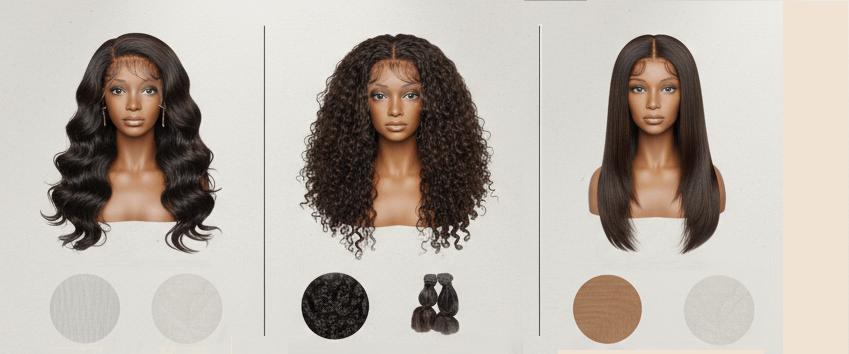
How do I choose between full lace, lace front, and 360 lace wigs for my wholesale buyers?
When I build a wholesale assortment, I start with customer profiles and use-case demand:
- Everyday wear and quick installs: Lace front wigs. They need less adhesive, go on faster, and hit the sweet spot for budget-conscious shoppers.
- High ponytails and updos with natural edges all around: 360 lace wigs. They provide a realistic perimeter without full-lace pricing or install time.
- Max styling freedom, editorial looks, braids/cornrows, and superior airflow: Full lace wigs. Best for premium clients who value versatility and comfort.
What I’ve learned:
- Cost and installation time matter more in bulk than perfection. Lace fronts move volume because they’re simpler to wear daily.
- Offer tiered bundles: 60–70% lace front, 20–30% 360 lace, 10–20% full lace in most markets. Adjust the mix for salons focused on editorial or luxury clients.
- Match density to region and climate. In hot climates, 130–150% density in full lace keeps shedding/tangling lower and ventilation higher; in cooler climates, 150–180% sells for fuller looks.
Key selection criteria for wholesale orders
- Styling priorities: Everyday parting vs. full-head parting vs. high ponytails
- Budget tiers: Entry (lace front), Mid (360 lace), Premium (full lace)
- Lace type: HD lace for film-level invisibility; transparent lace for value; medium-brown lace for convenience
- Hair type: Human hair wig for heat styling and longevity; synthetic wig for low cost and color variety
- Maintenance capacity: Full lace needs the most careful adhesive handling and daily care; lace front is lowest-touch
Which lace construction helps my customers achieve the most versatile styling options?
- Full lace wigs: Lace across the entire cap means you can part anywhere and do braids, cornrows, half-up styles, and sleek high buns without exposing tracks. They’re the lightest and most breathable, so they’re comfortable for long wear.
- 360 lace wigs: Lace around the perimeter allows high ponytails, buns, and updos with a natural hairline in front, sides, and nape. The machine-made center limits full-head braiding and all-over parting but still offers solid versatility for daily styling.
- Lace front wigs: Natural-looking hairline at the front, with parting mostly in the frontal area. Ideal for side parts, middle parts, swoops, and low ponytails if you finesse the hairline—but the back wefts can show in high ponytails.
Styling versatility quick guide
- Max freedom: Full lace > 360 lace > Lace front
- Fast changes between down styles and high pony: 360 lace
- Best for simple daily looks: Lace front
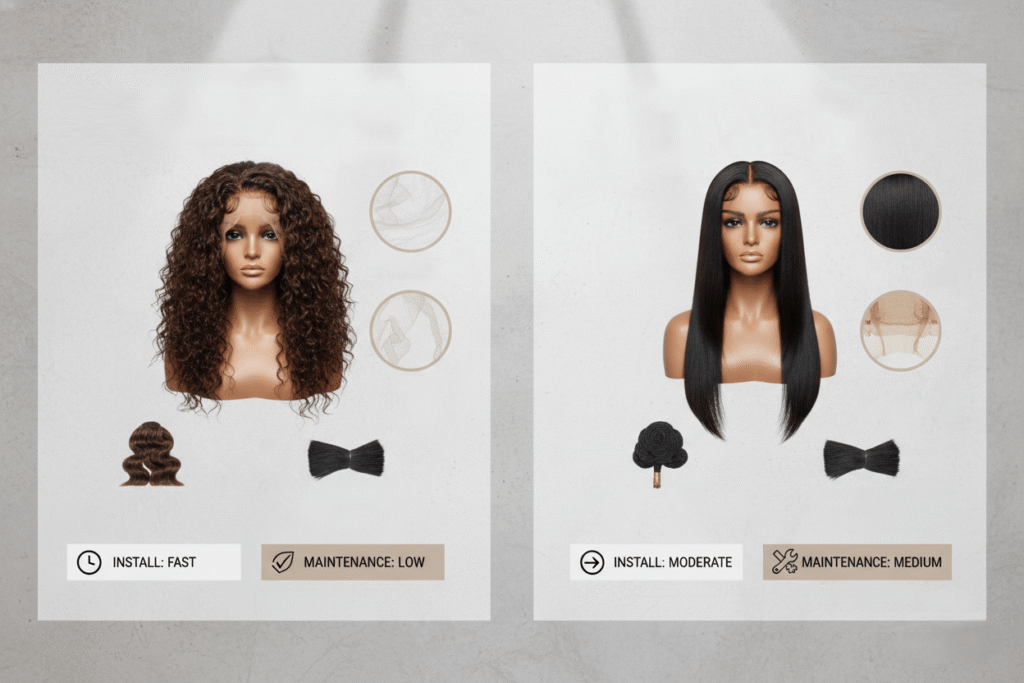
Do my clients prefer full lace for ventilation or lace front for value in bulk orders?
Honestly, value wins in volume. Most bulk buyers choose lace fronts because:
- They’re more affordable and quicker to install.
- Less adhesive needed; easier for everyday wearers and beginners.
- Fewer returns from “too complicated” installs.
Where full lace wins:
- Premium clients and performers who need maximum ventilation and styling freedom.
- Hot climates or customers sensitive to heat buildup—full lace breathes best.
- Salons marketing custom hairlines and editorial braids/cornrows.
Middle ground—360 lace:
- Clients who love high ponytails and clean updos but don’t want full-lace pricing or maintenance.
- Faster installs than full lace while delivering realism around the perimeter.
Practical concerns your clients ask about
- Shedding: Depends more on hair quality and knotting than lace type; hand-tied caps (full lace) can be gentler but need careful combing.
- Tangling: Higher densities and longer lengths tangle more; human hair tangles less than many synthetics. Encourage satin storage and detangling sprays.
- Lace visibility: HD lace is most invisible on camera and in daylight; transparent lace works for fair-to-medium tones; medium-brown lace for deeper tones. Tint sprays help.
- Longevity: Human hair and reinforced knots last longer. Full lace needs gentler handling over time because the entire cap is lace.
How do I explain the cost-performance tradeoffs of each lace type to my B2B customers?
I keep it simple: cost is driven by lace coverage and labor. Performance depends on styling goals, install speed, and maintenance.
Cost drivers
- Full lace: 100% hand-tied—highest labor = highest price.
- 360 lace: Hand-tied perimeter + machine center—mid-range cost.
- Lace front: Lace only at front + machine wefts—most affordable.
Performance lenses (how buyers feel day-to-day)
- Install speed: Lace front fastest; 360 mid; full lace slowest, with the most careful adhesive placement.
- Versatility: Full lace unlimited; 360 high pony/updo; lace front front-parting only.
- Breathability: Full lace best; 360 good; lace front moderate.
- Maintenance: Full lace highest care; 360 medium; lace front lowest.
Hair type and density matter more than lace alone
- Human hair wig: Best heat styling, longest life, can be recolored; higher initial cost but better over total wear.
- Synthetic wig: Budget-friendly, pre-styled looks, vivid colors; heat-safe fibers vary—limit heat to protect longevity.
- Density: 130–150% feels natural and reduces tangling; 180%+ is glam but heavier and may shed more. Balance density to styling goals and climate.
Comparison Table
| Wig Type | Lace Coverage | Styling Versatility | Breathability | Install Speed | Typical Price | Best Use Case |
|---|---|---|---|---|---|---|
| Lace Front | Lace at front only | Front parting; low pony with care | Moderate | Fast | $ | Everyday wear, beginner-friendly, budget value |
| 360 Lace | Lace around perimeter | High ponytails, buns, natural edges all around | Good | Medium | $$ | Updo lovers; realism without full-lace pricing |
| Full Lace | Lace over entire cap | Part anywhere; braids/cornrows; high buns | Excellent | Slow | $$$ | Premium clients; maximum styling + ventilation |
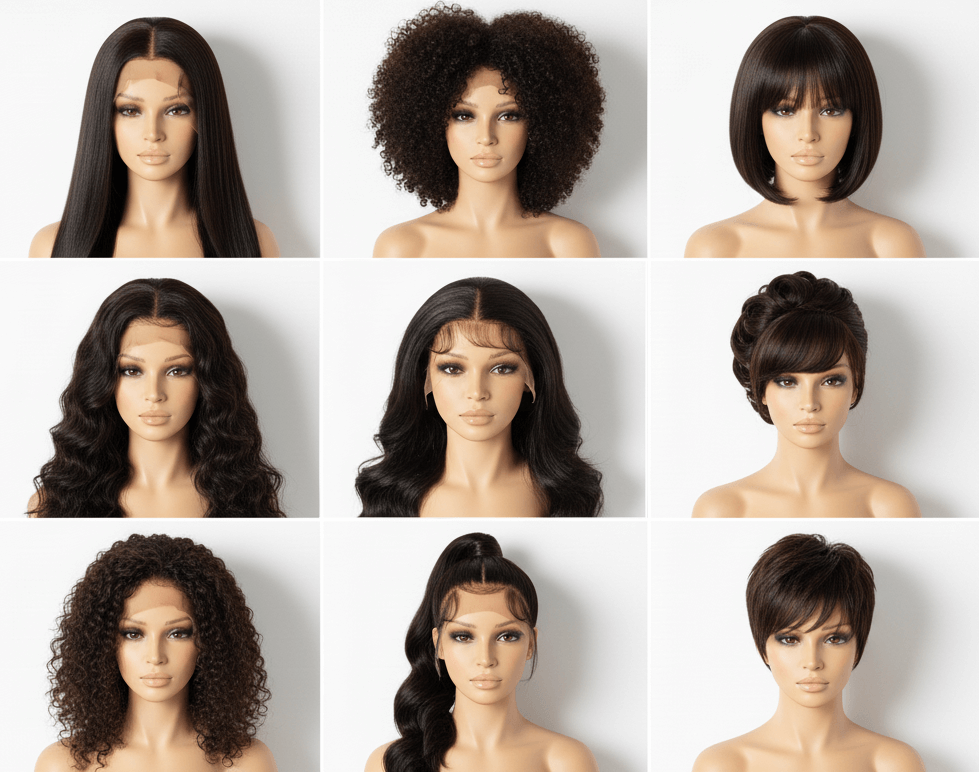
Optional FAQ
Which wig is better for high ponytails?
- 360 lace or full lace. Lace front can work with tricks, but the back wefts may show.
Can I get maximum realism on a budget?
- Choose 360 lace with HD lace at the hairline and keep density at 130–150% for a natural lay.
What causes shedding and tangling most?
- Over-bleached knots, rough combing, high density, and low-quality hair. Lace type is secondary—quality and care matter more.
HD lace vs transparent lace—which should I stock?
- HD lace for top-tier invisibility (film/photo work); transparent or medium-brown lace for everyday value. Offer tint sprays to bridge undertones.
Conclusion
If your buyers value speed and price, lace front wigs will lead your bulk orders. If they want high ponytails and clean updos without full-lace maintenance, 360 lace is the smart middle. When versatility and ventilation are non-negotiable—editorial styling, braids, long wear—full lace is worth the investment. Calibrate your assortment by customer lifestyle, climate, and density preferences, and you’ll reduce returns while increasing repeat buys. That’s how I build wig inventories that move.