
As a wig manufacturing strategist working with factories in China (Qingdao, Xuchang), India (Tirupati), and Eastern Europe, I’ve learned that “natural” is engineered—not accidental. When buyers tell me their hairlines look detectable under studio lighting or that parts read as “grid-like,” it’s rarely a single issue. It’s a stack: lace type, knotting method, ventilation direction, density gradation, and finish work (plucking, bleaching, tinting, melting) all compounding. And in B2B, we can’t rely on a stylist’s touch; realism has to be repeatable at scale across hundreds of units.
Wigmakers achieve natural hairlines and realistic parting by combining fine, transparent lace (HD or Swiss), hand-tied single or split knots at the front, low-density graduations, strategic ventilation, and post-production customization (pre-plucking, bleaching knots, lace tinting, and precise adhesive “melt”). Silk-top or skin-top constructions hide knots along the part, while zigzag lace cutting, off-center parting, and heat-setting improve scalp visibility and break up straight lines.
For wholesale consistency, factories standardize knot sizes, spacing patterns, density maps, and QC checks for lace tone, knot bleaching, and hairline symmetry—so realism holds up under 4K lighting and close inspection.
In this guide, I’ll detail the lace types and densities I specify for undetectable hairlines, the exact pre-pluck/bleach/tint workflow my teams use, how HD vs transparent lace performs for bulk buyers, and the QC gates we run to keep realism consistent across orders. I’ll also embed procurement context—cost, durability trade-offs, and which cap constructions to choose when your clients need believable parts without salon-level customization.
Which lace types and densities should I choose to make my hairline look undetectable?
Lace taxonomy and where I use each
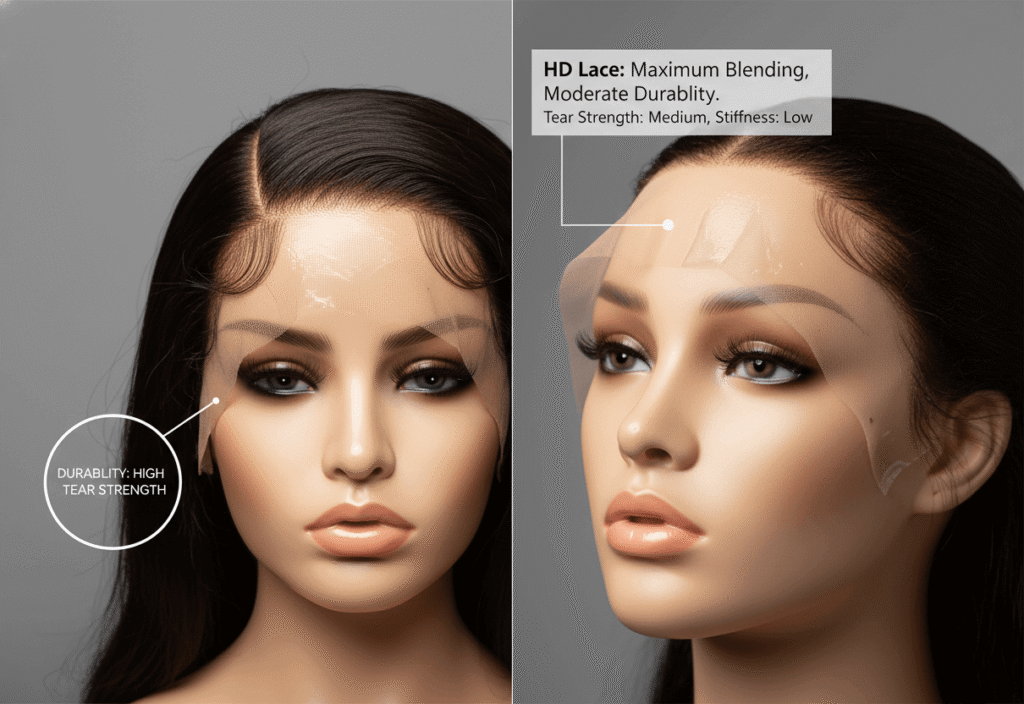
- HD lace (ultra-fine Swiss-type): Best-in-class invisibility for front hairlines. Virtually disappears on light to medium skin tones; with tinting, it blends well across deeper tones. Lower tear resistance—train staff for gentle handling.
- Swiss lace (standard fine): Excellent balance of invisibility and workable strength. My default for premium lines where realism matters but units see frequent handling.
- Transparent lace: Clearer tone but slightly stiffer mesh. Good value for mid-tier products; requires tint and makeup to avoid a “grey cast” on some skin tones.
- French lace: Thicker, durable, easy to ventilate. I use it in back panels and temples (non-hairline zones) or for customers prioritizing longevity over invisibility.
Density strategy that reads “real”
- Graduated hairline: 60–80% of the main density in the first 0.5–1.0 cm. I spec single knots, 1–2 hairs per hole, staggered spacing, and irregular recession at temples.
- Main body: 100% target density from 1–4 cm behind the hairline, building to crown.
- Crown/parting corridor: Slight taper around intended part zones (especially for silk-top), avoiding the “wall-of-hair” look.
Ventilation direction and spacing
- Direction: Slight backward and lateral angles at the hairline; mixed directions thereafter to break linearity. This reinforces lift and natural flow without exposing lace.
- Spacing: Randomized pattern—no strict grid. Alternate 1–2 hairs per knot, skipping holes to avoid visible rows. Zigzag part paths help avoid exposing grids.
Quick-reference comparison
| Lace type | Visibility (best=5) | Durability (best=5) | Typical use | Notes for buyers |
|---|---|---|---|---|
| HD (ultra-fine) | 5 | 2–3 | Front hairline on premium units | Most invisible; higher rejects if mishandled |
| Swiss (fine) | 4–5 | 3–4 | Fronts + top panels for premium/mainline | My default realism/durability balance |
| Transparent | 3–4 | 3–4 | Mid-tier fronts; requires tint/makeup | Can cast grey; plan tinting workflow |
| French | 2–3 | 4–5 | Back/temples; durability-first builds | Use away from hairline to protect realism |
How can I pre-pluck, bleach knots, and tint lace to match my clients’ scalp tones?
I standardize this as a three-step post-production line to reduce stylist dependency and keep results consistent across batches.
Step 1: Pre-pluck for irregularity (factory workflow)
- Map recession: Mark temples and widow’s peak based on SKU template; don’t mirror perfectly—natural asymmetry matters.
- Pluck pattern: Tweeze 10–20% of hairs in the first 0.5–1.0 cm, focusing on breaking straight edges. Leave micro “baby hair” zones with 1-hair knots intact.
- Ventilation synergy: Favor single or single-split knots at the edge; they release more cleanly and lay flatter post-pluck.
Step 2: Bleach knots without compromising hair integrity
- Developer strength: 20 vol for HD/Swiss; 10–20 vol for transparent/French. Avoid 30+ vol on delicate laces.
- Timing: 10–15 minutes for dark knots on HD lace; check every 5 minutes. Over-bleach causes “orange” knots and fiber breakage.
- Rinse/neutralize: Cool water + pH-balanced neutralizer; follow with bond-rebuilding treatment on the base to minimize shedding.
- Placement: Only the front 1–1.5 cm and along intended part lines. Keep double knots unbleached in high-tension zones (behind hairline) to maintain durability.
Step 3: Tint lace to match scalp tones
- Shade system: Stock 6–8 undertone-specific tints (neutral, golden, olive, cool brown). Undertone match beats shade depth for blend.
- Application: Airbrush or sponge to the underside; set with gentle heat (low) and a light dusting of translucent powder up top during “melt.”
- Darker tones: A warm-brown lace tint plus a touch of yellow corrector avoids ash/grey cast on HD/transparent lace.
- Final melt: Adhesive (glue or tape) applied thinly, pressed with silicone tool; finish with powder foundation at the edge to remove shine.
Do HD lace or transparent lace give my wholesale buyers better realism and durability?
My procurement take
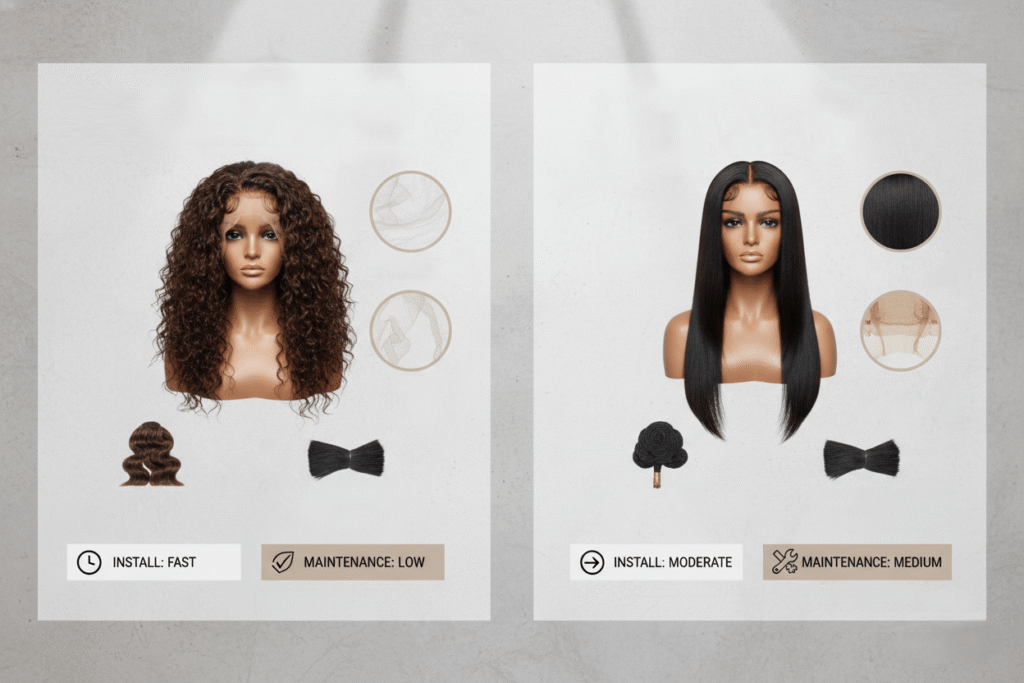
- If your brand sells realism under 4K lighting (content creators, salons, premium retail), HD lace wins. It’s nearly undetectable, especially with good tint and melt.
- If your buyers prioritize turnover, frequent wear, and lower returns without heavy customization, transparent lace is a safer middle ground.
Durability in the real world
- HD lace: Lower tear strength, higher risk during aggressive plucking or repeated installs. Reduce tension, train customers on careful removal, and provide elastic bands for stabilization.
- Transparent lace: Slightly stiffer, handles repeated melts better. Needs proactive tinting/warmth correction to avoid grey cast.
Hybrid recommendation
Use HD or Swiss at the frontal 1–1.5 cm, transition to transparent/French behind the hairline and at temples. This protects edges, cuts repair rates, and preserves realism where it’s most scrutinized.
Silk-top or skin-top for parts
- Silk-top/skin-top constructions hide knots along the part via layered bases. They deliver the most believable scalp effect but reduce free-parting and add cost.
- For flexible styling, combine a narrow silk-top corridor with free lace elsewhere; you’ll get a “true scalp” where it matters while retaining versatility.
| Buyer profile | Best choice (front) | Parting solution | Why it works |
|---|---|---|---|
| Salon/premium retail | HD or fine Swiss | Narrow silk-top corridor | Undetectable edges + believable scalp where needed |
| Influencers/content (4K lighting) | HD (trained handling) | Lace part + concealer | Max invisibility; accepts makeup workflows |
| Everyday wear, low-maintenance | Transparent/Swiss hybrid | Silk-top optional | Durable edges; tint/makeup for realism |
| Rental/costume | French/transparent | Lace part | Durability first; accept visible lace in close-ups |
What QC steps should I add to ensure consistent hairline realism across bulk orders?
Consistency is where most brands lose credibility. I bake these checks into factory SOPs and incoming inspection.
Pre-production standards
- Density maps: Locked templates per SKU (e.g., 70% density band in first 10 mm; 1–2 hairs per knot; staggered spacing). No ad-hoc changes on the line.
- Knot spec: Single knots at frontal edge; single-split within first 10–15 mm; double-split behind that. Sample boards at each workstation for visual reference.
- Lace lot control: Record lace batch ID, mesh count, and color variance. HD/Swiss lots vary—reject on yellow/grey tint or uneven mesh.
In-line QC gates
- Visual under 4K light: Inspect hairline at 30–50 cm distance with raking light to catch grid exposure and lace cast.
- Pull test: Gentle tug along the plucked band; measure shedding post-bleach (target ≤3 strands per 10 tugs across three zones).
- Symmetry check: Hairline recession marks, widow’s peak offset, and temple thinning must match template within ±2 mm tolerance.
- Knot color delta: L* value (colorimeter) before/after bleach; target lightening within a defined range to avoid orange or dark specks.
Final finishing QC
- Tint match: Undertone swatch system—lace must match neutral/golden/olive/cool profiles without ash cast. Photograph on three skin-tone mannequins.
- Melt test: Apply standard adhesive and powder; confirm no visible shine or lace edge at normal conversation distance.
- Parting realism: Off-center zigzag test part; ensure scalp visibility without line exposure. Heat-set with mousse and recheck after cool-down.
Post-shipment controls
- AQL sampling on returns: Classify issues (lace tear, knot visibility, density mismatch) to adjust process controls.
- Customer education inserts: Care/handling for HD lace, removal protocol, and tint guides reduce damage and support realism.
Conclusion
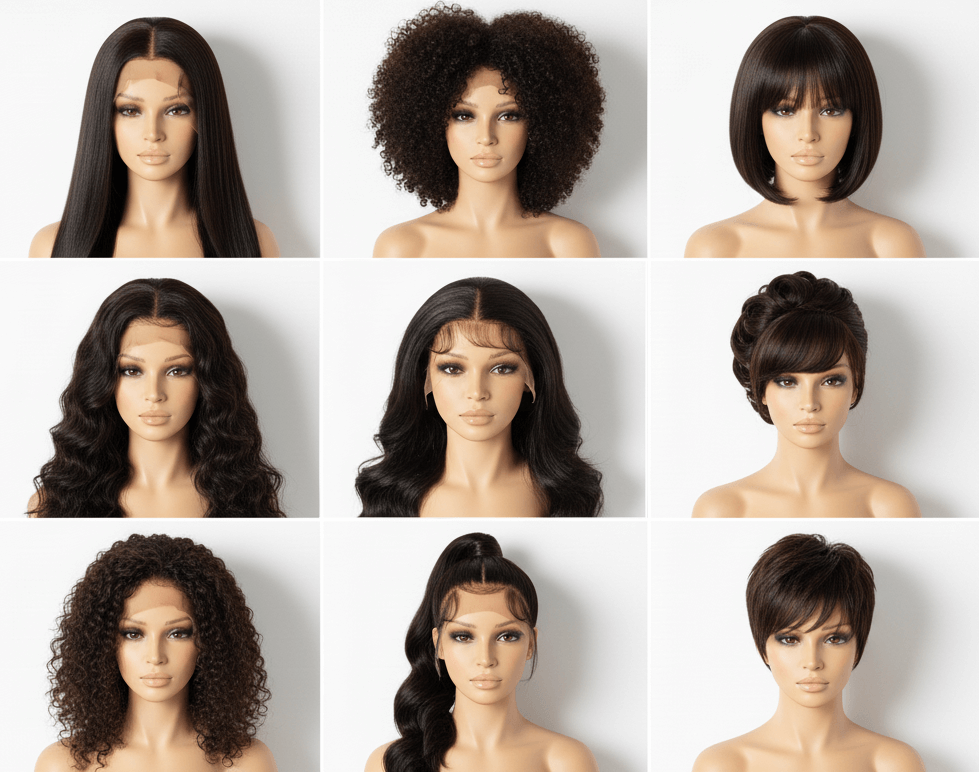
In my experience, undetectable hairlines and believable parts aren’t the result of one “magic” component—they’re the outcome of aligned materials (HD/Swiss lace at the edge), fine hand-tying with single/split knots, staggered ventilation, and disciplined post-production (pre-pluck, bleach, tint, melt). For wholesale buyers, HD or fine Swiss at the front paired with sturdier lace behind the hairline delivers the best realism-to-durability ratio. The secret to scaling natural results is QC: density maps, knot specs, lace lot controls, and 4K light inspections catch the issues that customers see instantly. When you standardize these steps, your hairlines hold up in high-resolution lighting, your parts read like real scalp, and your return rates drop—exactly what a B2B operation needs to grow profitably.