
I’ve worn, installed, and sold both closure and frontal wigs for years, and I’ve felt the pain points from both sides—buyer and stylist. I remember the first time I switched from a 5×5 closure to a 13×6 frontal for a photoshoot; the styling freedom felt magical, but the maintenance afterward reminded me why closures are my weekday workhorses. If you’re deciding which to stock—4×4/5×5 closures or 13×4/13×6 frontals—or you’re guiding clients on what fits their skill level, I’ll give you the honest, practical breakdown I wish I had early on.
Closures use smaller lace (4×4, 5×5, 6×6) covering the crown; frontals use larger lace (13×4, 13×6) spanning ear-to-ear. Frontals deliver maximum styling versatility and a full hairline illusion but cost more and need advanced installs. Closures are budget-friendly, easier to maintain, more durable, and reliable for daily wear with acceptable naturalness within the lace area.
Below, I’ll map sizing to parting space and hairline realism, show how these factors affect styling, help you choose inventory for your target buyers, and give you a skill-based decision framework you can use on consultations—plus real talk on shedding, tangling, lace visibility, and longevity.

Closure vs Frontal: Coverage, Hairline, and Naturalness
Lace Size and Coverage
- Closure wig: 4×4, 5×5, 6×6 (sometimes 7×7). Covers the top/crown only.
- Frontal wig: 13×4 or 13×6. Spans ear-to-ear for a complete hairline illusion.
What this means visually:
- Frontal wigs can mimic a natural hairline across the entire forehead, including baby hairs and temple transitions.
- Closure wigs look natural inside the lace window. Beyond that window, the wefts and tracks begin—so pulled-back or ear-revealing styles are limited.
Natural Appearance vs Lace Visibility
- Frontal: HD lace or well-tinted transparent lace melts better across the forehead, reducing lace visibility even in bright daylight or flash photography. Great for clients sensitive to “grid” showing.
- Closure: Natural look is strong in the parting area, especially with 5×5/6×6 free-part closures. However, the sides may expose tracks if hair is pulled back aggressively.
Longevity, Shedding, and Maintenance
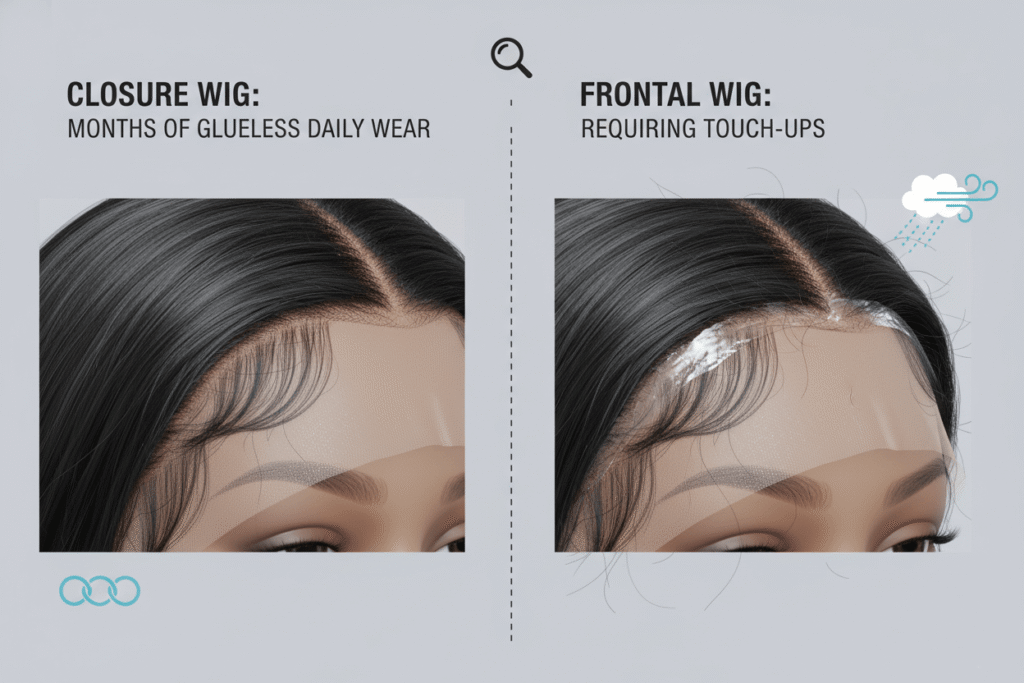
- Closures generally last longer because the lace area is smaller—less chance of tearing, less glue wear, less manipulation. I see lower shedding from closures simply because installs are gentler and less frequent.
- Frontals need more careful handling. Repeated adhesive use, plucking, and daily styling near the hairline can cause shedding and require repairs sooner.
- If your clients wear wigs daily or live in windy, humid climates, closures tend to stay put more reliably with glueless options (elastic band + combs), while frontals may lift without strong adhesive.
Should I Stock 4×4/5×5 Closures or 13×4/13×6 Frontals?
Here’s how I stock for different buyer profiles. This blends buyer psychology, budget, and lifestyle with real install outcomes.
Inventory Strategy by Buyer Type
- Everyday, low-effort wearers (commuters, professionals, moms): Heavier on 5×5 and 6×6 closures. They want quick on/off, minimal glue, and consistent hairline without daily customization.
- Trend-driven, content creators, special events: More 13×6 frontals (and some 13×4). They value deep side parts, half-up styles, ponytails, and pulled-back looks. HD lace frontals sell well here.
- Sensitive skin/adhesive-averse clients: Closures—glueless is easier, fewer touch-ups, less irritation.
- Budget-conscious buyers or bulk retail: Closures dominate. Lower unit cost, lower returns due to easier installs.
Cost and Margins (Typical Market Patterns)
- Closures: Lower wholesale, faster installs, fewer aftercare complaints. Higher repeat purchase for daily wear.
- Frontals: Higher wholesale and retail, but upsell opportunities—customization, adhesive kits, tinting services, and reinstall packages.
How Parting Space and Hairline Length Affect Styling Versatility
Parting Space: Depth and Direction
- 4×4 closure: Middle parts and short side parts; limited depth. Good for sleek bobs and middle-part looks.
- 5×5/6×6 closure: Wider free-part area—more play for diagonal side parts and slight shifts. Best for “natural everyday” styling without exposing tracks.
- 13×4 frontal: Standard depth with full hairline; side parts, half-up, low pony. Good for most face shapes.
- 13×6 frontal: Deep parting for dramatic side parts and scalp realism in layered styles. Ideal for editorial looks, swoops, and high-definition photos.
Hairline Length: Ear-to-Ear Matters
- Frontal hairline (ear-to-ear) enables:
- Pulled-back styles, ponytails, buns, cornrow looks under the wig without revealing tracks.
- Temple realism and baby hairs across the entire front.
- Closure hairline (central window) limits:
- High ponytails and fully pulled-back styles—risk of weft exposure on the sides.
- Best suited to down styles, soft half-up with strategic coverage, and gentle tucks behind the ear with caution.
Heat Styling, Density, and Movement
- Frontals often need careful heat at the hairline to avoid lace warping; density near the hairline should be lighter for realism, which can increase tangling risk if overstyled.
- Closures typically have consistent density and are less manipulated at the hairline, which reduces shedding and tangling over time.
Will Closures Cut Costs in Bulk While Keeping Natural Appearance Acceptable?
Yes—if you pick the right specs. Here’s what I use when I want closures to look convincingly natural without frontals’ price or maintenance.
- Choose 5×5 or 6×6 free-part closures for wider styling options and believable parting space.
- Upgrade lace: HD lace or well-made transparent lace tinted to match undertones reduces grid visibility in daylight.
- Pre-plucked hairlines within the closure window enhance realism; avoid over-plucking to prevent shedding.
- Offer glueless construction: elastic band + combs + light powder/tint. Clients love the speed and the comfort.
- Educate on wig care: Gentle detangling from ends up, avoid heavy oils near lace, and limit high heat to preserve knots. This helps closures maintain a “fresh install” look longer.
Result: Lower unit cost, fewer adhesive-related returns, and satisfied daily wearers who still feel polished.
How to Guide Clients: Closure vs Frontal by Install Skill
I use this skill-based decision checklist during consultations. It saves time and builds trust.
Beginner or Low-Skill Installers
- Recommend: 5×5 or 6×6 closure wigs, glueless-ready.
- Why: Faster installs, minimal lace work, fewer chances of visible mistakes.
- Styling fit: Middle or soft side parts; down styles; light half-up. Natural appearance acceptable for work and day-to-day.
Intermediate Installers
- Recommend: 13×4 frontal for ear-to-ear coverage without heavy customization.
- Why: Enough styling freedom to experiment; manageable maintenance if they’re comfortable with adhesive and basic tinting.
- Styling fit: Side parts, half-up styles, low ponytails. Good for events and content.
Advanced or Professional Installers
- Recommend: 13×6 frontal with HD lace.
- Why: Deep parting for dramatic looks; baby hair design; scalp-like realism in photos. Requires skill with adhesives, plucking, and lace melting.
- Styling fit: Pulled-back styles, sculpted edges, editorial shoots.
Environment and Lifestyle Add-ons
- Humid, windy, or highly active clients: Closures reduce lifting risk and maintenance.
- Sensitive skin: Closures with glueless wear are more comfortable.
- Special events and close-up photography: Frontals, preferably HD lace, for full hairline illusion.
Comparison Table
| Feature | Closure Wig (4×4/5×5/6×6) | Frontal Wig (13×4/13×6) |
|---|---|---|
| Coverage | Crown area only | Ear-to-ear full hairline |
| Parting space | Limited (4×4) to moderate (5×5/6×6) | Wide; deeper with 13×6 |
| Styling versatility | Best for down styles, soft side parts | Deep parts, half-up, ponytails, pulled-back |
| Naturalness | Natural within lace window | Full hairline realism across forehead |
| Install difficulty | Easy; often glueless | Advanced; adhesive and customization |
| Cost | Budget-friendly | Higher due to lace size and labor |
| Durability/maintenance | More durable; less shedding/lace damage | Needs careful handling; more touch-ups |
| Adhesive sensitivity | Minimal or none required | Often required for melt |
| Daily wear practicality | Excellent; quick on/off | Good if skilled; more maintenance |
Conclusion
If your target buyers want quick, low-effort, reliable everyday wear with solid naturalness, stock more 5×5 and 6×6 closure wigs. They cut bulk costs, reduce return risk, and keep clients happy with glueless convenience. If your audience lives for styling freedom, deep parts, and ear-to-ear realism—especially for events and content—carry 13×4 and 13×6 frontals, and pair them with install education and service upsells. I’ve been in both lanes, and the sweet spot for most businesses is a closure-heavy assortment with curated HD lace frontals for those “wow” moments.
Optional FAQ
Which wig is better: closure or frontal?
Neither is universally “better.” Closures win for daily wear, budget, and durability. Frontals win for styling versatility and full hairline realism.
Does HD lace matter?
For frontals, yes—HD lace can dramatically reduce lace visibility across the forehead. For closures, HD helps, but a well-tinted transparent lace often suffices.
Synthetic wig vs human hair wig for closures/frontals?
- Synthetic wig: Lower cost, less heat styling; good for closures and occasional frontals but limited restyling.
- Human hair wig: Higher cost, better heat styling and longevity; ideal for frontals where customization matters.
How do I prevent shedding and tangling?
Seal knots after customization, avoid over-plucking, detangle from ends up, use light serums (not heavy oils) near lace, and limit high heat at the hairline.