
I get asked this weekly by brand owners and factory buyers comparing spec sheets that all look “premium.” I’ve spent years inside Asian fiber mills and OEM wig factories, and I’ve tested everything from classic modacrylics to the latest heat-friendly blends on production lines. My goal here is to translate fiber science into decisions you can make at the sourcing table—so your wigs look natural, last through real-world wear, and scale reliably in bulk.
The best synthetic fibers for high-quality wigs are premium modacrylics—especially Kanekalon and Toyokalon—for natural luster, movement, and curl memory, with Futura and other heat-friendly modacrylic/PET blends adding moderate thermal styling. For brands prioritizing realism, choose fine-denier, matte-finish Kanekalon/Toyokalon or premium blends; for styling flexibility, opt for Futura-class heat-resistant fibers but manage tangling risk and lifespan with stricter maintenance and QC. Supplier consistency matters as much as fiber choice—source from mills with documented batch controls, color master batches, and tensile specs.
In the sections below, I’ll break down how to choose between Kanekalon, Toyokalon, Futura, and PET blends; how to spec heat resistance and movement by client segment; how to match denier and luster to your brand’s aesthetic; and which suppliers can deliver consistent bulk lots. I’ll also share QC tactics, spec sheets to request, and pitfalls I’ve seen when brands scale too fast.
How do I choose between Kanekalon, Toyokalon, Futura, and PET blends?
Quick positioning
- Kanekalon (modacrylic): Natural texture, low-to-moderate sheen, excellent curl memory, strong colorfastness; select variants offer limited heat tolerance.
- Toyokalon (modacrylic): Softer hand, silky slip, low shine that reads “natural,” especially good for curls/waves that need to hold under humidity.
- Futura and similar heat-friendly blends (often modacrylic + PET/other polymers): Tolerate moderate heat styling; slightly higher maintenance; can be more tangle-prone without proper cuticle-mimic coatings.
- Straight PET blends (polyester-forward): Budget-friendly, strong, higher inherent sheen unless matte-finished; best for fashion colors and short styles where movement demands are lower.
Decision guide by product intent
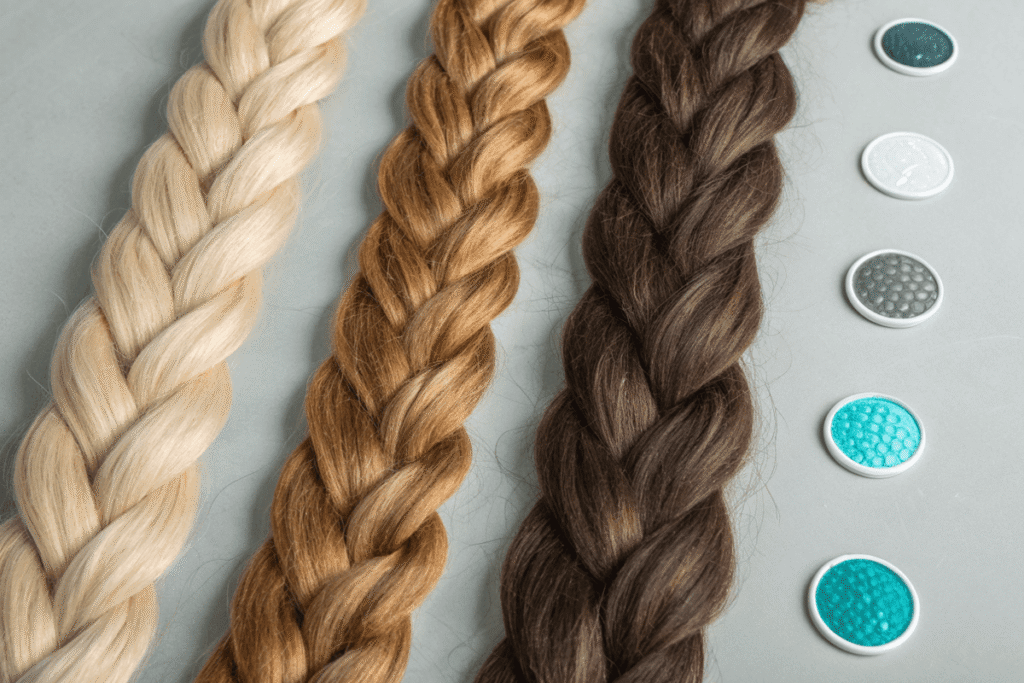
- Natural daily-wear realism: Kanekalon or Toyokalon in ultrafine denier with matte finish. Add silicone micro-coatings only as needed to aid detangling without increasing shine.
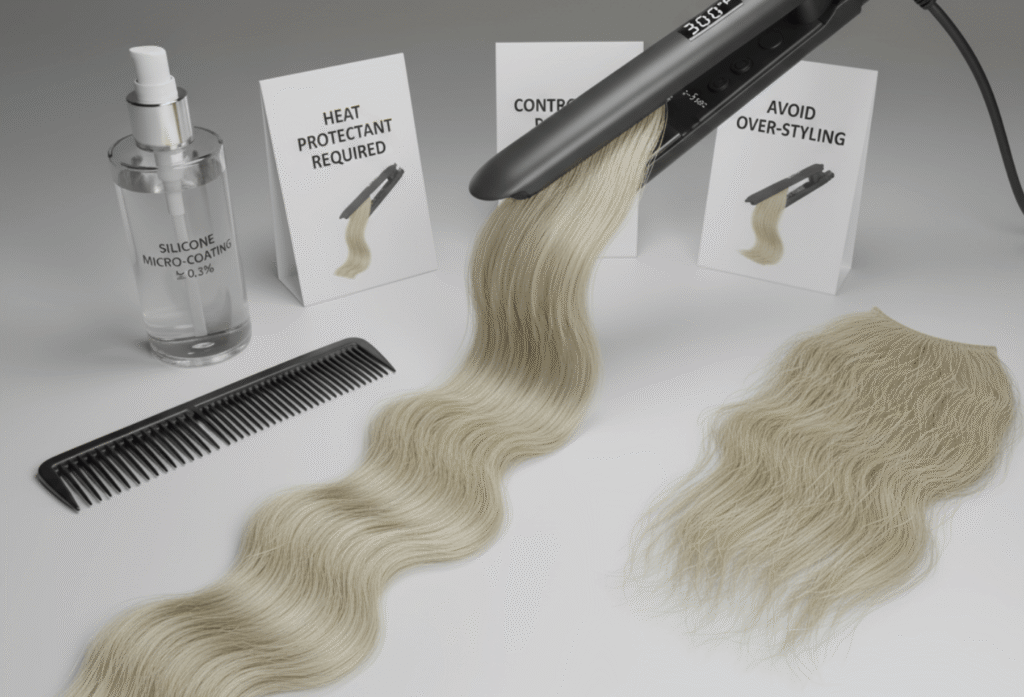
- Heat restyle capability: Futura-class heat-resistant fibers for 250–350°F tool use. Communicate strict end-user care guidelines to protect lifespan.
- Textured collections (coils, kinks, body wave): Toyokalon or Kanekalon engineered for curl memory; steam-set processing for durable patterns that outperform human hair in humidity.
- Fashion-forward, short-lifespan looks (festival, costume, high-chroma colors): PET-heavy blends with matte additives; prioritize color vibrancy and price.
Processing and finish considerations
- Steam processing: Best for setting curls without excessive thermal damage; preserves fiber integrity, especially on modacrylics.
- Matte finish technologies: Modern low-gloss masterbatches or surface etching reduce artificial shine, critical for HD lace-front realism.
- Silicone coatings: Light, durable coatings improve slip and reduce friction; heavy coatings look “plastic” and wear off unevenly.
Which fibers offer the best heat resistance and movement for my clientele?
Heat resistance tiers (typical, verify with supplier spec)
- Standard modacrylic (Kanekalon/Toyokalon variants): 180–230°F safe zone for touch-ups only; not for frequent restyling.
- Heat-friendly modacrylic/PET blends (Futura-class): 250–350°F with controlled passes and heat protectant; 3–5 seconds per section.
- High-temp labeled blends (“Heat-Friendly”/“Heat-Resistant”): Some claim up to 380–410°F; in practice, run lower to avoid polish loss and kinking.
Movement, drape, and curl memory
- Best natural movement: Fine-denier Kanekalon/Toyokalon with matte finish. The lower linear density and surface friction profile mimic human-hair swing.
- Best curl retention under humidity: Textured modacrylics engineered for curl memory; Toyokalon excels for soft waves and silkier curls, Kanekalon for defined texture sets.
- Heat-friendly trade-offs: More thermoplastic content improves restyling but can increase tangling and fiber fatigue over time—especially at the nape and shoulders.
Matching client segments
- Medical wear and daily professionals: Prioritize low shine, soft hand, and easy maintenance—Kanekalon/Toyokalon first, heat-friendly only in limited SKUs.
- Salon-driven restyle market: Futura-class fibers for moderate heat restyling; include clear care cards and warranty boundaries to control returns.
- Textured hair consumers: Modacrylic fibers with engineered curl memory; steam-set patterns with anti-frizz finishing for high-humidity regions.
Table: Heat tolerance vs. movement and care implications
| Fiber class | Typical heat range (°F) | Movement/drape | Tangling risk | Care emphasis |
|---|---|---|---|---|
| Kanekalon modacrylic | 180–230 | Very natural, low sheen | Low–Medium | Low heat only; gentle detangling |
| Toyokalon modacrylic | 180–230 | Soft, silky, low sheen | Low–Medium | Maintain curl sets; avoid hot tools |
| Futura / heat-friendly blend | 250–350 (max 380) | Good, slightly stiffer | Medium–High | Heat protectant; frequent detangling |
| PET-forward blends | 230–300 | Stiffer, higher sheen | Medium | Matte finishes; short style lengths |
How do I match fiber denier and luster to my brand’s look and feel?
In my experience, denier and luster determine 70% of perceived realism on first glance. Getting these wrong is why otherwise well-constructed wigs still read “synthetic.”
Denier selection (by style and audience)
- Ultrafine (0.03–0.05 dpf equivalent): Most human-hair-like; reduces visible shine and frizz; ideal for lace-front, parting areas, and premium lines.
- Fine (0.05–0.07 dpf): Balanced realism and durability for mainstream daily wear.
- Standard (0.07–0.09+ dpf): Durable, budget lines, short/fashion styles; can appear “chunky” if used densely.
Tip: Blend deniers—ultrafine at hairline and part, fine in top layers, standard in underlayers—to optimize cost without sacrificing realism where it matters most.
Luster management
- Choose matte-finish masterbatches for Kanekalon/Toyokalon to keep gloss low.
- Limit silicone to micro-coatings; heavy coats increase glare and wash off unevenly, causing patchy shine.
- Color impacts luster: very dark colors reflect more; specify extra-matte for 1B/2 shades and photo-facing SKUs.
- Texture reduces shine: yaki/perm yaki textures mask gloss and enhance grip for updos.
Construction alignment
- Ventilation density: Lower at hairline and part to avoid bulbous look with fine denier fibers.
- Knotting: Use single knots with bleached effect on lace fronts; double knots for durability in back zones.
- Length effects: Longer lengths magnify tangling—spec slightly finer denier and better coatings at 20”+ to maintain movement.
Table: Denier–luster pairing by brand positioning
| Brand positioning | Denier (front/top/back) | Luster target | Notes |
|---|---|---|---|
| Premium daily realism | Ultra / Fine / Fine | Matte to low-matte | Kanekalon/Toyokalon; matte batch; micro-silicone |
| Heat-styling lifestyle | Fine / Fine / Standard | Low-matte | Futura-class; strict care card; anti-tangle cap |
| Fashion/budget | Standard / Standard / Standard | Low to medium | PET blends; short styles; color vibrancy focus |
What fiber suppliers can provide consistent batches for bulk orders?
Consistency wins or loses your repeat business. Beyond “Japanese fiber” labels, you need mills with documented controls.
What I look for in a fiber supplier
- Batch traceability: Lot codes tied to polymer recipe, pigment masterbatch, and finish chemistry.
- Mechanical specs per lot: Denier tolerance, tenacity (cN/dtex), elongation at break, crimp parameters, and moisture regain data.
- Thermal profile: DSC/softening point and approved tool temperature ranges for heat-friendly lines.
- Color management: Delta E tolerances (≤1.0–1.5 for core shades), UV fade testing, and colorfastness to washing/sweat.
- Surface finish QC: Coefficient of friction targets; verification of matte index and silicone weight add-on.
- Compliance: Flame-retardancy certificates for modacrylics; REACH/Prop 65 where relevant.
Supplier map and categories
- Japan-origin modacrylic leaders: Producers of Kanekalon and Toyokalon grades used in premium daily-wear wigs. Expect higher MOQs and longer lead times but best-in-class handfeel, curl memory, and low sheen.
- Heat-friendly specialists (Asia): Mills producing Futura-class blends with balanced PET/modacrylic ratios and stable heat windows; ask for real tool-testing data, not brochure temps.
- Color-focused PET/matte blend makers (China/Korea): Strong on bright fashion tones and cost control; specify matte agents and denier tightness to avoid plastic shine.
Vetting and scaling practices
- Golden sample + pilot run: Approve a golden sample, then a 200–500 unit pilot before full PO. Measure luster/gloss units, denier distribution, and tangle index post 20-cycle comb test.
- Incoming QC: Use standardized swatches and measure Delta E; run a 10-minute 300°F hot-comb test on heat-friendly batches to check softening/kink thresholds.
- Vendor scorecards: Track claim rate, lot-to-lot color deviation, tensile variance, and lead-time adherence. Reward with rolling forecasts to secure priority.
Shortlist criteria you can send to vendors
- Fiber: Modacrylic (Kanekalon/Toyokalon or equivalent), ultrafine/fine denier, matte finish, micro-silicone ≤0.3% add-on.
- Heat-friendly line: Futura-class or equivalent, tool temp 250–320°F validated; provide DSC curve and recommended user instructions.
- Textured SKUs: Curl memory retention ≥90% after 24h humidity chamber (65% RH, 25°C).
- Colorfastness: Grade 4–5 to washing/sweat; UV exposure ΔE ≤1.5 after 24h.
- Documentation: Lot traceability, COA per batch, flame-retardancy and REACH compliance.
Final buyer notes from my experience
- Kanekalon is my baseline for natural daily wear; Toyokalon when I want softer hand and silky curl sets.
- Futura and similar heat-friendly blends sell well—but they need stricter end-user care to avoid tangling complaints and short lifespans.
- Modacrylic remains the backbone of premium synthetics—lightweight, inherently flame-resistant, holds color/curl, and scales well.
- Ultrafine denier and matte finishes are the fastest path to “is that human hair?” reactions—especially on lace fronts and parts.
- Silicone and coatings are tools, not crutches. Keep them light and consistent to avoid shine creep and uneven wear.
If you want, I can turn this into a spec checklist for your next RFQ and recommend mills that align with your MOQ and color library.