
I spend a lot of time in factories, vendor showrooms, and QA labs across China, India, and Southeast Asia, and I know how costly a mislabelled blend can be for a wig brand. In my experience, catching synthetic contamination early—at sample stage or incoming QC—saves thousands in returns and protects your reputation with salon partners. I’m going to walk you through the fast field tests I use, what visual cues actually matter, and the paperwork you should demand on bulk buys.
To identify 100% human hair versus blended fibers, combine safe field tests (heat tolerance, burn, cuticle, and root-direction) with disciplined visual checks (sheen, fiber uniformity, taper, movement) and verify with third‑party lab reports (FTIR, TGA, ash content). Human hair tolerates hot tools, smolders to crushable ash with a keratin smell, shows visible cuticles and natural taper, and accepts oxidative dyes—while blends melt/bead, look glassy and uniform, and resist permanent color. Always request composition certificates, chain-of-custody details, and random-lot test data from vendors.
Below I’ll cover the exact tests I perform safely, the product cues I train QC teams to spot, the lab proofs that settle disputes, and the sourcing guardrails that keep you away from mislabeled hair online.
What burn, cuticle, and root-direction tests can I perform safely?
Before you start: isolate a small sample from the nape or weft interior and keep water and a metal tray nearby. For bulk QC, I standardize with 10–15 strands per test from three points of the wig.
1) Heat tolerance check (no flame)
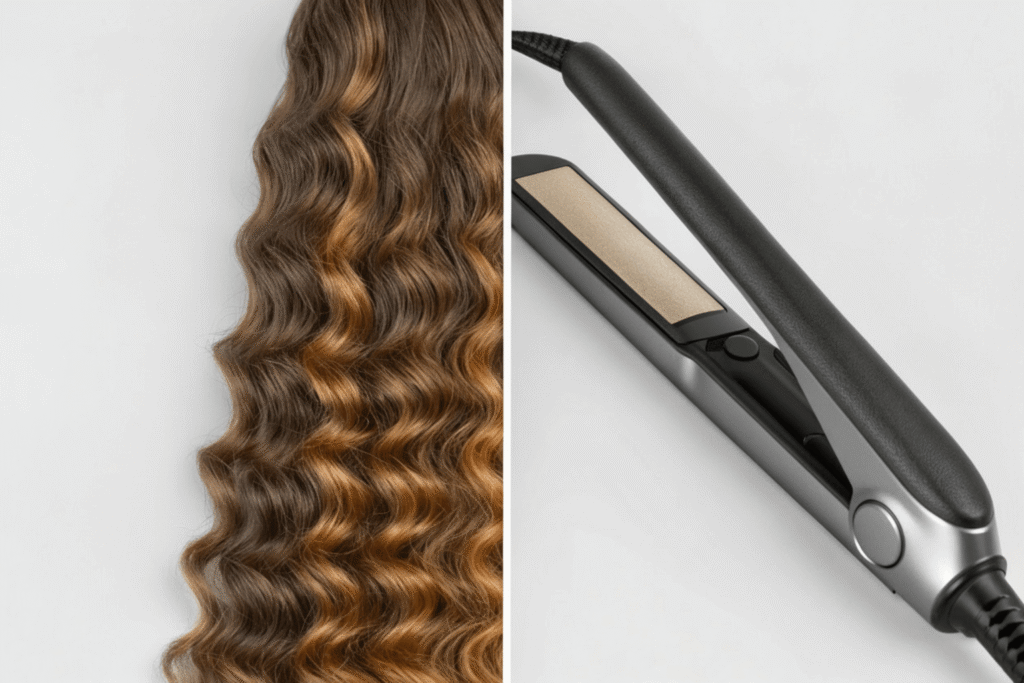
- Method: Use a flat iron at 150–170°C (300–340°F), 3–5 seconds.
- Human hair: Gradual response—shape changes without fusing; no plastic odor. It can be curled or straightened and won’t melt.
- Blends/synthetics: Rapid deformation, sticking to plates, or bead/fuse even at modest heat; chemical/plastic smell.
2) Micro-burn test (controlled)
- Method: Hold 3–5 strands with tweezers over a ceramic dish; touch the tip with a flame then remove.
- Human hair: Smolders, smells like burning keratin, forms soft ash that crushes to powder between fingers.
- Blends: Mixed behavior—some ash plus hard beads; noticeable chemical odor.
- Full synthetic: Melts into hard, glossy beads; sharp chemical smell.
- Safety: Ventilated area, flame-resistant surface, minimal sample.
3) Cuticle inspection under raking light
- Method: Lay a few strands on black card under a bright side light or phone flashlight; use 10–30× loupe if available.
- Human hair: Visible, irregular cuticle scales; strand diameter varies along length; natural matte-to-satin sheen.
- Blends: Glassy, uniform surfaces with little to no visible cuticle; overly consistent diameter from root to tip.
4) Root-direction alignment (Remy check)
- Method: Pinch a small bundle; slide fingers from root to tip and then tip to root.
- Human hair (properly aligned): Smooth root→tip; rough drag tip→root. Taper increases toward tips.
- Inverted/mixed: Rough both ways; elevated tangle risk.
- Note: Blended fibers often feel uniformly smooth both directions due to coating.
5) Strand float and wetting behavior
- Method: Place a few degreased strands in a glass of room-temperature water.
- Human hair: Initially suspend or sink slowly as it absorbs water; surface wets readily.
- Many synthetics: Float or sink abruptly and repel water; droplets bead on surface.
6) Color and dye responsiveness
- Method: Apply 10 vol developer with a dab of oxidative dye to a small sample for 10–15 minutes.
- Human hair: Oxidizes/tones predictably; slight lift or tone shift.
- Blends: Little to no permanent shift; may only accept fabric dyes or stain superficially.
7) Ends, breakage, and friction
- Human hair: Natural split/fray at tips; when rubbed on cotton, builds mild frizz with less static.
- Blends: Snap cleanly; ends look uniformly blunt; higher static and a faint “squeak” under friction.
How do I spot synthetic sheen and uniform fiber thickness in my product checks?
Train your eye and your team with consistent lighting and reference samples.
Visual red flags in seconds
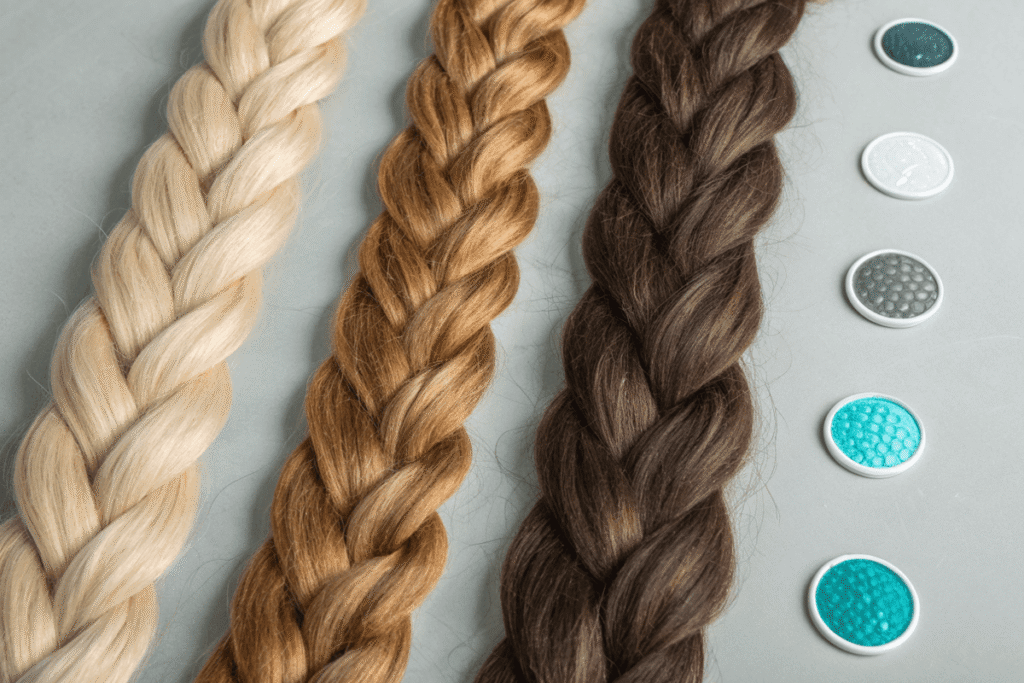
- Sheen: Human hair has a soft, directional luster; synthetics show a glassy, uniform shine that blooms under LED/flash.
- Uniform diameter: Human hair tapers; blends look “pencil-thick” end to end with minimal taper.
- Movement and drape: Human hair has weight and slight randomness; blends show springy memory and bounce-back that looks too perfect.
- Color cast: Human hair holds complex undertones; synthetics often have a flat, single-tone cast.
Quick tactile cues
- Weight-in-hand: Human hair feels denser for the same volume.
- Slip and snag: Human hair glides with tiny, natural micro-snags; blends feel uniformly slick until they grab suddenly.
Field comparison table
| Checkpoint | 100% Human Hair | Blended/Synthetic Indicators |
|---|---|---|
| Sheen under LED | Satin, directional | Glassy, uniform, mirror-like |
| Diameter along strand | Noticeable taper | Same thickness root→tip |
| Drape/motion | Natural, weighted fall | Springy, “memory” bounce |
| Ends | Split/frayed variance | Blunt, identical ends |
| Static/friction | Lower static, natural frizz | Higher static, plasticky squeak |
Which lab reports or vendor proofs should I request for bulk buys?
For orders above sample size, get composition proven independently. In my projects, I standardize vendor compliance to the following package:
Third‑party analytical tests
- FTIR (Fourier-transform infrared spectroscopy): Confirms polymer presence (e.g., PET, PVC) vs keratin profile. Ask for spectra overlay and lab notes.
- TGA (Thermogravimetric analysis): Distinguishes organic keratin decomposition curves from synthetic polymers; flags blend ratios.
- DSC (Differential scanning calorimetry): Detects melting transitions typical of synthetics.
- Ash content and residue morphology: Human hair leaves fragile mineral ash; synthetics leave hard beads—quantifiable at scale.
- Microscopy report: Photomicrographs showing cuticle scales, cross-section variability, and diameter distribution.
Documentation and lot control
- Certificate of composition: Declares 100% human hair, hair origin, processing (steam only vs acid bath), and any coatings.
- Lot-specific test certificates: Tie lab results to your PO number, production date, and carton IDs.
- Chain-of-custody summary: Collection region (India tonsure, SE Asia temple/door-to-door, Eastern Europe ponytail), factory consolidation points, and mixing controls.
- REACH/RoHS/Restricted substances: Especially if fibers could contain PVC or phthalates in blends; also residual formaldehyde limits from processing.
- Heat test declaration: Vendor states safe styling temperature range; human hair should handle 180–200°C with no melting.
What good vendor proof looks like
- Independent lab name and contact, not an in-house stamp.
- Random sampling plan: e.g., ANSI/ASQ Z1.4 AQL with carton dispersion.
- Clear, readable spectra and micrographs, not just “PASS/FAIL.”
How do I avoid mislabeled blends when sourcing online?
This is where margins are won or lost. I apply a layered risk-control approach:
Vendor screening and contracts
- Require pre‑shipment third‑party FTIR/TGA on every lot above X value, paid by vendor.
- Include composition warranty (100% human hair, tolerance 0% synthetic) with remedies: refund + destruction or replacement and freight covered.
- Mandate retention samples: Factory keeps sealed retainers; you keep matched counterparts for dispute testing.
Product specifications that reduce risk
- Specify: “Remy, aligned cuticle, no acid-bath stripping, steam texture only, no silicone overcoats heavier than X% by weight.” Heavy silicone can mask synthetic feel.
- Define measurable QC: diameter distribution (e.g., CV% target), minimum taper profile, moisture regain range, acceptable weight tolerance.
- Require root-direction bundling and ponytail integrity for higher grades; single-donor claims must be evidenced with intact ponytail presentation before wefting.
Sampling and incoming QC
- Never approve on photos alone. Order 2–3 sample units from separate “lots” and test all: heat, micro-burn, cuticle, float, dye patch.
- On receipt of bulk, open multiple cartons and pull a statistically valid sample. Document with video, keep chain-of-custody, and test immediately.
Price and marketing red flags
- Unrealistic price for grade claimed (e.g., “Euro virgin single-donor 22–26” at commodity pricing).
- Vague origin (e.g., “Asian mixed”) and no processing disclosure.
- Overuse of “heat-friendly synthetic” disclaimers buried in listings for “human hair.”
Training your team
- Provide a reference ring: verified human hair vs known synthetics for side-by-side comparisons.
- Standardize the quick nine-point checklist from my field notes:
1) Heat tool response
2) Burn/ash behavior
3) Cuticle visibility
4) Root-direction feel
5) Sheen under LED
6) Diameter/taper check
7) Float/wetting
8) Ends/breakage
9) Static/friction
Quick reference: test outcomes
| Test | Human Hair Expected | Blend/Synthetic Expected |
|---|---|---|
| Heat styling | No melting, style holds | Deforms/melts/beads |
| Burn | Smolders, keratin smell, crushable ash | Plastic odor, hard beads |
| Cuticle | Visible scales, irregularity | Smooth/glassy, no scales |
| Taper | Root thicker, tip thinner | Uniform thickness |
| Dye/oxidation | Accepts permanent tones | Resists or stains only |
| Float/wet | Sinks slowly, absorbs | Floats/repels, abrupt sink |
By combining safe, fast field tests with disciplined visual/tactile checks and insisting on third‑party lab verification, you can confidently separate 100% human hair from blended fibers before those wigs reach your customers. When in doubt, let the data decide—FTIR and TGA don’t argue, they just reveal what’s really in the fiber.