
I’ve tested, worn, colored, and cut more human hair wigs than I can count—on photoshoots, in sweaty travel days, and through the “oops” moments of over-bleaching knots. If you’ve ever wondered why one wig stays silky for months while another turns into a tangly cloud after the second wash, the answer almost always comes down to one thing: cuticle direction. I’ve been there, I’ve wasted money learning this, and I want you (and your customers) to avoid the same mistakes.
Remy hair has intact, aligned cuticles from root to tip; non-Remy has mixed or stripped cuticles. That single structural difference impacts tangling, shedding, color uptake, heat styling, longevity, and price. Remy typically tangles less, sheds less, and lasts longer; non-Remy often looks great out of the box (thanks to acid and silicone processing) but degrades faster once the coating washes off.
In the sections below, I’ll break down how cuticle direction affects matting and lifespan, how acid processing can hide non-Remy issues in lower-cost wigs, whether Remy is worth the premium for your target customers and brand positioning, and how to verify Remy quality with pre-shipment inspections so you’re not gambling on your inventory.
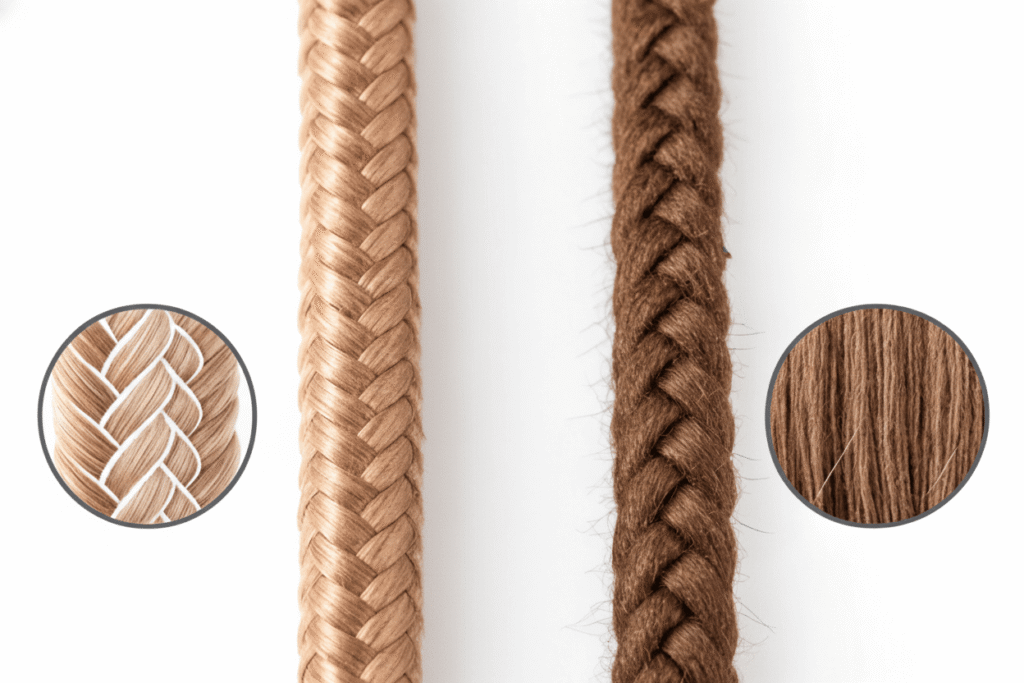
How does cuticle direction affect tangling and longevity in my orders?
The core difference: aligned vs mixed cuticles
- Remy human hair wigs are made with cuticles intact and aligned in the same direction from root to tip. This alignment mimics natural hair growth.
- Non-Remy human hair wigs often have mixed hair sources with cuticles in different directions or removed entirely.
Why alignment matters (the “Velcro” effect)
- With Remy, cuticles lay like shingles on a roof—scales glide past each other, reducing friction. Result: less tangling, less matting, fewer knots.
- With non-Remy, opposing cuticles catch like Velcro. Misaligned or stripped cuticles increase friction, causing tangling and shedding—especially after washing.
Real-world results I see in wear-testing
- Tangling: Remy tangles less because aligned cuticles reduce friction and matting. I can do gym-to-commute-to-dinner with a quick detangle. Non-Remy needs frequent brushing and still mats at the nape.
- Shedding: Non-Remy sheds more because stripped/rough cuticles and harsh processing weaken the hair and wefts.
- Longevity: Remy wigs typically have higher durability and retain a smoother, more natural feel over time—think months longer of presentable wear.
- Styling predictability: Remy accepts color and heat styling more consistently. Non-Remy may show uneven color uptake and heat response due to altered structure.
Quick Comparison Table: Cuticle Direction Impact
| Factor | Remy (Aligned Cuticles) | Non-Remy (Mixed/Stripped) |
|---|---|---|
| Tangling/Matting | Low | High |
| Shedding | Low–Moderate | Moderate–High |
| Longevity | 6–12+ months with proper wig care | 3–6 months; can degrade quickly |
| Color/Heat Response | Predictable | Inconsistent |
| Feel Over Time | Stays soft | Gets dry/brittle after washes |
Why might acid processing hide non-Remy issues in lower-cost wigs I see?
What manufacturers do to “fix” non-Remy
- Non-Remy hair is more prone to tangling and shedding due to misaligned or stripped cuticles, so factories often use heavy chemical processing:
- Acid baths strip cuticles to remove the rough, catching edges.
- Silicone coating adds instant slip and shine so the hair feels silky in hand.
The catch: it’s temporary
- Non-Remy wigs often undergo more acid baths and silicone coating to mask roughness, which wears off with washing. After 2–5 washes:
- Shine and softness drop rapidly.
- Fibers feel drier and stiffer.
- Tangling increases because there’s no cuticle left to protect the hair shaft.
How this shows up in customer reviews
- “It was amazing at first, then turned into a bird’s nest.” I see this pattern consistently with budget non-Remy. The first-wash glow fades fast when the silicone layer rinses away, revealing the damaged core.
Is Remy worth the premium for my target customers and brand positioning?
The business case: who benefits from Remy most
- For daily wear and longevity, Remy is preferred; for occasional use or short-term styling, non-Remy can be sufficient.
- Remy wigs usually cost more due to stricter sourcing and sorting, but they help you:
- Reduce returns related to tangling/shedding.
- Maintain consistent color results (critical if you offer custom tones).
- Build trust with stylists and repeat buyers who heat style often.
Positioning by customer segment
- Value/Budget shoppers: Non-Remy offers an entry point. Be transparent—position as “occasion wear” or “short-term styling.”
- Everyday professionals, influencers, bridal clients: Remy aligns with expectations—smoother feel after multiple washes, reliable styling, longer lifespan.
- Brand reputation: If your brand promises premium quality or salon-level results, Remy underpins that promise. Non-Remy can live in a clearly labeled “budget” line to protect your core brand equity.
My rule of thumb
- If your typical customer asks about longevity, density, and heat styling—and expects low shedding/tangling—Remy is worth the premium.
- If your customer prioritizes upfront price and occasional wear, a transparent non-Remy option can expand your range without hurting your brand (just don’t overpromise).

How can I verify Remy quality with pre-shipment inspections?
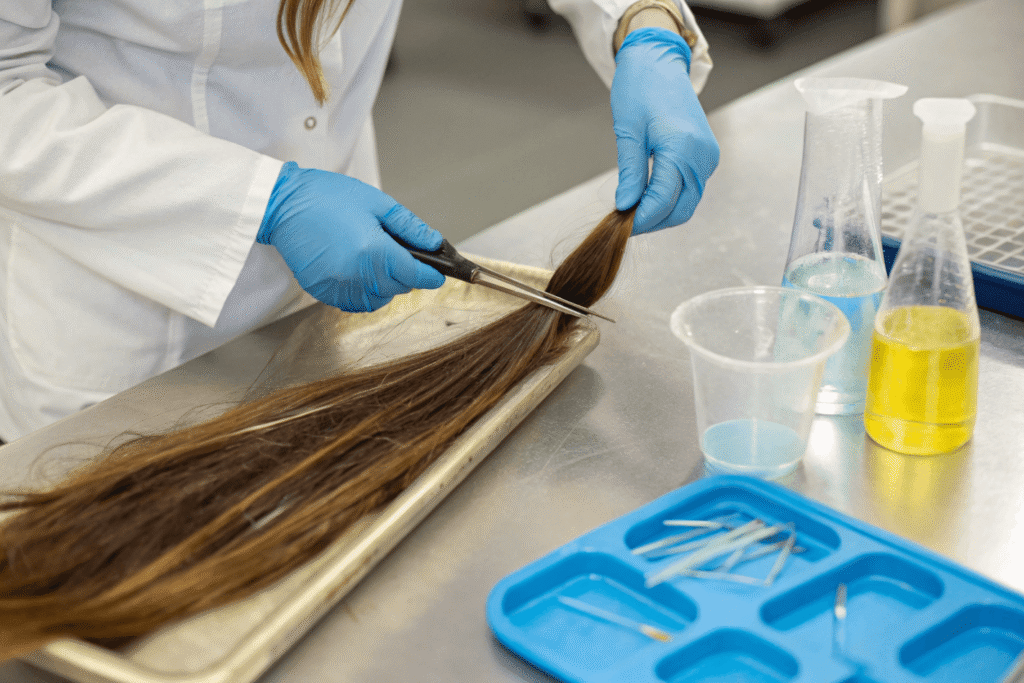
Here’s how I audit suppliers before a shipment leaves the factory. These steps catch 80–90% of non-Remy mislabeling and over-processing.
Cuticle direction tests (the must-do)
- Root–tip alignment check: Rubber-band bundles at both ends, then flip one end. Brush downwards only. If tangling/spiking increases when flipped, it’s likely aligned (Remy). If both directions feel equal or rough, beware.
- Backcomb test on a few strands: Slide fingers from tip to root. Remy will feel noticeably rougher going upward (because intact cuticles face down). If it feels equally smooth both ways, the cuticle may be stripped.
Water and wash test (catches silicone masking)
- Warm-water rinse + mild shampoo: Observe if the ultra-silky feel drops immediately. Excess slip, cloudy runoff, or a “squeaky” feel after one wash can indicate silicone-heavy, acid-processed hair.
- Dry-down behavior: After air-drying, Remy keeps a cohesive, soft drape; non-Remy frizzes quickly and mats at friction points (nape/ears).
Color and heat spot tests (structure integrity)
- 10 vol developer + shampoo strand test (5–10 minutes): Remy lifts evenly with minimal roughness. Over-processed non-Remy can feel gummy or lift patchy.
- Curl test at 320–350°F (160–177°C): Remy forms a consistent curl pattern and brushes out smoothly. Non-Remy may smell more chemical, set unevenly, or lose curl quickly.
Fiber/Weft inspection
- Lace/frontline density: Even knotting and minimal short flyaways suggest better sorting. Excess short filler hairs often signal mixed sources.
- Shed test: Gentle tug along weft; more than a few strands per pass indicates weaker construction or over-processing.
- Oxidation check: Under bright light, look for unnatural plastic-like shine or shade inconsistencies across the bundle—signs of heavy silicone or mixed-source hair.
Documentation and sampling protocol
- Specify Remy requirements in POs: “Cuticles intact and aligned; no acid cuticle stripping; minimal silicone finishing; consistent root-to-tip direction; max 10% short hairs.”
- Random sampling: Inspect at least 10% of units across lengths/densities. Pull 2–3 lace front wig units, 2 closures/frontals, and 2 bundles per batch length.
- Keep retention samples: Archive one unit per batch for future disputes.

Comparison Table
| Feature | Remy Human Hair | Non-Remy Human Hair |
|---|---|---|
| Cuticle Alignment | Intact, aligned root-to-tip | Mixed or stripped |
| Tangling & Matting | Low | High |
| Shedding | Low–Moderate | Moderate–High |
| Lifespan | 6–12+ months (with good wig care) | 3–6 months |
| Styling & Color | Predictable, holds style | Inconsistent, risk of damage |
| Processing | Minimal, gentle | Acid baths + silicone coating |
| Feel After Washing | Remains soft, natural | Gets dry/stiff as coating fades |
| Price & Positioning | Premium, daily wear & pro styling | Budget, occasional wear |
Conclusion
If you’ve ever asked “which wig is better,” the honest answer is: it depends on usage and brand promise. Remy wins on tangling, shedding, styling consistency, and longevity because the cuticles are intact and aligned. Non-Remy can look glossy out of the box thanks to acid and silicone—but that finish is temporary. For a brand aiming at repeat customers, daily wearers, and heat/color stylists, Remy is worth the premium. If you carry non-Remy, label it clearly for short-term or occasional wear, and tighten your pre-shipment inspections to protect your customer experience—and your reputation.
Optional FAQ
Does Remy always mean virgin?
No. “Remy” refers to cuticle alignment, not whether the hair is unprocessed. You can have colored Remy hair and still enjoy the benefits of alignment.
Will HD lace or lace front wig construction change tangling?
Lace type doesn’t change fiber quality, but HD lace is more delicate and can snag if the hair tangles. Better hair quality (Remy) makes maintaining HD lace units easier.
Can non-Remy ever be “good enough”?
Yes—for events, backup units, or budget-conscious buyers who won’t heat style often. Set expectations around lifespan and care.
Best care tip to extend longevity?
Gentle cleansing, regular conditioning, low-heat styling, and protecting high-friction zones (nape/shoulders) will extend both Remy and non-Remy life—Remy just benefits more.