
When I bought my first human hair wig, I felt totally overwhelmed by lengths, partings, and densities. I’d try on a stunning style in photos, only to find it made my cheeks look fuller or my jawline sharper. After fitting dozens of caps, tweaking partings, and getting customized trims, I learned that the magic isn’t just the wig—it’s how the cut, length, and volume balance your face shape.
The best human hair wig for your face shape balances proportions with the right length, parting, layering, curl pattern, and fringe. Round faces benefit from long layers and crown height; oval faces suit most styles; square faces soften with waves and side parts; heart faces look balanced with chin-length cuts and side-swept bangs; long/oblong faces need width and bangs; and diamond faces shine with fullness at the temples and chin. Lace-fronts, correct density, proper cap size, and simple customizations (trimming and parting adjustments) make the style look natural and tailored.
In this guide, I’ll walk you through how I match lengths and partings to each face shape, how layering and density change the balance, how curls or waves soften angles, and which fringe styles frame features naturally. I’ll also share practical fit tips, easy customizations, and beginner-safe ideas you can use right away.
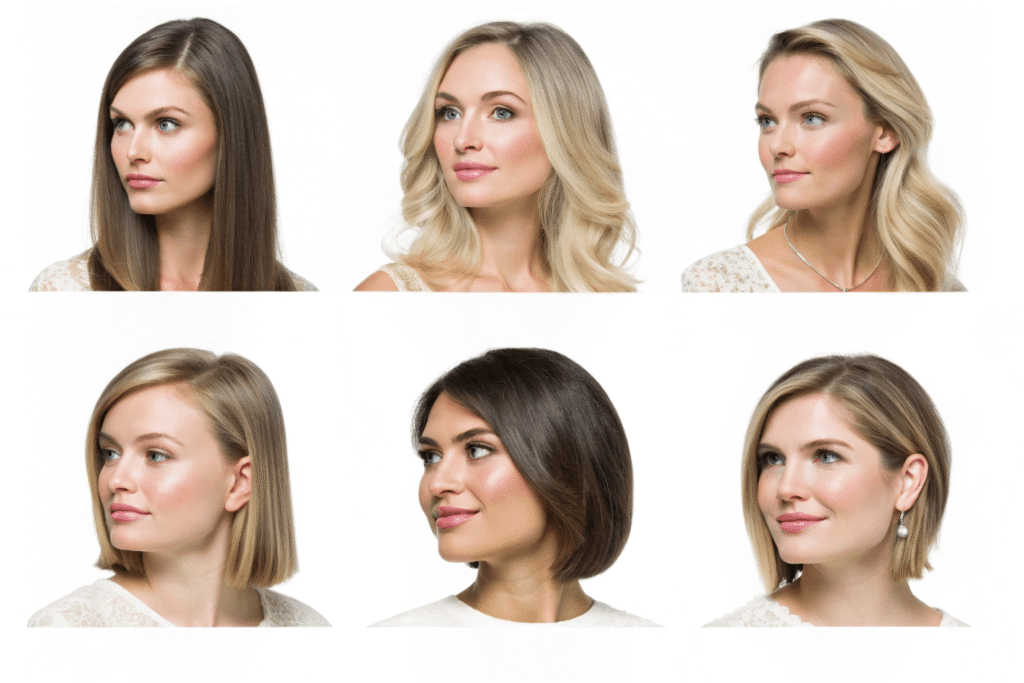
Which lengths and partings complement oval, round, or heart shapes?
Here’s what I’ve learned after fitting clients (and myself) across the most common face shapes. Use these as starting points, then fine-tune with parting and minor trims.
Oval Face: most versatile, keep it balanced
- Why it works: Oval faces have balanced proportions, so most styles flatter.
- Lengths I recommend:
- Collarbone to mid-back for everyday versatility.
- Short bobs work too—just keep some softness to avoid harsh lines.
- Partings:
- Middle or soft off-center part keeps symmetry.
- Side parts add volume if your hair density is lighter.
- Bonus tip: Avoid super heavy, long, blunt cuts without layers—they can drag the face downward.
Round Face: add vertical length, avoid cheek bulk
- Goal: Create the illusion of length and slim the cheeks.
- Lengths that flatter:
- Shoulder length and longer (lob to long layers).
- Layers starting below the cheekbone to avoid widening.
- Partings:
- Deep side part or off-center to break symmetry.
- Avoid center parts if they emphasize fullness at the cheeks.
- Style cues:
- Height at the crown adds vertical length.
- Face-framing layers that angle past the jaw are your friend.
Heart Face: balance the wider forehead and narrower chin
- Goal: Add volume below the jaw and soften the forehead area.
- Lengths:
- Chin-length to shoulder-length bobs and lobs.
- Long hair with soft layers focused around the chin.
- Partings:
- Side part to soften the forehead and draw attention to eyes/cheekbones.
- Style cues:
- Side-swept bangs or light curtain bangs.
- Avoid excessive crown volume that widens the upper face.
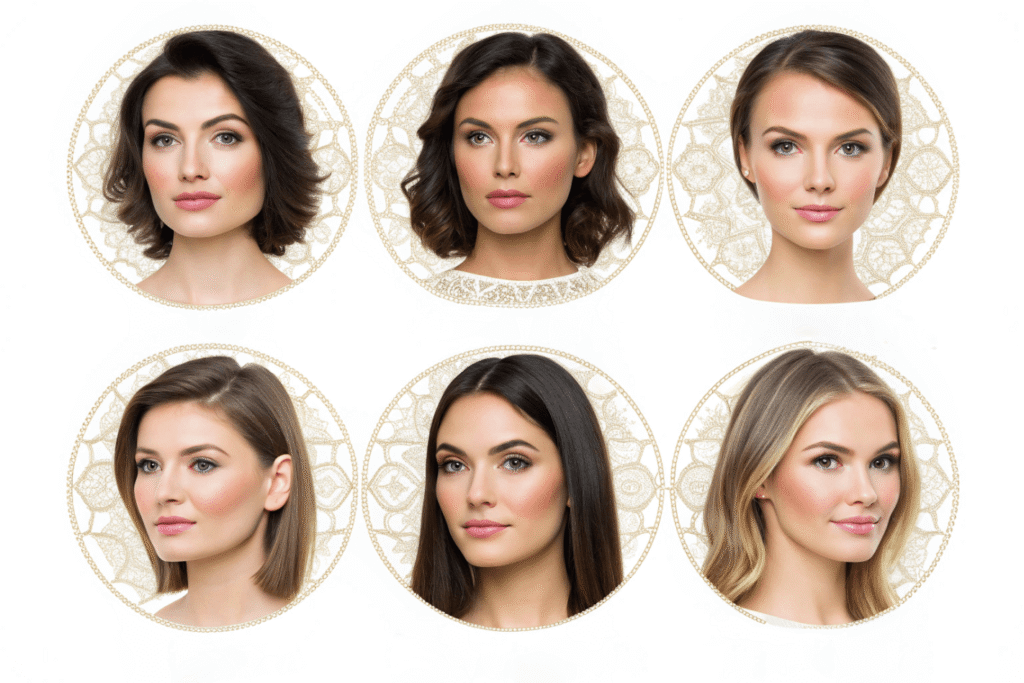
Quick cheatsheet: lengths and partings by face shape
| Face Shape | Complementary Lengths | Best Partings | What to Avoid |
|---|---|---|---|
| Oval | Collarbone–mid-back; soft bobs | Middle or off-center | Overly heavy, blunt lengths with no layers |
| Round | Shoulder length+; long layers | Deep side or off-center | Short, round bobs; volume at cheeks |
| Heart | Chin–shoulder; volume at jaw | Side part | Big crown height; severe middle part if forehead is wide |
| Square | Just past jaw to long | Side part | Blunt jaw-length cuts |
| Long/Oblong | Shoulder; medium lengths | Middle or soft side | Super long, sleek, no bangs |
| Diamond | Chin-length bobs/lobs | Side or soft middle | Fullness at cheekbones only |
How do layering and density affect balance for my features?
Layering and density are the secret levers that change how a wig reads on your face. I’ve seen the exact same length look flattering or heavy depending on where the layers fall and how dense the hair is.
Layering: where the movement matters
- Long layers (starting below the cheekbone)
- Best for: Round and heart faces to avoid widening mid-face.
- Effect: Streamlines and elongates, adds flow without bulk.
- Face-framing layers around the jaw/chin
- Best for: Heart and diamond faces to add softness at the chin.
- Effect: Balances a narrow chin or strong cheekbones.
- Soft, cascading layers for square faces
- Effect: Breaks up hard angles and jaw emphasis.
- Minimal layers (sleek looks)
- Best for: Oval faces that can carry balanced, simple silhouettes.
- Note: Add micro-layering around the front to avoid a blocky look.
Density: match volume to proportions
- Light to medium density (120–130%)
- Natural, beginner-friendly, reduces bulk around cheeks.
- Great for round and heart faces.
- Medium to full density (130–150%)
- Allows waves/curls to hold shape and gives volume where needed.
- Useful for square, long/oblong, and diamond faces if placed strategically.
- High density (150%+)
- Dramatic looks or glam curls; can overwhelm small faces.
- Use carefully—concentrate fullness below the jaw or at temples rather than cheeks.
Where to place volume
- Crown height
- + Round faces: adds vertical length.
- – Heart faces: can widen the upper face; keep it minimal.
- Cheek area
- + Long/oblong faces: adds width to balance length.
- – Round/heart faces: avoid bulk here to prevent widening.
- Jawline/chin
- + Heart and diamond faces: restores balance and softness.
- – Square faces: choose layered softness, not blunt jaw emphasis.
Table: how layering and density change face balance
| Face Shape | Ideal Layering | Density Sweet Spot | Volume Placement |
|---|---|---|---|
| Round | Long layers below cheekbone | Light–Medium | Crown height, length below jaw |
| Oval | Soft or minimal layers | Light–Medium | Even, avoid heavy blunt ends |
| Square | Soft cascading layers | Medium | Sides and ends, not at the jawline edge |
| Heart | Chin-focused face-framing | Light–Medium | Below jaw/chin, light at crown |
| Long/Oblong | Layers that add side fullness | Medium | Temples/cheeks to add width |
| Diamond | Temple and chin framing | Medium | Temples, chin; avoid cheekbone bulk |
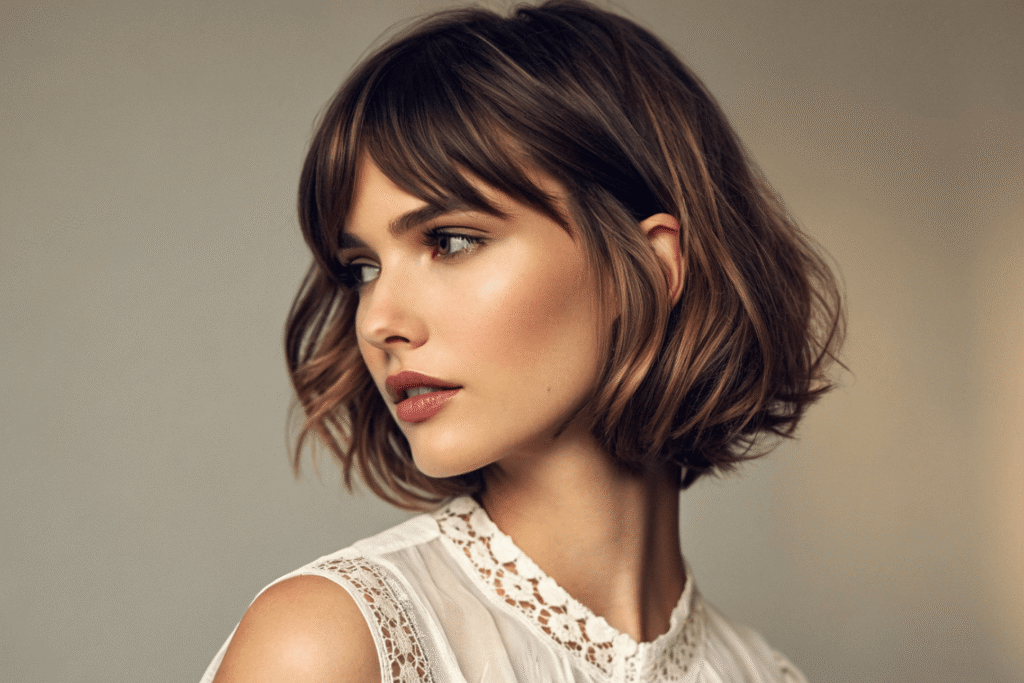
Can curls or waves soften angles for my square face?
Yes—texture is your best friend. Whenever I style wigs for square faces, I reach for soft waves or loose curls to round out the strong lines.
Why texture works on square faces
- Softens a pronounced jawline by introducing curves.
- Adds movement that breaks up boxy outlines.
- Draws the eye upward and inward, toward the eyes and cheekbones.
Curl and wave patterns I recommend
- Loose beach waves (2A–2B)
- Gentle S-waves that relax angularity without adding too much volume at the cheeks.
- Polished bends or “blowout waves”
- Smooth with curved ends that cup the jaw instead of hitting it bluntly.
- Soft curls (2C–3A)
- Add fullness across the mid-lengths and ends; keep layers long to avoid puffiness at the cheeks.
What to avoid with square faces
- Pin-straight, blunt cuts that land exactly at the jawline.
- Very tight curls without layering (can create a boxy silhouette).
- Sharp center parts that emphasize symmetry and angles—use a side part.
Pro styling tips for texture
- Set curls away from the face at the cheekbone level to visually lift.
- Combine a side part with an asymmetric front wave for instant softening.
- Keep density medium so the texture moves—too dense looks rigid.
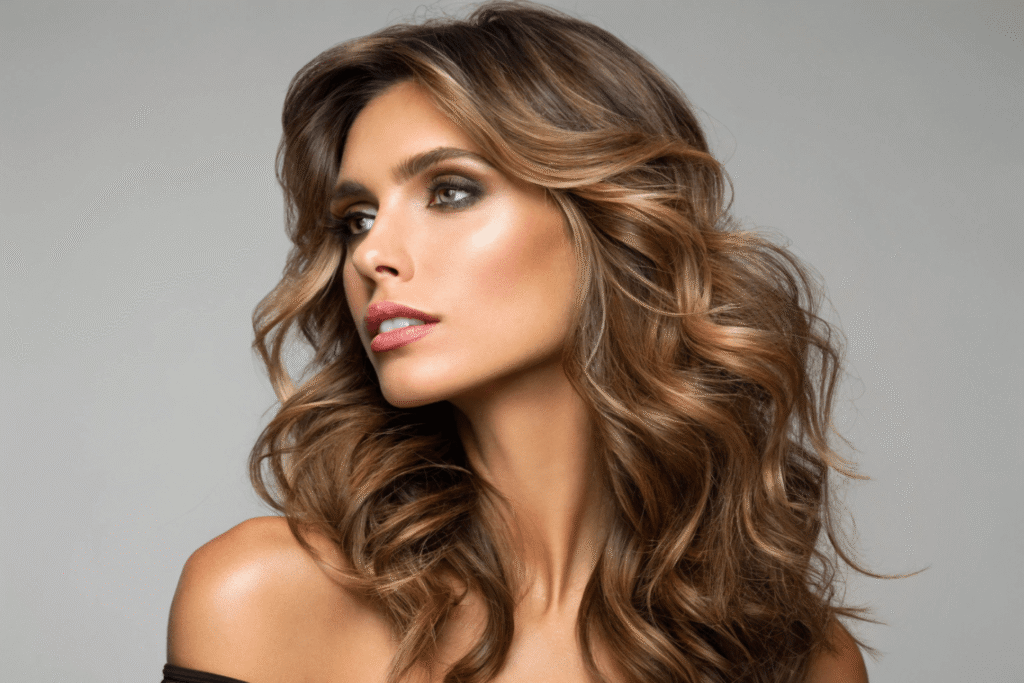
What fringe styles help me frame my face naturally?
Fringe (bangs) can completely change face balance. I treat bangs as a precision tool—small adjustments make a big difference.
Fringe-by-face-shape recommendations
- Round face
- Best: Side-swept fringe, airy curtain bangs that start at or slightly above the cheekbones.
- Why: Diagonal lines slim and elongate; see-through density avoids cheek bulk.
- Avoid: Heavy blunt bangs that shorten the face.
- Oval face
- Best: Most fringes work—soft curtain, wispy straight-across, or a micro-fringe if you love editorial looks.
- Why: Versatility; keep weight light to maintain balance.
- Square face
- Best: Side-swept or curved fringes with tapered ends.
- Why: Rounded shapes soften angular brows and jawline.
- Avoid: Thick, perfectly blunt bangs that emphasize horizontal lines.
- Heart face
- Best: Side-swept bangs or long curtain bangs that meet at the cheekbones.
- Why: Reduces forehead width and adds balance near the chin.
- Avoid: Too-short micro-bangs that widen the top half.
- Long/Oblong face
- Best: Full, straight-across bangs or full curtain bangs.
- Why: Visually shortens face length and adds mid-face focus.
- Avoid: Very long, center-parted hair with no fringe.
- Diamond face
- Best: Side-swept fringes that add width to the forehead; soft curtain bangs.
- Why: Balances narrow forehead and chin while softening cheekbone width.
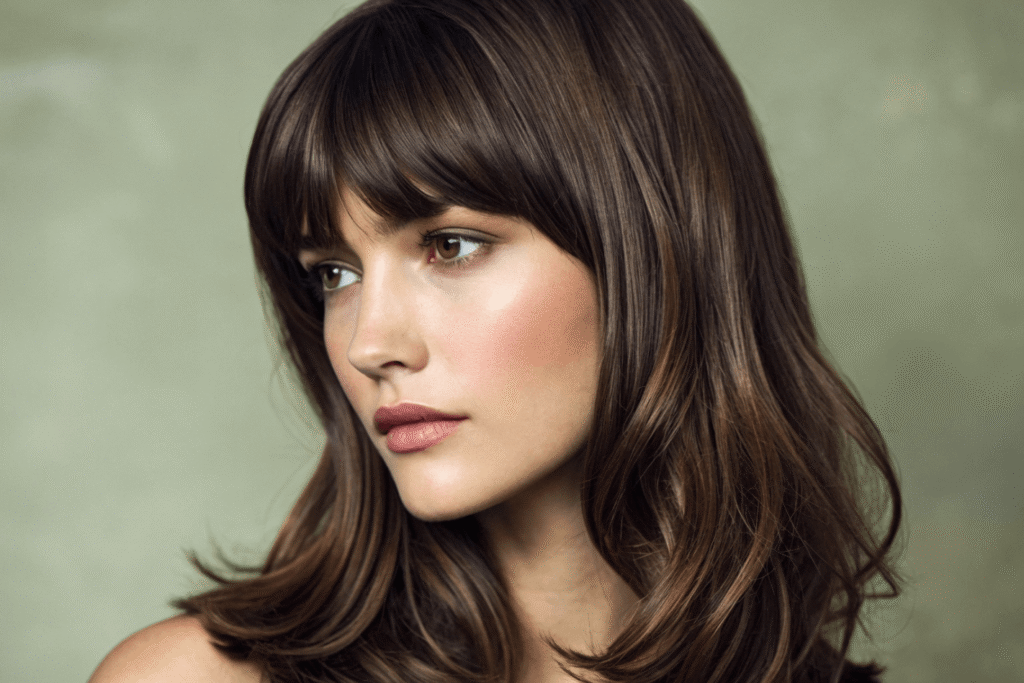
Practical fringe tips for human hair wigs
- Choose lace-front wigs for realistic hairlines and believable fringe transitions.
- Ask a professional to cut bangs while the wig is on your head for correct proportions.
- Start longer than you think—micro-trims prevent cutting too short.
- For curtain bangs, request a center split with longer outer edges blending into face-framing layers.
Bonus: Fit, cap construction, and easy customizations
I’ve learned that even the right cut can underwhelm if the cap doesn’t fit or the part sits off-center. These details matter.
Cap size and fit
- Measure circumference, front-to-nape, and ear-to-ear to select the correct size.
- A proper ear-to-ear fit ensures the part and hairline sit where they should—crucial for face balance.
- Use adjustable straps and (if available) ear tabs to fine-tune placement.
Cap construction to consider
- Lace-front
- Most natural hairline; ideal for parted and face-framing styles.
- Monofilament top or part
- Lets you shift the part (middle/off-center/side) to suit your face shape.
- Hand-tied caps
- Most natural movement; great for layered, textured looks.
Density and placement tweaks
- If cheeks look wide, thin the mid-lengths slightly (a stylist can “debulk”).
- If you need height, lightly tease at the crown or use a root-lifting spray safe for human hair wigs.
- If the chin area looks narrow (heart, diamond), concentrate waves or curls at the ends.
Easy customizations I rely on
- Trim face-framing layers around the cheekbones or chin to redirect attention.
- Shift the part by 0.5–1 inch to instantly change proportions.
- Add soft under-curl at the ends with a low-heat tool (observe human hair wig heat-safe limits).
- Install subtle baby hairs at the temples for seamless blending with lace fronts.
Sample starter styles for each face shape
Use these “safe bets” as your first wig in a new shape category.
- Round: Long layered lob (below the collarbone), deep side part, light–medium density, minimal cheek volume.
- Oval: Shoulder-length soft layers, middle part, airy curtain fringe optional.
- Square: Past-jaw layered waves, side part, medium density with curved ends.
- Heart: Chin-length lob with side-swept bangs, light crown volume, fullness at the jaw.
- Long/Oblong: Shoulder-length with full curtain bangs, soft side fullness, medium density.
- Diamond: Chin-length layered bob, side part, added fullness at temples and chin.
Frequently asked beginner questions
- Can I wear a middle part if I have a round face?
- Yes, if you keep layers long and add slight crown height—but most people find an off-center or side part more slimming.
- Will curls make my face look bigger?
- It depends where the curl volume sits. Keep fullness below the jaw for round/heart faces; mid-face fullness suits long/oblong.
- Are thicker wigs always better?
- Not for balance. Too much density at the cheeks widens the face. Choose density based on where you want movement and width.
- How do I know if the lace-front looks natural?
- The lace should sit flush, match your skin tone (or be tinted), and the hairline should have slight irregularity—avoid a perfectly straight edge.
Quick comparison: recommended elements by face shape
| Face Shape | Length Focus | Texture | Parting | Fringe |
|---|---|---|---|---|
| Round | Shoulder+ | Straight to soft waves | Deep side/off-center | Side-swept, airy curtain |
| Oval | Most lengths | Any, keep balanced | Middle/off-center | Most fringes, keep light |
| Square | Past jaw–long | Waves/loose curls | Side part | Side-swept, curved |
| Heart | Chin–shoulder | Waves/soft curls | Side part | Side-swept or long curtain |
| Long/Oblong | Shoulder | Waves/curls for width | Middle/soft side | Full/curtain bangs |
| Diamond | Chin-length | Soft texture | Side/soft middle | Side-swept/curtain |
Try-on checklist I use with clients
- Face shape goal: lengthen, widen, or soften?
- Length lands where? Above cheekbone, at jaw, or below collarbone?
- Parting test: center, off-center, deep side—photograph each.
- Layer check: do layers fall below the cheekbone if cheeks are full?
- Density audit: do cheeks look wider, or temples/chin fuller as intended?
- Fringe trial: clip-in faux bangs to preview before cutting.
- Movement: tilt head and smile—does the hair move naturally or look bulky?
- Cap fit: does ear-to-ear alignment place the part correctly?
- Lace and hairline: does it blend without harsh edges?
- Final tweak: one small change (part shift or micro-trim) before committing to bigger cuts.
Conclusion
Choosing a human hair wig that flatters your face shape comes down to balance. Based on my experience, I start by matching length and parting to the face shape, then fine-tune with layering, density placement, and texture. Round faces shine with longer layers and crown height; oval faces enjoy almost any style with soft balance; square faces love waves and side parts; heart faces look best with chin-focused volume and side-swept bangs; long/oblong faces benefit from width and full fringes; and diamond faces glow with fullness at the temples and chin.
If you’re a beginner, I’d start with a lace-front, light–medium density wig, then customize the part and face-framing layers. One or two subtle tweaks usually transform a good wig into your perfect wig. You’ve got this—and if you want a second pair of eyes, I’m always happy to help you pick a style that makes you feel like yourself on your best hair day.