
I see the same avoidable mistakes derail otherwise solid purchasing plans—both with individual end-users and B2B teams speccing private-label lines. I’ve sat in factories watching caps come off the machine where a 0.5 cm tolerance is the difference between a secure melt and a sliding hairline. I’ve helped brands unwind returns caused by “more” (more length, more density, more features) when the brief really needed “correct” (correct cap size, correct lace color, correct origin). In an industry where margin is tight and marketing is loud, it’s easy to overlook fundamentals like cap sizing, density-to-length balance, and vendor verification.
The top mistakes when choosing human hair wigs are poor cap sizing and construction choices, mismatched density and texture for daily life, skipping vendor verification, and overspending on features you won’t use. These errors cause discomfort, slippage, visible lace or parting, premature tangling, and inflated total cost of ownership. Correcting them requires accurate measurements, cap construction and lace color selection, provenance-based hair grading (Remy/virgin vs. marketing “A grades”), and aligning features to wearer lifestyle and install method.
Below I break these mistakes down the way I audit orders for manufacturers, wholesalers, and brand owners—what causes the problem, how it shows up in QA and customer complaints, and how to specify the right product up front. I’ll also include quick comparison tables and procurement checklists you can lift into your SOPs.
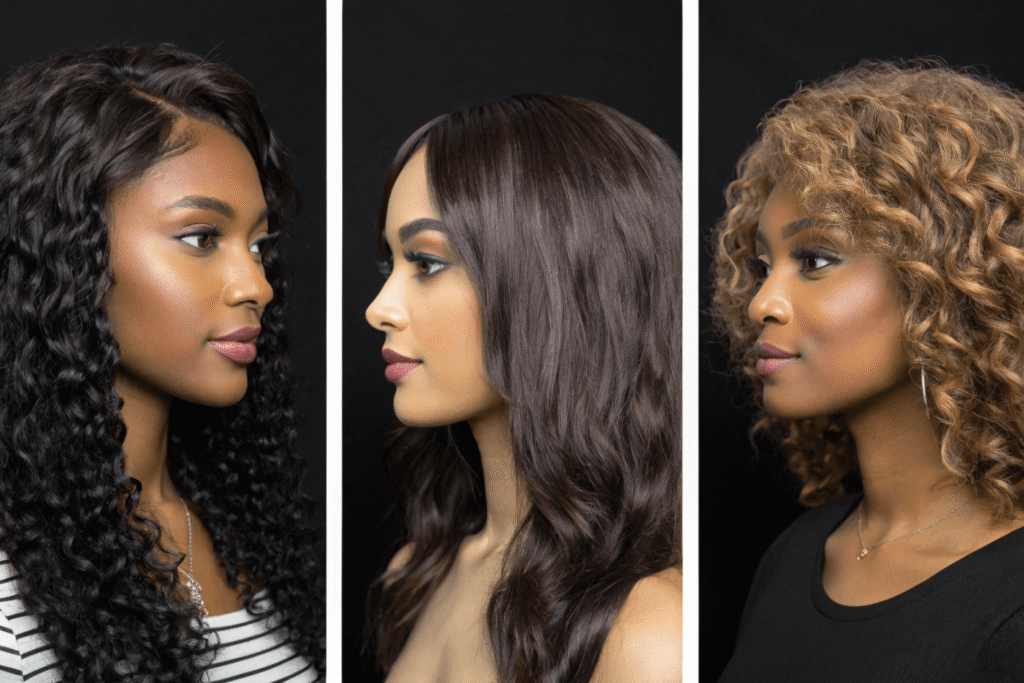
Do I overlook cap sizing and end up with discomfort or slippage?
Over 40% of returns I see trace back to sizing and cap architecture—not the hair. Buying the wrong cap size leads to poor fit, slipping, and unnatural hairline exposure; skipping proper measurement (including ear-to-ear and front-to-nape) causes temple lift and ear tab discomfort; ignoring cap construction leads to visible parting and limited styling.
Measure beyond circumference
- Required dimensions: circumference, front-to-nape, ear-to-ear across forehead, ear-to-ear over top, temple-to-temple round back, nape of neck. Measure on the head form you’ll actually wear—braided-down or flattened foundation.
- If between sizes, size up. You can snug a large cap with elastic bands or grips; you cannot stretch a small cap without stressing lace and knots.
Match cap construction to use case
- Lace front: Economical realism at the hairline; good for middle/side parting in the lace zone.
- Full lace: Maximum parting and updos but more delicate and labor-intensive.
- Monofilament/silk top: Natural part grid, durable top; pair with lace front for realism.
- Closed wefted backs: More durable, cooler, and cost-effective for daily wear.
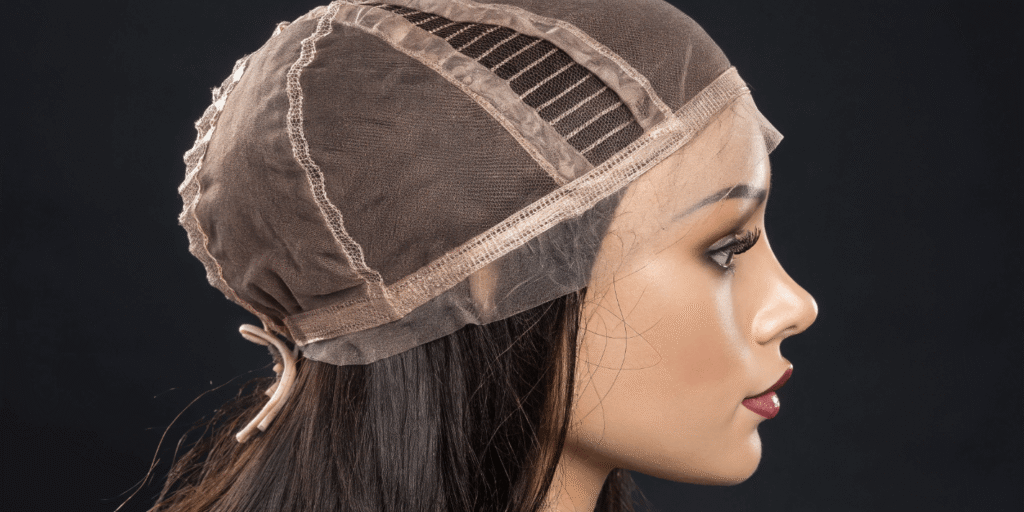
Cap size and construction matrix
| Spec decision | Operational risk if wrong | My practical fix |
|---|---|---|
| Size chosen as “Average” by default | Ear ripples, sliding hairline, headaches | Collect full 6-point measurements; default to elastic band; offer S/M/L SKUs |
| Ignoring ear-to-ear and front-to-nape | Temple lift, ear tab digging | Include foam-head fitting in QC; pre-trim ear tabs only after fitting |
| Wrong cap architecture | Visible tracks/part, styling limits | Lace front + mono/silk top for daily; full lace only for advanced installers |
Am I ignoring density and texture that suit my lifestyle?
Choosing density that’s too high or low creates an unnatural silhouette; neglecting lifestyle factors like heat styling, daily wear, or climate can make delicate knots or fine fibers impractical. Focusing only on length—ignoring face-framing, curl pattern, and part position—produces bulky, mask-like looks.
The density trap
Biological hair isn’t uniformly thick—especially at the hairline and crown. Over-dense units (180–250%) read “wiggy,” run hot, and require thinning.
| Density | Best for | Common mistake | My guidance |
|---|---|---|---|
| 130% (Natural) | Daily wear; finer bio hair | Feels “too thin” out of the box | Looks most realistic; add layers for movement |
| 150% (Medium) | 12–20 inch lengths | Safest general choice | Sweet spot for most face shapes |
| 180%+ (Heavy) | 22”+ glam looks | Daily-wear “helmet,” neck strain | Budget for de-bulking; not commuter-friendly |
For a realistic daily look, spec 130–150%. If marketing demands 180% visuals, plan stylist thinning and a layered cut in your BOM.
Texture and knot durability vs. behavior
- Straight and body wave tolerate regular hot tools; deep curl/kinky curly require moisture discipline and low manipulation.
- Frequent high-heat styling (≥400°F) fractures cuticles—especially on acid-bathed non-Remy hair. Set SOPs: 320–360°F max, heat protectant mandatory.
- Knots: Single-knot hairlines look undetectable but slip faster on daily wearers; double knots in dense zones balance longevity and realism.
Lace color and hairline work
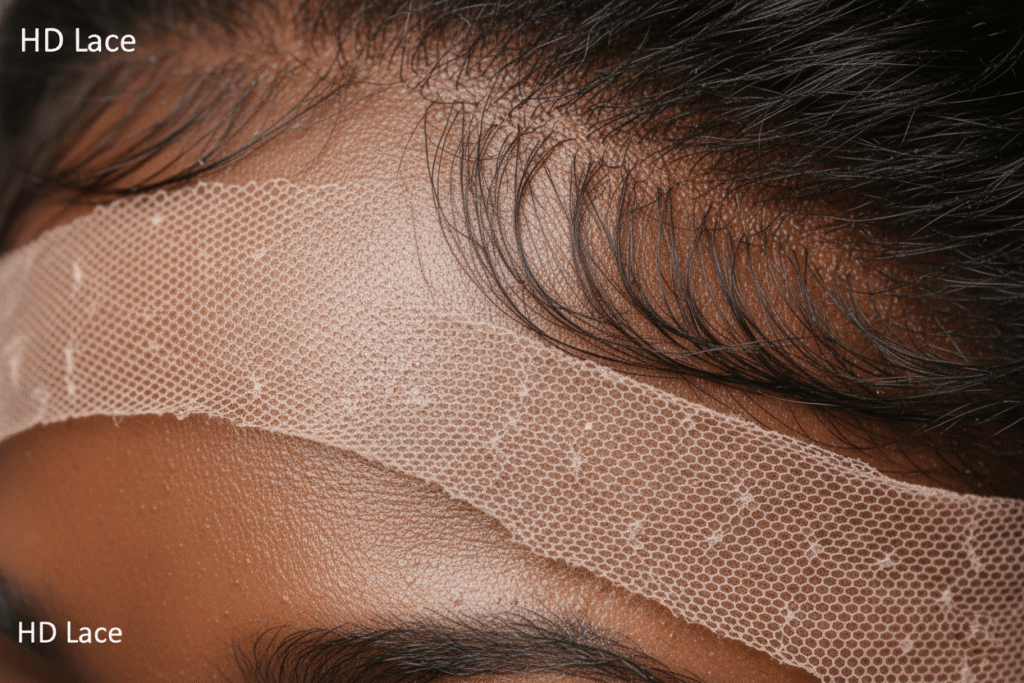
Selecting the wrong lace color or not tinting results in a visible grid and mismatched hairline. HD lace melts beautifully but is fragile; transparent lace is durable yet ashy on deeper tones without tint. Always plan for tint spray or makeup if using transparent lace on deeper skin.
Do I skip vendor verification and risk inconsistent quality?
Overlooking hair origin and grade (Remy vs non-Remy) leads to faster tangling, matting, and reduced longevity. The “7A/10A/12A” grading language is marketing—not a standard. Vendor verification is your only defense against cuticle-misaligned blends and inconsistent ventilation work.
What matters more than “A grades”
- Remy: Cuticles aligned, collected in the same direction—lower tangle risk.
- Virgin: No chemical processing prior to coloring/perm in factory.
- Non-Remy/acid-bathed: Cuticles removed then silicone-coated—initial shine, later matting.
Origin signals (not absolutes)
- India/SEA: Abundant, medium-coarse; stable for daily wear; good steam perm retention.
- China (domestic hair scarce; often processed imports): Quality varies widely; verify cuticle alignment claims.
- South America/Eastern Europe: Scarcer, higher price; fine/medium texture; authenticate single-donor claims.
Verification workflow I require
- Pre-shipment samples: One raw bundle for cuticle test (microscope or tape-back test), one processed piece for wash/comb/heat cycle.
- QA photos/videos: Inside cap (stitch regularity, knot uniformity), hairline close-ups (density graduation), bleach test on knots.
- Batch retention: Keep 2% retention samples labeled by lot for dispute resolution.
- Documentation: Vendor’s processing declaration (steam-only vs acid bath), dye curve for color consistency, base fabric spec (HD vs Swiss mm thickness), knotting map.
How can I avoid overspending on features I won’t use?
Choosing adhesive or install methods without considering scalp sensitivity and activity increases irritation and early lace damage; underestimating maintenance costs—deep conditioning, knot sealing, and professional customizing—reduces lifespan and inflates total cost of ownership. Marketing often pushes “more” when “correct” is cheaper over the product life.
Map features to actual use
- If you don’t wear updos: Lace front + mono/silk top beats full lace on cost and durability.
- If you sweat, commute, or work out: Glueless with elastic band and combs reduces adhesive spend and lace repairs.
- If you won’t heat-style daily: Steam-processed texture close to your desired look minimizes tool time and breakage.
True cost of ownership (TCO)
| Cost driver | Typical hidden cost | How to control |
|---|---|---|
| Customization (pluck, bleach knots, cut) | $40–$150 per unit | Request light pre-pluck and lightly bleached knots at factory; finish in-salon |
| Maintenance (masks, serums, knot sealer) | $8–$20/month | SOP: weekly condition, monthly knot seal on high-friction zones |
| Adhesives and removers | Skin irritation, lace shedding | Choose glueless where possible; patch test adhesives; rotate wear |
| Premature tangling (non-Remy) | Early replacement | Insist on Remy/virgin spec; verify with cuticle tests |
Practical buying checklist (B2B-ready)
- Origin check: Require “Remy” or “Virgin” in contracts; avoid “100% human hair” with no alignment claim.
- Density check: 130–150% for daily wear; add layering to achieve shape, not brute density.
- Size check: Enforce 6-point measurement collection; default to size-up policy with adjustable elastic.
- Lace check: Choose HD only when user handling is gentle; otherwise transparent + tint SOP.
- Install check: Match cap and adhesives to user sensitivity and activity level; favor glueless for daily commuters.
Conclusion
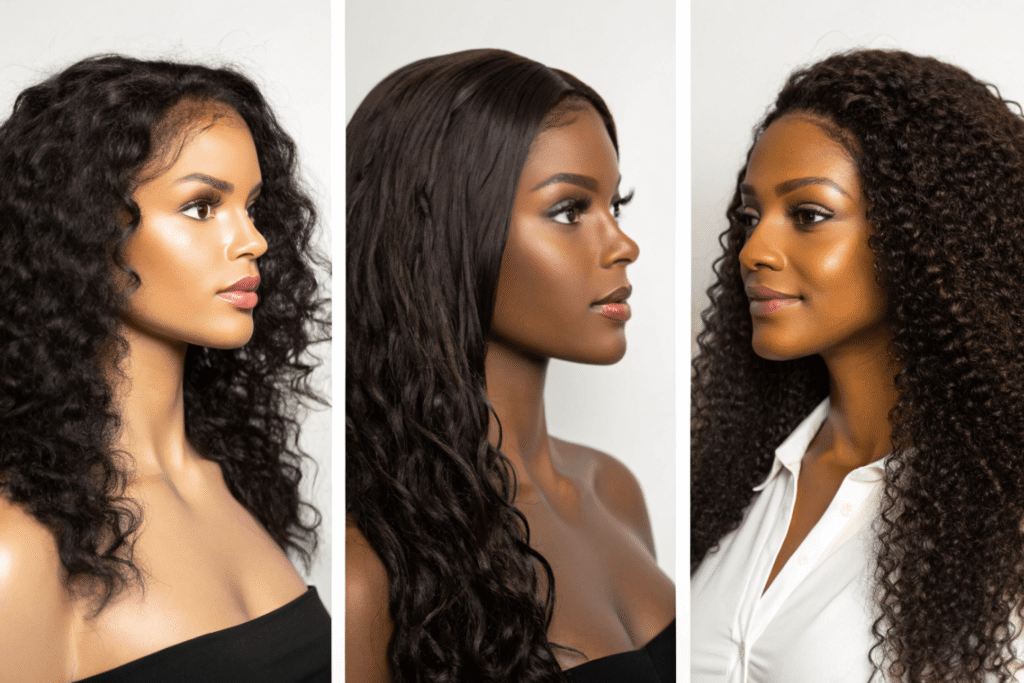
In my experience, most regret in wig buying—and most return costs in B2B—come from prioritizing “more” over “correct.” Get the fundamentals right: precise 6-point measurements, cap architecture aligned to styling needs, realistic density and texture, lace color that truly melts, and verified Remy/virgin sourcing rather than chasing “A grade” labels. Build a simple verification workflow with retention samples and processing declarations, and map features to actual wear habits. Do this, and you’ll cut returns, extend lifespan, and deliver units that look real, feel comfortable, and perform predictably across batches.