
I’ve sat across procurement teams, brand owners, and factory managers weighing the “pre-colored vs virgin hair” decision more times than I can count. In practice, it’s a balancing act between immediate wearability and long-term performance. Colored hair delivers instant shade accuracy and creative looks off the shelf; virgin hair preserves natural cuticle integrity, which directly affects durability, humidity behavior, and styling tolerance. If you care about lifespan, minimal maintenance, and predictable behavior in heat and humidity, the technical nuances matter more than the color chart.
Pre-colored hair does save time, but it usually reduces longevity compared to virgin hair because processing raises porosity and weakens keratin bonds. Brassiness in lighter shades is prevented through UV protection, violet/blue toners, chelating before washing, and low-heat routines. Toning is typically easier and more stable on virgin hair post-install because intact cuticles accept professional color more predictably. Your budget and maintenance tolerance should decide: choose colored hair for upfront convenience and specific shades; choose virgin hair for durability, customization, and lower long-term cost per wear.
Below, I’ll break down real factory-level differences, what happens to cuticles during dyeing, and how those changes show up in daily wear. I’ll also give you concrete brassiness prevention protocols and a procurement-friendly comparison so you can match the option to your maintenance routine and budget expectations.
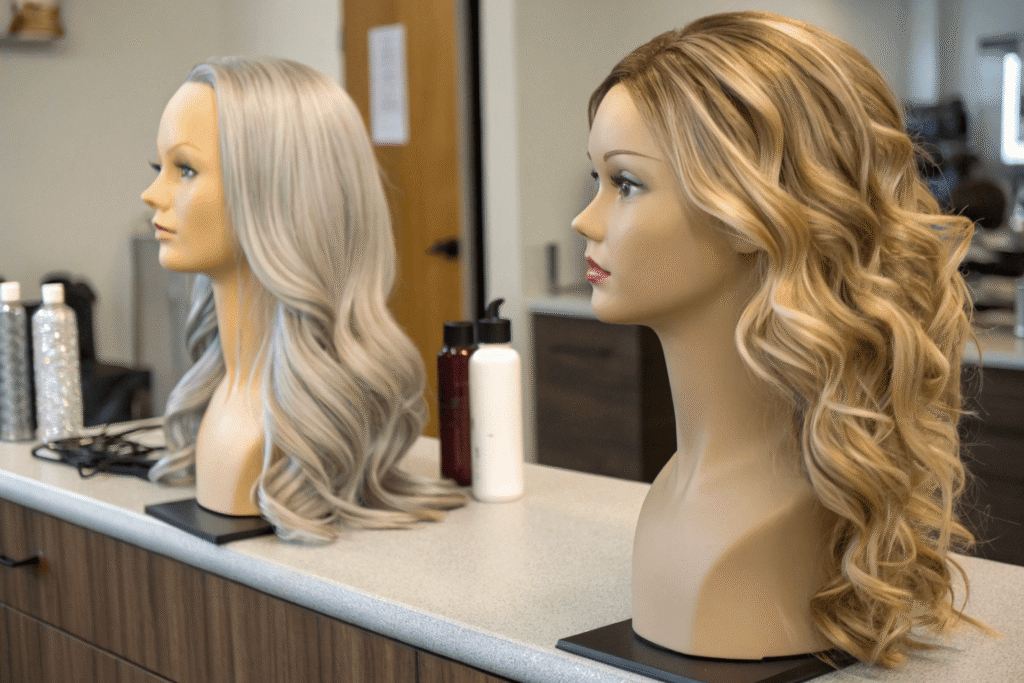
Does pre-colored hair save me time but reduce longevity?
What “pre-colored” means at the factory
In most wig factories, “colored human hair” is Remy or mixed-grade human hair that’s bleached, dyed, and often silicone-finished for shine and smooth handfeel. Bleaching lifts natural pigment (melanin) by oxidizing the hair’s cortex, which:
- Raises or erodes cuticles
- Increases porosity
- Reduces tensile strength and elasticity
Result: hair becomes more hydrophilic, absorbing ambient moisture (frizz in humidity), and more prone to dryness and breakage over time.
Time saved vs lifespan trade-off
- Time-to-wear: Pre-colored units deliver exact shades (from #4 brown to #613 blonde, balayage, and fashion tones) without salon work. This is ideal for teams needing standardized looks across SKUs or campaigns.
- Longevity: Expect 6–12 months of prime wear with good care for pre-colored hair. Virgin hair typically sustains 12–24+ months because intact, aligned cuticles reduce friction, tangling, and mechanical damage.
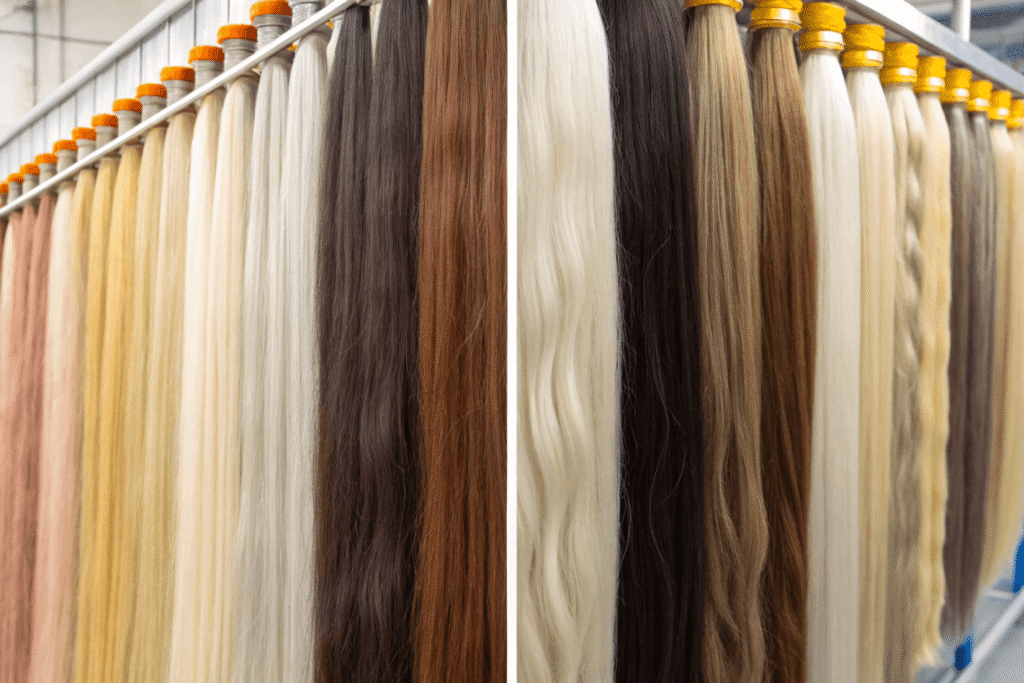
Where the reduction in lifespan comes from
- Elevated porosity accelerates moisture cycling (swelling/shrinking), causing cuticle chipping.
- Heat styling hits already weakened keratin bonds, shortening usable life.
- Color fade triggers more frequent toning/color-refresh cycles, further stressing strands.
For users who need specific shades immediately, pre-colored is practical. For those prioritizing long-term performance, virgin hair remains the safer technical choice.
How do I prevent brassiness in lighter shades I wear?
Brassiness is a function of porosity, residual minerals, UV exposure, and dye molecule washout. Whether you buy #613 or lift virgin to a level 8–10, control the environment the hair lives in.
Anti-brass protocol (field-tested)
- Chelate first: Use a chelating shampoo (EDTA-based) every 2–4 weeks to remove minerals (iron/copper) that warm the tone. Hard water accelerates brassiness.
- Tone intentionally:
- Violet-based for yellow tones (#613, platinum)
- Blue-based for orange tones (honey, caramel)
- Avoid over-toning; set a 3–5 minute dwell, rinse cool.
- UV defense:
- Apply UV-protectant leave-ins (benzophenone-4 or equivalent) before outdoor wear.
- Use hats/scarves in peak sun if possible; UV oxidizes dyes, turning blonde warm.
- pH and heat control:
- Finish washes with slightly acidic conditioners (pH 4.5–5.5) to help reseal cuticles.
- Keep hot tools at 300–340°F (150–170°C) max; high heat accelerates fade.
- Water quality:
- Install a shower filter; mineral-heavy water speeds brass.
- Wash cadence:
- Extend intervals; dry shampoo between washes to minimize dye leach.
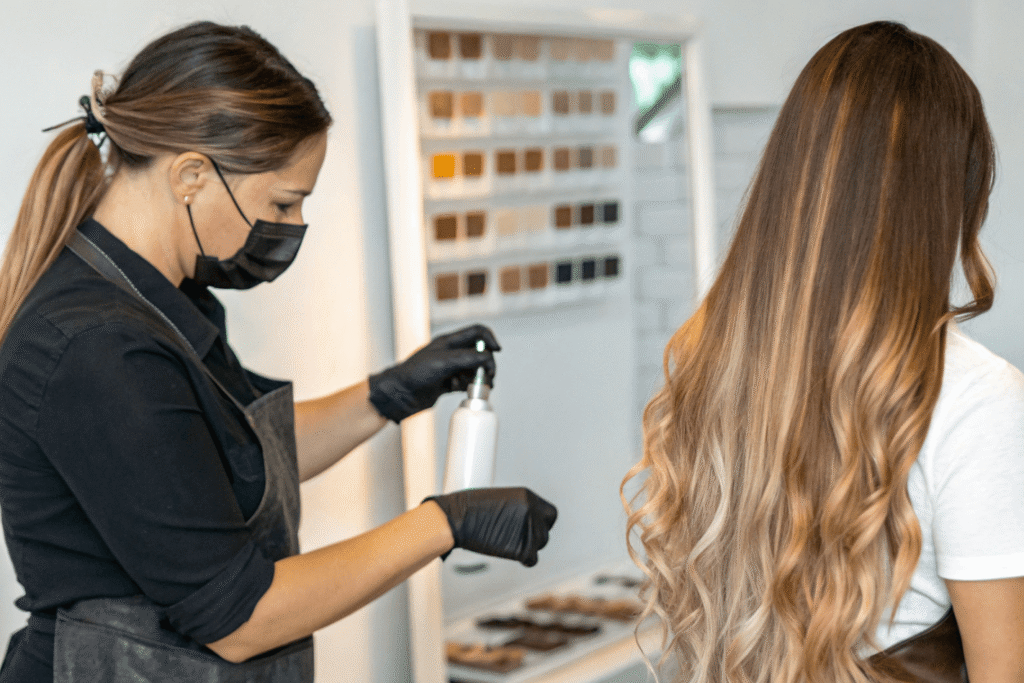
Is toning easier on virgin hair post-install?
Why virgin accepts toner more predictably
Virgin hair retains intact cuticles and consistent internal structure. Toners and demi-permanent color deposit evenly, and the strand can handle bond-building additives (e.g., succinic acid, bis-aminopropyl diglycol dimaleate) without collapsing.
Pre-colored hair can be patchy:
- Uneven porosity from prior bleaching causes inconsistent uptake.
- Silicone coatings impede toner penetration unless fully clarified first.
- Multiple factory dye layers may react unpredictably to salon toners.
Practical workflow I recommend
- For virgin hair:
- Clarify lightly; apply a demi toner at low volume (no harsh lift).
- Seal with acidic conditioner; finish with light serum.
- For pre-colored hair:
- Deep clarify to remove silicones.
- Strand test for dwell time; use protein-bond builders sparingly.
- Shorter toner exposures; prioritize deposit-only formulas.
Result: toning is cleaner, more durable, and less risky on virgin, while pre-colored requires stricter prep and shorter, controlled sessions.
Which option suits my budget and maintenance routine?
Decision factors
- Budget horizon: Are you optimizing for upfront spend or cost per wear?
- Climate and lifestyle: High humidity, frequent outdoor exposure, and regular heat styling favor stronger cuticles.
- Maintenance appetite: Will you commit to color-safe products, UV care, and careful heat limits?
Quick verdict table
| Criteria | Virgin Hair | Colored Human Hair (Pre-Dyed) |
|---|---|---|
| Upfront Cost | Higher (single-donor, intact cuticles) | Lower to mid (processing masks variability) |
| Cost per Wear | Lower over 12–24+ months | Higher if replaced at 6–12 months |
| Longevity | 1–2+ years with proper care | 6–12 months; faster color fade |
| Humidity Behavior | Better (hydrophobic cuticle layer) | Weaker; frizz and swelling |
| Maintenance | Moderate; standard care | Higher; color-safe, toners, UV defense |
| Color Variety | Requires salon/custom work | Instant shades, balayage, fashion colors |
| Toning Stability | High; predictable uptake | Variable; needs pre-clarifying |
| Styling Tolerance | Better heat tolerance | Reduced heat tolerance; bond weakening |
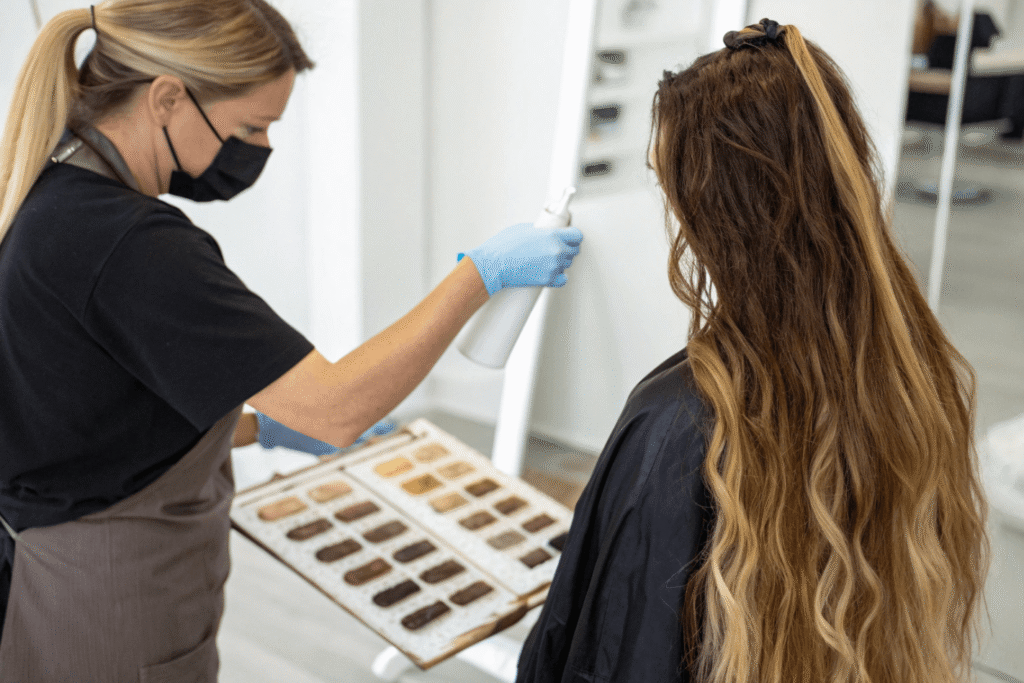
Budget-guided recommendations
- If you prioritize longevity and natural performance: Choose virgin hair, and invest once in professional customization. The total lifecycle cost is typically lower.
- If you need immediate, exact shades or complex coloring (platinum, vivid fashion): Choose pre-colored hair, but plan for higher maintenance (toning, UV protectants, specialized shampoos) and faster replacement cycles.
Additional technical insights embedded from sourcing and QC
- Virgin hair with aligned cuticles (true Remy, single-donor) tangles less, feels smoother, and blends more naturally with varied textures. It also tolerates routine heat styling better than factory-colored.
- Colored hair’s strength and elasticity decline after bleaching and dyeing; managing porosity with acidic rinses and bond-builders helps, but cannot fully restore original integrity.
- Pre-colored can be cost-effective upfront for users who want fashion colors or highlights without salon fees. However, expect color fade with washing, sun exposure, and heat—plan toners and refreshers.
- Lifting virgin to very light levels still stresses hair; use professional services and consider stopping at level 7–8 for a better strength-to-tone balance.
Conclusion
Pre-colored hair wins on convenience and shade accuracy on day one; virgin hair wins on structural integrity, humidity performance, and long-term value. If you’re willing to customize, virgin hair delivers a smoother maintenance curve and higher lifespan. If you need instant fashion tones, pre-colored is sensible—just budget for anti-brass care, UV protection, and more frequent refresh cycles. For most high-end users who value durability and predictable styling, I recommend starting with virgin hair and partnering with a professional colorist to achieve your target shade without sacrificing the cuticle health that keeps the wig performing month after month.