
I’ve spent years sitting between procurement teams and factory floors, watching great wigs fail early because of styling habits—not fiber quality. Whether you’re managing SKUs for daily-wear units or premium human-hair collections, the question isn’t “curling vs straightening,” it’s “how do I control heat, frequency, and prep so I don’t burn through inventory value?” In my experience, the biggest cost driver isn’t reprocessing or donor sourcing—it’s avoidable damage from end-user styling that shortens lifecycle and spikes warranty claims.
Curling and straightening both degrade fibers; longevity depends on heat control, sectioning discipline, and frequency. Use low to medium heat, test on an inconspicuous section, apply fiber-specific heat protectant, and let styles set while cooling on a stand. For human hair, keep tools below ~300–350°F (150–175°C) with minimal passes; for synthetic, only style heat-friendly fibers under the manufacturer’s max and favor heatless methods whenever possible.
Below I break down practical protocols you can standardize across education cards, care inserts, and customer support scripts—covering curl setting, flat-iron prep, safe styling cadence for daily units, and when heatless methods can deliver comparable results with far less risk.
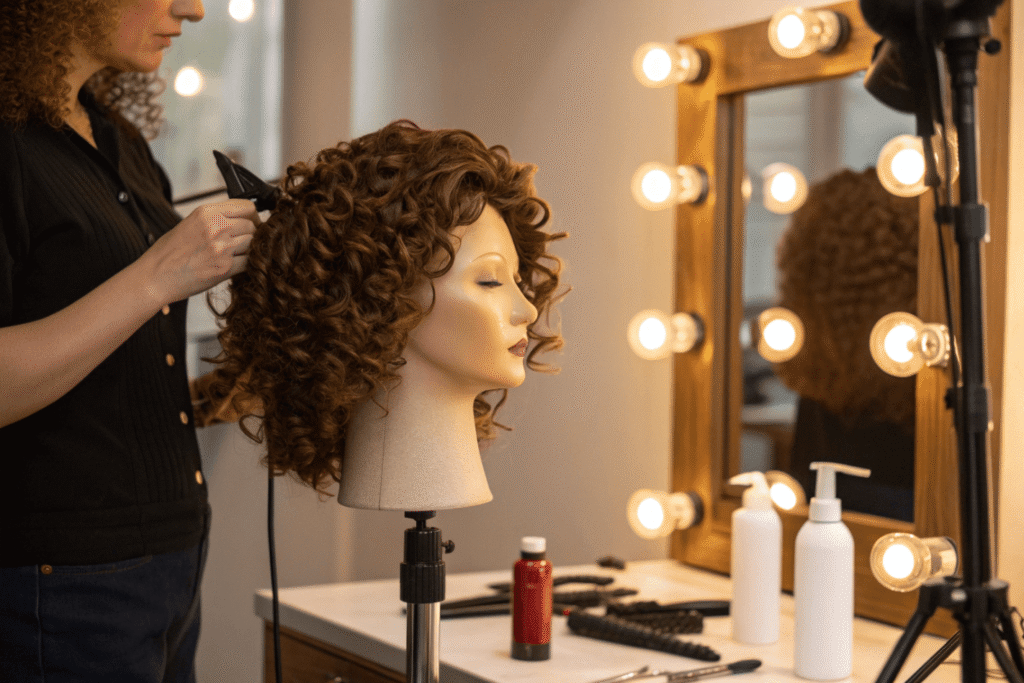
Should I set curls with low heat and pin-curl techniques?
When I’m advising brands, I prioritize heat thresholds and mechanical stress over curl type. Curls set best when you control three variables: temperature, tension, and cool-down.
- Start with low to medium heat and always spot-test on a hidden underside section. This catches coatings, dyes, or fiber blends that react unpredictably.
- Apply a wig-formulated heat protectant first. Silicone-forward sprays for synthetic create a thermal slip; lightweight argan/keratin blends for human hair reduce protein denaturation and moisture loss.
- Work in small sections and avoid excessive tension. Over-pulling increases shedding, tangling, and cap stress—especially at weft stitches and lace perimeters.
Pin-curling is effective, but I’ve seen pins deform fibers and dent lace when used on hot strands. A safer approach:
Curling workflow I trust
1) Detangle and pre-protect: Wide-tooth comb from ends upward; apply heat protectant.
2) Set the curl: Wrap 1″ sections, use low to medium heat for the shortest effective time.
3) Cool to lock the shape: Slide the tool out and catch the curl in your palm, clip loosely with a duckbill or use foam rollers. Then:
4) Stand cool-down: Place the wig on a stand and let it fully cool to set the style without pressure points. Avoid heavy pins on hot fibers.
For heat-friendly synthetics, stay below the manufacturer’s max and never exceed it. For human hair, I keep wands at 300–325°F for most textures; coarse donors can tolerate up to 350°F but don’t make it your default. The style’s longevity comes more from a complete cool-down than from higher heat.
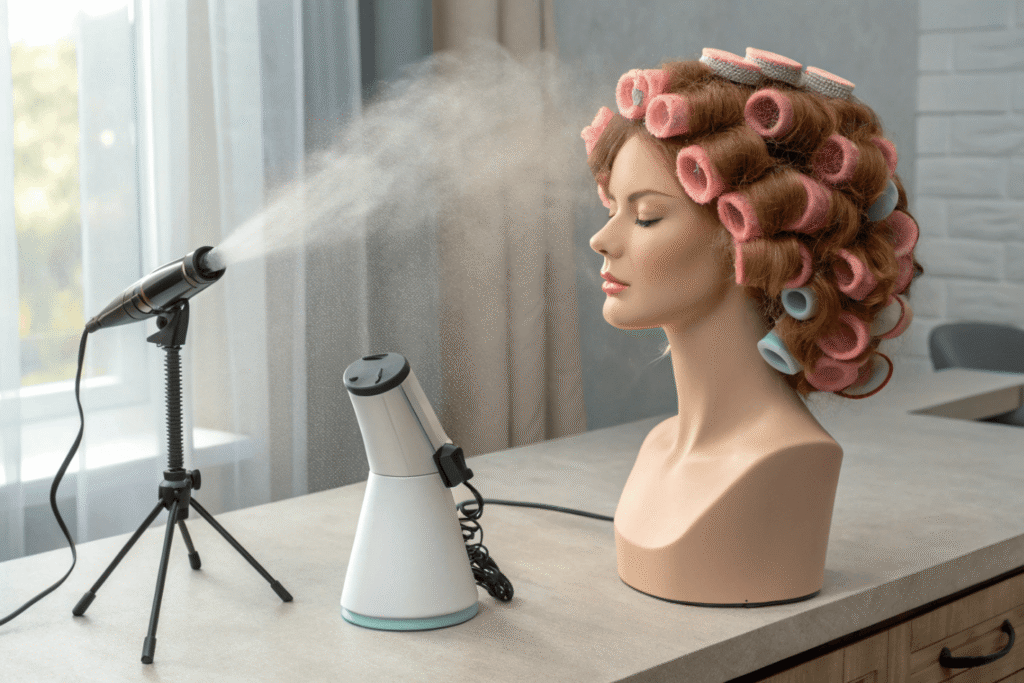
How do I prepare hair before flat ironing to prevent dryness?
Flat ironing goes wrong before the iron ever touches hair. The prep sequence dictates moisture retention and cuticle integrity.
Pre-iron moisture and protection
- Wash less frequently with sulfate-free, wig-safe products; condition mid-lengths to ends only. Over-washing strips protective finishes on synthetics and lipids in human hair.
- Air-dry fully on a stand. Flat ironing damp fibers traps moisture and causes micro-bubbling (pitting) in human hair and relaxation or distortion in synthetics.
- Apply a fiber-specific heat protectant evenly and comb through to distribute. This reduces hot spots and ensures even glide.
Sectioning and pass control
- Create small, consistent sections; thicker bundles need more passes and more heat—both are longevity killers.
- Limit passes: one slow, continuous pass is the goal; two at most for stubborn sections. Don’t park the iron—keep it moving to avoid localized overexposure.
- Keep tools below ~300–350°F (150–175°C) for human hair; stay under the stated maximum for heat-friendly synthetic. Standard synthetic should not be flat ironed.
Post-iron, let the unit cool undisturbed on a stand. Brushing while warm frays the set and invites frizz.
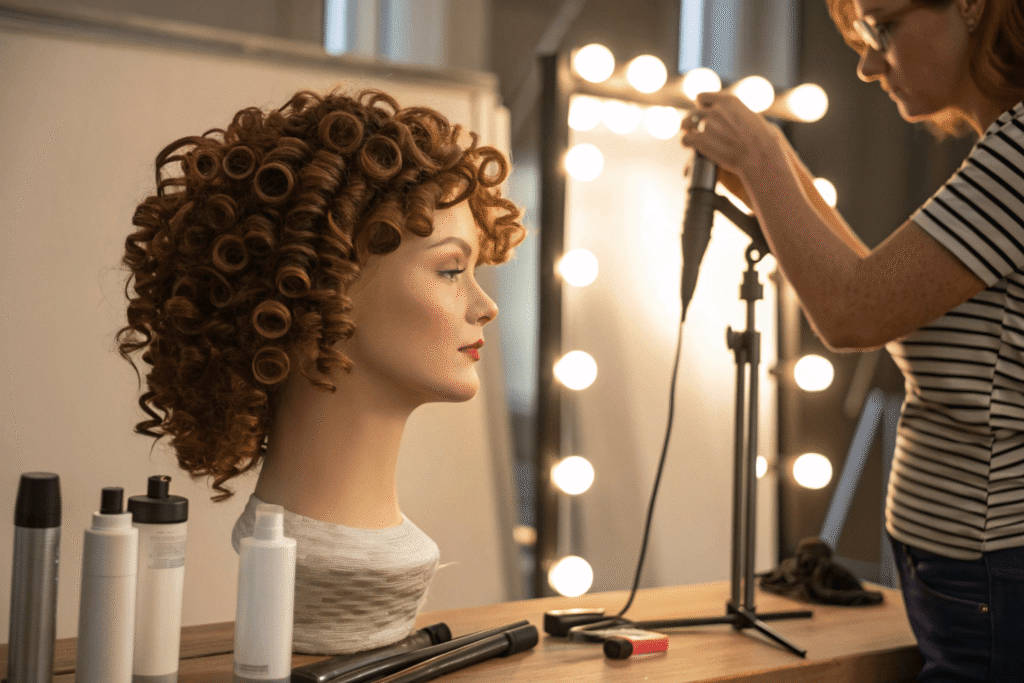
What styling frequency is safe for daily wear units?
In my QA reviews, frequency is the strongest predictor of premature fiber failure and lace fatigue. If a wig is worn daily, treat heat like a controlled substance.
Practical cadence for B2B care guides
- Human hair: Heat style no more than 1–2 times per month; refresh between wears with heatless methods. Schedule deep conditioning every 6–8 wears, focusing on mid-lengths to ends.
- Heat-friendly synthetic: Use corrective heat only when friction frizz appears; avoid routine daily heat. Keep temperatures under the manufacturer’s maximum.
- Standard synthetic: Do not apply direct heat; rely entirely on heatless shaping and gentle steam from a distance if needed.
Rotation and rest
- Rotate between multiple units. Giving a wig 2–3 rest days reduces cumulative stress and allows moisture equilibration.
- After any heat styling, cool and rest on a stand before storage—never bag a warm unit.
Table: Recommended styling frequency and heat limits
| Fiber type | Heat tool use | Temperature cap | Suggested frequency (daily wear) |
|---|---|---|---|
| Standard synthetic | Avoid direct heat | N/A | Heatless only; touch-ups as needed |
| Heat-friendly synthetic | Limited, corrective | Manufacturer’s stated maximum | 1–2× monthly or corrective only |
| Human hair | Limited, preventive | ~300–350°F (150–175°C) | 1–2× monthly; deep condition cycle |
Do heatless methods give me comparable results with less damage?
Yes—and they’re the cornerstone of any longevity strategy I deploy for retail education and warranty reduction. Proper tools and timing deliver near-salon results without thermal stress.
Heatless curling that works
- Foam rollers or flexi rods on slightly damp hair; set overnight and release gently. Finish with a light, wig-safe styling spray.
- Finger-coiling for defined patterns; scrunch and air-dry on a stand.
- Steam from a distance for synthetics: brief, controlled passes to relax or reform shape without direct contact.
Heatless smoothing/straightening
- Brush-through while damp and set with clip sections; allow full air-dry on a stand.
- Controlled hot-water pour for synthetics: warm (not boiling) water to reset shape; always test a hidden section first.
Because heatless approaches avoid protein denaturation (human hair) and thermoplastic deformation (synthetic), they cumulatively extend service life and reduce returns. They also minimize cap stress since you’re not pulling sections taut under a hot tool.
Table: Method comparison for damage vs. outcome
| Method | Result quality (proper technique) | Damage risk | Best for |
|---|---|---|---|
| Curling iron/wand | High | Medium–High | Human hair; heat-friendly synthetic |
| Flat iron | High | Medium–High | Human hair; heat-friendly synthetic |
| Foam rollers/flexi rods | High (overnight) | Low | All fibers |
| Distant steam (synthetic) | Medium–High | Low–Medium | Synthetic fibers |
| Hot-water reset (synthetic) | Medium | Low | Synthetic fibers |
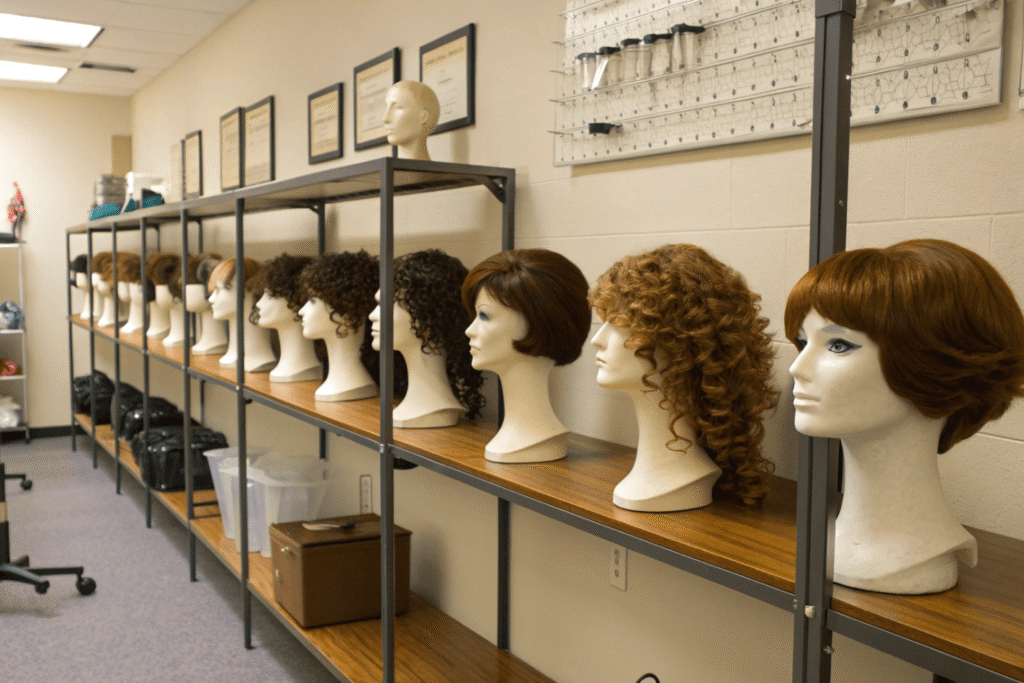
Cross-cutting preservation rules I teach consistently
- Use low to medium heat settings and spot-test an inconspicuous section before any curling or straightening.
- Apply a wig-specific heat protectant before hot styling to reduce dryness and fiber damage.
- For synthetic wigs, only style heat-friendly fibers and keep temperatures under the manufacturer’s max.
- For human hair, limit iron passes, keep tools below ~300–350°F (150–175°C), and avoid daily heat to reduce cuticle wear.
- Work in small sections; avoid excessive tension to prevent shedding, tangling, and cap stress.
- Let the wig cool fully on a stand after styling to set shape without deformation from pins or clips.
- Prefer non-heat methods (foam rollers, flexi rods, distant steam) for comparable results with less damage.
- Wash less frequently with sulfate-free, wig-safe products; condition mid-lengths to ends; air-dry fully before styling.
- Store on a mannequin or in a satin-lined bag away from sunlight and humidity to preserve fiber integrity.
- Rotate multiple wigs and schedule deep conditioning (human hair) or fiber-safe detangling (synthetic) to extend lifespan.
Conclusion
From factory QA to customer care playbooks, I treat “curling vs straightening” as a heat budget question. Both will age fibers; your longevity gains come from lower temperatures, minimal passes, meticulous prep, complete cool-down, and a bias toward heatless methods. If you standardize these protocols—especially for daily wear units—you’ll extend service life, cut warranty risk, and keep styles looking fresh with fewer reworks. For human hair, keep tools under ~350°F and limit use; for synthetic, heat only when the fiber is explicitly heat-friendly and always below the manufacturer’s cap. When in doubt, set the look without heat and let time, not temperature, do the work.