
I’ve spent years helping manufacturers, wholesalers, and brand owners reduce returns and extend product lifecycles. Long-term storage is one of the most overlooked areas in wig care, yet it directly impacts fiber integrity, cap elasticity, style retention, and customer satisfaction. In my experience, how you store a unit for weeks or months often determines whether it ships out pristine—or comes back as a warranty claim.
Proper long-term wig storage requires clean, fully dried units; gentle pre-storage detangling; shape-preserving supports (stands, boxes, or satin/silk bags with a hairnet); and a controlled environment with low humidity, no heat, and no UV exposure. For human hair, breathable covers and light, residue-free conditioning are essential; for synthetics, avoid tight folds to prevent cold crimping. Inventory should be labeled, rotated, and inspected periodically to catch dryness, tangling, or pests early.
Below, I’ll answer common storage decisions—silk bags vs. mannequin heads, humidity and dust control, pre-storage prep, and multi-unit organization—and weave in practical, factory-level advice your teams can implement immediately.
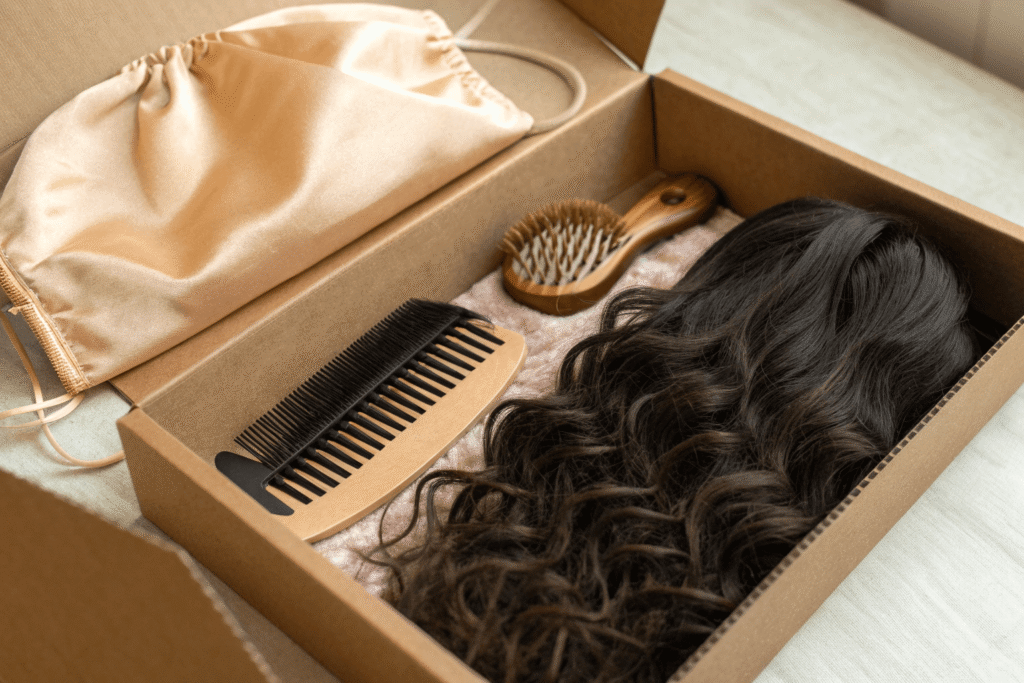
Should I use silk bags or mannequin heads to prevent deforming?
Silk/Satin Bags: When Breathability and Friction Control Matter
- For human hair wigs, silk or satin bags are my go-to. They minimize friction, reduce frizz, and allow limited airflow, which helps avoid musty odors.
- Technique I trust: fold ear-to-ear (not crown-to-nape) to protect lace fronts, place acid-free tissue inside the cap to support the crown, secure with a soft hairnet, then bag. Don’t compress bags in drawers; weight crushes fiber and sets unwanted bends.
- Pair with a desiccant when climate is humid, but avoid airtight plastic; you want breathable—not sealed—storage.
Original Boxes: Best Structural Protection
- Hard-sided boxes protect from crushing and stacking pressures. I recommend them for synthetics (to prevent cold crimping) and custom-styled units.
- Add a hairnet, acid-free tissue in the cap, and a small desiccant. If the box is plastic, ensure a tiny vent hole to prevent moisture buildup.
Mannequin Heads and Stands: Use Sparingly for Long-Term
- Daily staging is fine, but prolonged storage on rigid heads can stretch elastic caps and distort ear tabs.
- If you must use heads (complex, gravity-dependent styling), size down the canvas block slightly, cover with a breathable dust cover, and secure lace flat to avoid snagging. Rotate off the head periodically to let elastic recover.
Quick decision guide:
- Human hair, standard styles: silk/satin bag + hairnet + tissue support.
- High-value synthetics or intricate styling: original box + hairnet + tissue, avoid tight bends.
- Long-term display: mannequin only with dust cover, reduced tension, and periodic rest.
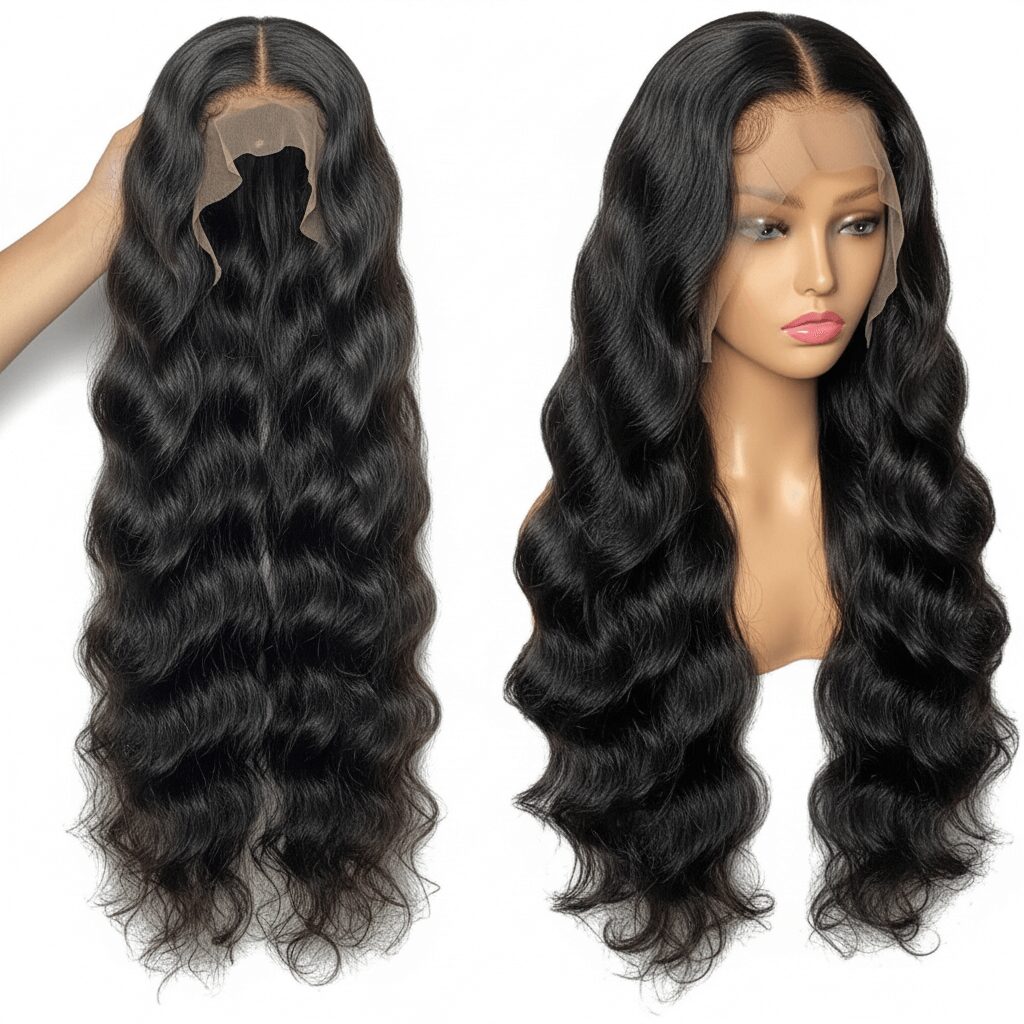
Table: Storage Method Pros/Cons
| Method | Pros | Cons/Watch-outs | Best For |
|---|---|---|---|
| Silk/Satin Bag | Breathable, low friction, space efficient | Can crush if stacked; needs tissue support | Human hair, straight/wavy styles |
| Original Box | Crush protection, stackable | Needs airflow; add desiccant | Synthetics, custom-styled units |
| Mannequin/Stand | Maintains complex shape | Cap stretching; dust exposure | Short-term display, complex styles |
How do I control humidity and dust in my storage area?
Environmental Control: The Three Critical Variables
- Temperature: Keep units in a cool room (ideally 18–22°C / 64–72°F). Avoid attics (heat) and basements (damp).
- Humidity: Target 40–55% RH. High humidity risks mold; low humidity can overdry human hair. In humid regions, use room dehumidifiers and place silica gel packets in boxes/bags. Replace desiccants quarterly.
- Light: UV fades human hair (especially colored/processed units) and embrittles synthetics. Store in darkness; never near windows.
Dust Management: Protect Lace and Knots
- Dust embeds in lace knots and is tough to remove without stressing the ventilation. Use hairnets and breathable covers. If using open shelving, add clear, vented bins with desiccants and keep shelves wiped weekly.
- Avoid cotton covers directly on hair (wicks moisture and causes friction). Use non-shedding dust covers or pillowcase over mannequin heads, not on the hair itself.
Micro-Controls Inside Containers
- Ventilation: A tiny vent in plastic boxes prevents stale air. For bags, choose tightly woven satin/silk—breathable but protective.
- Pest deterrence: Keep storage areas clean, avoid food, and inspect monthly. Lace and adhesives can attract certain pests; early detection prevents inventory loss.
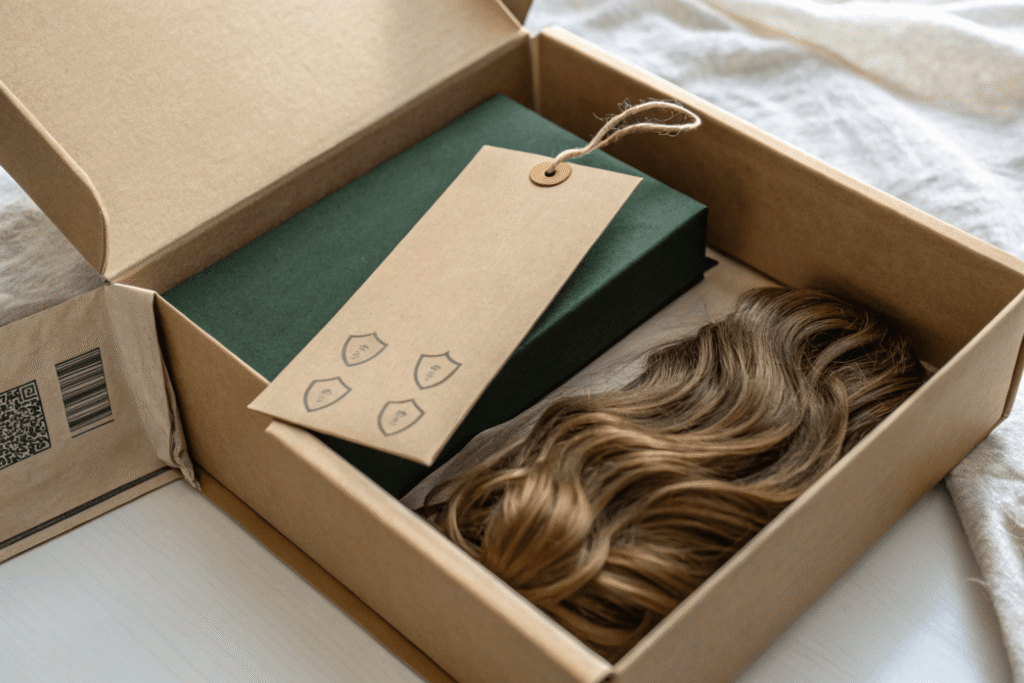
What pre-storage steps keep hair soft and tangle-free?
My “Golden Rules” Before Storage
- Clean: Never store after wearing. Wash to remove oils, sweat salts, and product buildup that degrade caps and lace over time.
- Dry: Air-dry completely; the cap must be bone-dry. Any trapped moisture encourages mildew and odor.
- Detangle: Work ends to roots with a wide-tooth comb or wig brush. Knots tighten in storage, leading to matting and breakage.
- Hydrate (Human Hair): Light, residue-free leave-in or a few drops of jojoba/argan on mid-lengths and ends. Avoid heavy oils; they attract dust and can oxidize.
- No Oils (Synthetic): Do not oil synthetic fibers; they don’t absorb, and residue causes clumping.
Shape Preservation
- Hairnet: Secure the style lightly with a soft net to keep flyaways contained.
- Lace Protection: Lay lace fronts flat and avoid pressure points; this prevents snagging and stretching.
- Cap Support: Stuff the crown and sides with acid-free tissue to prevent collapse and keep the silhouette consistent.
Material Nuances
- Synthetic fibers: Avoid tight folds; aim for gentle loops to prevent “cold crimping.” If a crease forms, corrective steaming is risky—prevention is better than rework.
- Human hair: Breathable storage reduces “closet smell.” If you’re storing colored hair, add UV-blocking practice (dark storage) to prevent brassy shift.
Table: Pre-Storage Prep by Material
| Step | Human Hair | Synthetic Hair |
|---|---|---|
| Clean & Dry | Mandatory; remove oils/product; cap fully dry | Mandatory; remove sweat/odors; cap fully dry |
| Detangle | Wide-tooth comb; ends to roots | Wide-tooth comb; gentle handling |
| Hydration | Light leave-in or minimal natural oil on ends | None; avoid oils |
| Containment | Hairnet + tissue in cap; breathable bag or box | Hairnet + tissue; box or spacious bag |
How can I organize multiple units in my inventory?
Inventory Organization That Prevents Damage and Speeds Fulfillment
- Labeling: Tag each unit with SKU, fiber type (human hair/synthetic), origin (e.g., Indian Remy, Southeast Asian single-donor), length, texture, color code, lace type, and last service date. This avoids unnecessary handling.
- Segmentation: Store human hair separately from synthetics to align with humidity and handling needs. Keep processed colors (blondes, vivids) apart from natural colors—they’re more UV-sensitive and may need extra inspection.
- Rotation: Implement a quarterly rotation. Pull, inspect for dryness or tangles, refresh with light leave-in (human hair), and re-net. This prevents long-term set issues and catches pests early.
- Shelf Strategy: Use adjustable shelving with vented bins. Heavy boxes on lower shelves; light bags on upper shelves to avoid compression. Maintain aisle space to prevent overstuffing and fiber crush.
- QC Checkpoints: Add a mini checklist to each bin—clean/dry confirmed, tissue support present, hairnet applied, desiccant date, and environment logs (temperature/humidity). Train staff to reject storage if any step is missed.
Operational Tips I’ve seen reduce returns:
- Avoid heat sources and sunlight exposure near racks; synthetic fibers deform with heat, and human hair color shifts under UV.
- Use breathable covers or satin bags for extended storage rather than airtight plastic. Airtight traps micro-moisture and odors.
- Protect lace fronts and parting areas with flat placement and hairnets to prevent snagging. This is especially important for HD/translucent lace.
- Periodic inspections: look for tangles, dryness, or cap stress. Refresh as needed; document action for traceability.
By embedding these storage protocols into your SOPs, you preserve cap structure, maintain fiber softness, and minimize costly rework. Proper storage isn’t just care—it’s risk management across your supply chain.