
If you’ve just opened a package of “human hair bundles” and you’re not 100% sure they’re real, you’re not alone. Between silicone-coated wefts, acid-washed non-Remy, and synthetic blends, it can be tough to judge quality with the naked eye—especially if you plan to color, install, or resell the hair.
You can’t prove authenticity with one trick, but you can get a very reliable answer by combining a few safe, small-sample tests: feel/appearance, water absorption, low-heat styling, cuticle-direction, and (if needed) a tiny burn or bleach strand test. Real human hair shows intact cuticles, absorbs water, styles without melting, smells like burning protein when flamed, and lifts or takes color predictably. Synthetics and heavily coated hair often float, melt or kink under heat, feel uniformly slick, and resist dye.
This matters whether you’re a consumer choosing bundles, a stylist protecting clients, or a retailer safeguarding your brand reputation. The difference between raw/virgin Remy hair and chemically stripped, silicone-dipped hair shows up in installation time, longevity, color results, and returns. Below, I’ll walk you through safe at-home checks, how to spot processing, what to request from vendors, and how to read photos/videos for cuticle alignment.
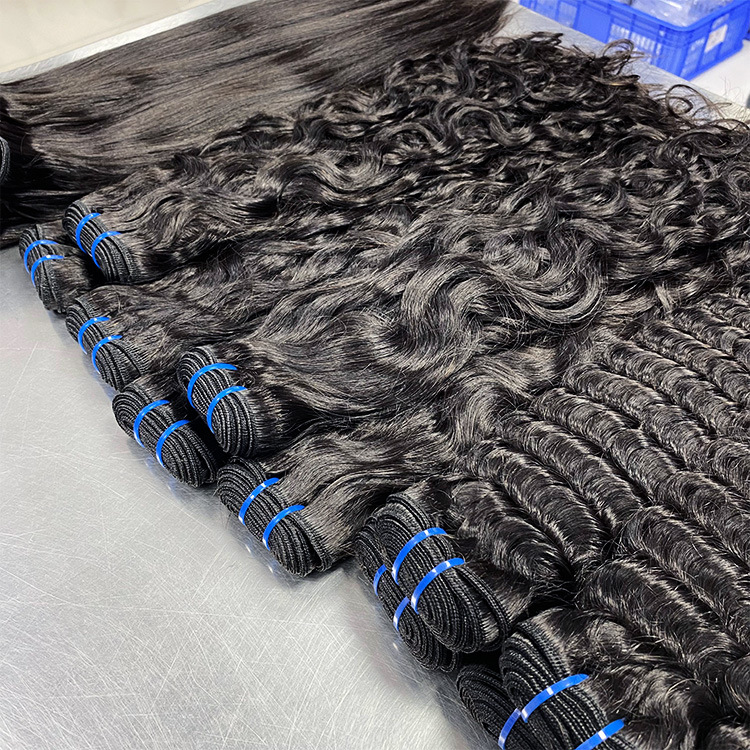
human hair bundles comparison showing texture, luster, and tapered ends
Which at‑home tests can I do safely (burn, cuticle, bleach strand) without ruining the hair?
Quick, non-destructive checks
- Feel and movement: Human hair feels soft and fiber-like (not plastic-cool) and flows naturally. Synthetic or heavily coated hair feels uniformly slick or glassy, with “plastic” slip.
- Shine and color: Natural luster with slight strand-to-strand variation is a good sign. “Too shiny” or mirror-gloss often points to silicone coating or synthetic fibers.
- Smell: Strong plastic or chemical odor suggests heavy processing. Light factory steam scent is normal; harsh “corn chip” or chemical smells are red flags.
Water absorption/float test (safe)
- How: Drop 3–5 loose strands into a glass of room-temperature water. Observe for 10–30 seconds.
- Result: Human hair absorbs water and typically sinks or becomes heavier before slowly sinking. Synthetic and silicone-coated hair tends to repel water and float or take longer to wet.
- Note: Coated human hair can float at first. Use this test together with the next ones.
Low-heat styling test (safe on a hidden section)
- How: Set a flat iron or wand to low–medium heat. Test a small, hidden section.
- Human hair: Styles smoothly and holds a curl/straightness until rewetted.
- Synthetics: May melt, kink, stick to plates, or give off a plastic odor. Some “heat-friendly” synthetics tolerate low heat but still won’t behave or hold like human hair.
Cuticle slide test (safe)
- How: Pinch a single strand. Slide your fingers root-to-tip (smooth), then tip-to-root.
- Human hair with intact cuticles: Smooth in the natural direction, and noticeably rougher with slight resistance going tip-to-root.
- Stripped/coated or synthetic: Feels equally slippery both ways.
Burn test (use sparingly and safely)
- How: Cut 1–2 strands. Hold with tweezers. Briefly pass through a small flame over a nonflammable surface; remove flame and observe.
- Human hair: Smells like burning protein (feathers/hair), burns then self-extinguishes, leaves soft, crushable ash.
- Synthetics: Melt and form hard beads, smell chemical/plastic.
- Limitations: Animal hair will mimic human hair in a burn test. This test won’t reveal Remy vs non-Remy.
Bleach or dye strand test (optional, very telling)
- How: Mix a tiny amount of bleach or semi-permanent dye and apply to a cut-off strand. Process as directed, rinse, and assess.
- Human hair: Lifts or takes dye with predictable tonality (speed varies by prior processing).
- Synthetics: Resist color, turn patchy, or degrade.
- Tip: For salon owners/retailers, do this on samples before bulk buys; color performance is a major customer touchpoint.
Quick behavior comparison
| Test/Sign | Human Hair (cuticle-intact) | Silicone-Coated/Acid-Washed Human Hair | Synthetic/Mixed Fibers |
|---|---|---|---|
| Feel | Natural fiber feel; not plastic-cool | Very slick/slippery at first | Uniformly slick, plastic-like |
| Water | Absorbs; usually sinks | Beads/repels initially | Floats/repels; dries very quickly |
| Heat styling | Styles and holds until rewetted | Styles initially; performance drops as coating washes off | Melts/kinks; may stick to plates |
| Burn | Protein smell; soft ash | Protein smell; still ash | Chemical smell; hard beads |
| Color/bleach | Lifts/accepts dye | May lift unpredictably/unevenly | Resists dye; can degrade |
| Cuticle slide | Smooth down, rough up | Often smooth both ways | Smooth both ways |
| Strand thickness | Slight natural variation | More uniform after acid wash | Highly uniform, extruded look |
How do I spot silicone coating, acid wash, or mixed synthetic fibers in my bundles?
What these processes mean
- Silicone coating: A cosmetic layer added to make hair feel silky and look shiny. It temporarily masks roughness and damage.
- Acid wash (cuticle stripping): Non-Remy or mixed-direction hair is soaked to dissolve cuticle scales, then coated to prevent instant matting. It looks great day one, but degrades quickly.
- Synthetic blends: Plastic fibers mixed with human hair to lower cost; often detectable with heat/burn/dye tests.
Signs of silicone coating
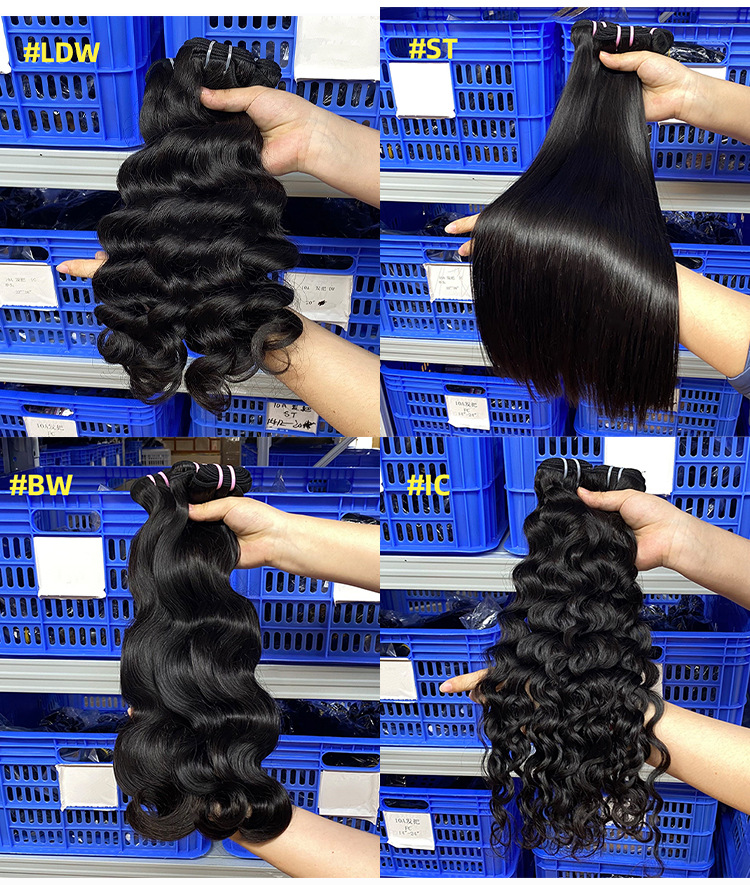
- Ultra-glossy, glass-like shine and very slippery handfeel.
- Water beading or slow wetting during the first wash.
- Alcohol wipe test: Rub a single strand with isopropyl alcohol on a cotton pad. You may feel the strand’s surface lose some slip and see a faint cloudy film on the pad.
- Clarifying proof: After a clarifying shampoo (sulfate), hair feels drier/rougher, tangles more, and loses that day-one slip.
Signs of acid-washed, cuticle-stripped hair
- Cuticle slide test feels smooth both ways (little to no “grab” going tip-to-root).
- Unnaturally uniform strand diameter; ends can look blunt yet fragile.
- After 1–3 washes, tangling increases, especially at the nape or with friction; sheen dulls, and fibers feel dry.
- Under magnification (phone macro lens or simple USB microscope), you won’t see clear overlapping cuticle scales—shafts look smooth or etched.
Signs of synthetic or mixed fibers
- Melt/kink under low heat; plastic odor on burn.
- Hard bead residue after burn test.
- Overly consistent thickness and plastic-like sheen.
- Float and dry very quickly compared to human hair.
- High static and a “plastic squeak” when rubbed.
Simple spot tests for processing
- Towel rub: Gently rub mid-lengths with a cotton towel. Silicone-heavy hair feels squeaky-slick initially, then catches more as coating wears.
- Warm water + dish soap bowl test (loose strands): Coated hair may leave a slick film; human hair won’t.
- Static/squeak test: Rub strands between fingers; human hair typically generates less static and has a soft “hair squeak.” Plastics generate more static and a sharper squeak.
What proof should I ask vendors for, like raw hair videos or processing declarations?
As a salon, stylist, or small hair brand, treat this like QC. Reputable vendors of human hair bundles, virgin hair bundles, raw hair bundles, and human hair extensions are used to these requests.
Documentation to request
- Processing declaration: Written confirmation of Remy (cuticle-aligned) status, whether hair is raw/virgin vs dyed/steamed, and whether silicone or acid treatments were used.
- Source detail: Region of origin, single-donor vs multi-donor, and collection method (ponytail vs floor hair).
- Batch/lot traceability: Lot numbers tied to your order for consistent reorders.
- Spec sheet: Weight (e.g., 100g ± 5g), length tolerance, double-drawn vs single-drawn, weft type (machine vs hand-tied), and acceptable shed rate.
Visual proof to request (photos/videos)
- Root-marked ponytails: Show the bundle tied at the root end, then combed root-to-tip and tip-to-root on camera to demonstrate roughness only in the reverse direction.
- Wet comb-through video: Fully saturate in water and comb—real hair gets heavier, detangles with slip; synthetics often repel and snarl.
- Natural revert clip: After a light steam or shampoo, raw/virgin textures should return to their base pattern.
- Macro shots: Close-ups of fiber surface and weft construction (beard length, neat stitching, no excessive short returns).
- Weight-on-scale photo: Bundle on a digital scale to confirm 100g standard.
- Color swatch test (optional): Vendor applies toner/bleach to a few strands to show lift behavior, especially if you sell color services.
Commercial terms that build trust
- Return/defect policy: Clear window and conditions for tangling/matting claims.
- Consistency promises: Same-lot fulfillment for multi-bundle orders.
- Sample program: Paid or discounted samples before wholesale commitment.
- Label transparency: Honest use of terms like Remy, virgin, raw rather than vague “grade” claims.
| Vendor Proof Item | Why It Matters |
|---|---|
| Processing declaration | Confirms no acid/silicone if you need true Remy |
| Root-marked, two-direction comb video | Demonstrates cuticle alignment and direction |
| Wet comb-through video | Shows water absorption and natural detangling |
| Macro weft photos | Reveals quality control and single-direction wefting |
| Weight-on-scale photo | Verifies true bundle weight |
| Return/defect policy | Protects you and your clients |
Can I verify cuticle alignment and single‑direction wefting from product photos and videos?
You can’t be 100% certain from media alone, but you can get close by asking for specific shots that reveal directionality and construction.
What to look for in cuticle alignment
- Two-direction comb test on video: The model combs smoothly root-to-tip, then shows noticeable resistance tip-to-root. If it’s equally slippery both ways, cuticles are likely stripped or heavily coated.
- Water-dunk + comb: Hair should darken, absorb water, and detangle without plastic-like beading. Coated or synthetic hair resists saturation.
- Subtle luster and slight strand variation: Real cuticle reflects softer, with micro-variation; plastic-like shine looks uniform and mirror-bright.
Verifying single-direction wefting (Remy construction)
- Root identification: The vendor should mark the root end and show that all roots sit on the same side of the weft. Ask them to flip the bundle; root ends should remain on the same weft edge.
- Weft “beard” inspection: The short return hairs (beard) should be even and tidy. Excessively long, wild returns can indicate cut-and-folded non-Remy.
- Tape or slide test on camera: A strip of painter’s tape pressed lightly along mid-lengths and slid tip-to-root will catch more if cuticles are intact and aligned. Root-to-tip should glide.
- Natural taper: Real Remy hair has slightly fuller mids with natural taper toward the ends (unless double-drawn). Completely blunt, uniform ends in long lengths can suggest heavy processing.
Bonus: simple magnification helps
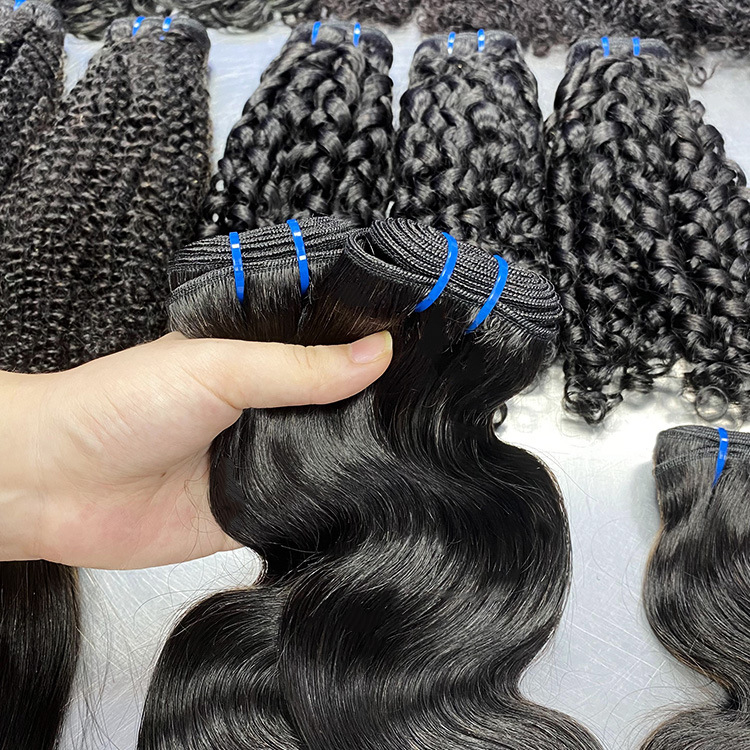
- Use a phone macro clip or basic USB microscope: Human hair shows overlapping cuticle scales; synthetics look smooth/extruded or patterned. This won’t tell you raw vs virgin, but it distinguishes hair from plastic quickly.
Hair type snapshot for context
| Hair Type | Quality | Lifespan (with care) | Coloring/Lightening |
|---|---|---|---|
| Raw Hair | Highest | Longest | Excellent (predictable lift) |
| Virgin Remy | High | Long | Very good |
| Non-Remy/Processed | Variable | Short–Moderate | Unpredictable |
| Synthetic | Lowest (for installs) | Short | Limited/none |
Note: The same QC approach applies whether you’re buying human hair bundles, human hair wigs, lace front wigs, HD lace wigs, or bulk hair for wefting. Always test small samples first, especially if you plan to bleach or tone.
Practical QC workflow you can use today
- Step 1: Feel/shine/smell check on arrival.
- Step 2: Water absorption test on a few loose strands.
- Step 3: Low-heat styling test on a hidden section.
- Step 4: Cuticle slide test across different areas of the bundle.
- Step 5: If needed, burn test on 1–2 strands in a safe area.
- Step 6: Bleach or dye test on cut-off strands if you color hair.
- Step 7: If you’re a salon/retailer, document results and request the vendor media/proofs listed above for your files.
Safety note: When doing burn tests, work over a non-flammable surface with tweezers, keep water nearby, and only test 1–2 loose strands.
Key red flags worth acting on
- Melting, kinking, or plastic smell under low heat.
- Perfectly uniform thickness, glassy plastic-like shine, and equal slip in both directions.
- Heavy water beading or floating strands that won’t wet after 30+ seconds.
- Quick tangling and matting after the first clarifying wash (coating washed off).
If you’re sourcing for clients or your boutique, don’t ignore early indicators—returns and reputational damage cost more than replacing a questionable lot.
Conclusion
Real human hair behaves like a natural protein fiber: it absorbs water, styles and holds shape until rewetted, shows slight strand variation, smells like burning hair in a flame, and—most importantly—has intact cuticles that create directional “grip.” Silicone coatings, acid washes, and synthetic blends can fake the look on day one, but the difference shows up fast in your tests and after the first few washes.
Whether you’re installing for yourself, serving salon clients, or stocking an online shop, get into the habit of small-sample QC and vendor proof requests. A few minutes of testing can save you hours of detangling, prevent color disasters, and protect your brand’s promise of quality.
Futher Reading: https://biwinco.com/human-hair-bundles-ultimate-buying-guide/