
If you’ve ever looked in the mirror and thought, “Why does my wig look tired even though I barely wore it?”—you’re not alone. Synthetic fibers pick up oils from your skin, a bit of hairspray, and whatever’s floating around your day (commute dust is a silent offender). The good news: you don’t need salon skills or fancy gadgets to bring a synthetic wig back to fresh, bouncy, and smooth. You just need a gentle process and the right products.
To clean a synthetic wig, detangle with a wide-tooth comb, wash in cool water using a synthetic wig shampoo, condition lightly on mid-lengths and ends, then air-dry on a wig stand away from heat and sun. Wash every 6–10 wears or when buildup is visible, and avoid heavy oils or alcohol-based products.
Below, I’ll walk you through exactly how I wash and dry synthetic wigs at home—step by step, with realistic tips and small details that matter (like how long to swish vs. soak, and what to do with lace fronts). I’ve made all the common mistakes so you don’t have to.
What supplies do I need to wash my synthetic wig at home?
Before you start, assemble everything. It keeps you from running around with dripping fibers, which is how people stretch caps and frizz ends.
Core supplies (what I actually use)
- Wide-tooth comb or a wig brush (looped bristles are great)
- Basin or clean sink
- Cool water (never hot)
- Synthetic wig shampoo (or a mild sulfate-free cleanser formulated for synthetics)
- Synthetic wig conditioner or conditioning spray
- Soft towel (microfiber is ideal)
- Wig stand or collapsible drying stand
- Optional: fabric softener (tiny amount), detangling spray for synthetic fibers

Why these matter
- Wide-tooth comb: Reduces tension and prevents snapping the fiber. I’ve seen ends fuzz up from people using tight-bristle brushes.
- Cool water: Heat is the enemy. Hot water can warp curl patterns and cause permanent frizz.
- Wig-specific cleanser: Regular shampoos can be too harsh or too oily; wig shampoo is designed to lift residue without stripping the fiber coating.
- Conditioner: Synthetic fibers don’t “absorb” like human hair, but a light coat helps slip and prevents matting—especially on ends.
- Wig stand: Airflow and shape retention. Drying flat can create weird kinks.
Tools & Alternatives Table
| Tools & Materials | Best Use Case | Safe Alternatives |
|---|---|---|
| Synthetic wig shampoo | Routine cleansing for all synthetic fibers | Mild sulfate-free shampoo for synthetics only |
| Synthetic wig conditioner/spray | Slip and softness on mid-lengths/ends | Tiny amount of diluted fabric softener |
| Wide-tooth comb / looped wig brush | Detangling without tugging | Fingers for very fragile lace sections |
| Basin or sink | Controlled soak and swish | Large bowl or plastic tub |
| Microfiber towel | Gentle blotting without friction | Soft cotton T-shirt |
| Wig stand | Shape retention and airflow | Wire rack or tall bottle covered with towel |
Pro tip: If your wig has a lace front, keep a hand inside the cap when detangling near the hairline to avoid stressing the lace. I learned this after one too-enthusiastic combing session that cost me a few knots at the front.
How often should I wash my synthetic wig to keep it looking fresh?
Frequency depends on how you wear it and the environment. Sweat, dry climates, hair spray, and daily friction (scarves, helmets) accelerate buildup.
General rule of thumb
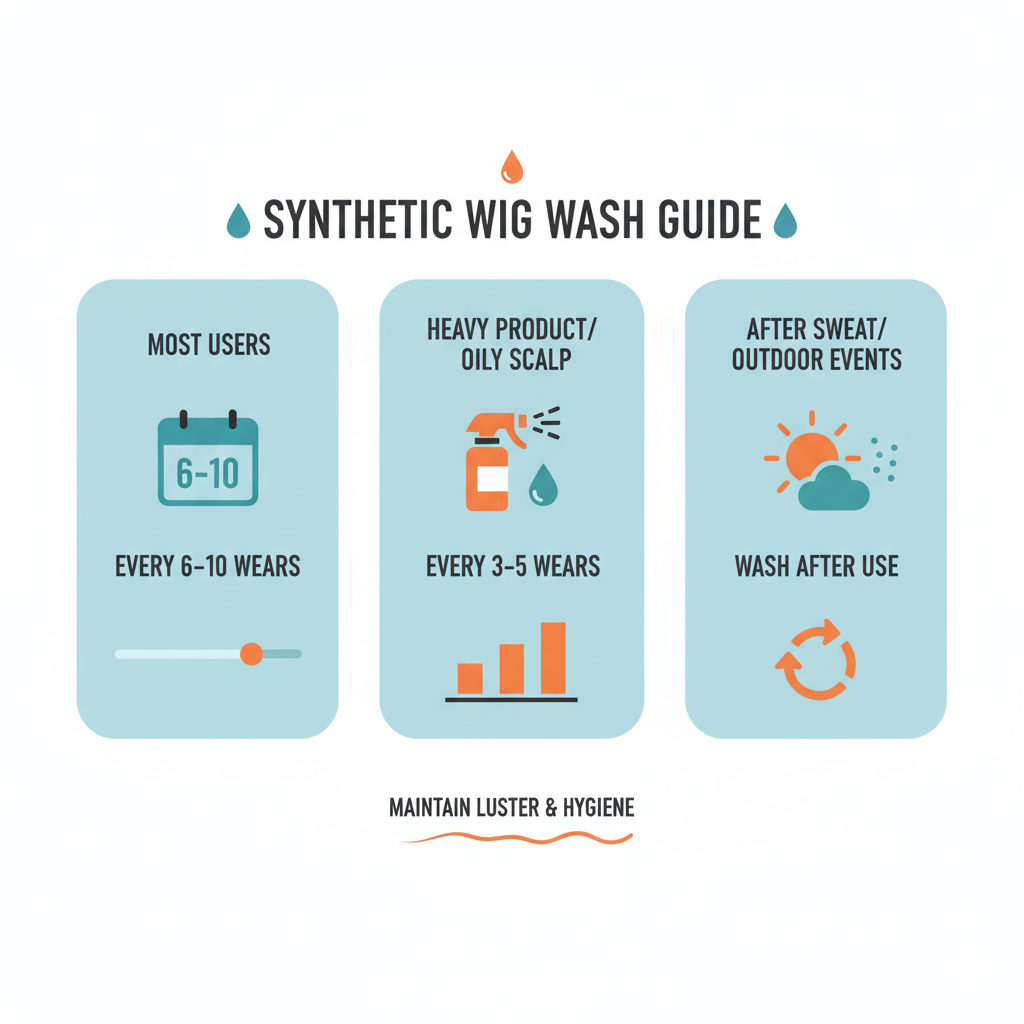
- Every 6–10 wears for most people
- Every 3–5 wears if you use styling sprays regularly or have an oily scalp
- After events where you sweat or spend time outdoors (festivals, summer commutes)
Signs it’s time to wash
- The wig feels coated or “squeaky” instead of soft
- Ends look rough, clumpy, or slightly sticky
- The cap smells a bit like scalp or product
- Curl or wave pattern loses definition and won’t revive with light detangling
Light refresh vs. full wash
- Light refresh after each wear:
- Mist with a wig-safe detangler
- Comb from ends upward
- Spot-clean the cap with a damp cloth
- Full wash after buildup or 6–10 wears:
- Follow the full steps below (soak, swish, condition, air-dry)
If you wear the same wig daily, sticking to a weekly routine keeps fibers smoother longer. Over-washing can dry them out, too, so aim for balance.
Can I use regular shampoo, or do I need a special synthetic wig cleanser?
Short answer: Use a cleanser formulated for synthetic wigs whenever possible. Regular shampoos—especially those made for human hair—can be too heavy, too oily, or too alkaline, and they may strip protective coatings or leave residue that attracts dust.
What works well
- Synthetic wig shampoo from a reputable brand
- Mild, sulfate-free shampoos specifically labeled safe for synthetic fibers
- Diluted solution (follow the product’s capful instructions; more is not better)
What to avoid
- Hot water (can distort fibers)
- Heavy silicones or oils (make wigs shiny in the wrong way and attract grime)
- Alcohol-laden products (dry out fibers and create stiffness)
- Clarifying shampoos for human hair (too harsh; can dull synthetic fibers)
Conditioner guidelines
- Use a synthetic wig conditioner or a dedicated conditioning spray
- Apply to mid-lengths and ends, not the roots/cap (it can loosen knots and wefts)
- Leave on for 2–3 minutes; do a gentle partial rinse so a small amount remains for slip
- Optional: a few drops of fabric softener diluted in water for very rough ends (avoid scented, colored versions—stick to basic)
I once tried a salon-grade human hair mask on a synthetic curl set (rookie curiosity). It looked amazing wet… then dried plastic-shiny and heavy. It took two washes to restore it. Lesson learned.
What is the best drying method to protect the wig’s fiber and style?
Air-dry on a wig stand away from heat, sun, and humidity. Drying is where most people accidentally undo their careful washing—twisting the cap, blow-drying on high, or leaving it in the sun.
Ideal drying steps
- Blot gently with a towel—do not wring or twist.
- Place on a wig stand for airflow and shape.
- Keep it out of direct sunlight and away from heaters.
- Let it dry completely before brushing or styling.
- Use only cool airflow if you must speed up drying.
Why air-drying wins
- Heat changes the structure of synthetic fibers. Even “heat-friendly” wigs have limits.
- Air-drying protects the curl pattern and prevents frizz at the ends.
- The stand keeps the cap from stretching or drying lopsided.
Drying mistakes vs. how to avoid them
| Common Mistake | How to Avoid It |
|---|---|
| Blow-drying on high heat | Air-dry or use only cool airflow |
| Wringing the wig to remove water | Blot gently with a microfiber towel |
| Drying flat on a towel | Use a stand to preserve shape and airflow |
| Sun-drying on a windowsill | Dry in shade; UV can fade and heat can warp |
| Brushing while damp | Wait until fully dry; detangle gently after |
If your wig is labeled heat-friendly, you can use low heat—but stay conservative. I stick to 250–280°F (120–140°C) max and do quick passes with constant motion. Test on an inner section first.
Step-by-step: how to wash a synthetic wig (gentle method)
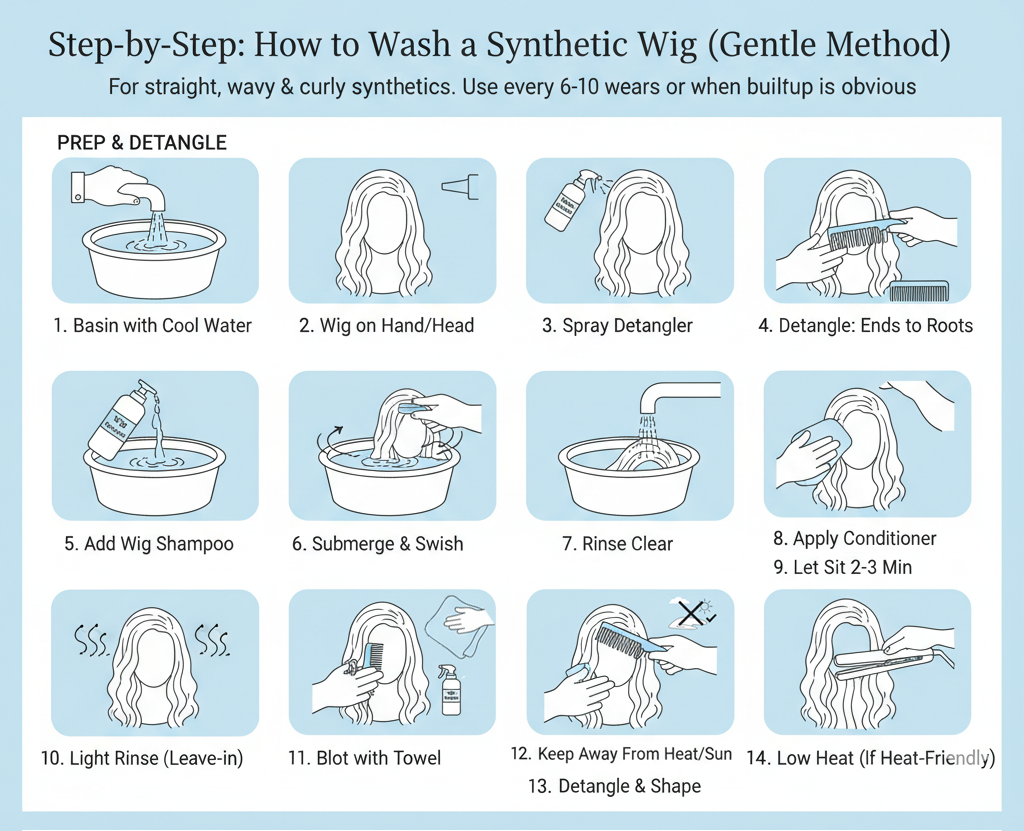
Follow these steps when buildup is obvious or after 6–10 wears. This is the routine I trust for straight, wavy, and curly synthetics.
Prep and detangle
- Set up your basin with cool water.
- Place the wig on your hand or a mannequin head for stability.
- Spray a light wig detangler if needed.
- Gently detangle from the ends up to the roots with a wide-tooth comb.
- Support the lace front with your fingers inside the cap.
- Work in sections; don’t rush the hairline.
Wash
- Add a capful of synthetic wig shampoo to the basin; mix gently.
- Submerge the wig and swish softly for 2–5 minutes.
- Do not rub, scrub, or twist. Think “glide,” not “massage.”
- Lift the wig and rinse under cool running water until it runs clear.
Condition
- Apply synthetic wig conditioner to mid-lengths and ends.
- Avoid the cap and knots.
- Let sit 2–3 minutes.
- Rinse lightly with cool water—leave a small amount for softness and manageability.
Dry
- Blot excess water with a soft towel. No wringing.
- Place on a wig stand to air-dry completely.
- Keep away from sun, radiators, or steamy bathrooms.
- Wait until fully dry before combing.
Restyle
- After drying, use a wig-specific detangler and a wide-tooth comb to shape.
- Avoid heat tools unless the wig is labeled heat-friendly. If it is, use low temps and quick passes.
Step-by-step at a glance
| Step | Purpose | Estimated Time |
|---|---|---|
| 1–4 | Detangle gently to prevent fiber stress | 3–6 minutes |
| 5–7 | Cleanse product/oil buildup | 3–5 minutes |
| 8–10 | Condition ends for slip and smoothness | 3 minutes |
| 11–12 | Remove water, set shape for drying | 2 minutes |
| 13 | Air-dry thoroughly | 4–8 hours |
| 14–15 | Restyle and finalize | 3–10 minutes |
Total active time: roughly 15–25 minutes, plus passive drying.
Extra tips for different wig types
Lace-front or monofilament wigs
- Detangle away from the lace—support the hairline with your fingers inside the cap.
- Avoid heavy conditioner at the front; it can loosen the knots over time.
- If makeup transfers to the lace, dab with a cotton swab and wig shampoo solution, then rinse carefully.
Curly or wavy synthetic wigs
- Skip aggressive combing—finger-detangle with a dab of conditioning spray.
- After washing, scrunch curls gently to encourage pattern while drying.
- Once dry, separate curls with fingers rather than combing to prevent frizz.
Long wigs prone to friction frizz
- Use a light silicone-free detangler and focus on the nape area.
- Consider a satin scarf or collar guard if you wear jackets; the nape is the first area to roughen.
- Refresh ends with a tiny diluted fabric softener dip (optional), then rinse lightly.
Heat-friendly synthetic fibers
- Heat tools are okay at low settings, but the wig will still prefer air-drying.
- Avoid hot water entirely; it can shift curl memory.
- Use heat only on fully dry fibers.
Gentle care habits that extend wig life
- Wash on schedule, not out of habit. If the wig still feels soft and clean, don’t over-wash.
- Keep products minimal—avoid heavy oils, thick serums, and aerosol hairsprays not meant for synthetics.
- Store on a stand away from sunlight and dust. If you must store in a bag, make sure it’s fully dry first.
- Rotate wigs if possible. Daily wear on one piece accelerates friction frizz at the nape.
Here’s the trick: consistency beats intensity. Gentle, regular maintenance keeps fibers glossy-looking far longer than an occasional “deep rescue.”
Troubleshooting: common mistakes and quick fixes
- Wig looks limp after washing:
- You may have over-conditioned or used a heavy product. Do a light rewash with wig shampoo and rinse thoroughly.
- Ends feel crunchy:
- Try a brief soak in cool water with a few drops of fabric softener. Rinse lightly.
- Cap feels loose:
- Avoid tugging while wet. Adjust straps only when the wig is fully dry.
- Shine looks “too synthetic”:
- Use a tiny amount of dry shampoo (clear, not white) from a distance to reduce shine. Test first.
I once thought more conditioner meant more softness. On synthetics, more usually means “slippery but stiff.” A partial rinse leaves just enough slip without the heavy feel.
FAQs: quick answers you can trust
- Can I use regular shampoo?
Use a cleanser made for synthetic wigs or a mild sulfate-free option designed for synthetic fibers. Most regular human hair shampoos aren’t ideal. - How often should I wash?
Every 6–10 wears on average; more often if you use product or sweat. Light refreshes in between help. - What water temperature is best?
Cool to lukewarm only. Never hot. - Can I blow-dry?
Prefer air-drying. If absolutely necessary, use cool airflow—not heat. - Do I need conditioner?
Yes, but lightly and only on mid-lengths and ends. Avoid the cap. - Can I heat-style?
Only if your wig is labeled heat-friendly. Keep temps low and test on a hidden section.
Putting it all together: a realistic routine you can follow
- After each wear:
- Light detangle from ends to roots
- Spot-clean the cap if needed
- Store on a stand
- After 6–10 wears:
- Full wash with wig shampoo
- Light condition on ends
- Air-dry on a stand, then restyle
That’s it. No complicated chemistry, no stressful salon steps—just gentleness, cool water, and patience. The first time I got this routine right, I remember noticing how the fibers felt soft without that sticky glide. The wig held its shape, the lace looked clean, and styling took half the time.
If you’re unsure about your specific wig (straight vs. curly, lace-front vs. full cap, heat-friendly or not), share the model or fiber type and I’ll tailor the steps. It’s easy to tweak for your exact needs.
Final thoughts
Caring for a synthetic wig isn’t about perfection—it’s about consistency and kindness to the fibers. With the right shampoo, cool water, and a gentle touch, your wig will bounce back to looking fresh in under 30 minutes of active time. The more you practice this routine, the faster it gets. And after that first successful wash and air-dry, you’ll wonder why you ever worried about it.
You’ve got this. Keep it cool, keep it gentle, and your wig will thank you with smooth ends and a clean, natural-looking shape every time.