
If you’ve ever washed a synthetic wig the “normal” way—shampoo, scrub, wring, blow-dry—you probably learned the hard way that wigs don’t play by human-hair rules. One enthusiastic wash can turn silky fibers into frizz, flatten curls, and leave the whole piece stiff and dull. I’ve been there: the first time I washed a favorite bob, I absentmindedly used warm water and my regular shampoo. The result? A crunchy triangle I could barely salvage with conditioner spray and a week of gentle detangling.
To wash a synthetic wig without damaging the fibers, detangle first, use cool water, and cleanse with a dedicated synthetic wig shampoo. Avoid rubbing or wringing; instead, swish gently, rinse until clear, and air-dry on a stand away from heat and sunlight. Stick to wig-safe products and wash only every 6–8 wears to keep frizz and fiber fatigue at bay.
In this guide, I’ll walk you through the exact process I use for both premium synthetic and heat-friendly fibers. You’ll see what products are safe, how often to wash when you wear your wig daily, the best way to detangle, and how to dry without wrecking the style. Let’s keep your wig looking fresh, moving naturally, and lasting longer.
What gentle products should I use to wash my synthetic wig without frizzing the fibers?
The fastest way to ruin a synthetic wig is using the wrong cleanser or anything with heat. Synthetic fibers (Kanekalon, Toyokalon, and similar) have a set shape baked in at the factory; harsh surfactants, hot water, or friction can relax or distort that shape and cause frizz.
What to use (and why)
- Synthetic wig shampoo
- Formulated with milder surfactants that lift oils, sweat, and light dirt without stripping or roughening the fiber.
- Synthetic wig conditioner or fiber-smoothing spray
- Coats fibers just enough to reduce static and tangles without heavy residue.
- Cool water
- Prevents heat-related warping; helps the fibers keep their factory-set texture.
- Microfiber towel
- Minimizes friction and snags when blotting.
- Wide-tooth comb or wig brush
- Spreads tension evenly across fibers to prevent stretching and breakage.
Products to avoid (for real)
- Regular shampoos and conditioners for human hair
- Often too strong; can leave residue or dull the fibers.
- Hot water or heated tools on non–heat-friendly synthetic wigs
- Can melt or permanently frizz the fibers.
- Heavy oils, silicone serums meant for human hair, fabric softener as a routine step
- May weigh fibers down, attract dirt, and cause buildup. If you try fabric softener occasionally, dilute well and rinse thoroughly.
- Nail brushes, nylon bristle brushes, boar bristle brushes
- Cause static, catch fibers, and create fuzzy ends.
- Dish soap and baby shampoo
- I know they’re popular hacks, but they’re not ideal for ongoing care. In a pinch, super-diluted baby shampoo is gentler than dish soap—but dedicated synthetic wig shampoo is safer and more consistent.

Quick comparison: tools & materials vs. alternatives
| Item/Step | Best Option (Safe for Synthetic) | Common Alternative | Notes/Trade-offs |
|---|---|---|---|
| Cleanser | Synthetic wig shampoo | Baby shampoo (diluted) | Baby shampoo is mild but not formulated for fibers |
| Conditioner | Synthetic wig conditioner or fiber spray | Light leave-in (wig-safe) | Avoid heavy human-hair conditioners |
| Comb/Brush | Wide-tooth comb or wig brush | Detangling comb | Skip nylon/bristle brushes |
| Towel | Microfiber towel | Soft cotton tee towel | Avoid rough bath towels |
| Water temperature | Cool | Lukewarm (for heat-friendly) | Never hot—warps style and frizzes fibers |
How often should I wash my synthetic wig if I wear it daily for work?
Frequency depends on your environment, how much you sweat, and product use. Overwashing accelerates tangling and fiber fatigue; underwashing invites odor and buildup. There’s a sweet spot.
General rule of thumb
- Every 6–8 wears for most synthetic wigs.
- If you wear it all day in warm weather or use styling sprays frequently: every 4–6 wears.
- If you rotate wigs or wear a wig cap and minimal products: you can stretch to 8–10 wears.
Signs it’s time to wash
- The wig looks dull or feels coated.
- Increased static or tangles, especially at the nape.
- Noticeable odor after a workday.
- Fibers feel stiff and don’t move naturally.
How to extend time between washes
- Wear a breathable wig cap to absorb sweat and oils.
- Use a light, wig-safe leave-in fiber spray to refresh and reduce static.
- Spot-clean the nape and interior cap with a damp cloth after sweaty days.
- Store on a stand to maintain shape; cover lightly to keep dust off.
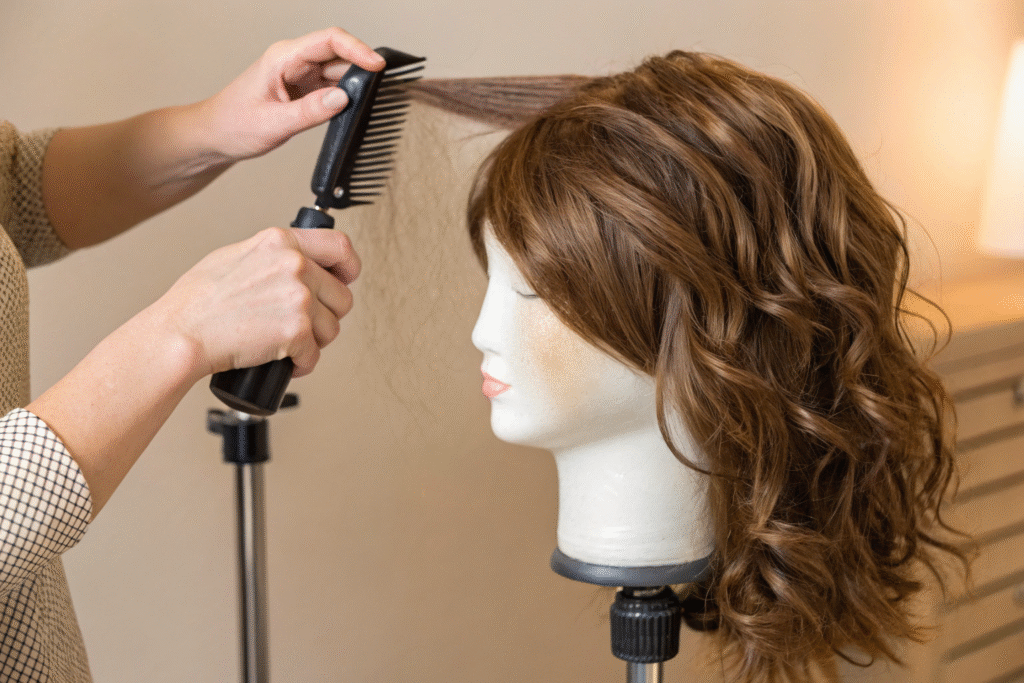
Can I detangle my synthetic wig before washing, and what’s the safest method?
Yes—detangle before washing. Washing a knotted wig amplifies friction, which stretches and frizzes fibers. Think of it like combing out a necklace chain before putting it in a jewelry cleaner: prep saves damage.
Step-by-step: safe pre-wash detangle
- Place the wig on a stand or your hand to stabilize the cap.
- Lightly mist with wig-safe detangler or a diluted fiber-smoothing spray.
- Start at the ends. Work upward in 1–2 inch sections, supporting the hair above the knot with your fingers.
- Use a wide-tooth comb or wig brush. Short strokes; don’t yank. If a knot resists, hold the fiber firmly above it and gently pick it out from the bottom up.
- Be extra gentle at the nape—this area collects friction from collars and scarves.
- For curly or wavy synthetics, finger-detangle as much as possible to preserve pattern. If you must use a comb, opt for the widest teeth and minimal passes.
- Once smooth, proceed to washing. A quick pass with your fingers to check for hidden snags helps.
Personal tip: I once tried to rush a long wig by combing from mid-lengths down, and created a bigger knot near the ends. The ends-first approach is slower but saves you from stretch damage and fuzzy fiber tips.
Common detangling mistakes vs. how to avoid them
| Mistake | How to Avoid |
|---|---|
| Starting at the roots | Always begin at the ends and work upward |
| Using too much force | Hold above the knot; use short, gentle strokes |
| Dry-combing curly textures | Mist lightly or use fingers to maintain curl pattern |
| Using the wrong brush | Wide-tooth or wig brush only; avoid bristle brushes |
| Skipping sectioning | Detangle in small sections for control |
How do I dry my synthetic wig after washing to keep the style and avoid heat damage?
Drying is where most people accidentally undo all their careful washing. Synthetic fibers hate heat and friction. Your goal is: remove excess water gently, let gravity reshape, and preserve the factory-set style.
The right washing process (full steps)
Follow this exactly—each step protects the fibers.
1. Detangle before washing
- Ends to roots with a wide-tooth comb or wig brush. This prevents stretching and minimizes friction during cleansing.
2. Prepare a cool-water bath
- Fill a basin with cool water. Add a small amount of synthetic wig shampoo (roughly a nickel/50p-sized dollop; dilute well).
3. Submerge and swish (3–5 minutes)
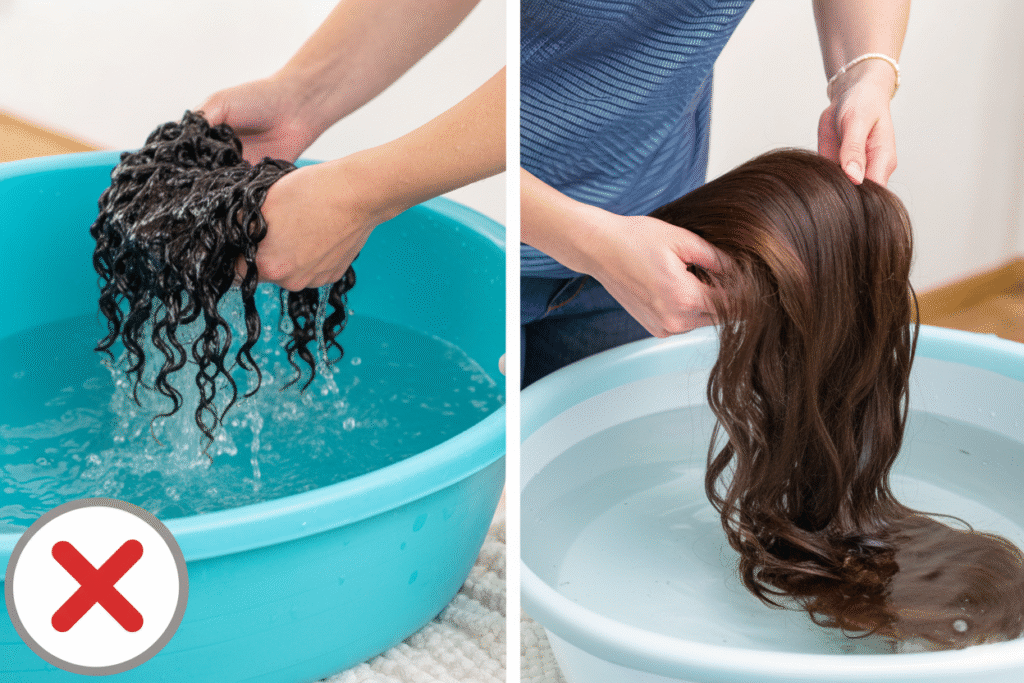
- Submerge the wig and gently swish. Do not scrub, rub, or wring. Let the water and cleanser do the work.
4. Rinse until water runs clear
- Hold the wig under cool running water. Keep rinsing until there are zero suds. Residue can make fibers dull and sticky.
5. Condition mid-lengths and ends
- Apply synthetic wig conditioner or fiber-smoothing spray. Focus on mid-lengths and ends (skip the roots/cap to avoid slippage). Follow product directions: some are light rinse, others are leave-in.
6. Blot, don’t wring
- Lift the wig, let excess drip. Place it in a microfiber towel and press gently to blot. No twisting or wringing—the fastest route to frizz.
7. Air-dry on a stand
- Place on a wig stand in a well-ventilated room, away from sunlight, radiators, kitchen heat, or lamps. Let it dry completely before combing. Gravity helps the fibers fall into place.
8. Final tidy
- Once dry, lightly comb or finger-style. For curls/waves, scrunch gently; avoid brushing out the pattern.

Heat-friendly synthetics: special notes
Some wigs are labeled “heat-friendly” or “HD.” They tolerate low heat—but “low” is key.
- Keep tools at manufacturer’s limit (often 250–300°F / 120–150°C). When in doubt, go lower.
- Always let the wig cool fully before detangling; fibers reset as they cool.
- Use a heat protectant designed for synthetic fibers (not human-hair sprays).
- Never blow-dry on hot. Use cool air only, and from a distance, if you must speed up drying.
Drying dos and don’ts
Do:
- Use a stand for airflow and shape.
- Blot with microfiber.
- Keep away from kitchens (oven blasts), space heaters, and sunny windows.
Don’t:
- Twist, wring, or rub in towels.
- Comb while wet—wait until fully dry.
- Hang by the lace front (can stretch); use the crown area on the stand.
Step vs. purpose (quick reference)
| Step | Purpose | Estimated Time |
|---|---|---|
| Detangle ends to roots | Prevent stretching and friction | 5–10 minutes |
| Cool-water shampoo bath | Cleanse gently without style loss | 5 minutes |
| Rinse thoroughly | Remove residue that stiffens fibers | 2–3 minutes |
| Condition ends | Reduce static, smooth tangles | 1–2 minutes |
| Blot with microfiber | Remove excess water without frizz | 1–2 minutes |
| Air-dry on stand | Preserve shape and texture | 4–8 hours |
Step-by-step tutorial: wash your synthetic wig the gentle way
This is the full, practical routine I use. If you follow it, you’ll avoid 95% of common issues.
Preparation
Gather supplies:
- Synthetic wig shampoo and conditioner/fiber spray
- Basin/sink, cool water
- Microfiber towel
- Wig stand
- Wide-tooth comb or wig brush
- Remove pins/clips from the wig cap to prevent snagging.
- If the wig is heavily soiled (product buildup), do two short swish cycles instead of one long soak—less friction, better lift.
Wash
- Detangle ends to roots in sections.
- Fill basin with cool water; add a small amount of wig shampoo and mix gently.
- Submerge the wig; swish softly for 3–5 minutes. Avoid scrubbing or rubbing.
- Lift the wig; drain, then rinse under cool running water until it runs clear.
- Apply conditioner/fiber-smoothing spray to mid-lengths and ends; follow directions to light-rinse or leave-in.
Dry
- Blot excess water with a microfiber towel—no twisting.
- Place on a wig stand; air-dry in a ventilated area away from sun/heat.
- After drying, gently comb or finger-style. For curls, use fingers to define rather than brushes.
Optional refresh tips
- For nape tangles between washes, mist with wig-safe detangler and pick knots from ends upward.
- Anti-static sheets (briefly and lightly) can help with flyaways—avoid overuse.
- If the style looks limp after drying, a very light mist of fiber spray and a few minutes on the stand can revive movement.
Troubleshooting: what if something goes wrong?
- Frizzed ends after washing
- Trim a millimeter or two from the worst fuzz, then mist with fiber-smoothing spray and gently comb. Move slowly to avoid more frizz.
- Stiff, crunchy feel
- You may have residue. Do a short cool-water soak with diluted wig shampoo, swish lightly, and rinse thoroughly.
- Odor persists
- Increase soak time slightly (still gentle swish), ensure a complete rinse, and let the wig dry in a well-ventilated space. Avoid heavy fragrances that can coat fibers.
- Flattened curls/waves
- Finger-scrunch while damp and let air-dry undisturbed. For heat-friendly fibers, reset curl with low heat and a protected tool—always within manufacturer limits.
Micro habits that make a big difference
- Cap care: Wipe the interior cap lightly with a damp cloth between washes—less sweat means longer intervals.
- Clothing awareness: Scarves and collars at the nape cause friction; be mindful on long days.
- Storage: Keep on a stand or in a breathable bag. Avoid plastic bags for long-term storage—they trap humidity.
- Sunlight: Direct sun fades fibers and can warm them enough to distort—dry in shade and store away from windows.
- Gentle mindset: If you catch yourself rushing, stop. Most wig damage happens in the “I’ll just do this quickly” moments.
Frequently asked quick answers
- Best products to avoid frizz?
- Synthetic wig shampoo + fiber-smoothing conditioner/spray, cool water, microfiber towel, wide-tooth comb.
- How often to wash if I wear it daily for work?
- Aim for every 6–8 wears; adjust to 4–6 if you sweat more or use styling products often.
- Can I detangle before washing?
- Absolutely—and you should. Ends to roots, in sections, with a wide-tooth comb or wig brush and a light mist of wig-safe detangler.
- How do I dry without heat damage?
- Blot gently, air-dry on a stand, keep away from sun and heat. For heat-friendly synthetics, low heat only within manufacturer limits, and detangle after cooling.
A quick reminder in simple terms
- Use gentle, wig-specific detergent.
- Rinse—don’t rub—until the water runs clear.
- No sunbathing or high-heat drying.
Final thoughts
Once you get the hang of this, caring for a synthetic wig becomes second nature. The routine is quiet and calm: cool water, a gentle swish, a little patience while it dries, and a quick tidy at the end. Your wig will reward you with better movement, fewer tangles, and a style that holds week after week. Give yourself two or three washes to build the habit, and you’ll be surprised how easy—and how effective—it becomes.