
Importing wigs from China can be highly profitable, but success hinges on getting the fundamentals right: supplier selection, airtight specifications, the right Incoterms, and disciplined logistics. Whether you’re bringing human hair lace wigs or synthetic fashion units to market, a robust import process will protect your margins and brand reputation.
Basic process to import wigs from China: identify your HS code (typically 6704), define precise product specs, vet and contract your supplier, choose suitable Incoterms (FOB/CIF/DDP), approve pre-production samples, set AQL and arrange inspections, book freight (air/sea), and clear customs with a licensed broker using the commercial invoice, packing list, and bill of lading/air waybill.
In the sections below, I break down how to choose the right wig supplier, which trade terms and documents to use, how to manage sampling and quality control, and what to plan for in shipping and customs for the US and Nigeria. I’ll also share practical tips to avoid delays, non-conformities, and unexpected costs.
How do I choose the right Chinese wig supplier for my quality and volume needs?
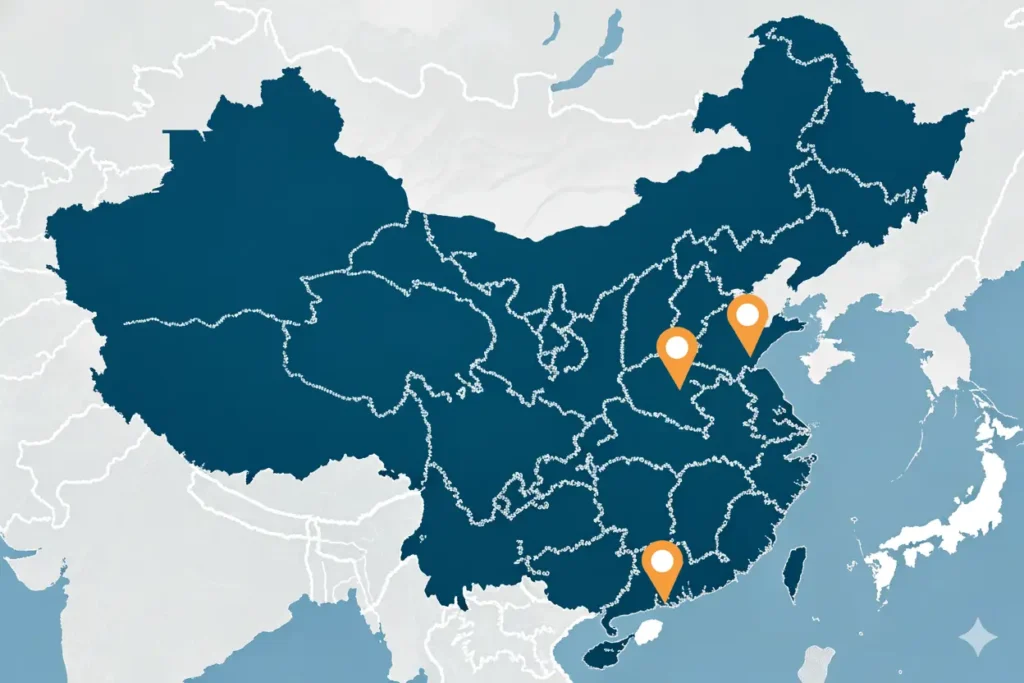
Selecting the right supplier is the single most important decision in wig importing. China’s wig manufacturing clusters (e.g., Xuchang in Henan for synthetic and blended wigs, Qingdao in Shandong for human hair and lace systems) offer different strengths, price points, and lead times.
Vet suppliers through samples, factory audits, certifications, and enforceable contracts; match regional specializations to your product type and volume, and use performance scorecards to reduce risk over repeat orders.
Regional strengths and product fit
- Xuchang, Henan: Large-scale synthetic and mixed-fiber production, competitive pricing, strong wefting capacity, fast mass production.
- Qingdao, Shandong: Human hair processing, lace-front/full lace craftsmanship, better consistency for premium SKUs, more experienced with boutique brands.
- Guangzhou/Shenzhen: Export-savvy traders/assemblers, quick turnaround on fashion-forward SKUs, flexible MOQs; useful for dropship/SMB pilots.
Supplier vetting workflow
- Request technical samples for each spec: cap construction (lace front/full lace/mono), density, knots (bleached/single/double), lace type (Swiss/HD), hair origin (Remy/non-Remy/virgin), color level, length distribution.
- Verify certifications where relevant: ISO 9001 for quality systems, social compliance audits (BSCI/SEDEX), and lab test reports for fiber labeling accuracy and color-fastness. Many wig products aren’t regulated like cosmetics, but truthful labeling and consumer safety still matter.
- Conduct factory audits (on-site or virtual): check knotting lines, ventilating teams, QC processes, and repair/rework stations; confirm capacity and peak-season scheduling.
- Run pilot orders: split SKUs across two suppliers to compare consistency, defect rate, and schedule adherence.
Contract structure that sticks
- Master supply agreement plus purchase contracts with:
- Detailed spec appendix (materials, density tolerance ±5%, lace GSM, cap size ranges, ventilation pattern, packaging).
- AQL inspection levels (e.g., ANSI/ASQ Z1.4, General II, AQL 2.5 for major defects, 4.0 for minor).
- Delivery terms, penalties for late delivery/non-conformance, rework/credit provisions.
- Dispute resolution venue (e.g., CIETAC arbitration) and governing law.
- Risk mitigation: platform trade assurance, escrow milestones, or letters of credit for larger orders.
Pro Tip: Include a “Golden Sample” clause. The supplier must match this sealed, dated sample for every batch; deviations trigger rework or discounts.
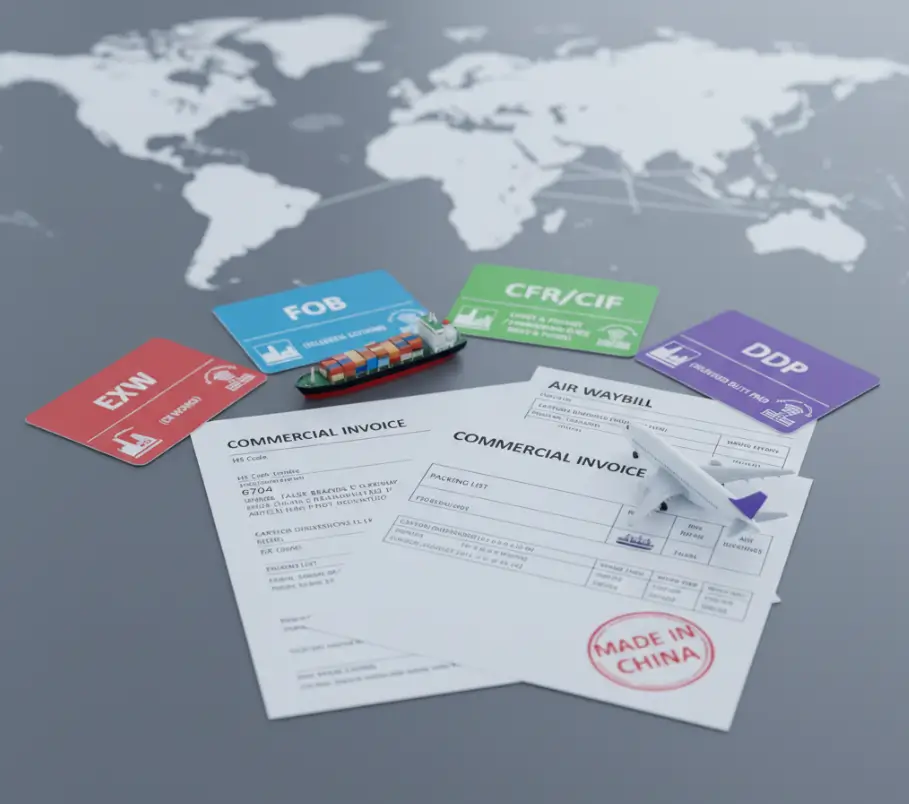
What documents and trade terms (EXW, FOB, CFR, DDP) should I use for my wig orders?
Getting Incoterms and paperwork right determines who pays for what, who bears risk when, and how smoothly cargo moves. For wigs, accurate classification under HS code 6704 is essential to calculate duty and comply with labeling rules.
Use FOB for most wig imports to balance control and cost; confirm HS code 6704 on the invoice, and ensure you have the commercial invoice, packing list, and bill of lading/air waybill before shipping; consider DDP only with trusted forwarders handling destination taxes.
Core documents you’ll need
- Commercial Invoice: Seller and buyer details, HS code (typically 6704), unit prices, currency, Incoterm, country of origin (China), payment terms.
- Packing List: SKU-level counts, net/gross weights, carton dimensions, number of packages.
- Transport Document: Bill of Lading (sea) or Air Waybill (air). Must match invoice details.
- Certificates/attestations: Not usually required for wigs, but include fiber content labeling and care instructions to meet destination consumer regulations. US: FTC textile labeling rules; Nigeria: SONCAP may apply for certain goods—verify current scope with your broker/agent.
- US-specific: Importer of Record information and, for formal entries, a customs bond.
- Nigeria-specific: Form M registration and Pre-Arrival Assessment Report (PAAR) via Nigeria Customs, if applicable to your import setup.
Incoterms comparison for wig shipments
| Incoterm | Cost Coverage | Risk Transfer | When to Use |
|---|---|---|---|
| EXW (Ex Works) | Buyer covers everything from factory gate | Risk passes at seller’s premises | Only if you have a strong local China team/forwarder; higher buyer workload |
| FOB (Free on Board) | Supplier handles origin export and port delivery; buyer covers ocean/air freight & beyond | Risk passes when goods loaded on vessel/aircraft | Best balance for control and transparency; common for wigs |
| CFR/CIF (Cost & Freight / Cost, Insurance & Freight) | Seller pays main carriage (and insurance for CIF) to destination port | Risk still passes at loading point | Useful if you want price certainty but retain customs/last-mile control |
| DDP (Delivered Duty Paid) | Seller handles door delivery including duties/taxes | Seller bears most risk/cost | Use with caution; ensure clarity on duty/tax rates and responsibility for compliance |
Caution: DDP into the US or Nigeria can backfire if the seller misdeclares values or uses unlicensed agents. You, as brand owner, still carry reputational and regulatory exposure.
How do I manage pre-production samples and quality inspections to avoid inconsistencies?
Sampling and QC are where wig imports succeed or fail. A perfect photo sample can mask inconsistent knotting, density variation, or color shifts in bulk. Systematic controls ensure repeatability.
Lock a Golden Sample, define measurable specs and AQL, and schedule pre-shipment inspections; use defect taxonomy and test protocols to catch issues like shedding, tangling, and lace tearing before cargo moves.
Build measurable specifications
- Material: Human hair (Remy/virgin) vs. synthetic (Kanekalon, heat-resistant fibers).
- Density: Define target and tolerance (e.g., 150% ±5%), check by weft weight and strand count in specified zones.
- Lace: Swiss/HD lace GSM, tint, durability tests; knot bleaching standard.
- Cap construction: Lace front/full lace/mono; ear tabs, combs/clips, adjustable straps.
- Color and length: Shade codes (e.g., #1B, #613, ombre patterns), length distribution (true-to-length ratio and acceptable variation).
- Packaging: Hairnet, tissue, box/polybag, barcode/label content.
Inspection plan
- Pre-production sample approval: Ensure supplier signs off that bulk will match the Golden Sample. Photograph and seal.
- In-line inspection (optional for large runs): Check first 10–20% for density, knotting uniformity, lace integrity.
- Pre-shipment inspection: ANSI/ASQ Z1.4 sampling, AQL 2.5/4.0; verify:
- Shedding/tangling tests (comb-through cycles).
- Lace tear test and seam strength.
- Colorfastness (wet rub/bleed checks for dark colors).
- Cap sizing and symmetry.
- Labeling accuracy (fiber content, care).
- Consolidate defect categories:
- Critical: Wrong material, severe lace tear, contamination.
- Major: Density shortfall > tolerance, color mismatch, mis-sized cap.
- Minor: Loose threads, minor packaging scuffs.
Pro Tip: Add a “Rework Window” clause—supplier must correct defects within 7–10 days at their cost, with re-inspection before release.

What shipping, customs, and duties should I plan for when importing wigs to the US or Nigeria?
Logistics strategy should align with your volume, cash flow, and launch timelines. Wigs are relatively compact and high-value, making air viable for initial drops, while sea becomes economical as volumes scale.
Classify under HS 6704, choose air for speed or sea for cost, plan buffer stock around peak seasons, and clear customs via licensed brokers; ensure origin marking and labeling compliance to avoid delays or penalties in the US and Nigeria.
Mode selection and transit planning
| Mode | Typical Use Case | Transit Time | Cost Profile | Notes |
|---|---|---|---|---|
| Air (courier or air freight) | New launches, small/urgent orders, high-MSRP SKUs | 3–8 days | Higher per kg | Best under ~150–200 kg; use air freight for better rates than courier at scale |
| Sea (LCL/FCL) | Stable replenishment, larger volumes | 20–40 days (Asia–US), 30–50 days (Asia–West Africa) | Lowest per unit | LCL for small volumes; FCL reduces damage risk and per-unit cost |
Plan for Golden Week (Oct), Chinese New Year (Jan/Feb), and 11.11 peak—they affect lead times and space availability. Build 2–4 weeks of buffer stock heading into those periods.
US import specifics
- HS code: Typically 6704 (Wigs, false beards, eyebrows, eyelashes, switches and the like, of human or animal hair or other textile materials). Confirm subheadings for material type with your broker.
- Duties: Vary by material and construction; verify current rates via CBP/Cross database. Some synthetic textile wigs carry different duty rates than human hair wigs.
- Broker process: File entry, pay duty, and present documents (invoice, packing list, AWB/BL). A customs bond is required for formal entries. Ensure country-of-origin marking (“Made in China”) and FTC-compliant labeling for fiber content and care.
- State regulations: Some states scrutinize consumer labeling. Keep consistent care instructions and avoid misleading claims.
Nigeria import specifics
- Regulatory steps: Register Form M (via your bank), obtain PAAR through Nigeria Customs, and coordinate with a licensed clearing agent.
- Duties/Taxes: Import duty, VAT, and possible levies based on HS 6704 subheading. Rates change—your agent should confirm current tariff schedules.
- Standards/Labeling: Country-of-origin marking required. SONCAP may not apply to wigs, but packaging/labeling should be truthful and consistent; agents may request documentation to avoid delays.
- Ports and timelines: Apapa and Tin Can Island are common; allow extra buffer for port congestion and document verification.
Caution: Under-declaration to cut duty is a common pitfall. It risks seizure, fines, and blacklisting. Always align declared values with contracts and payment records.

Operational checklist before cargo moves
- Approve pre-shipment inspection report.
- Receive commercial invoice, packing list, and BL/AWB.
- Confirm HS code 6704 and origin marking on labels/packaging.
- Book freight with clear Incoterms (FOB/CIF/DDP) and insurance if needed.
- Share arrival notice with your broker/agent and pre-file entries where possible.
Sample timeline and responsibilities(if you want to short the time, please contact us)
| Week | Activity | Owner |
|---|---|---|
| 0–1 | Spec finalization, RFQ to regional suppliers | Buyer |
| 2–3 | Sample evaluation, factory audit | Buyer/Third-party |
| 4 | Contract signing, Incoterms set (FOB/CIF) | Buyer/Supplier |
| 5–7 | Production and in-line checks | Supplier/QC agent |
| 8 | Pre-shipment inspection and report approval | Buyer/Inspector |
| 8–9 | Freight booking; docs prepared (invoice, PL, BL/AWB) | Supplier/Forwarder |
| 9–12 | Transit (air: week 9–10; sea: week 9–12+) | Forwarder |
| 10–13 | Customs clearance and delivery to warehouse | Broker/Agent |
Conclusion
Importing wigs from China is straightforward when you control the variables: pick the right regional supplier, codify specs and AQL, lock Incoterms that fit your risk tolerance, and execute disciplined inspections and customs clearance. The most important levers are HS code 6704 accuracy, airtight contracts, and a reliable broker-forwarder combo.
If you’re planning your next wig import from China and want help with supplier vetting, Incoterm selection, or inspection checklists, contact us for tailored sourcing advice and templates you can use immediately.