
Many wig wearers notice their new synthetic unit looks glossy under indoor lights or in photos—and it can read “plastic” instead of “polished.” If you’re styling for everyday wear, salon clients, or product photography, that glare is frustrating.
synthetic fibers (like Kanekalon and Toyokalon) are smooth plastics with uniform diameters that reflect light evenly, and factory silicone finishes plus anti-static treatments amplify the gloss—especially under LEDs and flash. To reduce shine naturally, cut static and surface slip: use a cool water + fabric softener rinse, add micro-texture with light steaming, and mattify with a dusting of cornstarch or tinted dry shampoo. Keep product buildup low and favor diffused lighting when styling or shooting.
For consumers, this means a more realistic look and longer wear. For salons, brands, and retailers, it’s a customer-satisfaction lever: less glare equals higher perceived quality, fewer returns, and better UGC. As a manufacturer and OEM partner, we build these steps into salon protocols and content for our distributors.
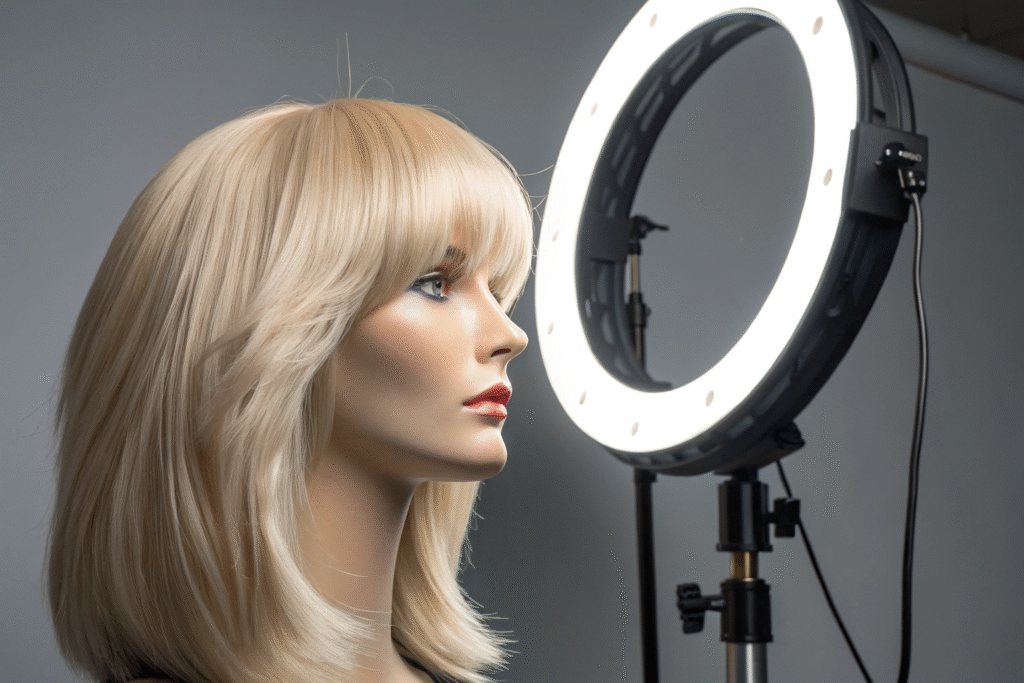
Why do some synthetic wigs look unnaturally glossy under light?
From a production standpoint, shine is physics plus finishing.
1) Fiber composition and surface optics
- Materials: Most mainstream synthetics use Kanekalon or Toyokalon—thermoplastic filaments with smooth, round cross-sections.
- Uniform diameter: Dense, even strands reflect light consistently, unlike human hair cuticles that scatter light.
- Texture impact: Straight, sleek styles bounce more light than kinky, deep wave, or yaki textures. Heat-resistant (HD) fibers often have slightly more microtexture, so they can read less shiny.
2) Factory finishing and anti-static treatments
- Silicone coating: Applied for slip, detangling, and hand-feel; it increases surface reflectivity.
- Anti-static sprays: Great for frizz control in packaging, but can align fibers, creating mirror-like patches.
3) Lighting environment
- Bright, direct sources—overhead LEDs, ring lights, and camera flash—exaggerate specular highlights.
- Diffused daylight or softboxes reduce hotspots and make fibers appear more natural.
4) Buildup and static over time
- Sprays/serums: On synthetics, they don’t “absorb” like on human hair—buildup smooths the surface further.
- Static electricity: Aligns strands in the same direction, producing high-gloss planes and separating fibers unnaturally.
Quick comparison: factors that increase or decrease visible shine
| Factor | Increases Shine | Decreases Shine |
|---|---|---|
| Fiber Type | Standard Kanekalon/Toyokalon | Heat-resistant/HD blends with microtexture |
| Texture | Straight, silky | Yaki, kinky, wave, permatease |
| Finish | Fresh silicone, anti-static | Washed-in softener, lightly steamed |
| Lighting | Direct LED, flash, overhead | Diffused daylight, softbox, bounce |
| Styling Products | Serums, gloss sprays | Minimal residue, powder mattifiers |
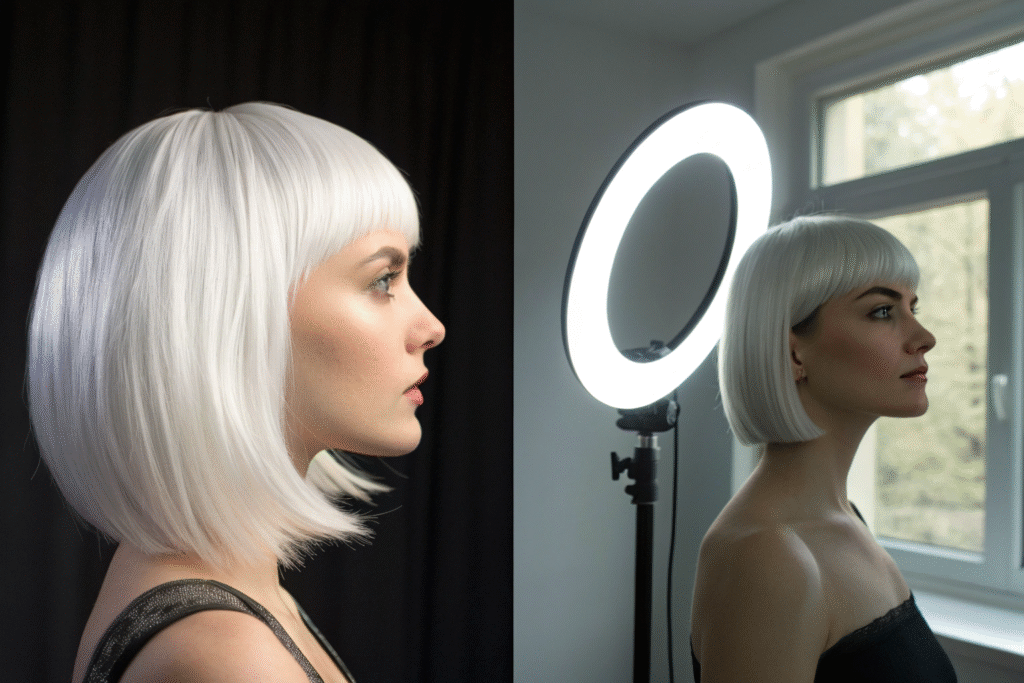
How can I reduce the shine of my synthetic wig without damaging it?
Here’s the safe, manufacturer-approved workflow we recommend to stylists and retailers during prep or after unboxing.
Step-by-step: non-damaging shine reduction
1) Pre-detangle
- Tools: Wide-tooth comb, wig stand.
- Why: Prevents stress on fibers during rinsing/steaming.
2) Anti-static, softening rinse
- Mix: Cool water + 1–2 tsp of liquid fabric softener per liter.
- Soak: 5–10 minutes. Swish gently—no wringing.
- Rinse: Cool water until just clear; leave a trace for slip control.
- Effect: Reduces static and slightly cuts the silicone “glassiness” without stripping.
3) Micro-texture with steam
- Set: Wig on stand; hold a garment steamer 8–12 inches away.
- Passes: Light, even passes for 15–30 seconds per section while combing with a wide-tooth comb.
- Caution: Avoid overheating—no direct contact, keep motion constant.
- Effect: Introduces microscopic irregularities that scatter light and lower gloss.
4) Matte finish touch-up
- Option A: Tinted dry shampoo (match to wig shade).
- Option B: Minimal cornstarch or unscented baby powder.
- Method: Dust sparingly, then brush through thoroughly so no residue is visible.
- Effect: Creates a soft-focus finish and better root realism.
5) Lighting-aware styling
- Style and photograph under diffused light to evaluate results accurately.

Pro tips from the factory floor
- Start conservative: You can always add more powder—removing excess is harder.
- Avoid high-heat tools unless fiber is clearly heat-friendly (check label). Even then, keep below the recommended temp.
- Do not use oil serums on synthetics; they don’t absorb and will spike shine.
What home methods can I use to make my wig look more realistic?
These natural fixes are inexpensive, salon-tested, and safe for most synthetics when used correctly.
1) Cool water + fabric softener soak
- Ratio: 1–2 tsp per liter in cool water.
- Soak 5–10 minutes; rinse lightly; air-dry on a stand.
- Benefits: Cuts static, softens feel, gently dulls “factory glaze.”
2) Light steaming + wide-tooth comb
- Goal: Add microtexture without restyling.
- Technique: Keep the steamer moving; comb as you steam to set the fibers.
- Bonus: Helps relax overly uniform shine on straight units.
3) Cornstarch or unscented baby powder
- Application: Sprinkle a pinch into palms, pat on mid-lengths/ends first, then roots; brush out thoroughly.
- For dark colors: Use tinted dry shampoo or cocoa-powder blend (very light) to avoid cast.
4) Tinted dry shampoo
- Select a brunette/blonde/red shade to match.
- Spray 10–12 inches away in light passes; let set; brush through.
- Fastest way to drop shine ahead of shoots or client fittings.
5) Humidity exposure
- Wear outdoors briefly or hang in a steamy bathroom (not wet).
- Effect: Reduces static that makes reflective patches.
6) Gentle cleanse for buildup
- If you’ve used sprays, do a synthetic-safe wash (see last section).
- Avoid vinegar or alcohol on a routine basis; they can dry or embrittle some blends. If you do a one-off ACV rinse for heavy buildup, dilute well and follow with a fabric-softener soak.
Home method matrix
| Method | Shine Reduction | Risk Level | Best For | Notes |
|---|---|---|---|---|
| Fabric softener soak | Moderate | Low | New wigs, static | Rinse lightly to avoid residue |
| Light steam | Moderate–High | Medium | Straight/glossy styles | Keep distance to avoid heat marks |
| Cornstarch/baby powder | Moderate | Low | Quick matte finish | Brush out to prevent dull cast |
| Tinted dry shampoo | Moderate | Low | Dark colors, fast results | Choose shade carefully |
| Humidity exposure | Light | Very Low | Static hotspots | Temporary effect |
| ACV rinse (occasional) | Moderate | Medium | Heavy product buildup | Dilute well; not routine |
Common mistakes to avoid:
- Over-powdering, which looks dusty in daylight and in 4K.
- Using silicone serums or shine sprays on synthetics.
- High-heat flat irons on non-heat fibers (melting risk).
- Aggressive combing while wet (fiber stretch and frizz).
How often should I wash my synthetic wig to keep the shine balanced?
Washing cadence is a balance between removing buildup and preserving fiber integrity.
Recommended wash schedule
- Daily wear: Every 6–8 wears.
- Occasional wear: Every 10–12 wears or when you notice static/buildup.
- Heavy product use or urban environments: Every 4–6 wears.
Washing protocol for synthetic wig care
1) Detangle dry on a stand with a wide-tooth comb.
2) Fill a basin with cool water; add synthetic wig shampoo (or a drop of gentle dish soap for emergencies).
3) Submerge and swish for 2–3 minutes—do not rub or twist.
4) Rinse in cool water until clear.
5) Optional: 1–2 tsp fabric softener in cool water; soak 5 minutes; quick rinse.
6) Blot with towel; never wring. Air-dry on a stand away from heat and sun.
7) Once dry, lightly steam if needed and finish with a minimal matte powder or tinted dry shampoo.
Salon and retail perspective
- For B2B: Include a “matte-prep” card with glossy straight units—customers equate low-shine with realism.
- In-store and photos: Use diffused lighting to reduce perceived gloss and increase purchase confidence.
- Returns reduction: Educate on first-wear softener soak and dry shampoo; it cuts “too shiny” returns.
Quick FAQ
- Will fabric softener damage my wig? Used sparingly in cool water and rinsed lightly, it’s safe for most standard synthetics and widely used in cosplay and retail prep.
- Can I use regular conditioner? Avoid—formulas for human hair can leave residue on synthetics.
- Is vinegar safe? As an occasional, diluted clarifier for heavy buildup, yes; don’t make it routine.
- Do heat-resistant fibers shine less? Often slightly, thanks to microtexture, but finishing and lighting still matter.
Conclusion
Synthetic wigs look shiny because smooth plastic fibers, silicone finishes, and direct lighting create uniform reflections. The fix is straightforward and gentle: reduce static, add microtexture, and matte the surface with soft techniques—cool water + fabric softener soaks, light steaming, and a careful dusting of cornstarch or tinted dry shampoo. For salons, distributors, and brands, building these steps into prep and education boosts realism, customer satisfaction, and repeat sales. If you’re a retailer or OEM partner, we can help you formalize a “matte-prep” SOP and training assets for your team and clients.