
Importing wigs from China is a mature yet nuanced category in global sourcing. Prices can swing widely—even for “similar” SKUs—because quotations reflect raw hair grades, lace specifications, labor intensity, QA standards, compliance, and commercial terms. If we understand how factories build cost and risk into quotes, we can negotiate smarter and avoid surprises in landed cost.
Wig quotations from Chinese suppliers vary primarily due to hair material grade and cap construction, followed by lace quality, density/length, processing level, and customization. Commercial variables—supplier model (factory/trader/ODM/OBM), MOQ, payment terms, lead time, QA standards, certifications, and logistics—further shape unit price and landed cost.
Before we dive into details, I’ll break down the technical drivers (hair, lace, construction), commercial models (factory vs trading vs ODM/OBM), purchasing levers (MOQ, payment, lead time), and quality/compliance factors that show up in quotes. We’ll also use realistic ranges from China’s wig hubs like Xuchang (Henan) and Qingdao (Shandong), and call out where cost rises linearly versus exponentially.
How do hair grade, lace type, density, length, and customization impact price spreads?
The material and workmanship profile of a wig is the single biggest driver of quotation differences. Most “price shocks” trace back to hair grade claims, lace spec, and how much hand-tying and chemical processing a unit actually requires.
Higher hair grades (virgin > Remy > non‑Remy > synthetic), finer lace (HD/Swiss), higher density/length, and advanced processing (bleached knots, pre‑plucked, color lifts) compound cost through raw material, reject rates, and labor hours—often pushing quotes from incremental to exponential increases.
Hair material grade: the primary price driver
- Virgin human hair (true unprocessed, consistent cuticle direction, single donor claims) commands the highest quotations. Genuine virgin 12A-equivalent units can be 2–3× the price of non‑Remy mixes because:
- Raw hair scarcity and traceability premiums
- Lower chemical tolerance for mistakes (higher reject costs)
- Longer lifespan and better lightening performance (e.g., lifts to level 613)
- Remy hair (aligned cuticles) sits mid-to-high, with more predictable performance and fewer tangling/Shedding claims.
- Non‑Remy: cheapest for human hair, often acid-bathed to remove cuticle, then coated; lower durability, more variability—quotes reflect that.
- Synthetic (Kanekalon/heat‑resistant fibers): lowest base cost, faster production, but limited styling and shorter lifecycle.
Caution: “Virgin” on a quote isn’t proof. Ask for bleaching test data (e.g., lift levels, ΔE color change), tensile strength, and cuticle alignment verification protocols.
Cap construction and lace: material + labor
- Construction types escalate labor hours:
- Machine‑made wefted caps: lowest labor cost
- Lace front: hand‑tying only on frontal area; balanced price
- 360 lace and full lace: extensive hand‑knotting; 2–4× labor vs lace front
- Mono or silk tops: pricier materials, top ventilation complexity
- Lace spec matters:
- HD lace vs Swiss vs French: HD costs more (finer denier, high transparency) and increases reject rates during ventilation
- Knot size and density targets: smaller knots and higher strand count raise labor and rework risk
Pro Tip: Request the lace spec sheet (denier, mesh count, base color options), knot method (single/double), and ventilation rate (knots per cm²) alongside quotes.
Length, density, and grams per wig
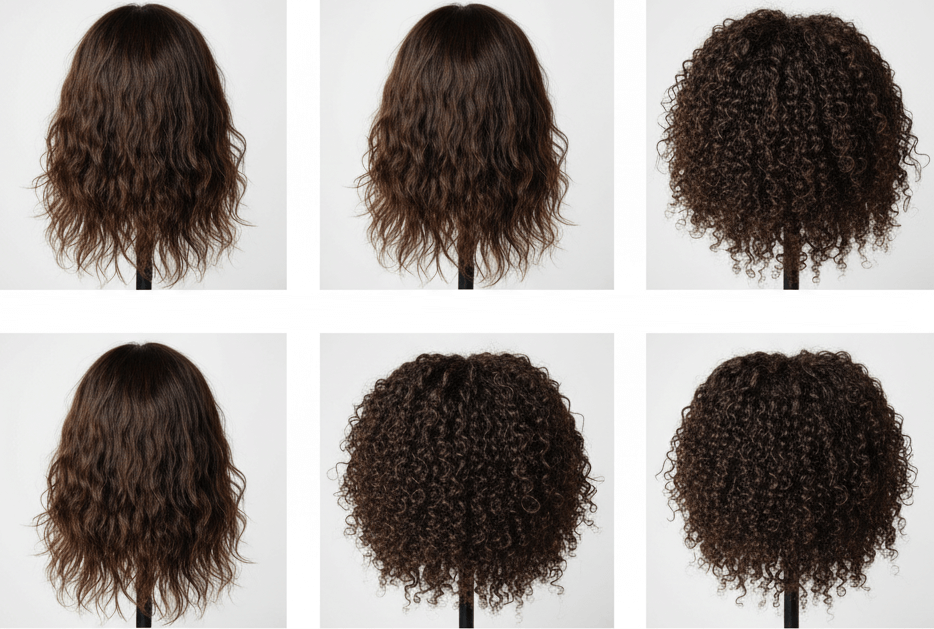
- Pricing scales with grams used per unit. As length pushes above 22–24″, prices rise nonlinearly because sourcing long, consistent fibers has scarcity premiums.
- Density steps (130% → 150% → 180% → 200%) often add cost in tiers; beyond 180%, labor challenges (knotting congestion) also increase reject rates.
Processing and styling level
- Each added step—bleached knots, pre‑plucked hairline, color lifting (levels), balayage/ombre, perming—adds chemical, skill, and QA costs.
- Complex color work (multi‑tone, rooted effects) can add 10–30% vs natural color; high‑lift 613 or ash tones may require higher-grade starting hair and stricter QA.
Quick comparison table: material and construction cost escalators
| Driver | Typical impact on unit price | Notes |
|---|---|---|
| Virgin vs Remy vs non‑Remy | High | Virgin can be 2–3× non‑Remy |
| Synthetic vs human hair | High | Synthetic far cheaper, lower longevity |
| Lace front → 360 → full lace | Medium to high | Labor hours increase steeply |
| HD lace vs Swiss/French | Medium | Higher reject and rework risk |
| Density 130% → 180% → 200% | Medium to high | Material + labor for knotting |
| Length 12″ → 24″+ | Medium to very high | Exponential above 24″ |
| Bleached knots, pre‑plucked | Low to medium | Added processing and QA |
| Complex color lifts/styles | Medium to high | More chemicals/time/skill |
Why do factory‑direct, trading company, and ODM/OBM models quote differently?
Supplier structure affects margins, flexibility, and risk. The same spec can price differently depending on whether you’re buying from a production floor, an aggregator, or a brand‑builder.
Factory‑direct offers the leanest price for standard SKUs, trading companies add margin for assortment and small MOQs, while ODM/OBM models layer design, branding, and liability coverage—raising quotes but lowering execution risk and time‑to‑market.
Supplier models explained
- Factory‑direct (Xuchang, Qingdao, Yiwu clusters):
- Pros: Best ex‑works pricing, direct control of production schedule, faster technical answers
- Cons: MOQ requirements, narrower catalog, variable English support
- Trading companies:
- Pros: Broader assortment across multiple factories, lower MOQ, better communication, consolidation across lengths/colors
- Cons: Added margin (typically 5–15%), potential opacity on true factory capabilities
- ODM/OBM (design/brand owners):
- Pros: Product development, pattern libraries, packaging, compliance management, after‑sales processes
- Cons: Highest quotes; you’re paying for IP, QA systems, brand liability, and service layers
Pro Tip: If you need a tight lineup of repeatable SKUs with minimal customization, factory‑direct often wins. For varied catalogs and small test orders, trading firms can be cost‑effective. If you lack in‑house product development or compliance resources, ODM/OBM may save total cost despite higher unit quotes.
Hidden margin vs risk premiums
- Trading companies may embed risk premiums to cover returns and supplier variability.
- ODM/OBM quotes include development amortization and warranty buffers; useful if your market expects consistent QA and branded packaging.
How do order quantity, payment terms, and lead time influence my unit price?
Commercial levers—how much you buy, how fast you need it, and how you pay—are powerful price determinants beyond the technical spec.
Larger batches, SKU consolidation, and relaxed lead times reduce cost via scale and smoother scheduling; stricter payment terms (longer credit, deposits <30%) and rush lead times raise quotes through financing and overtime premiums.
MOQ and SKU consolidation
- Unit price drops as batch size increases; factories optimize hair sorting, lace cutting, and ventilation lines for single‑spec runs.
- Consolidating SKUs (e.g., common base cap with variable lengths/colors) allows shared materials and reduces changeover waste.
Payment terms and financing
- Typical terms: 30–50% deposit, balance before shipment.
- Asking for OA terms (open account), longer credit, or low deposits introduces supplier financing cost and bad‑debt risk—showing up as higher unit prices.
- Currency hedging (USD/CNY volatility) may add 1–3% buffer during unstable periods.
Lead time and scheduling
- Standard lead times:
- Machine‑made/stock lace fronts: 7–15 days
- High‑density full lace or complex color: 20–40 days
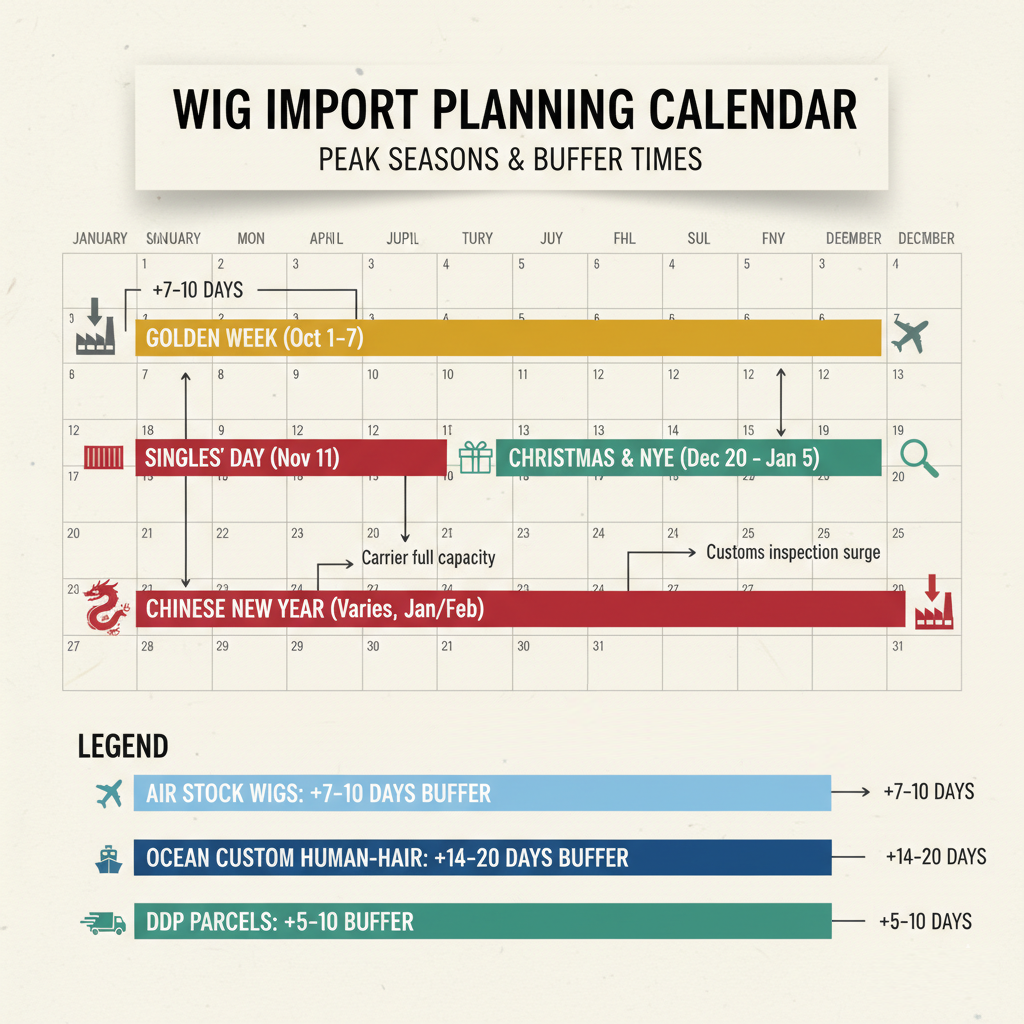
- Peak season (before major holidays) adds 5–10 days
- Rush orders trigger overtime pay and higher reject rates; factories price this risk with 5–20% surcharges.
Illustrative lever table
| Lever | Typical effect on price | Practical tactic |
|---|---|---|
| Increase MOQ | Decrease | Batch by length/density |
| SKU consolidation | Decrease | Standardize base caps |
| 50% deposit vs 30% | Decrease | Reduce supplier financing burden |
| OA terms/net 30 | Increase | Offer forecasts or bank guarantees |
| Rush lead time | Increase | Pull forward planning to avoid overtime |
| Flexible delivery window | Decrease | Allow level loading of production |
How do QA standards, certifications, and after‑sales service show up in my quotes?
Quality assurance and compliance are cost centers that reduce variability and legal risk. Suppliers price in the testing, documentation, and warranty they’re expected to carry.
Stricter QA (double‑drawn sorting, cuticle verification, multi‑stage sterilization), formal certifications (REACH, CPSIA, flammability), and robust after‑sales terms add cost line items—but lower returns, chargebacks, and brand risk.
QA standards and process controls
- Single‑drawn vs double‑drawn: double‑drawn achieves fuller ends; higher sorting labor costs.
- Cuticle alignment checks: microscopy or chemical tests; reduces tangling claims.
- Sterilization and residue control: multi‑stage washing, controlled chemical usage; crucial for sensitive markets.
- In‑process inspections: ventilation density checks, shedding/tension tests, colorfastness; often part of higher quotes.
Compliance, testing, and labeling
- REACH (EU) for chemical residues from dyes/bleaches.
- CPSIA (US) for labeling and potential heavy metal limits in accessories.
- Fiber flammability tests (particularly for certain markets and synthetic fibers).
- Country‑of‑origin marking, care labels, and traceability documentation.
Caution: If your destination market requires specific testing, ask suppliers to itemize test costs (lab fees, pre‑production samples, certification renewals). Bundled quotes can hide compliance gaps.
After‑sales service and warranties
- Replacement/credit policy for shedding or color mismatch claims is often reflected as a premium.
- ODM/OBM suppliers typically include structured RMA processes and customer support—higher upfront, but lower lifecycle cost.
Conclusion
When you import wigs from China, quotation differences are not arbitrary—they reflect material scarcity (hair grade, length), lace and construction complexity, processing depth, and the supplier’s operating model. Your commercial terms (MOQ, payment, lead time) and required QA/compliance standards further tilt unit pricing and total landed cost. The fastest way to normalize quotes is to specify hair grade with test expectations, lace spec (HD/Swiss/French with denier), exact density/grams, processing steps, and required certifications—then align terms and timelines.
If you want a pragmatic review of your RFQs or help standardizing specs to close price gaps, contact us for tailored sourcing advice. We’ll benchmark suppliers across Xuchang and Qingdao, model landed costs by Incoterms, and negotiate the right balance of price, quality, and risk for your market.