
Importing wigs from China is highly feasible, and securing approved samples is the smartest way to lock quality before you scale. Whether you’re buying synthetic lace fronts or premium Remy human hair units, a structured sample policy prevents color mismatches, density drift, shedding, and lace defects from slipping into bulk production.
Yes—you can and should approve samples before bulk orders. A reasonable policy includes paid pre-production samples, a “golden sample” as the QC benchmark, documented specs and tolerances, and crediting sample fees against your first PO. Fast express shipping, standardized verification, and contractually binding acceptance criteria ensure the approved sample governs mass production quality.
Below, I’ll outline sample policies, revision rounds, what to sign off, and how to ship and track consistency so your production batches match the exact look and feel you approved.
What is a reasonable sample policy, cost, and refund against bulk orders?
Before you place a purchase order (PO), your sample policy defines expectations, costs, and how approvals translate into production. A clear policy reduces ambiguity and protects you if the supplier diverges from the approved standard.
A practical sample policy: pay for customized samples, negotiate credit against the first bulk order, define a “golden sample” benchmark, and set written tolerances (color, density, lace, length) with remedies for nonconformance.
Typical Sample Cost Structure
- Stock samples: $25–$60 per unit for synthetic; $60–$150 for human hair.
- Customized samples (cap size, HD lace, specific color, density, length): $80–$250 per unit depending on hair origin and complexity.
- Rush fees: +10–20% if requested inside 5–7 days.
- Shipping (DDU via express): $25–$60 per shipment, paid by buyer; duties/taxes on arrival.
Pro Tip: Ask for a three-tier sample approach—one stock unit to check baseline workmanship, one customized pre-production sample to test your specs, and one finalized “golden sample” after your feedback.
Refund/Credit Practices
- Sample fee credit: Commonly deductible from the first PO if you meet a minimum order value (e.g., $3,000+).
- Percentage credit: 50–100% of sample fees credited; shipping usually not credited.
- Validity window: Credits typically valid for 60–90 days after sample approval.
Lead Time Expectations by Region
- Xuchang (Henan): Faster for synthetic and blended wigs; 5–10 days for custom samples.
- Qingdao (Shandong): Strong for human hair processing and coloring; 7–14 days for custom samples.
- Guangzhou: Good for high-end lace work and HD lace; 7–12 days typical.
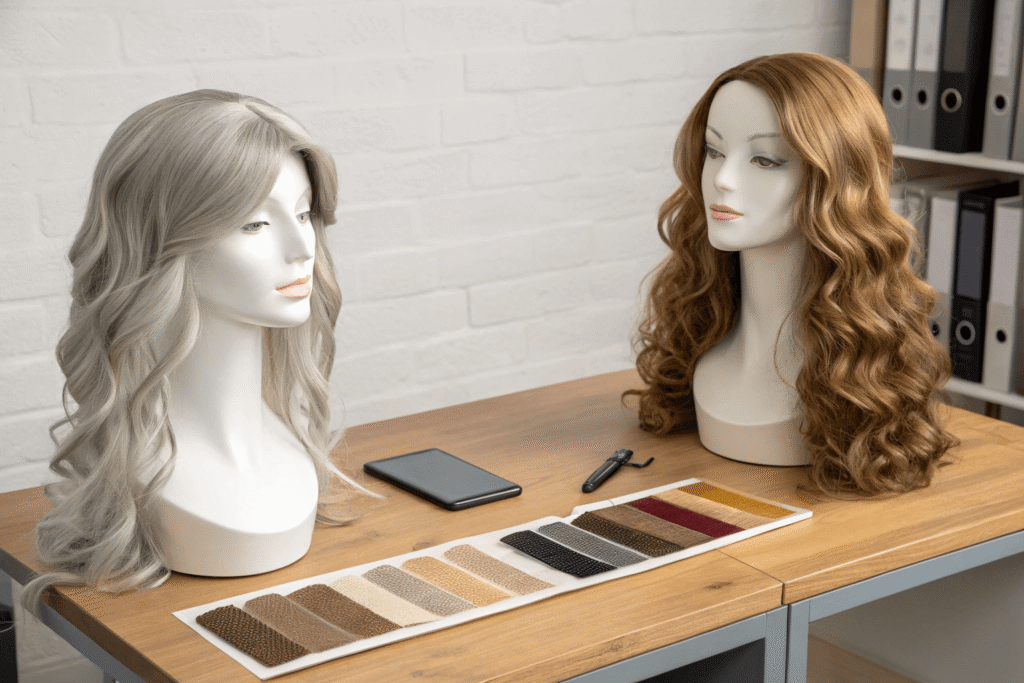
Sample Policy Snapshot (Negotiation Table)
| Item | Typical Terms | What to Negotiate |
|---|---|---|
| Sample Fee | $80–$250 customized; $25–$60 stock | 50–100% credit against first PO |
| Shipping Terms | Express DDU; buyer pays freight & duties | Supplier shares freight on 2nd round |
| Lead Time | 7–14 days custom; 3–5 days stock | Firm timeline with penalties if missed |
| Golden Sample | Produced after spec confirmation | Binding in contract as QC standard |
| Validity | 60–90 days | 120 days if colors require lab batches |
Caution: Avoid “free sample” offers with vague specs. You’ll pay for it in bulk with inconsistent density or off-tone color lots.
How many rounds of sample revisions should I plan before PO confirmation?
You want enough iterations to refine quality, but not so many that you lose momentum. Set the number of rounds up front and tie each round to clear, measurable changes.
Plan 2–3 rounds: pre-production sample, revision sample, and final golden sample. Use measurable tolerances for color, density, lace, and length. If a third round fails, pause and reassess supplier capability.
Recommended Revision Flow
- Round 1: Pre-production sample (checks construction, lace type, base density, cap fit).
- Round 2: Revision sample (applies changes to color code, density adjustment ±5–10%, knot bleaching level, hair direction/root alignment).
- Round 3: Golden sample (final benchmark; signed and sealed; governs QC in mass production).
Pro Tip: Cap total iterations at three. Beyond that, your cost/time escalates and signals the factory may not be fit for your spec tier.
Why Iterations Matter
- Color reproducibility: Human hair dye lots vary; you need stable formula references.
- Lace consistency: HD Swiss lace varies by roll; matching transparency and stretch is critical.
- Density realism: Factory counts may differ from market perception—verify with grams and weft spacing.
Suggested Timeline
| Stage | Deliverable | Typical Time | Key Checks |
|---|---|---|---|
| R1 Pre-Production | First build to your tech pack | 7–10 days | Cap fit, lace material, base density |
| R2 Revision | Adjusted per feedback | 5–8 days | Color tone, knot bleaching, hairline |
| R3 Golden Sample | Final signed benchmark | 3–5 days | Full spec compliance; photo/video audit |
Caution: If the supplier resists providing a golden sample, expect quality drift in bulk. That’s a red flag.
Which sample approvals (style, color, density, lace) should be signed off to lock quality?
Approvals must be precise, measurable, and binding. Vague “looks good” feedback invites disputes later.
Sign off on a detailed spec sheet plus the physical golden sample: style, cap construction, lace material and shade, color code, density grams, length tolerance, processing methods, and QA thresholds. Attach photos under standardized lighting and enforce allowable variances in the contract.
Approval Checklist (H3)
- Style & Construction:
- Cap type: 13×4 lace front / full lace / 5×5 closure; ventilation direction; weft pattern.
- Hairline: pre-plucked level; baby hair presence/length.
- Lace:
- Material: Swiss/HD; shade: light/medium/brown; denier; stretch and tear resistance.
- Knots: single/double; bleaching level; knot size.
- Hair & Processing:
- Origin: Chinese/Indian/SEA; Remy alignment; virgin vs. processed.
- Texture: straight/body wave/curly; curl pattern code; perm set method.
- Color: industry code (e.g., 1B, #4/27), ombre/balayage pattern; tone tolerance ΔE ≤ 2–3.
- Density & Length:
- Total grams per wig; density map (front/temple/crown/nape); tolerance ±5–8%.
- Length measured from crown; tolerance ±1 cm up to 16″, ±1.5 cm above 18″.
- QA & Performance:
- Shedding: ≤ X strands per comb-through.
- Tangling: pass 10-stroke comb test.
- Odor: no chemical residual detectable after wash.
- Colorfastness: pass rub test and 30-min soak test.
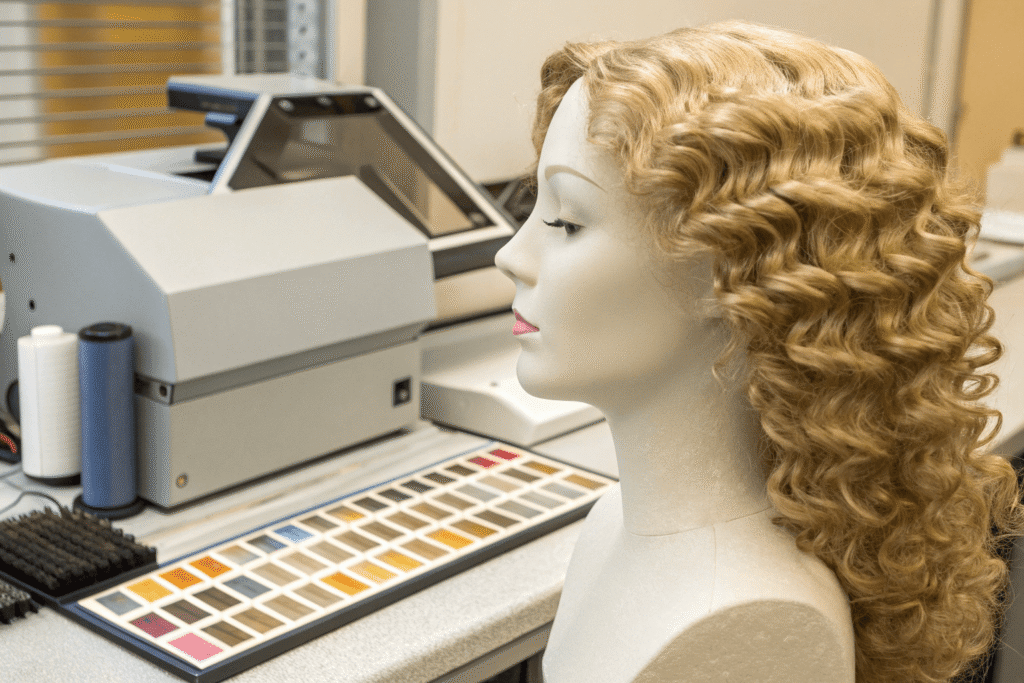
Binding Documentation
- Technical pack: diagrams, color swatches, lace spec sheets, ventilation density chart.
- Photo/Video evidence: standardized lighting (5600K), gray card reference, comb-through footage, wet/dry comparison.
- Golden sample seal: serialize the sample; both parties hold a tagged unit.
- Contract clauses: define acceptance criteria, allowable variances, rework/replacement terms, and that bulk must match the golden sample.
Pro Tip: Use a color reference like Pantone Hair/Beauty swatches or a calibrated ΔE tool to avoid “warm vs. cool” disputes, especially for ash tones and balayage.
How do I ship samples fast and track color and texture consistency in repeats?
Speed and traceability are crucial. Express couriers and disciplined recording keep approvals tight and repeatable.
Ship via express (DHL/UPS/FedEx) under DDU so you pay duties, and label shipments “samples for approval.” Maintain a lot-level color/texture record, require batch photos under standardized lighting, and run a pilot order to validate repeat consistency before scaling.
Shipping Best Practices
- Terms: DDU (Delivered Duty Unpaid). You cover freight and duties on arrival.
- Documents: commercial invoice marked “trade samples,” HS code (e.g., 6703.00 for wigs), declared value, and intended use (testing/approval).
- Fast lanes: Premium express services usually deliver 3–5 days globally.
- Customs tip (US): If using mutilated samples for duty relief, mark “9811.00.60” and ensure the sample is defaced and unsuitable for resale.
Consistency Tracking
- Color management:
- Fix lighting at 5600K; use gray card.
- Record ΔE values versus golden sample.
- Keep a lab dye lot ID with each batch; request supplier’s bath number.
- Texture management:
- Record curl diameter and set method; capture humidity/temperature during setting.
- Comb-through video on each batch; quantify tangle rate.
- Density verification:
- Weigh finished wigs; map grams by zone (front/temple/crown/nape).
- Verify weft count against spec; photograph lace ventilation spacing.
Repeat Order Control Table
| Control Item | Method | Frequency | Thresholds |
|---|---|---|---|
| Color ΔE | Spectro or app with gray card | Each batch | ≤ 2–3 vs. golden sample |
| Texture | Comb-through + curl diameter photos | Each batch | No matting; curl ±1–2 mm |
| Density | Scale weight + ventilation count | 10% AQL sampling | ±5–8% grams by zone |
| Lace | Visual + tensile spot check | Each roll change | Tear resistance per spec |
Pro Tip: After approving the golden sample, place a small pilot order (e.g., 30–50 units) to verify real-world consistency for colorfastness, shedding, tangling, and odor before committing to 500+ units.
Caution: Branded packaging samples may require IP authorization. Provide your trademark certificate and a letter of authorization to avoid production delays or compliance flags.
Conclusion
Approved samples are your guardrail when you import wigs from China. We recommend a paid sample policy with credit against the first PO, 2–3 revision rounds culminating in a serialized golden sample, and a binding contract that sets measurable tolerances. Ship via express with proper sample labeling, and manage repeat consistency with standardized color/texture checks and a pilot order.
If you want help drafting a rock-solid tech pack and sample approval workflow—or need factory recommendations by wig type and region—contact us for tailored sourcing advice.