
When I bought my first synthetic wig, I was overwhelmed by terms like “lace front,” “monofilament,” and “heat-friendly fibers.” I wanted something that looked natural, fit comfortably, and didn’t demand salon-level skills to style. If you’re feeling the same way, you’re not alone—most beginners struggle to balance realism, comfort, and budget on their first wig.
The best beginner synthetic wigs are pre-styled, breathable, and realistic at the hairline. Look for a lace front (for a natural hairline), a monofilament or partial mono top (for a realistic part), heat-resistant fibers if you plan light styling, and adjustable straps for fit. Start with shoulder-length or shorter styles to reduce tangling, choose a color close to your natural shade, and budget $100–$300 for reliable quality.
I’ll walk you through how to choose the right wig for your style, the key beginner-friendly features to look for, how to make your wig look natural and feel comfortable, and why cap construction matters. I’ll share what I’ve learned from testing multiple wigs, making mistakes, and figuring out what truly works for first-time wearers.
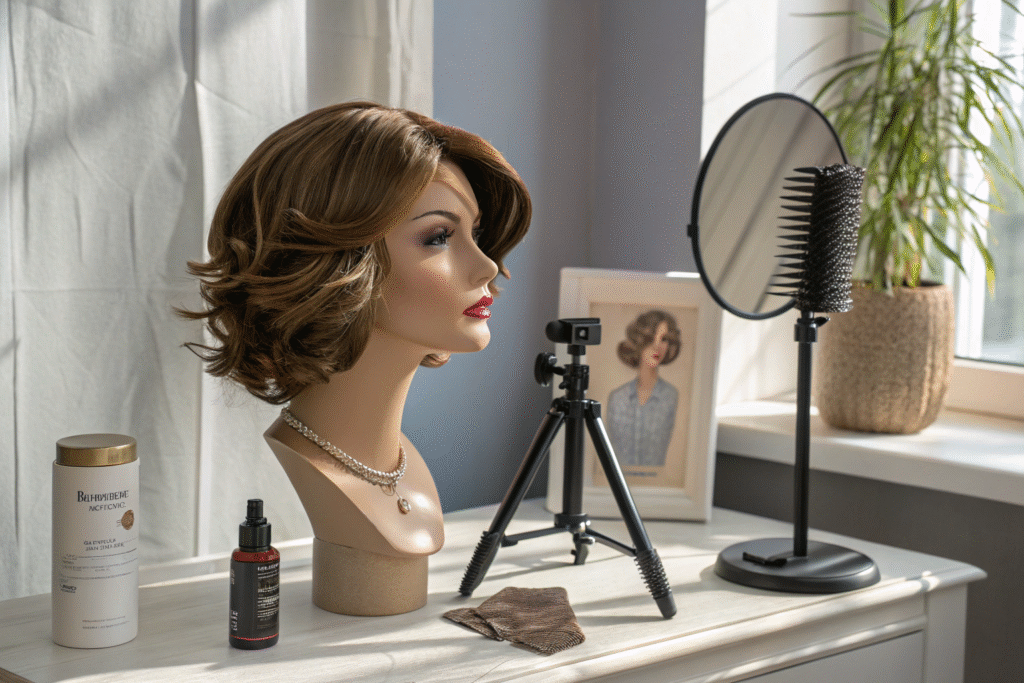
How do I choose the right synthetic wig for my style needs?
When I help beginners pick a wig, I start with lifestyle and maintenance. Synthetic wigs come pre-styled, which is perfect if you don’t want daily upkeep. The trick is choosing a style that complements your face, suits your routine, and won’t tangle quickly.
Start with manageable lengths and cuts
- Short to shoulder-length: tangles less, easier to maintain, great for first-timers.
- Simple textures: straight or soft waves hold their shape and are easy to brush.
- Face-framing layers: soften features and reduce bulky volume around the cheeks.
Match your current vibe (then experiment later)
- Color: pick something close to your natural shade or within 1–2 tones. Rooted/shadowed colors look more realistic at the part.
- Density: choose light to medium density for a believable look; heavy densities can look “wiggy” on small faces.
- Parting: if you always part left/right, pick a mono-part that matches, or go with a mono-top for flexible parting.
Heat-friendly fibers vs. standard synthetic
- Standard synthetic: the style “memory” holds after washing; zero hot tools. Easiest for beginners.
- Heat-friendly synthetic: allows low-heat styling (often up to 270–300°F/130–150°C). More versatile, but requires careful heat use and may be slightly more maintenance.
Quick decision framework I use
- I have 10–15 minutes max each morning → standard synthetic, pre-styled, shoulder-length.
- I like to tweak curls or straighten occasionally → heat-friendly fibers, but still keep it mid-length.
- I’m active and outdoors a lot → shorter cuts (pixie/bob), open wefted cap for airflow, secure fit features.
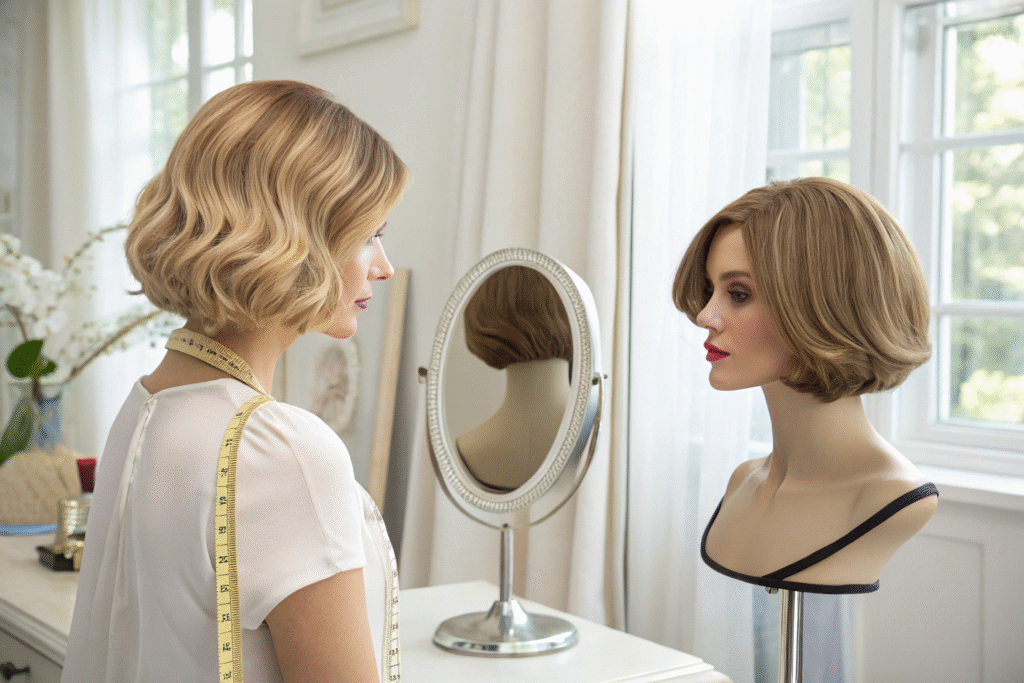
Starter style ideas that work
- A classic shoulder-length lob with soft waves
- A sleek chin-length bob with a light root
- A layered shaggy bob with face-framing pieces
- A low-density pixie for zero-fuss days
What are the key features I should look for in a beginner-friendly synthetic wig?
After trying several brands and styles, I’ve learned that a few features make a massive difference in comfort, realism, and maintenance. Here’s what I prioritize.
Must-have beginner features
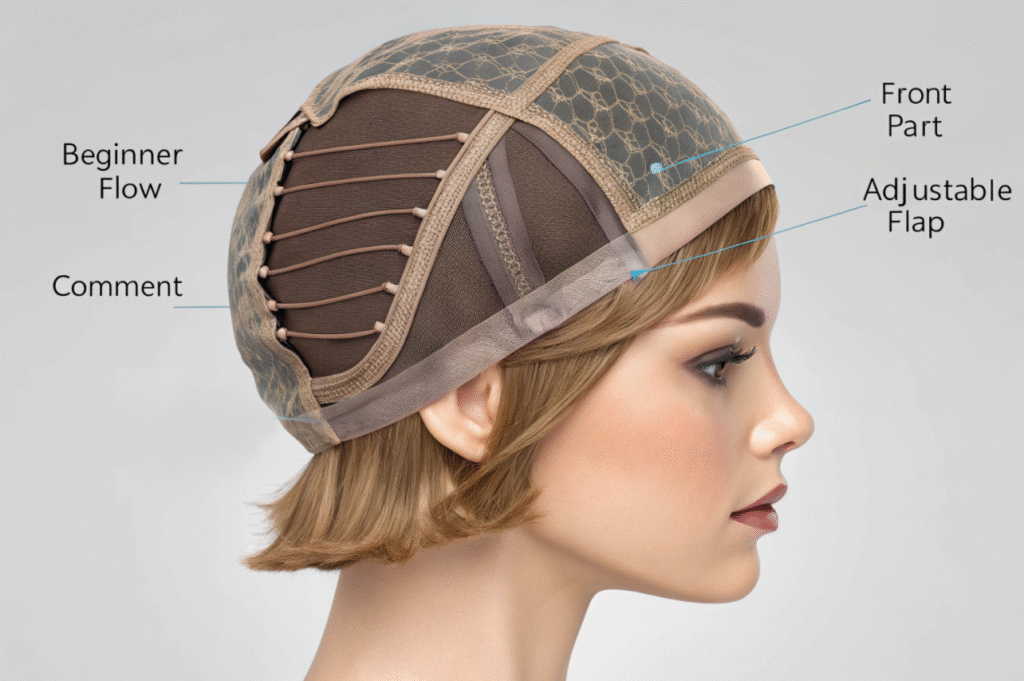
- Lace front: for a natural-looking hairline when the wind blows or you tuck hair behind your ears.
- Monofilament part or top: a realistic scalp at the part; mono-top allows you to change the part.
- Adjustable straps and ear tabs: ensure a snug, secure fit as you fine-tune size.
- Breathable cap (open wefted): keeps you cool and light, great for daily wear.
- Pre-styled synthetic fibers: cut down on styling time; style holds after washing.
Nice-to-have features
- Velvet or silicone-lined ear tabs: less itch, better grip.
- Extended nape with adjusters: improved security, especially for updos or high collars.
- Lightly pre-plucked hairline or shaded rooting: adds realism without extra work.
- Heat-friendly label (if you plan to tweak style): gives freedom for small changes.
Feature comparison at a glance
| Feature | Why It Matters | Best For | My Take |
|---|---|---|---|
| Lace Front | Natural hairline, realistic edges | Everyday wear, pulled-back styles | A game-changer; worth the upgrade |
| Mono Part | Realistic scalp where you part | Consistent side/center part wearers | Affordable realism; great starting point |
| Mono Top | Part anywhere, natural scalp | Style switchers, picky parting | Premium feel; more expensive but flexible |
| Open Wefted Cap | Breathability, lightweight | Warm climates, long days | My go-to for comfort |
| Closed/Hand-Tied Sections | Softer on sensitive scalps | Medical hair loss, sensitive skin | Ultra-comfortable but pricier |
| Heat-Friendly Fibers | Low-heat styling flexibility | Occasional restyle | Be gentle with heat to prevent damage |
| Adjustable Straps | Dial in fit (usually +/- 0.5″) | First-time sizing | Essential for beginners |
Budget expectations and value
- Entry-level reliable range: $100–$300. This tier gets you a decent lace front, open wefts, and a mono-part in many cases.
- Mid-range upgrades: $300–$500. Expect better fiber quality, mono-top or more hand-tying, and more natural colors/rooting.
- Accessories worth adding: wig stand, wide-tooth comb, wig-safe shampoo/conditioner, detangling spray (synthetic-safe).
How can I ensure my synthetic wig looks natural and fits comfortably?
Looking natural is a combination of cap choice, color selection, fit, and a few small styling techniques. Comfort comes from breathable construction and a secure, non-scratchy interior.
Fit and sizing: what I measure
- Head circumference: measure along hairline, behind ears, and nape. Most people fit Average (21.5″–22.5″ / 54.5–57 cm).
- If you’re between sizes: use adjustable straps; some caps also offer Velcro or hook adjusters.
- Try-on test: shake your head gently—if it shifts, tighten the straps or add a wig grip band.
Comfort boosters I rely on
- Open wefted caps for airflow, especially in warm weather.
- Velvet-lined ear tabs and nape to reduce friction.
- Wig grip or silicone liner if you’re active or have a smooth scalp.
Make it look real: small details with big impact
- Color and rooting: shades close to your natural color look most believable. Rooted tones mimic growth and hide part lines.
- Parting: with mono parts/tops, pluck a few fibers sparingly (optional) and add a touch of powder to match your scalp tone.
- Hairline finesse: trim the lace carefully (if uncut) and lay it flat; a tiny bit of wig-safe adhesive at the temples helps for long days.
- Density and volume: if the front seems too dense, lightly thin with a professional’s help (or ask the retailer for low-density options).
- Tangles: keep hair off the collar if it’s shoulder-length; friction at the nape causes matting on longer synthetic wigs.
Care routine that keeps it fresh
- Wash every 6–10 wears (or when products build up). Use cool water and wig-safe shampoo/conditioner.
- Pat dry with a towel; never wring. Air-dry on a wig stand to preserve shape.
- Brush gently with a wide-tooth comb, starting at the ends.
- Avoid high heat, steam, and friction (backpacks, rough sweaters).
- Store on a stand for shape and airflow.
Simple care timeline I follow
- Daily: detangle lightly, store on a stand.
- Weekly: check straps, ear tabs, and lace for wear.
- Monthly: wash if needed, refresh with synthetic-safe conditioning spray.
Natural-look checklist
- Lace front lies flat, color matches skin tone at hairline
- Rooted or shaded color, not too glossy
- Mono part with a clean, natural-looking scalp
- Density suits face size (light to medium for most beginners)
- Part placed where you naturally part your hair
Why is understanding cap construction important when buying my first wig?
Cap construction is the foundation of comfort, realism, and durability. Once I understood caps, my buying choices improved dramatically—and I stopped wasting money on styles that didn’t suit my needs.
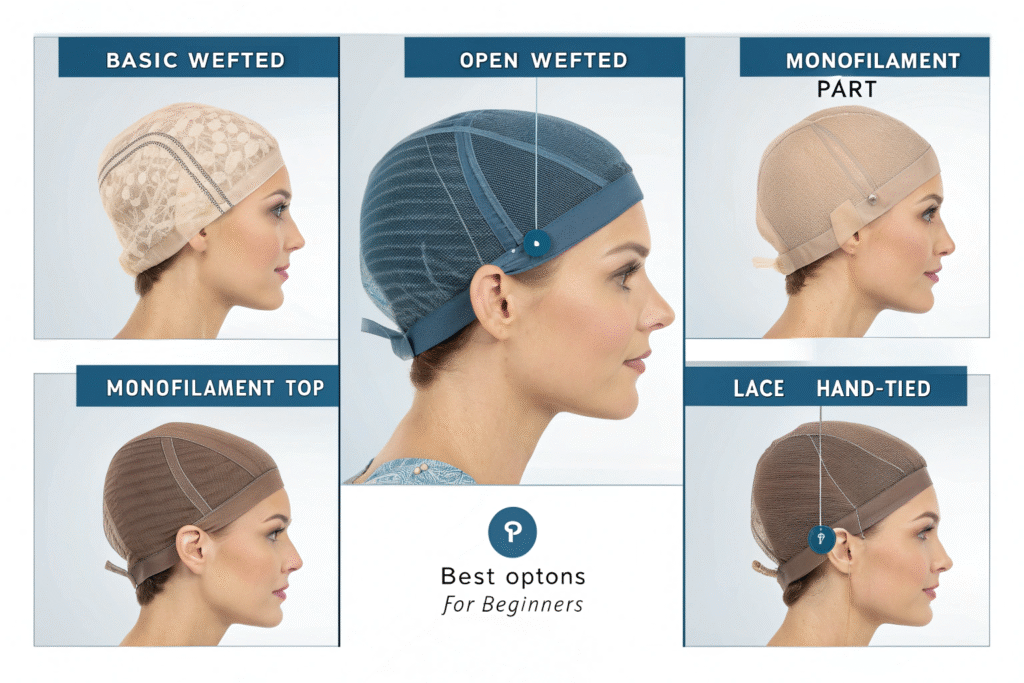
The main cap types explained
- Basic wefted (machine-made): affordable, breathable, pre-teased at the crown for volume; less realistic at the part/hairline.
- Open wefted: like basic wefted but optimized for airflow and lightweight feel; my top pick for daily comfort.
- Lace front: sheer lace along the hairline with individually tied fibers for a realistic front edge.
- Monofilament part: a small section at the part that looks like scalp; great realism with lower cost than full mono-top.
- Monofilament top: larger area you can part anywhere; very natural appearance and comfortable feel.
- Hand-tied caps: individual strands tied across most or all of the cap; soft, flexible, premium comfort (more expensive).
Cap construction comparison table
| Cap Type | Realism (Hairline/Part) | Breathability | Comfort | Price Trend | Best For |
|---|---|---|---|---|---|
| Basic Wefted | Low/Low | High | Medium | $ | Tight budgets, occasional wear |
| Open Wefted | Low–Med/Low | Very High | Medium–High | $–$$ | Daily wearers needing airflow |
| Lace Front (add-on) | High/— | Medium–High | High | $$ | Natural hairline seekers |
| Mono Part | —/High (part only) | Medium | High | $$ | Realistic part without high cost |
| Mono Top | —/Very High | Medium | Very High | $$–$$$ | Flexible parting, premium look |
| Hand-Tied | High/High | Medium | Very High | $$$ | Sensitive scalps, maximum comfort |
Note: Many wigs combine features (e.g., lace front + mono part + open wefts), which is ideal for beginners wanting realism without losing breathability.
How I choose based on use case
- Everyday workwear in warm climate: lace front + mono part + open wefts.
- Sensitive scalp or hair loss: mono top or mostly hand-tied for softness.
- Tight budget but want realism at the hairline: lace front with basic wefts.
- Style switcher who loves changing parts: mono top.
When to pick heat-friendly vs. standard synthetic
- Choose heat-friendly if: you’ll occasionally change curl pattern or smooth flyaways with low heat.
- Choose standard synthetic if: you want lowest maintenance and consistent style memory after washes.
Quick-Start Buying Checklist (Recap)
- Cap type: lace front for hairline realism; mono part/top for scalp look.
- Interior comfort: open wefts, soft lining, adjustable straps, stable ear tabs.
- Fiber: standard synthetic for easiest upkeep; heat-friendly if you’ll restyle lightly.
- Length: shoulder-length or shorter to minimize tangling.
- Color: close to natural shade; consider rooted tones.
- Budget: $100–$300 for beginner-friendly quality.
- Essentials: wig stand, wide-tooth comb, wig-safe shampoo/conditioner, detangling spray.
Beginner Examples: What I’d Pick First
- A rooted, shoulder-length lob with a lace front + mono part on an open wefted cap.
- A chin-length sleek bob with a lace front and basic wefts (budget-friendly but believable).
- A low-density pixie with a mono crown for realistic lift and zero tangling.
Common Mistakes I See (And How I Avoid Them)
- Going too long on the first wig: leads to tangling and frustration → start shorter.
- Skipping the lace front: hairline looks bulky → choose lace front for realism.
- Choosing an unfamiliar bold color first: can feel “costumey” → stay near your natural range, then experiment later.
- Not measuring head size: leads to slipping or headaches → measure circumference and adjust straps.
- Using regular haircare products: can damage fibers → use wig-safe formulas only.
Conclusion
Choosing your first synthetic wig doesn’t have to be confusing. Based on my experience, the sweet spot for beginners is a lace front with a mono part on an open wefted cap in a shoulder-length or shorter style. Pair that with a color close to your natural shade, adjustable straps for fit, and a simple care routine, and you’ll get a natural look with minimal effort.
If I were starting today, I’d pick a pre-styled, medium-density bob or lob in a rooted tone, budget $150–$300, and invest in a wig stand and wig-safe shampoo. This setup looks real, feels comfortable, and holds up to daily life.
You’ve got this. Start with the features that matter most to you—realistic hairline, breathable comfort, and manageable length—and build from there. If you want personalized recommendations (head size, activities, preferred length, and colors), tell me your details and I’ll share a tailored starter list you can confidently buy from.