
I’ve worn, sold, and styled synthetic wigs on busy salon days and quiet mornings at home, so I know the decision can feel overwhelming. Do you want the flexibility to curl and straighten, or the simplicity of a set-and-forget style? I’ve tested both heat-resistant (heat-friendly) synthetics and traditional non-heat synthetics on my own head and on clients, and the differences show up fast in daily life—shine, frizz, density, heat limits, and how the fiber behaves after a few washes.
Heat-resistant synthetic wigs handle moderate heat (around 250–350°F) for occasional curling and straightening but have a shorter lifespan and require precision. Non-heat synthetic wigs arrive pre-styled, hold shape better, look glossier out of the box, and are lighter, cooler, and usually more budget-friendly over time.
If you crave frequent style changes, heat-resistant fibers offer flexibility. If you want reliable, polished hair with minimal upkeep, non-heat synthetics are the winner. Below, I’ll map this to real styling habits, salon needs, and budgets—and I’ll share exact temperature guidelines and shine-control tricks that actually work.
How do I decide based on my styling habits and budget?
Start with your routine
- If you change looks multiple times a week (loose waves Monday, sleek bob Thursday), a heat-resistant synthetic wig fits your lifestyle. You can refresh curl patterns or add beachy bends without buying a new style.
- If you want grab-and-go hair that looks the same every day—no hot tools, no surprises—choose a non-heat synthetic. It’s the most consistent option for work commutes, gym sessions, and humid weather.
Consider budget and total cost of ownership
- Non-heat synthetic wig: Usually more cost-effective over time. You won’t need heat-safe tools or heat protectants, and the style memory is strong, so you avoid frequent restyling. With proper wig care, they generally last longer than heat-friendly synthetics.
- Heat-resistant synthetic wig: The upfront price can be similar, but maintenance adds up (heat protectant, careful restyling, potential earlier replacement due to fiber stress). Worth it if you truly use the styling freedom; otherwise, you’re paying for flexibility you don’t need.
Comfort and wearability
- Non-heat synthetics tend to be lighter and cooler, which matters for long shifts or hot climates.
- Some heat-friendly fibers are denser and can feel warmer. If you’re heat-sensitive or very active, that extra density can be noticeable.
What surprised me
I expected heat-friendly fibers to outlast traditional synthetics because I “take care of them.” In reality, the more you heat-style, the quicker fibers fatigue—longevity drops, and ends need earlier trimming. If you’re budget-conscious or hate maintenance, the non-heat route is smarter.
Will heat-friendly fibers meet my salon clients’ curling and straightening needs?
Yes—with realistic expectations and pro technique
- Heat-resistant synthetic wigs tolerate moderate temps (typically 250–350°F). I keep my iron at 275–300°F for curls and 260–280°F for smoothing. Go slow, use minimal tension, and let sections cool fully to set the shape.
- Styling range: Soft waves, gentle bends, and light smoothing look great. Extreme pin-straight glass hair or tight, high-tension coils at high heat? That’s where synthetic fibers push back. For dramatic transformations, human hair wigs still win.
Salon workflow tips
- Prep with a silicone-free heat protectant formulated for synthetic fibers. A light mist is enough—oversaturating can weigh down the fiber.
- Use ceramic tools with accurate temperature control. Avoid steam irons and blow dryers unless explicitly rated safe for synthetics.
- Set and cool: Roll or clip curls to cool for 5–10 minutes. Brush out only after the fiber returns to room temperature to prevent frizzing the cuticle-like surface.
- Manage expectations with clients: Heat-friendly synthetics can be restyled but may need refreshes after washing; style memory isn’t as strong as non-heat fibers. Book quick “touch-up” services instead of promising week-long curls.
When to recommend non-heat synthetics to clients
- High humidity or high-activity lifestyles where style retention matters more than customization.
- Clients who dislike maintenance or are sensitive to heat tools.
- Cost-conscious clients needing consistent looks over months.
How can I prevent shine and frizz in non-heat synthetic wigs I sell?
Shine control (without dulling the fiber)
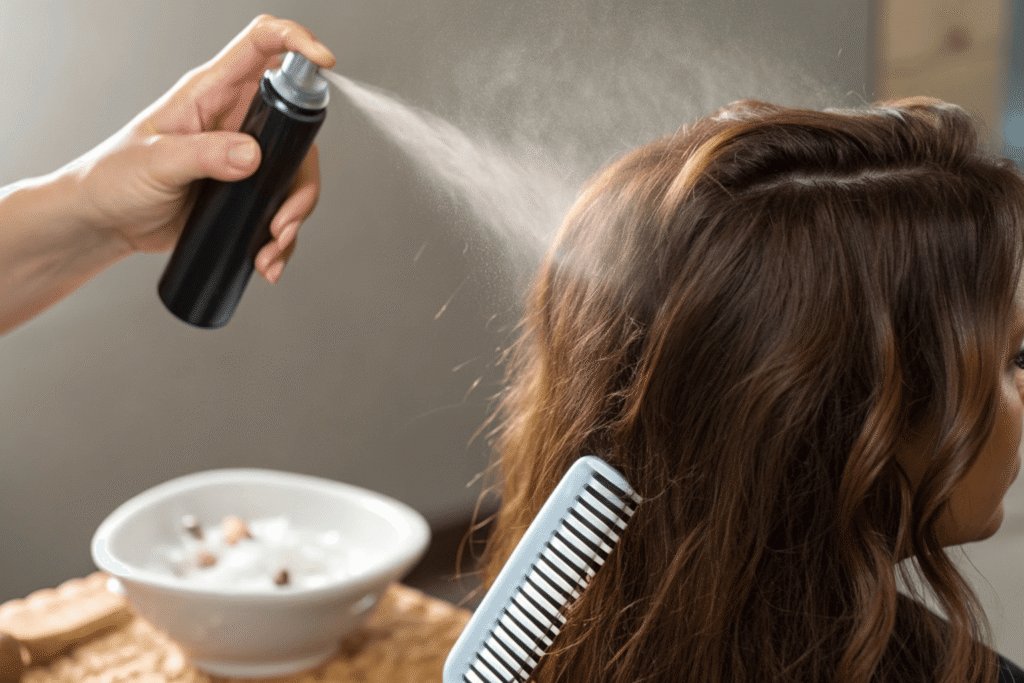
- Dry shampoo or texture powder: Light dusting at mid-lengths and ends (avoid heavy build-up at the roots). Tap off excess and brush with a wide-tooth comb.
- Fabric softener rinse (sparingly): 1 teaspoon in a basin of cool water, quick dunk, then a thorough cool-water rinse. Air-dry on a stand. This reduces glare without residue when done lightly.
- Matte-finishing sprays made for synthetic hair: Short, even spritz from 10–12 inches away. Test on an inner layer before full application.
Frizz prevention and smoothing
- Detangle daily with a wide-tooth comb, starting at the ends and moving up. No boar bristle on synthetics—static city.
- Use a synthetic-safe leave-in conditioning spray. Mist lightly, then smooth with hands; don’t saturate.
- For ends that rough up after a few weeks, a gentle “steam set” by a professional (no contact heat) can refresh smoothness. At home, apply leave-in and finger-roll the ends while drying.
- Storage matters: Keep wigs on a stand, away from sunlight and heat sources. Nylon bags can create static—opt for breathable fabric covers.
- Friction zones: If you wear collars, scarves, or drive often, the nape area will tangle first. A tiny drop of synthetic-safe serum at the nape before heading out can reduce friction.
Retail-ready presentation
- Under store lights, shine increases. Use soft, diffused lighting and matte backdrops for displays.
- Offer a “first-wear kit”: travel-size dry shampoo, leave-in, wide-tooth comb, and a quick care card. It reduces returns and boosts customer satisfaction.
What temperature limits should I set for my heat-resistant stock?
Practical, safe ranges I use
- Flat irons: 260–285°F (127–140°C) for smoothing and subtle straightening.
- Curling irons/wands: 275–300°F (135–149°C) for soft waves and curls.
- Absolute ceiling: 325–350°F (163–177°C), only if the manufacturer explicitly approves. Many lines perform best below 300°F.
Policy and training
- Label each heat-friendly style with the brand’s tested range and your in-house maximum (I default to ≤300°F unless the spec sheet says otherwise).
- Train staff on “heat plus time” rules: lower temp, longer dwell, smaller sections. More heat isn’t better—precision is.
- Require heat protectant and cooling time before brushing. Create a quick checklist at stations: protect → section → style → cool → brush.
Red flags and fiber stress
- Gloss loss, rough ends, or “bubble” texture indicate overheated fibers. Stop, trim ends if needed, and reduce temperature by 25°F on the next pass.
- If a client insists on frequent high-heat restyles, recommend rotating between two heat-friendly wigs to reduce cumulative stress—or consider a human hair option.
Comparison Table
| Factor | Heat-Resistant Synthetic | Non-Heat Synthetic |
|---|---|---|
| Styling flexibility | Curl/straighten at moderate temps; change patterns as needed | Pre-styled, holds shape; no direct heat tools |
| Temperature tolerance | ~250–350°F with precision and protectant | Heat will melt/frizz; avoid all direct heat |
| Shine level | Typically less shiny, more natural out of the box | Often glossier; can mattify with dry shampoo |
| Weight/comfort | Can feel denser and warmer | Lighter and cooler for long wear |
| Longevity | Shorter with frequent heat use | Generally longer with proper care |
| Maintenance | Higher: heat control, restyling after washes | Lower: wash, shake, wear; strong style memory |
| Budget over time | Higher if you style often (tools + replacement) | More cost-effective for everyday wear |
| Humidity/active wear | May relax; needs touch-ups | Style holds better in humidity and activity |
Optional FAQ
Will heat-friendly synthetics hold tight, long-lasting curls?
They hold soft waves and medium curls well at moderate temps with proper cooling. Ultra-tight, high-tension curls are possible but less durable; consider human hair for long-lasting, high-definition curls.
Can I use a blow dryer on synthetic wigs?
Only if the wig is labeled heat-resistant and the dryer has a cool/low setting. Direct high heat can damage fibers. For non-heat synthetics, air-dry only.
How often should I wash synthetic wigs?
Every 6–10 wears for daily use, or monthly if worn occasionally. Use synthetic-specific shampoo and conditioner, and air-dry on a stand.
Do lace front wigs or HD lace change this decision?
Lace type affects hairline realism, not fiber heat tolerance. Whether you choose lace front or HD lace, follow the fiber’s heat rules.
Conclusion
If you love reinventing your look and don’t mind careful heat styling, a heat-resistant synthetic wig is your best match—just keep temps controlled and expectations realistic. If you want reliable, polished hair with minimal effort, a non-heat synthetic wins for longevity, comfort, and cost. I’ve been on both sides, and the happiest clients are the ones who choose based on their habits and environment—not just the label. Need help mapping this to your routine? Tell me how often you style, your climate, and your budget, and I’ll point you to the right fiber and temperature plan.