
As a supplier who has launched and scaled multiple human hair wig lines for retailers, salons, and distributors across North America and Europe, I know what your first-time customers ask—and what B2B buyers need to stock, educate, and retain them. This guide translates consumer beginner questions into actionable sourcing, merchandising, and aftercare strategies so you can build trust, reduce returns, and boost repeat sales.
Human hair wigs give the most natural look, realistic movement, and styling flexibility. For beginners, clarity on hair type (Remy vs. non-Remy), cap construction (lace front, monofilament, full lace, closed weft), density (120–150% for day-one realism), proper sizing, and a simple care routine is what determines satisfaction. If you’re a wholesaler or retailer, optimize your SKUs around these requirements and provide clear measurement and care education to keep returns near zero.
If you’re curating a beginner-friendly catalog, aim for a focused assortment: lace-front Remy basics in 12–16 inches, 130% density, natural shades, adjustable caps, and clear care cards. In this pillar, I’ll break down cap construction without overspending, recommend starter densities and lengths that sell-through fast, provide a measurement framework to reduce fit-related returns, and share a low-effort maintenance routine you can turn into printable SOPs and in-box inserts.
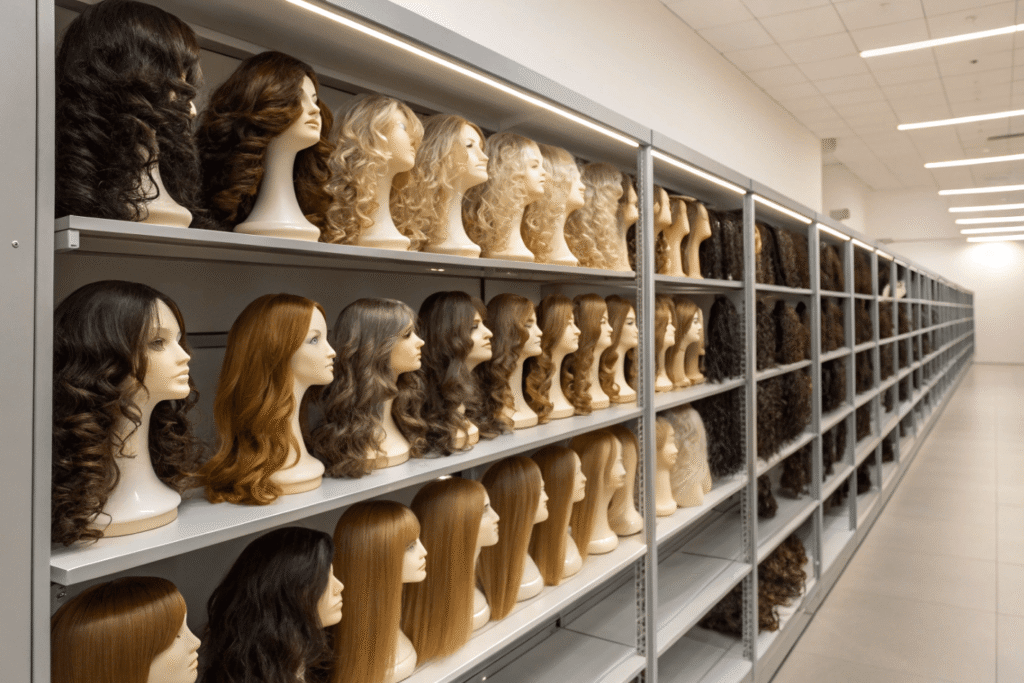
Types of Human Hair Wigs for Beginner Buyers (and What Matters in B2B)
Beginner customers want a natural look from day one with minimal learning curve. As a B2B buyer, you’re balancing realism, durability, supply stability, and margin. Here’s how I structure beginner-friendly assortments that consistently sell and stay under control financially.
Key Hair Types You’ll See in the Supply Chain
- Brazilian: Medium to coarse texture, strong cuticle, holds curls well; popular in North America. Great for daily wear and texture diversity.
- Indian: Lightweight with natural movement; slightly finer than Brazilian; blends easily across ethnicities.
- Peruvian: Soft feel with a bit more body; good for volume without heaviness.
- European: Finer strand, premium-cost segment; excellent for clients seeking ultra-natural, low-density looks.
Tip from sourcing: Don’t over-index on “origin” marketing alone. Verify strand diameter, cuticle alignment, and silicone status through labable QC (cuticle-direction microscopy and silicone-strip testing) when feasible for larger contracts.
Remy vs. Non-Remy (The Quality Lever That Reduces Returns)
- Remy (cuticles aligned): Lower tangling, better longevity, fewer customer complaints. Best default for beginner lines.
- Non-Remy: Budget-friendly, often silicone-coated; looks glossy at first but can degrade faster. If you carry it, price accordingly and manage expectations with transparent labeling.
For first-time buyers, I recommend prioritizing Remy SKUs for your core line and limiting non-Remy to promotional or entry tiers with strong disclosure. This protects your brand and keeps support tickets low.
Construction Options Simplified for Beginners
- Lace Front: Natural hairline, easiest “pro look” without full commitment. Sweet spot for beginners.
- Monofilament Top: Realistic scalp and multi-directional parting; excellent for parted styles; upsell over lace-front only.
- Full Lace: Maximum styling freedom but higher cost and care; not the default for beginners unless you offer install services.
- Closed Weft/Basic Cap: Durable and lower-cost; good for budget SKUs or back-of-cap density.
B2B strategy: Stock 60–70% lace-front Remy, 20–30% mono-top lace-front hybrids, 10–20% closed-weft hybrids. Reserve full lace for advanced buyers or salon-installed services.
Advantages and Disadvantages for B2B Sourcing (Beginner Segment Focus)
When buyers ask, “Why human hair?” your sales and PDPs should present honest trade-offs. This increases trust and decreases post-purchase friction.
Advantages for Your Customer (and Your P&L)
- Natural appearance and movement, easily justifying a higher AOV.
- Heat-styling and recoloring flexibility; fewer “it doesn’t look right” returns.
- Longer lifespan (1–3 years with proper care) improves customer satisfaction and LTV.
Operational Considerations for You
- Higher capital tied in inventory vs. synthetic; mitigate with tight SKU curation.
- QC complexity: Remy integrity, cuticle alignment, and lace quality need consistent checks.
- Education required: Fit, density expectations, and care instructions must be preemptive.
Honest Drawbacks to Communicate
- More maintenance than synthetic; set realistic care expectations.
- Upfront price is higher; offer installment options or tiered product lines.
- Heat/coloring can shorten lifespan; advise to strand-test or use professional services.
Transparent PDP tables and in-box care cards are your best defense against dissatisfaction. I include “Beginner Density Guide” and “How to Measure” inserts in every starter wig.
How to Choose the Right Supplier or Product Line (OEM, ODM, Private Label for Beginner Wigs)
I’ve onboarded dozens of factories and seen how quickly beginner programs thrive or fail based on the SOPs you set upfront. For a beginner-first assortment, here’s exactly how I vet suppliers and structure the product line.
Supplier Vetting Checklist (Beginner Wig Program)
- Remy Verification: Require cuticle alignment confirmation, avoid heavy silicone masking. Ask for untreated sample bundles for testing.
- Lace Standards: HD lace for premium SKUs; Swiss lace for durability; color range from light to deep brown. Check lace memory and tear resistance.
- Knot Work: Consistent single knots at hairline for realism, double knots elsewhere for durability; confirm bleaching tolerance and longevity.
- Density Control: Confirm density tolerance within ±5%. Inconsistent density confuses beginners and creates returns.
- Color Consistency: Ask for delta-E tolerances if pre-colored; verify with swatches under daylight-balanced lighting.
- Lead Times & MOQs: For beginner products, target MOQs of 10–30 units per SKU with 15–25 day lead time; ensure capacity scaling for Q4 spikes.
- Packaging & Inserts: Supplier should support branded care cards, satin bags, and measurement guides.
Product Line Architecture for Beginners
- Core SKUs:
- 12–16 inch, straight or body wave
- 130% density (or 120–150% by supplier scale)
- Lace front with mono-part or mono-top option
- Natural black/brown base plus 1–2 balayage SKUs
- Upsell SKUs:
- 18 inch mono-top lace fronts
- HD lace premium variant
- 150% density “volume” option
- Entry SKUs:
- Closed-weft with lace front, 12–14 inch, 120–130% density
- Same Remy standard to keep satisfaction high
OEM, ODM, and Private Label Tips
- OEM: Provide your exact specs. Lock tech packs with measurements, lace specs, knotting pattern, bleach test protocol, and density map.
- ODM: Use the factory’s proven beginner templates; customize lace tint range and packaging to go to market faster.
- Private Label: Prioritize brand storytelling and care UX—unboxing, QR-linked tutorials, and appointment booking with partner salons.
A Simple Comparison Table for Buy Teams
| Attribute | Entry (Budget Remy) | Core Beginner (Recommended) | Premium Beginner |
|---|---|---|---|
| Cap | Lace front + closed weft | Lace front + mono part/top | HD lace + mono top |
| Density | 120–130% | 130–140% | 150% |
| Lengths | 12–14″ | 12–16″ | 14–18″ |
| Hair | Remy | Remy (select textures) | Remy+ or European mix |
| MSRP Range | $229–$399 | $399–$649 | $649–$999 |
| Best For | Price-sensitive starters | Day-one natural look | Photo-ready, low lace visibility |
How to Choose the First Wig Cap Construction Without Overspending
From a beginner’s perspective, cap construction decides 80% of how “real” the wig looks at the hairline and part. From a B2B lens, it defines your cost structure. Here’s how I position the first purchase.
What I Recommend for Most First-Time Wearers
- Lace Front + Mono Part (or small mono top):
- Reason: Natural hairline and realistic scalp at part with manageable cost and durability.
- Cost control: Less expensive than full mono-top or full lace and fewer support issues than full lace installs.
When to Step Up
- Full Mono-Top:
- For customers who part in multiple directions and demand scalp realism beyond a fixed part.
- HD Lace Front:
- For clients prioritizing lace invisibility (photos, content creators) and lighter skin tones that need finer tulle to disappear.
When to Hold Off
- Full Lace:
- High learning curve and maintenance. Unless you bundle installation services or target advanced wearers, keep this limited.
Talking Points for Your PDPs
- “Beginner-friendly install” badges for lace front + mono part.
- “Durability-first” badges for Swiss lace options.
- “Ultra-invisible hairline” badge for HD lace premium SKUs.
Which Density and Length Look Natural from Day One?
Beginners often equate density with quality, but over-density reads “wiggy.” You can win loyalty by guiding them to realistic volumes.
My Field-Tested “Day-One Natural” Defaults
- Density:
- 120–130%: Everyday realism for straight/fine textures.
- 130–140%: Universal sweet spot (especially for body wave).
- 150%: Use sparingly as “glam volume”; not a first default.
- Length:
- 12–14 inches: Collarbone to just past shoulders—easy maintenance, low shedding risk.
- 16 inches: Maximum length for a first wig before upkeep spikes.
Texture note: Curl and wave compress apparent length. 14″ body wave can wear like a 12–13″ straight visually.
Merchandising Tip
Create a density-and-length guide chart on your PDPs and in your stores. It decreases returns and exchanges by setting expectations.
How to Measure the Head to Avoid Tightness or Slipping
Fit is the top driver of returns in beginner segments. I’ve cut return rates by more than half simply by making measurement unavoidable before checkout.
The Four Measurements to Require
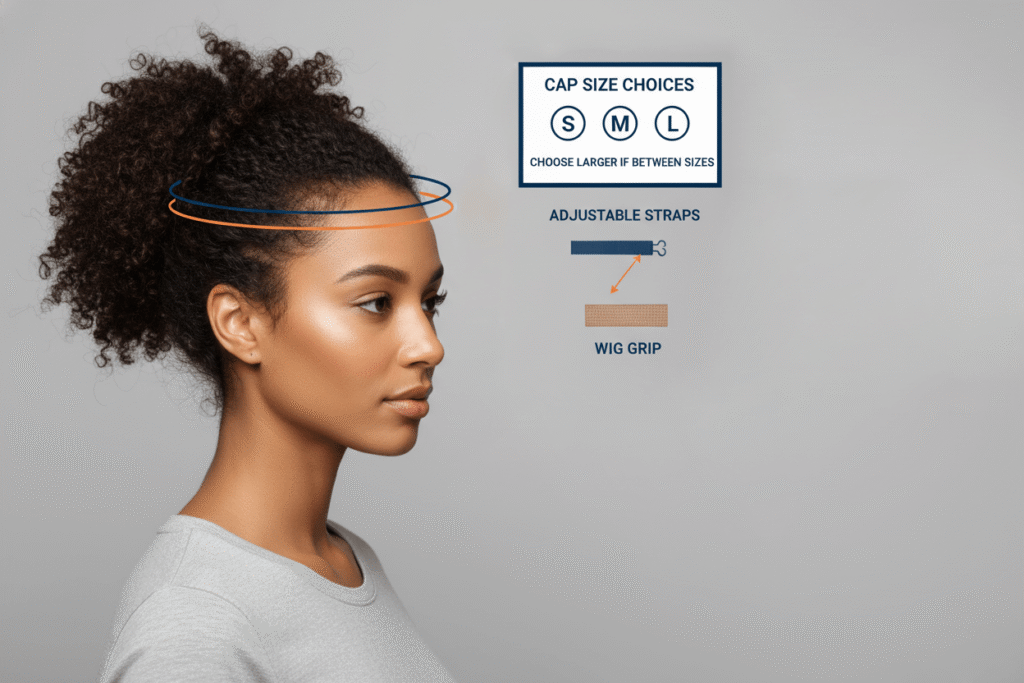
- Circumference: Hairline around the head; average adult 21–22.5″.
- Front to Nape: Center forehead to nape.
- Ear to Ear (Across Forehead): Temple to temple.
- Ear to Ear (Over Top/Back): Above one ear over crown to the other ear.
Sizing advice:
- If between sizes, choose the larger cap with adjustable straps or elastic band.
- Always recommend a wig grip or adjustable band for new wearers who fear slipping.
Fit-Testing SOP for Retail or Salon Partners
- Dry fit the wig on a wig cap or grip.
- Adjust straps first, then check ear tab symmetry.
- If lace ripples at the hairline, cap is likely too large; if lifting at nape, too small.
Include a QR code inside packaging linking to a 60-second measurement video. Your customers will thank you—and so will your returns department.
What Basic Care Routine Keeps a Starter Wig Looking New?
Beginners want a simple routine that doesn’t feel like a second job. This is the maintenance template I include on our care cards.
Daily/After-Use
- Detangle ends to mid-length with a wide-tooth comb; work upward.
- Apply a pea-size amount of lightweight serum to mid-lengths/ends if dry.
- Store on a wig stand or in a satin bag; never in humid bathrooms.
Weekly to Biweekly (Every 7–10 Wears)
- Wash with sulfate-free shampoo; avoid scrubbing the lace base.
- Condition mid-lengths to ends; avoid knots at the base to prevent loosening.
- Rinse cool; air-dry on a stand away from sun or heat.
Styling Rules for Longevity
- Heat at 300–350°F max, always with protectant.
- Prefer heatless styles between washes.
- If coloring, strand-test or use professional services; lace staining is a common beginner mishap.
Storage SOP
- Cool, dry place; away from sunlight and humidity.
- Detangle before storing; use satin-lined bags for travel.
- Avoid friction from rough fabrics (cotton, wool collars).
Assortment Planning for Beginner-Focused B2B Programs
This is the SKU blend I deploy for new partners launching a beginner collection.
Starter Bundle (Per Shade)
- 12″, 14″, 16″ lengths; body wave and straight.
- 130% density standard; one 140% density variant for “fullness” seekers.
- Lace front + mono part; Swiss lace default, one HD lace premium SKU.
- Natural black (1B), dark brown (2/4), and one subtle balayage (e.g., 2/4 with caramel).
Sizing Mix
- Small: 20%
- Medium: 60%
- Large: 20%
- All with adjustable straps and optional elastic band.
Packaging and Education
- Satin bag + breathable box.
- Care card (one-page), measurement guide, QR code for video tutorials.
- Return policy clarity: Uncut lace and net intact for eligibility.
Quality Control: What I Check Before Approving a Batch
Your beginner promise rides on consistency. Here’s the checklist my team uses on each batch.
- Hair Integrity: Random bundles checked for cuticle direction; no acid bath smell; minimal short fillers.
- Lace: Even tension, no frayed edges, consistent knot bleaching on hairline.
- Knots: Hairline single knots; interior double knots; no excessive shedding when gently combed.
- Density Mapping: Visually and by scale; ±5% tolerance.
- Part Realism: Mono top/part lies flat; no overplucking bald spots.
- Cap Build: Even stitching; strap elasticity; combs placed symmetrically.
- Cleanliness: No heavy silicone; no residue; neutral scent.
Document QC with photos and retain a golden sample for disputes.
Merchandising and Content That Converts Beginners
I’ve A/B tested content across hundreds of PDPs targeted at first-time buyers. Here are the elements that consistently lift conversions.
- “Find my first wig” quiz: Guides to cap construction, density, and length.
- Real-life try-on photos by size and density.
- 30–60 second tutorial videos embedded above the fold.
- Density and length comparison charts.
- Fit guarantee copy: Free size exchange if lace uncut.
- Appointment CTA: “Book a virtual fit check” or partner salon try-on.
Logistics, Pricing, and Warranty Considerations
Beginners often hesitate at price; flexible structures remove friction.
- Tiered Pricing: Entry, Core, Premium as described above.
- Payment Options: Installments increase AOV and conversion on first-time buyers.
- Warranty: 30-day manufacturing defect coverage; fit exchange if lace intact.
- SLA for Wholesale Partners: 2–3 week lead time standard; rush options for launches.
Compliance and Ethical Sourcing Notes
Ethical, traceable sourcing is increasingly part of procurement checklists.
- Transparency: Supplier affidavits on sourcing; third-party audits where possible.
- Chemical Use: Disclose bleaching and dye processes; maintain MSDS for major treatments.
- Labeling: Clear distinctions between Remy, non-Remy, processed textures, and lace types.
Quick-Reference Tables for PDPs and Sales Teams
Beginner Density and Length Cheat Sheet
| Desired Look | Density | Suggested Length | Notes |
|---|---|---|---|
| Everyday natural | 120–130% | 12–14″ | Lowest upkeep; highest satisfaction for first-timers |
| Universal starter | 130–140% | 14–16″ | Slight volume without “wiggy” look |
| Glam volume | 150% | 16–18″ | Coach on care, shedding, and heat moderation |
Cap Construction Decision Guide
| Cap Type | Pros for Beginners | Cons | Use Case |
|---|---|---|---|
| Lace Front | Natural hairline, simple styling | Less parting flexibility | First wig default |
| Lace Front + Mono Part | Realistic scalp at part | Slightly higher cost | Best overall starter |
| Full Mono-Top | Freestyle parting, realism | Higher price than mono part | Styling-focused clients |
| Full Lace | Max styling | Learning curve, delicate | Advanced wearers or salon installs |
| Closed Weft Hybrid | Durable, budget-friendly | Less scalp realism | Entry price point |
B2B FAQs Answered Through the Beginner Lens
- What return rate should I expect on beginner wigs?
- With measurement education and care cards, 2–5%. Without, 8–12% is common.
- Which SKUs drive the first 80% of revenue?
- Lace front + mono part, 12–16″, 130–140% density, natural shades.
- Do I need HD lace in the beginner line?
- One or two SKUs as upsell is enough. Swiss lace is more durable for most.
- Should I include pre-bleached knots?
- Yes at the hairline and part; it reduces install friction. Keep bleach within integrity limits to avoid shedding.
Turn Beginner Questions into Sales Scripts and Inserts
You asked:
- How do I choose my first wig cap construction without overspending?
- Recommend lace front + mono part; Swiss lace default; HD as optional upgrade.
- Which density and length help me achieve a natural look from day one?
- 130% density at 12–14″ (straight) or 14–16″ (body wave).
- How do I measure my head to avoid tightness or slipping?
- Four-point measurement + between-size = choose larger cap with adjustable straps; add a wig grip.
- What basic care routine keeps my starter wig looking new?
- Detangle daily, wash every 7–10 wears with sulfate-free shampoo, condition mid-lengths to ends, air-dry, light heat only.
Package these answers into:
- Box insert: “Your First Wig Playbook” one-pager.
- PDP banners: “Beginner Fit Guarantee,” “Day-One Natural Density.”
- QR video: 60-second measuring and first-wash tutorial.
Image Ideas You Can Use in PDPs and Guides
- Side-by-side density comparison (120% vs. 130% vs. 150%).
- Cap interior photography: lace front vs. mono part vs. full lace.
- Measurement diagram with tape positions.
Conclusion: The Beginner Blueprint B2B Buyers Can Execute Today
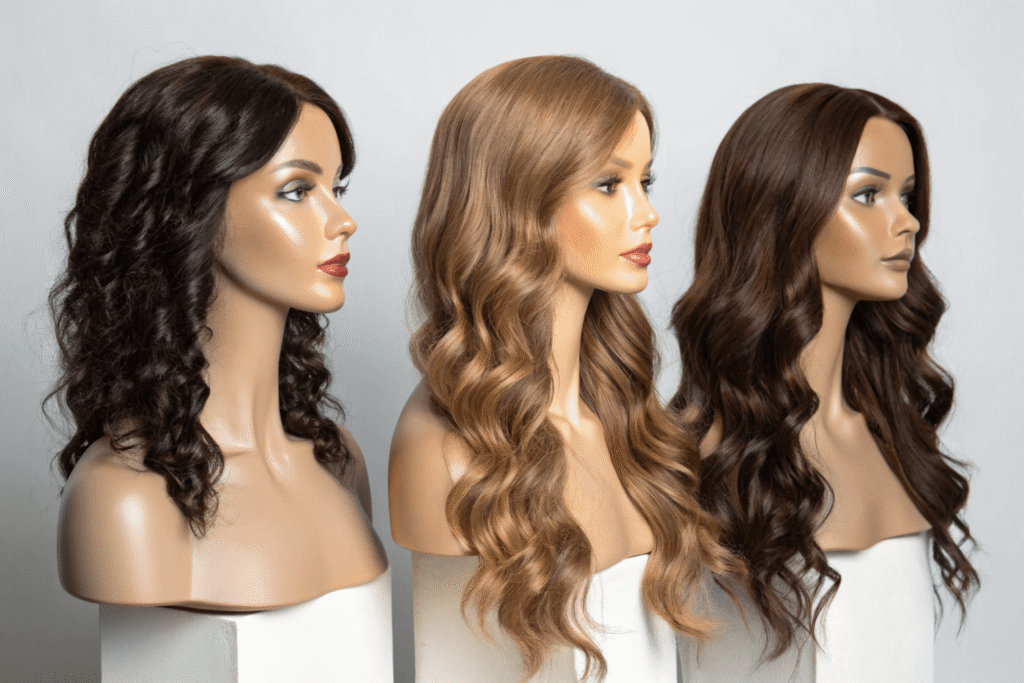
If you want beginner customers to fall in love with human hair wigs on day one, anchor your assortment around Remy lace-fronts with mono parts, 12–16 inches, and 130–140% density. Educate on fit with mandatory measurement content, and simplify care with a single-page routine. From a sourcing standpoint, standardize Remy verification, lace quality, knot work, and density tolerance to keep outcomes consistent and returns low.
I’ve seen this formula repeatedly lift conversion, expand word-of-mouth, and stabilize support demand. If you’d like, I can share our starter tech packs, QC checklists, and packaging templates, or arrange sample kits across the three tiers (Entry/Core/Premium). Contact us for a sample request, wholesale pricing, or to review our ready-to-label beginner collection and OEM/ODM capabilities.
Ready to build a beginner-friendly wig line? Let’s map your first 10 SKUs and get samples moving this week.