
When I first started comparing lace constructions, I kept running into the same problem: I wanted a natural hairline, the freedom to do ponytails, and a cap that didn’t overheat me or my clients. But every option had trade-offs in cost, maintenance, and styling limits. After testing several units across lace front, 360 lace, and full lace caps—and installing them for clients in different climates and skill levels—I learned how to match the cap type to real-world needs rather than just marketing claims.
The best lace wig for beginners balances realism, cost, and maintenance. Lace front offers the most budget-friendly, beginner-proof installs with a natural hairline. 360 lace adds perimeter lace for high ponytails and better ventilation at a mid-range price. Full lace delivers maximum parting and updo freedom but costs more and requires advanced handling. In this guide, I’ll show you exactly how to pick based on styling goals, budget, and skill level.
Before we dive in, I’ll walk through the core differences, who each cap suits best, and the lessons I’ve learned from hands-on installs for both personal use and B2B clients. I’ll also share value picks and practical tips to help you avoid common pitfalls, whether you’re buying one unit or placing a bulk order.
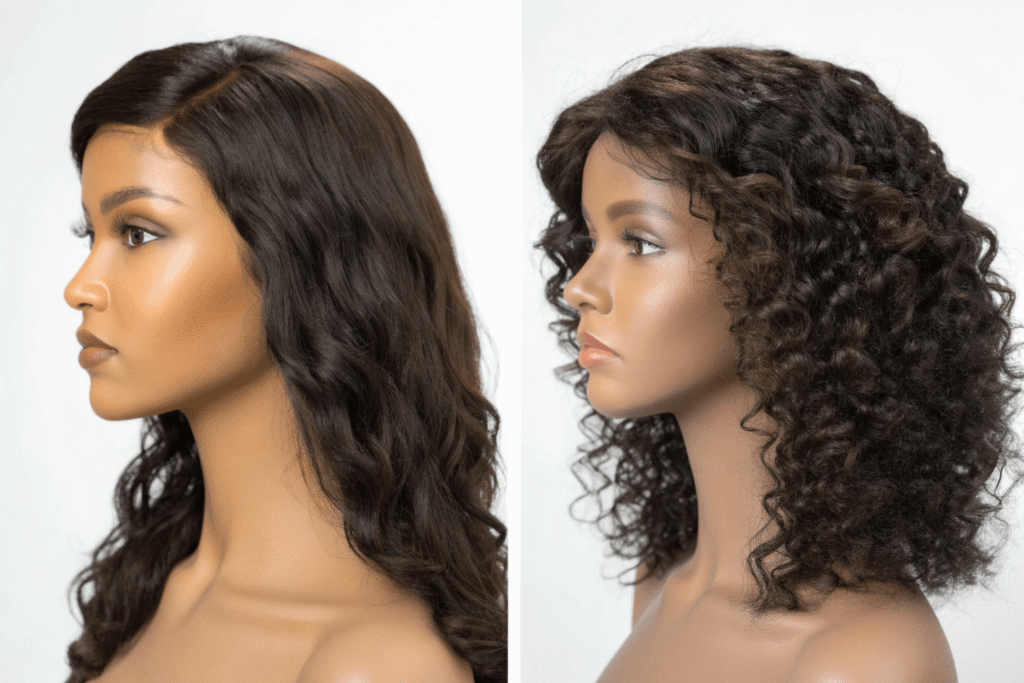
How do I match lace construction to my styling needs and budget?
Here’s what I’ve learned after fitting lace wigs for first-time buyers and salon clients: start with how you actually style your hair week to week, then layer in your budget and maintenance tolerance.
Quick overview: what each cap does best
- Lace front: natural hairline at the front, easiest installs, lowest cost, best for down styles and low ponytails.
- 360 lace: lace around the perimeter for high ponytails and buns, breathable middle, moderate price and skill.
- Full lace: lace everywhere for parting anywhere and advanced updos; highest realism and cost, most delicate.
Match by styling habits
- If you mostly wear hair down, with occasional side parts: lace front.
- If you want regular high ponytails or sleek buns: 360 lace or full lace.
- If you braid, cornrow, or do intricate updos from any angle: full lace.
Match by budget and maintenance
- Tight budget or first purchase: lace front with a pre-plucked hairline and medium density (130–150%).
- Mid-budget, versatile styling without full maintenance: 360 lace.
- Premium budget, maximum realism and parting: full lace, ideally with reinforced seams and high-quality Swiss lace for durability.
Skill level matters
- Beginner: lace front—fast installs, fewer pitfalls.
- Intermediate: 360 lace—some adhesive work and perimeter customization.
- Advanced: full lace—careful handling, precise installs, and consistent maintenance.
My practical decision framework
I ask these three questions:
1) How often will you expose the nape (high ponytails/buns)? If “weekly,” skip lace front.
2) How patient are you with installs and touch-ups? If “minimal,” pick lace front or a glueless-ready 360.
3) What climate and scalp sensitivity do you have? If “hot” or “sensitive,” 360 lace often feels cooler than dense full lace caps, unless you select ultra-light full lace.
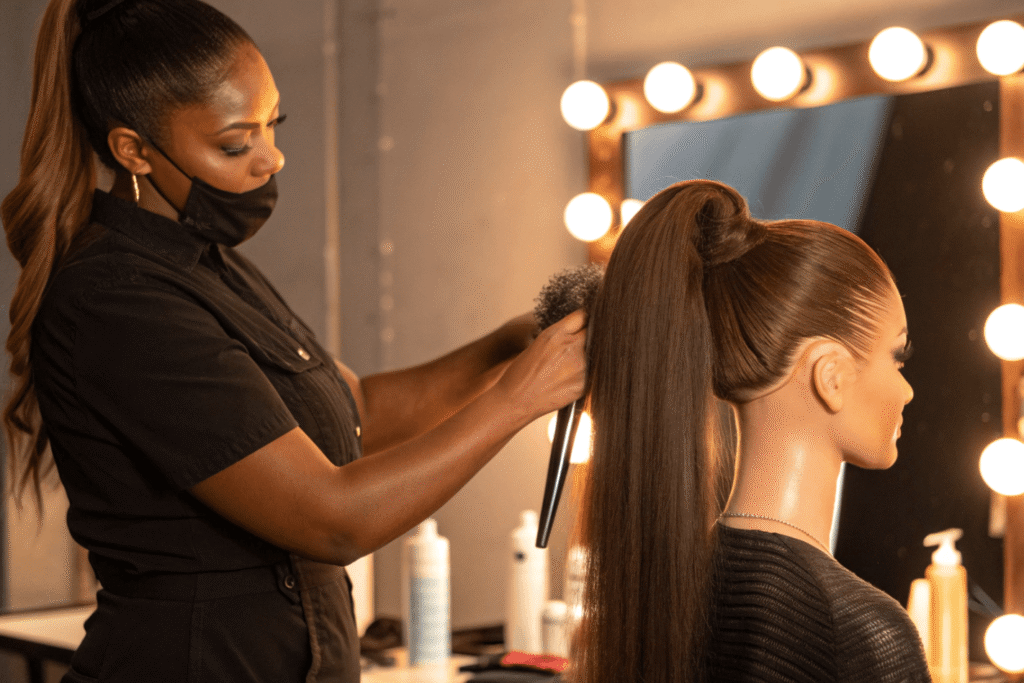
Will a 360 lace give me better ponytail options for my clients?
Yes—360 lace is purpose-built for exposed nape styling. In my experience, it’s the sweet spot for clients who want high ponytails and buns without the full complexity and price of a full lace.
Why 360 lace shines for ponytails
- Lace around the perimeter (front, sides, nape) gives a natural look from every angle when hair is lifted.
- The center cap is machine-made and breathable, adding structure and easier installs than full lace.
- Faster to secure than full lace when styling for events or back-to-back appointments.
Tips for clean, natural ponytails on 360 lace
- Pre-pluck the nape if your unit isn’t already customized; a soft gradient avoids harsh lines.
- Use a thin adhesive or gel at the nape for event styling; freeze spray can work for short wear.
- Choose density wisely: 130–150% keeps ponytails sleek and avoids bulky napes.
- Opt for transparent/light brown lace to match client undertones; tint sparingly to avoid buildup.
When I still recommend full lace
- Ultra-sleek, editorial updos with visible scalps anywhere you part.
- Complex braid patterns where scalp realism is critical across the entire head.
- Clients who need maximum parting freedom for frequent restyling throughout the week.
Real-world scenarios I see
- Fitness instructors or dancers: 360 lace for secure high ponytails and breathability.
- Bridal clients: 360 lace for long-wear updos; full lace for intricate styles with multiple parts.
- Corporate professionals: lace front if hair is worn down most days; 360 lace if ponytails are part of the routine.
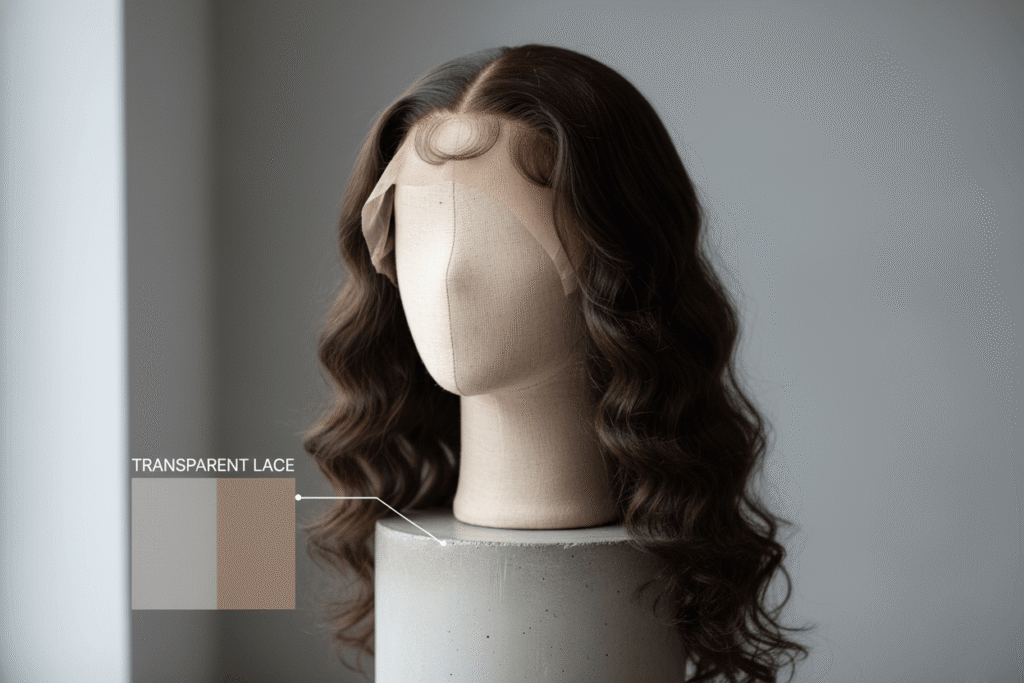
Is full lace ventilation worth it for premium B2B buyers I serve?
For premium B2B clients, full lace can be worth it—but only when the use case demands maximum parting and top-tier realism. If you’re supplying units for hot climates or sensitive scalps, consider both ventilation and durability trade-offs.
Ventilation vs. durability: what I’ve observed
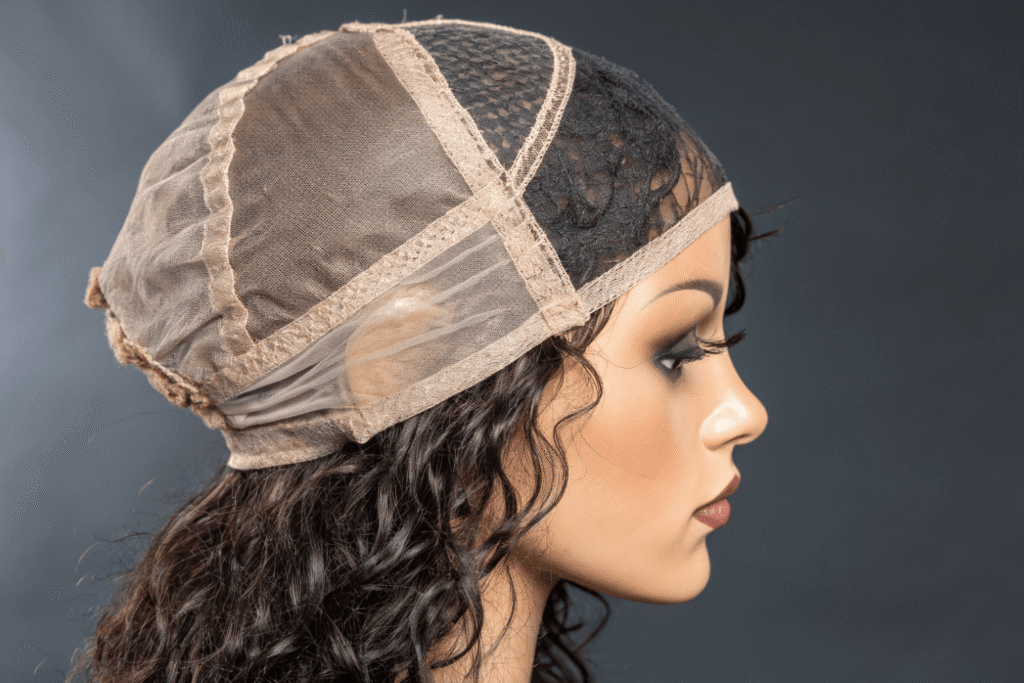
- Ventilation: full lace breathes across the entire scalp, but some full lace caps use higher-density knotting that reduces airflow. Request lighter knot density + Swiss or HD lace where appropriate.
- Durability: full lace is more delicate at high-tension points (temples, nape). Reinforced seams and thoughtful stitching reduce tear risk in salon use.
When full lace makes sense in B2B
- Editorial, film, theater, or luxury salon settings prioritizing realism at any angle.
- Clients changing parts often, wearing intricate braids or sculpted updos.
- VIPs with specific scalp needs who value lightweight caps with premium lace.
When 360 lace is the smarter B2B choice
- Warm climates or clients who sweat—360’s breathable middle keeps heads cooler.
- Frequent ponytail/bun wearers needing quick, secure installs.
- Teams needing faster turnover and fewer touch-ups on busy service days.
Spec recommendations for premium orders
- Lace material: soft Swiss or HD lace at hairline; consider standard Swiss elsewhere for durability.
- Knotting: single knots at hairline, double knots elsewhere for longevity; bleach or tint knots for realism.
- Density: 130–150% for most; 180% only for voluminous styles (warn about bulk in updos).
- Hair type: cuticle-aligned human hair for longevity and natural movement; match texture to client base (straight, body wave, kinky curly).
Which cap offers the best value for bulk orders with natural hairlines?
When I manage bulk procurement, I look for the best balance of install speed, customer satisfaction, and return rate. For most B2B bulk orders, lace front with a pre-plucked hairline offers the highest value—followed by 360 lace when updo demand is strong.
Why lace front wins on value
- Lowest unit cost and fastest installs reduce service time.
- Natural hairline up front meets expectations for everyday wearers.
- Fewer returns due to simpler maintenance and sturdier machine-made sections.
When to choose 360 lace in bulk
- Your client base regularly wears high ponytails/buns.
- You serve hot climates or gyms/spas where ventilation matters.
- You want a premium look without full lace pricing or fragility.
Full lace in bulk—niche but powerful
- Luxury salons or film/stage productions.
- Advanced stylists who can maintain and repair lace.
- Clients demanding parting freedom and maximum realism.
Value-focused spec checklist I use
- Pre-plucked hairline with subtle graduation and a few sparse, irregular baby hairs (optional).
- Medium lace shade options plus transparent; offer lace tint kits in upsell bundles.
- Adjustable straps and combs for glueless wear; include elastic band for security.
- Quality control on knot bleaching to prevent premature shedding.
- Clear density labeling and counseling so clients choose appropriate fullness.
Side-by-side comparison
| Cap Type | Styling Freedom | Ponytails/Updos | Ventilation | Install Difficulty | Price Range | Best For |
|---|---|---|---|---|---|---|
| Lace Front | Front hairline realism; parting in front | Low ponytails | Moderate (front lace) | Beginner-friendly | $ | Everyday wear, bulk value |
| 360 Lace | Natural perimeter; good parting near edges | High ponytails | High (breathable middle) | Intermediate | $$ | Active clients, hot climates |
| Full Lace | Part anywhere; maximum realism | Excellent | Very high (all-lace cap) | Advanced | $$$ | Editorial/luxury, complex styles |
Pros and cons table
| Cap Type | Pros | Cons |
|---|---|---|
| Lace Front | Most affordable; easy installs; sturdy back; great daily wear | Limited high updos; less ventilation at crown |
| 360 Lace | Natural hairline + nape; high ponytails; breathable; mid-price | More prep than lace front; perimeter adhesive touch-ups |
| Full Lace | Unlimited parting; best for intricate styles; premium realism | Highest cost; most delicate; slower installs and maintenance |
My recommendations by scenario
- Budget-conscious beginners: Lace front, 13×4 frontal, pre-plucked, 130–150% density.
- Styling versatility without premium pricing: 360 lace with adjustable bands and light nape customization.
- Luxury or performance-grade realism: Full lace, Swiss/HD at hairline, reinforced seams, single knots hairline.
Conclusion
Choosing the right lace wig cap comes down to how you style, how much you want to spend, and how much maintenance you’re willing to do. Based on my experience:
- Lace front is the best starting point for most beginners and bulk orders—natural hairline, easy installs, and strong value.
- 360 lace is ideal when high ponytails and buns are part of your weekly routine or your clients need better airflow and perimeter realism.
- Full lace is the premium choice for advanced users, editorial work, and anyone who wants parting freedom from every angle.
If I were starting from scratch today, I’d begin with a well-made lace front for everyday wear, upgrade to a 360 lace for active or hot-climate clients, and reserve full lace for premium, high-styling scenarios. With the right match, you’ll get a natural look, comfortable wear, and a cap that truly fits your routine. You’ve got this—and I’m confident you’ll make a choice that feels as good as it looks.