
I’ve detangled thousands of human hair wigs across lace front, full lace, and wefted caps—both salon-grade and factory stock—so I understand the anxiety behind every pass of the comb. In my experience, shedding during detangling is rarely about the hair quality alone; it’s about tension management at the knot. When a wig is treated like scalp hair, knots slip, wefts loosen, and density declines. When it’s treated like a delicate textile, shedding drops dramatically.
To detangle human hair wigs without causing shedding, I work on a wig stand and detangle ends-to-roots in small, supported sections; I use a wide-tooth comb or loop/wig brush on slightly damp hair with conditioner or slip; I anchor the hair above the tangle to protect knots; and for stubborn mats, I add a silicone-based serum and finger-separate before brushing. I avoid saturating the cap, limit heat, and periodically seal knots to preserve density over time.
Below, I’ll break down the tools and sectioning methods that minimize stress, how to use slip effectively, when ends-to-roots is essential, and how steam or mist can safely reduce friction—grounded in wig manufacturing realities and what buyers should watch for when training clients and after-sales teams.
Which brushes and sectioning methods minimize stress?
Tooling that protects knots and wefts
From factory floors to salon backrooms, the fastest way to cause shedding is using high-friction tools or fine teeth that grab and yank tied strands.
- Wide-tooth comb: My primary detangler for all textures; low drag and minimal snagging.
- Loop (wig) brush: Bristle loops glide over fiber without sharp tips that catch knots—ideal for smoothing after combing.
- Flexible paddle brush (no ball tips): Only for final polish on straight/wavy textures; avoid ball-ended pins that hook lace knots.
- Fingers: First pass on any section; tactile feedback prevents overpulling.
Table: Brush/Comb Choice by Use Case
| Use case | Preferred tool | Why it minimizes stress |
|---|---|---|
| Initial separation on any texture | Fingers | Detects snags without torque; prevents knot lift. |
| Primary detangling | Wide-tooth comb | Large spacing reduces friction and catch points. |
| Smoothing after detangling | Loop brush | No sharp tips; glides over aligned hair. |
| Final polish (straight/wavy only) | Flexible paddle brush | Distributes tension evenly; avoid ball tips. |
Sectioning and anchoring: the real shedding control
I always detangle on a canvas block head or stable wig stand. Secure with T-pins only through reinforced areas (ear tabs, nape elastic)—never through delicate lace.
- Small sections: Divide into 4–6 parts. Smaller sections reduce resistance in the tool and cut torque on knots.
- Anchor above the tangle: With one hand, hold the hair 2–3 inches above the knot/weft; with the other, comb only the free ends. This “anchor” absorbs tension so the cap and knots don’t.
- Support the weft line: On machine-wefted wigs, place a finger along the stitch while combing underneath. It prevents traction on the weft and reduces slip.
- Avoid fine-tooth combs: They elevate friction, drag across micro-tangles, and loosen knots—especially problematic on bleached knots or lightly ventilated lace.
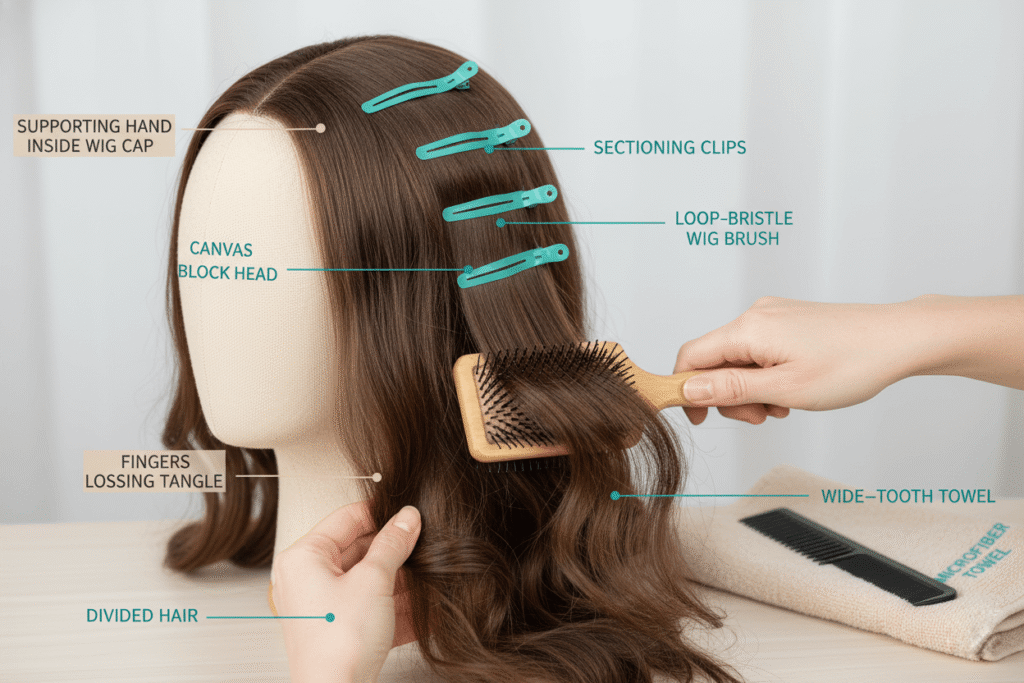
Industry note: Double-knot ventilated lace (common in high-density units) tolerates slightly more handling than single-knot bleached hairlines. Adjust tool aggressiveness accordingly; use loop brushes and extra slip at the hairline.
How do I use conditioners and slip to ease knots?
Controlled hydration: damp, not soaked
Human hair fibers swell when saturated. Swollen fibers stretch, weaken, and create cap moisture that can soften knots. My rule: work on slightly damp hair, never a soaked cap.
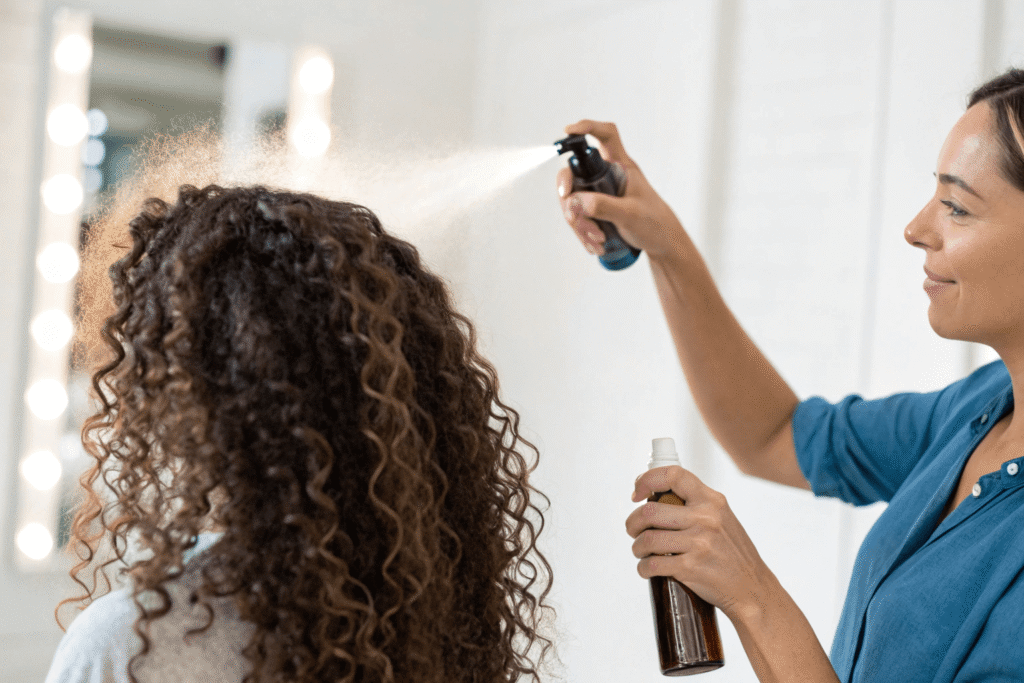
- Light mist: Use a wig-safe leave-in conditioner or detangling spray. Mist the hair lengths, not the cap.
- Do not saturate the cap: Excess moisture can swell lace/mesh and loosen ventilation knots.
Slip strategy for different textures
- Straight/wavy: Mist + lightweight leave-in; add a drop of argan or light silicone serum to mid-lengths/ends for stubborn snags.
- Curly/coily: Water + conditioner (sulfate-free) for heavier slip; detangle with fingers and a wide-tooth comb while curls are hydrated, then set curl pattern post-detangle.
For stubborn mats:
- Apply a silicone-based serum on mid-lengths and ends.
- Finger-separate the knot first; massage gently to open the tangle.
- Then proceed with the wide-tooth comb bottom-up.
Anti-static measures:
- Always avoid detangling bone-dry hair; static increases friction and cuticle clash.
- Use anti-static sprays or lightweight leave-ins to reduce flyaway resistance and micro-snapping.
Care integration:
- Wash in cool water, sulfate-free products; no rubbing or twisting.
- Pat dry with a towel—do not wring—before detangling. Twisting can torque knots and encourage shedding.
Should I detangle from ends to roots every time?
Yes—this is the non-negotiable baseline for preserving density. Ends-to-roots reduces cumulative tension on knots and stops tangles from compounding.
The bottom-up protocol I follow
- Start at the very tips with the section anchored.
- Clear the first 2 inches; move your anchor hand up another 2 inches.
- Repeat until you reach the roots.
- If the comb snags, stop, re-mist, and use fingers or the tail comb to open the knot before resuming.
Exceptions? Only micro-smoothing on already detangled hair:
- On fully detangled straight hair, I might run a loop brush from mid-lengths to ends for polish. I never start at the root on a tangled section.
Heat considerations:
- Limit heat styling; excessive heat weakens cuticles, increasing breakage during combing.
- Always use heat protectant before any pass with thermal tools; weaker cuticles shed more under subsequent mechanical stress.
Knot integrity:
- Bleached knots at hairlines slip more easily—be extra strict with ends-to-roots and anchoring near the front lace.
Can steam or mist help me reduce friction safely?
Mist is essential; steam is situational
Light misting with water/leave-in is my go-to. Steam can be helpful for rehydrating dry fibers and relaxing set tangles, but must be used cautiously to protect glue lines, lace integrity, and knot stability.
Safe use guidelines:
- Distance and control: Keep steam at a safe distance; aim for gentle warm mist over the hair lengths, not directly into the lace base.
- Cap protection: Avoid directing steam into the cap or knot areas to prevent swelling and potential knot slippage.
- Texture targeting: Steam benefits coarse, high-porosity hair and tight curls/coils where cuticles lift and friction spikes.
When I choose steam:
- On stubborn mid-length mats after serum application, a brief pass of warm steam relaxes fibers and enhances slip—then I finger-separate and comb ends-to-roots.
- Post-wash rehydration of dry ends before detangling on high-density units.
When I avoid steam:
- Recently processed or bleached knots (hairline units).
- Freshly sealed knots—give 24 hours cure time.
- Adhesive-attached systems where heat/steam may soften bond.
Long-term prevention:
- Store on a stand or satin-covered form; cover with silk/satin bag between wears to curb nape tangling.
- Periodically seal knots on the underside of lace or wefted areas with a professional knot sealer to reduce shedding over time.
Table: Mist vs. Steam Decision Guide
| Method | Best for | Risks | My recommendation |
|---|---|---|---|
| Light mist + leave-in | All textures; everyday detangling | Minimal if cap stays dry | Primary method; apply to lengths only. |
| Warm steam (controlled) | Coarse/tightly curled hair; stubborn mats | Cap swelling, knot slip, adhesive softening | Use carefully on lengths; avoid direct lace/knots. |
Final process summary I use with clients and teams
- Work on a wig stand; section small; anchor above tangles and support the weft.
- Wide-tooth comb or loop brush only; avoid fine teeth and ball-tipped pins.
- Mist lightly with wig-safe leave-in; don’t saturate the cap.
- Finger-separate stubborn knots; add silicone serum to mid-lengths/ends.
- Detangle strictly ends-to-roots; stop-and-reset if snagging occurs.
- Wash cool, sulfate-free; pat dry; avoid friction-heavy handling.
- Limit heat; always use protectant; re-seal knots periodically.
Treat the wig like the handcrafted textile it is. Once a hair is pulled from a knot, it won’t grow back—so every detangling decision should protect the ventilation first, smooth the fiber second, and polish last.