
I spend a lot of time inside wig factories and with brand teams troubleshooting why beautiful units start frizzing or splitting after just a few wears. The truth is: once hair leaves a living scalp, it loses its natural sebum shield. Add processing variables—steam setting, coloring, wefting tension, knot bleaching—and the cuticle’s margin for error shrinks. In B2B terms, frizz and split ends are not just cosmetic; they’re warranty claims, returns, and shortened product lifecycles that eat into margin.
To prevent frizz and split ends in human hair wigs, I aggressively manage moisture, friction, and heat across the entire maintenance cycle. I use sulfate-free cleansers, detangle only when damp from ends upward, apply lightweight leave-ins or wig-safe serums, cap heat at low-to-moderate temperatures with protectants, and trim ends on a predictable schedule. I also air-dry on stands, store in satin, reduce nape abrasion with accessories, and avoid alcohol-heavy stylers while clarifying gently to remove hard-water and product buildup.
Below, I’ll break down practical guardrails for heat and cuticle protection, a simple trimming cadence, friction control with satin, and the best post-wash serums that seal moisture without buildup. Expect factory-floor insight, supplier-level realities, and routines you can roll out to customers or embed into brand care cards.

Industry context: why cuticles fail in wigs
- Origins and processing matter: Indian temple hair and SEA Remy typically have better cuticle integrity than heavily processed Chinese stock or “beauty-grade” blends that went through acid bath and silicone top-coats. Steam setting, dyeing (especially high-lift blondes), and knot bleaching can raise porosity and reduce tensile strength.
- Machine wefted vs. hand-tied: Weft tension and repeated brushing at the seam/nape accelerate cuticle wear. Lace-front or full-lace units are prone to friction at the nape against collars.
- Supply-chain checkpoint: Inspect for true cuticle alignment (Remy), avoid over-acidized fibers, and ensure final rinse pH and conditioning protocol are documented by your factory.
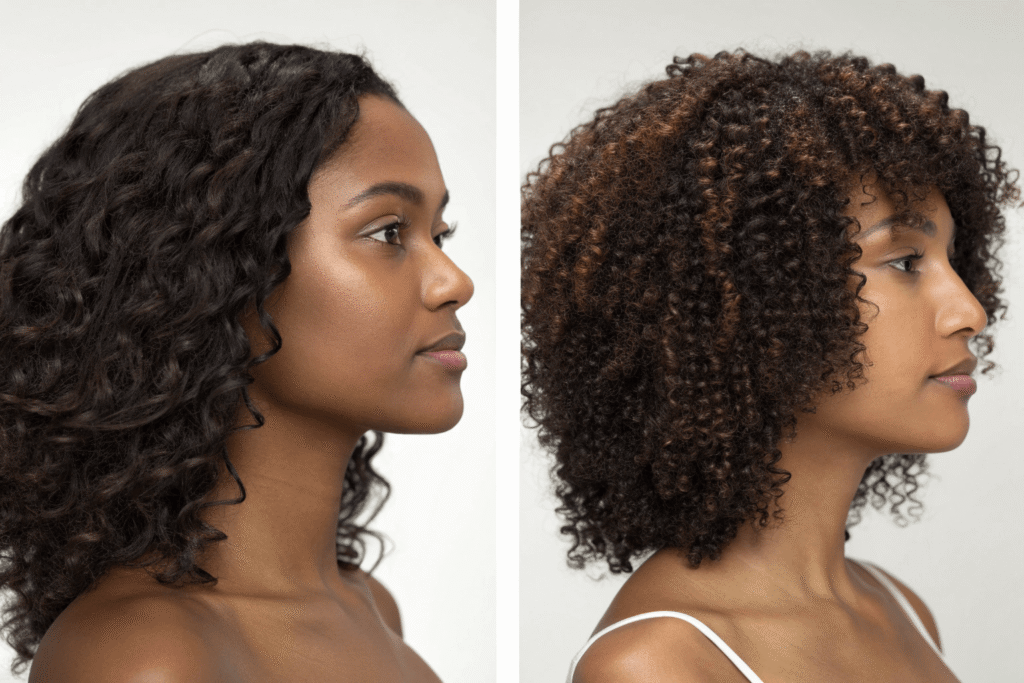
What heat limits and products protect my cuticles best?
Heat thresholds I stick to
- Flat irons/curling irons: 300–340°F (150–170°C) for healthy, dark, Remy hair; 280–315°F (140–160°C) for colored, high-lift blondes or previously processed units.
- Blow-drying: Low heat with a concentrator nozzle or diffuser; airflow directed downward to lay cuticles flat. I avoid aggressive brushing while wet—hair is weakest then.
Non-negotiable product rules
- Sulfate-free, moisturizing shampoo and conditioner formulated for human hair wigs to cleanse gently and retain cuticle moisture.
- Heat protectant with film-formers (e.g., dimethicone, amodimethicone) and humectants (e.g., propanediol, glycerin) to create a thermal barrier and reduce moisture loss.
- Alcohol-aware styling: Avoid high SD alcohol content that flashes off moisture and roughens cuticles; prefer water-based serums and creams.
Handling and detangling protocol
- Detangle only when damp using a wide-tooth comb starting from the ends, holding the hair above the section to minimize tension and breakage.
- Air-dry on a wig stand whenever possible; if blow-drying, use a diffuser/nozzle and direct airflow downward to smooth the cuticle.
Quick reference table: heat and cuticle-safe workflow
| Step | Tool/Temp | Product | Why it protects cuticles |
|---|---|---|---|
| Pre-style | N/A | Leave-in conditioner (lightweight) | Reduces friction, pliability improves detangling. |
| Thermal styling | 280–340°F (140–170°C) | Heat protectant spray/cream | Film-formers reduce moisture loss and thermal shock. |
| Drying | Low heat, downward airflow | None or light serum | Aligns cuticles; avoids lift and frizz. |
| Post-style | N/A | Micro-dose serum on mid-lengths/ends | Seals and smooths; avoids root/knot slippage. |
How do I trim ends periodically to maintain smoothness?
Trimming is a preventive measure—not a rescue mission. Split ends cannot be repaired; removing them stops the split from traveling up the shaft.
My cadence and method
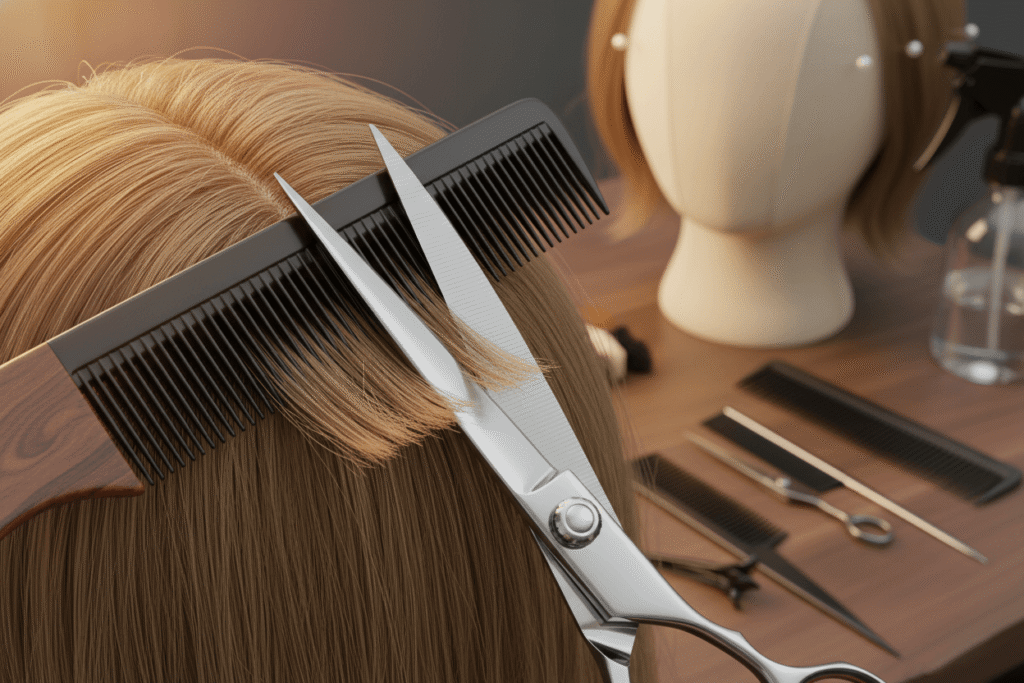
- Trim the ends periodically (every 6–8 wears or as needed) to remove split ends and prevent them from traveling up the hair shaft.
- “Dusting” approach: 3–6 mm (about 1/8–1/4 inch) off the perimeter and any high-friction zones (nape, around ear tabs).
- Sectioning: Detangle damp hair, then work in 1–2 inch sections. Hold hair between fingers, elevate slightly and dust only the frayed tips. Use sharp shears; dull blades fray fibers.
Factory-to-salon tip
- Blonde or acid-processed hair needs slightly more frequent dusting due to higher porosity. Document this in care cards as a tiered schedule: every 4–6 wears for lightened units, 6–8 wears for natural dark Remy.
Can satin accessories reduce friction during wear?
Absolutely. Friction is the biggest silent destroyer of the cuticle—especially at the nape against collars and rough fabrics.
Satin and silk in daily wear
- Sleep with the wig removed; if you must sleep in it, braid loosely and use a silk or satin pillowcase or bonnet to reduce frizz-causing abrasion.
- Collar awareness: In winter, wool and heavy coats scour the nape. Pin hair up or use a satin scarf barrier to cut friction at the neckline.
- Storage: Store the wig on a stand or mannequin head away from heat and sunlight, and cover it with a silk or satin bag to prevent friction and dryness.
Operational benefit for brands
- Including a satin bag or bonnet in the box cuts post-purchase complaints about “tangling at the nape” by reducing fiber-on-fabric abrasion. It’s a low-cost accessory with high retention impact.
What post-wash serums seal moisture without residue?
Post-wash sealing is where most users over-apply heavy oils that attract dust and cause buildup. I prefer lightweight, wig-safe options formulated to smooth without occluding or loosening knots.
My post-wash routine
1) Use sulfate-free, moisturizing shampoo and conditioner formulated for human hair wigs to cleanse gently and retain cuticle moisture.
2) Detangle only when damp using a wide-tooth comb starting from the ends, holding the hair above the section to minimize tension and breakage.
3) Apply a lightweight leave-in conditioner or wig-safe serum after washing to reduce friction and seal the cuticle against frizz.
5) Air-dry on a wig stand whenever possible; if blow-drying, use a diffuser or nozzle and direct airflow downward to smooth the cuticle.
Serum selection criteria
- Texture: Lightweight, non-tacky; spreads thinly and absorbs fast.
- Actives: Silicones like amodimethicone (targeted deposition), cyclopentasiloxane for slip; light oils (argan, jojoba) used sparingly; panthenol for flexibility.
- Residue control: Avoid alcohol-heavy styling products and hard-water buildup; clarify occasionally with a gentle chelating treatment followed by deep conditioning.
Application strategy
- Maintain internal moisture balance by using light oils or silicones sparingly on mid-lengths and ends, focusing on hydration rather than heavy occlusion.
- Micro-dose: One pea-sized amount per 12–14 inches of length. Emulsify in palms, apply from mid-lengths to ends. Never saturate the knots or base to prevent shedding.
Care cadence table: keep frizz and splits at bay
| Frequency | Action | Why it helps |
|---|---|---|
| Daily (as needed) | Apply lightweight serum on ends | Replaces missing scalp oils; reduces friction. |
| Every 8–10 wears | Wash + condition (cool final rinse) | Resets moisture balance; closes cuticles for shine. |
| Monthly | Gentle chelating/clarifying + deep condition | Removes minerals/product film without stripping; restores slip. |
| 6–8 wears | Dusting trim | Stops micro-splits early; maintains perimeter smoothness. |
Additional guardrails I enforce
- Limit heat styling; when necessary, use a heat protectant and keep tools at low to moderate temperatures to avoid drying and splitting.
- Sleep protocol and travel: Remove wigs before sleep; if unavoidable, braid loosely and use satin/silk pillowcases or bonnets.
- Touch discipline: Minimize constant finger-combing which transfers dirt and disturbs cuticle alignment.
- Nape-specific care: Apply an extra micro-drop of serum to the nape before coats or scarves; detangle that zone first after wear.
Troubleshooting severe frizz
- If fibers feel squeaky or grabby, hard-water minerals may be present; perform a gentle chelating rinse followed by a hydrating mask.
- For straight textures with stubborn tangles, a warm-water soak plus a silicone-rich conditioner can help re-align fibers. Test carefully; avoid cap immersion.
Conclusion
Preventing frizz and split ends in human hair wigs is about disciplined moisture management, heat restraint, friction control, and proactive trimming. I lock in hydration with sulfate-free wash routines, detangle damp from ends upward, cap heat at safe thresholds with protectants, and dust ends every 6–8 wears. Satin accessories and thoughtful storage cut abrasion at the nape—a major win for longevity and customer satisfaction. Finally, lightweight serums and periodic clarifying keep cuticles smooth without residue. When brands standardize these protocols in care cards and post-purchase education, returns drop, reviews improve, and the usable life of each unit extends—protecting margin and reputation across the board.