
I’ve spent enough time in factories, on QC lines, and inside brand dashboards to know most product pages don’t tell you what you actually need to decide. Procurement teams want predictable performance, not pretty adjectives. The pain points I hear most: inconsistent density claims, vague “Brazilian” labels, lace buzzwords used loosely, and specs scattered across images, bullets, and A+ content. If you’re buying for a brand or wholesale program, misreading one line item can cascade into returns, restocking labor, and customer support drag.
Reading wig descriptions like a pro means anchoring on the few specs that directly drive realism, longevity, and total cost of ownership—specifically fiber type, cap construction, lace type/size, density, knots, measurements, and origin/processing transparency. Cut through “Brazilian/ Malaysian” marketing by verifying cuticle status, processing level, and factory-grade details; compare SKUs with a standardized sheet so you’re not mixing apples and oranges.
In this guide, I break down exactly which specs matter for performance, how to parse origin claims, the keywords I trust versus those I treat as fluff, and a simple way to normalize listings across platforms. I’ll pull in practical checkpoints from sourcing, processing, and QC so your team can scan a page and predict how that unit will actually wear, style, and age.
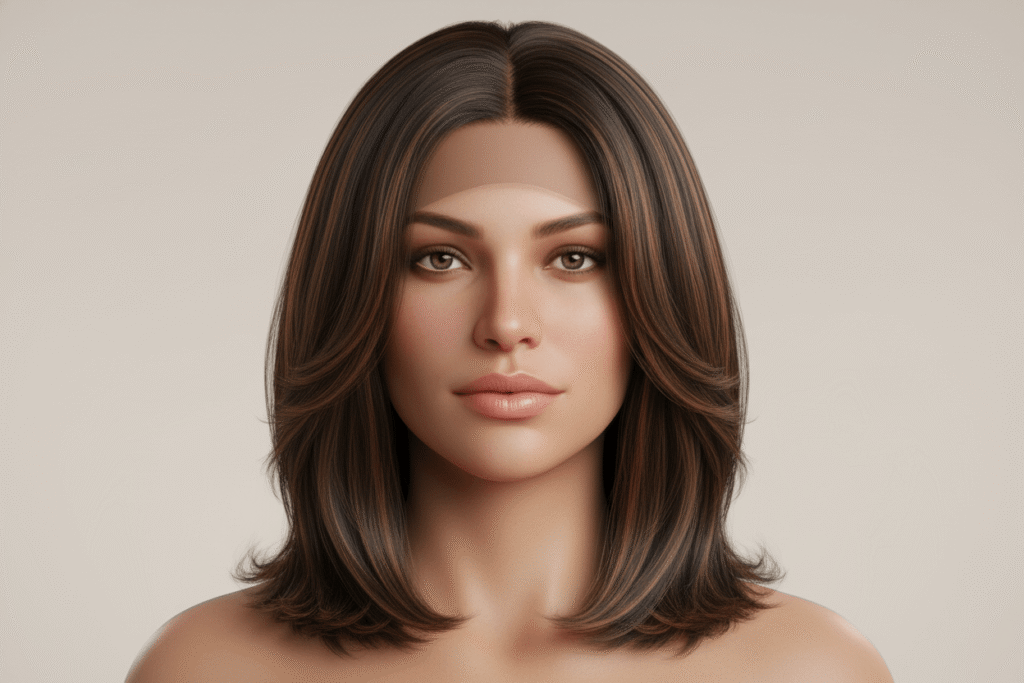
Which specs—lace type, density, knots—matter most for performance?
I assess performance under three buckets: realism at the hairline, mechanical durability over repeated wears, and styling flexibility. Each spec ladders into one or more of these.
Fiber type sets styling limits and lifespan
- Human hair: heat styling, dyeing, humidity response; lifespan 9–18 months with salon-level care. Ask: Remy cuticle alignment? Steam-only texture vs acid-processed? Single vs multi-donor?
- Synthetic: pre-styled, low maintenance; most are heat-sensitive unless labeled “heat-friendly” with a stated max temp. Expect 3–6 months.
- Blends: partial heat tolerance and better style retention; verify human-hair percentage.
Practical QC: curl a trimmed strand at the seller’s stated temperature and smell for melting (synthetic) versus keratin odor (human).
Cap construction controls realism and comfort
- Lace front + wefted back: natural hairline at front, cost-efficient, moderate breathability. Good daily driver.
- Full lace or 100% hand-tied: maximum movement and updo capability; highest comfort; higher shedding risk if knots are over-bleached.
- Monofilament part/top: scalp realism where it counts; flexible parting zone without full hand-tied costs.
Your use case: retail customers wanting deep side parts or ponytails need more lace area; medical wearers prioritize 100% hand-tied comfort.
Lace type and size affect detectability
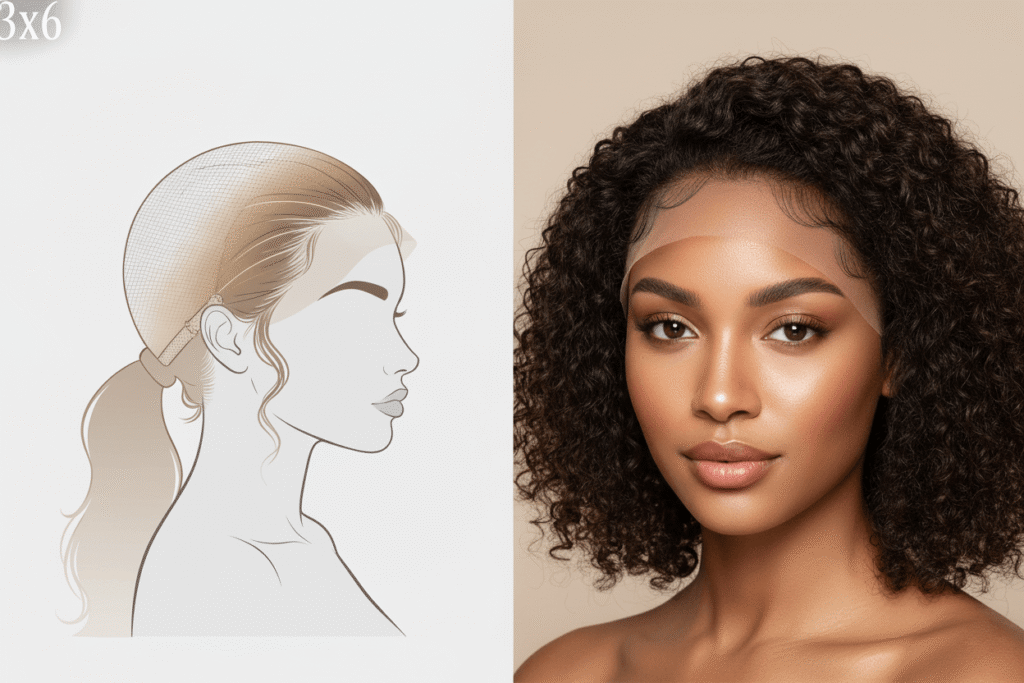
- HD/Swiss lace: finer, lower denier, more undetectable in photos; more delicate—train your stylists on gentle removal.
- Transparent/brown lace: choose based on scalp tone; a perfect tone beats “HD” that’s too pale or dark.
- Lace area: 13×4 vs 13×6 frontage; 360 lace or full lace for updos.
Field note: larger lace equals more ventilation and knot count—budget time for tinting and reinforcement.
Density drives look, weight, and styling load
- Lower density reads more natural, is lighter, and tangles less; higher density carries glamour but needs more detangling and heat to shape.
- Match density to length and curl: long or tight curls demand higher root density to avoid see-through ends.
Knots: size, pattern, and bleaching level
- Single knots look finer at hairline; double knots add durability in the interior.
- “Pre-bleached knots” should specify zone (hairline only vs full front) and shade lift. Over-bleach shortens life; I prefer light or gradient bleaching plus subtle tint.
Measurements: fit and silhouette accuracy
- Fit: circumference, ear-to-ear, and front-to-nape—critical for returns prevention.
- Style shape: front, crown, sides, nape lengths beat a single “22 inches” claim, especially for waves/curls with shrinkage.
Origin and processing define longevity
- Remy (cuticle-aligned) tangles less over time. Non-Remy often acid-bathed then siliconed—feels silky out of box, degrades after 6–10 washes.
- Texture: steam-processed curls recover better than chemically etched patterns.
How do I interpret fiber origin like Brazilian or Malaysian claims?
Here’s the industry reality: “Brazilian,” “Peruvian,” “Malaysian” on listings usually describes a texture/marketing profile, not a verified country-of-origin supply chain. Most human hair in global wig factories is sourced from China, India, parts of Southeast Asia, with premium niche supply from Eastern Europe or South America in small volumes.
What I look for instead:
- Cuticle status: “100% Remy, unidirectional” beats any nationality label.
- Donor profile: “single donor” is rare at scale; if claimed, ask for batch traceability or small-batch QC photos.
- Processing transparency: steam vs acid bath, silicone coating yes/no, bleach and dye history. “Virgin” must mean never chemically colored; many listings misuse it.
- Coarseness and denier: Indian temple hair typically thicker denier; SEA hair can be finer; Eastern European is the finest and priciest. If a “Brazilian” unit is ultra-fine and ash-lifted, it’s likely not South American.
Red flags:
- “Brazilian Remy Grade 12A/13A” with no processing notes—those letter grades aren’t standardized; they’re marketing tiers, not ISO specs.
- Deep blonde from “virgin” dark origins without stating multi-step lift and bond builders—chemically inconsistent.
If the vendor is serious, they can state:
- Source region (e.g., North India temple collections; North Vietnam community collections)
- Remy verification method (bundle banding through processing)
- Texture method (steam pattern code)
- QC shed/tangle test metrics (comb passes, tensile breakage %)
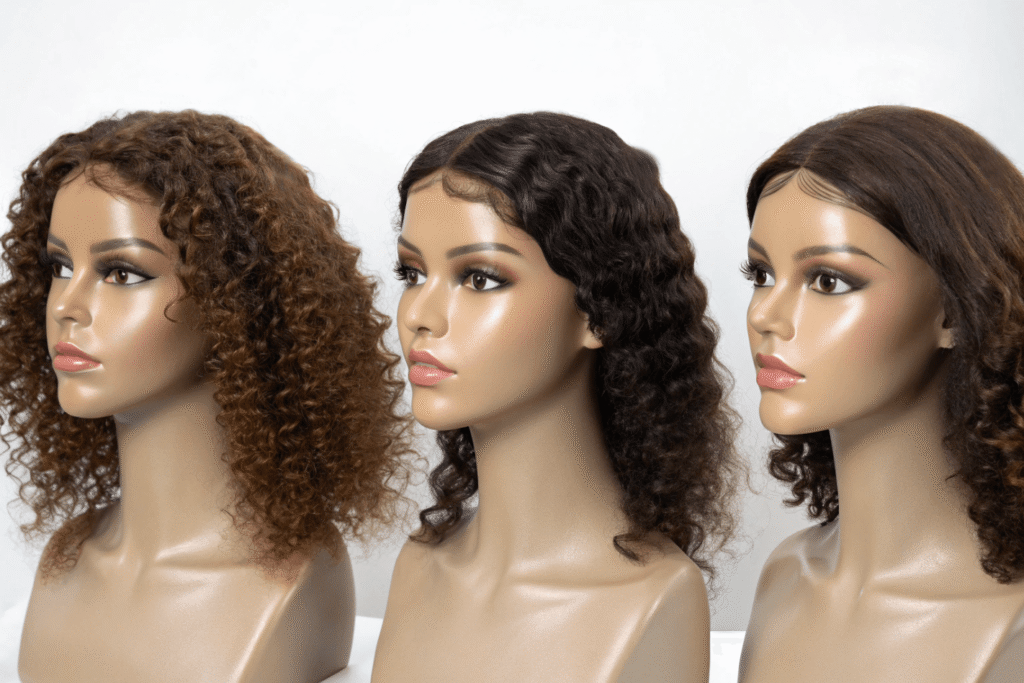
What keywords signal quality vs marketing fluff in listings?
I’ve trained teams to skim for signal terms and ignore noise. Here’s the short list.
Signal keywords (quality indicators)
- “Remy, cuticle-aligned; bundle-kept through wet process”
- “Steam-processed texture; no acid bath”
- “Single knots at hairline, double interior”
- “HD/Swiss lace, 13×6; 0.10–0.12 mm thickness” (actual thickness stated)
- “Bleached knots, hairline 1 inch gradient; 10-vol developer; anti-shed seal”
- “Denisty 130% measured on size M cap, 22-inch straight reference”
- “Nape length, crown length specified; curl shrinkage note”
- “Cap size: Circ 22.5”, ear-to-ear 13”, front-to-nape 14””
- “Heat-friendly synthetic to 320°F/160°C; fiber type named (Kanekalon high-temp)”
- “Pre-plucked 0.5–1 cm with staggered hairline; return policy 14–30 days; care instructions: sulfate-free, detangle wet ends-to-roots”
Fluff/buzzwords (treat with caution)
- “Brazilian/Peruvian hair” without processing details
- “Grade 12A/13A/15A” with no standard definition
- “Celebrity factory / showroom quality”
- “100% no shed, tangle-free” (no product is zero shed)
- “One size fits all”
- “Ultra HD invisible lace” with no denier or color options
- “Virgin platinum blonde” (true virgin cannot be light blonde unless natural)
Maintenance notes as honesty signals
When a listing candidly states heat limits, detangling frequency, sulfate-free care, and expected lifespan by wear pattern, I rate that vendor as higher integrity.
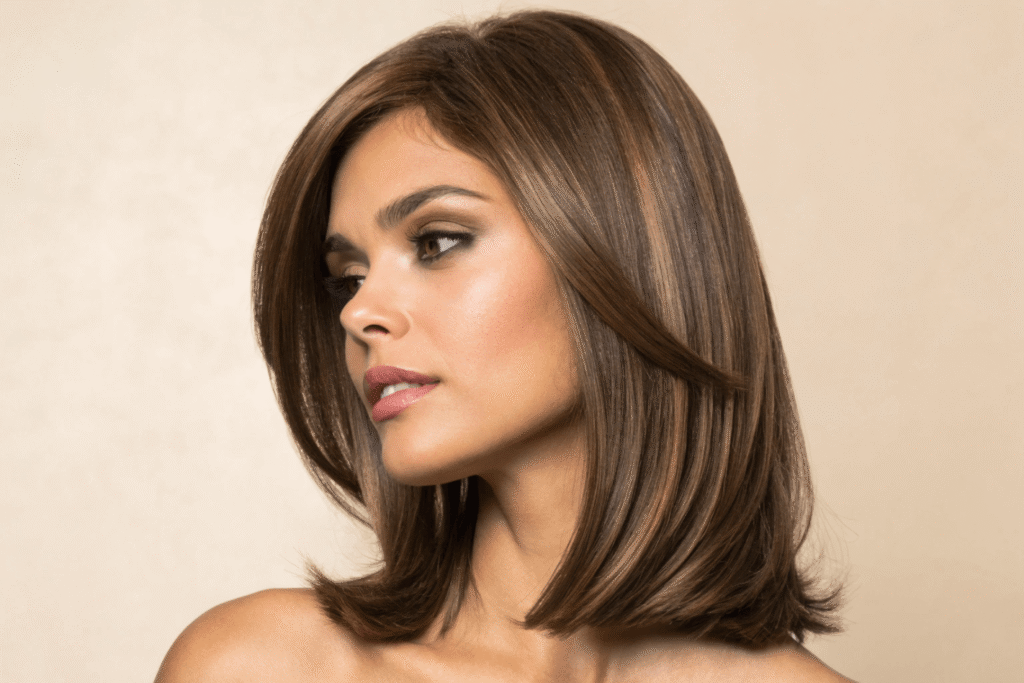
How can I compare items across platforms consistently?
I normalize every SKU into the same comparison sheet. Below are the fields I copy from any listing so we can compare like-for-like, whether it’s a marketplace, brand site, or factory PDF.
Cross-platform spec normalization template
| Field | What to capture | Why it matters |
|---|---|---|
| Fiber type | Human/Remy status; synthetic + heat rating | Styling and lifespan |
| Origin & processing | Region, cuticle alignment, steam vs acid, silicone coat | Long-term tangling and feel |
| Cap construction | Lace area (13×4/13×6/360/full), hand-tied %, mono zones | Realism, comfort, updo capability |
| Lace type/color | HD/Swiss/transparent; color options | Hairline detectability |
| Knots | Single/double; bleached zone and level | Hairline realism vs shedding risk |
| Density | % plus reference length and cap size | True fullness across vendors |
| Length map | Front/crown/sides/nape + texture shrinkage note | Predict style silhouette |
| Cap size | Circumference, ear-to-ear, front-to-nape | Fit and return risk |
| Color spec | Level/tone; roots/highlights/ombré | Color accuracy |
| Add-ons | Combs, elastic band, pre-plucked, pre-bleached | Install cost/time |
| Care & warranty | Heat/care limits, return policy | TCO and risk |
Pro tip: convert density to an apples-to-apples metric by requiring a “22-inch straight on M cap” reference. If vendor A lists 180% on 26-inch deep wave, normalize by expected shrinkage and end fullness; often that “180%” behaves like 150% straight.
Quick scoring rubric (internal use)
| Dimension | Score 1–5 | Notes |
|---|---|---|
| Hair integrity | Remy verification; processing | |
| Hairline realism | Lace, knots, pre-pluck quality | |
| Styling flexibility | Lace area, hand-tied %, heat limits | |
| Comfort | Cap size accuracy, breathability | |
| Maintenance | Care realism, detangle frequency | |
| Disclosure quality | Specifics vs fluff |
Practical checkpoints from my notes integrated across steps
- Fiber type dictates styling: human hair tolerates heat and color; most synthetics don’t unless clearly marked heat-friendly with a temp cap.
- Cap construction drives realism/comfort: lace fronts for hairlines; monofilament parts for scalp realism; full hand-tied for movement.
- Density = fullness vs effort: higher density looks thicker but adds weight and styling time.
- Lace type/size: HD/Swiss looks great but is delicate; larger lace equals freer parting and more prep.
- Origin/processing: Remy cuticle alignment reduces tangling; heavy chemical processing feels silky at first but degrades faster.
- Length/measurements: rely on front/crown/sides/nape, not just total inches; factor curl shrinkage.
- Cap size: measure circumference, ear-to-ear, front-to-nape for petite/average/large accuracy.
- Color behavior: rooted and highlighted shades add dimension; synthetics can shift under different lighting—request daylight photos.
- Returns/care: realistic care notes (sulfate-free, detangling) signal honest lifespan expectations.
- Accessories/install: combs, elastic bands, pre-pluck/bleached knots, and adhesive needs impact total cost and effort.
Conclusion
If I had to reduce professional reading to one habit, it’s this: ignore nationality adjectives and grade letters; hunt for cuticle alignment, processing transparency, knot and lace specifics, and measured dimensions. Build a normalization sheet and score every listing the same way. When your team anchors on these signals, you’ll predict performance, reduce returns, and buy inventory that delights both stylists and end customers—without paying for marketing fluff.