
I’ve fit thousands of wigs on real clients—from budget-friendly machine-made caps to couture, fully hand-tied masterpieces—and I’ve worn them all through hot summers, long workdays, and test installs. If you’re weighing realism against price, or you’re buying wholesale and need reliable cost-performance, I’ll break down exactly what matters: construction, comfort, styling freedom, durability, and where hybrid caps shine for margin and customer satisfaction.
Hand-tied wigs look and move the most natural and feel lighter and cooler, but they cost more and require gentler care. Machine-made wigs win on price, durability at the seams, and built-in volume, but their wefts can limit realism and parting. Hybrid caps (hand-tied crown/part + machine wefts) offer the best cost-performance for wholesale: realistic top, breathable feel, solid durability, and attractive margins.
Below, I’ll compare construction types in plain language, share my wholesale pricing logic, discuss realism vs. wefts, and show exactly how I segment catalogs by market so you can stock the right mix for salons, medical buyers, and fashion-first customers.
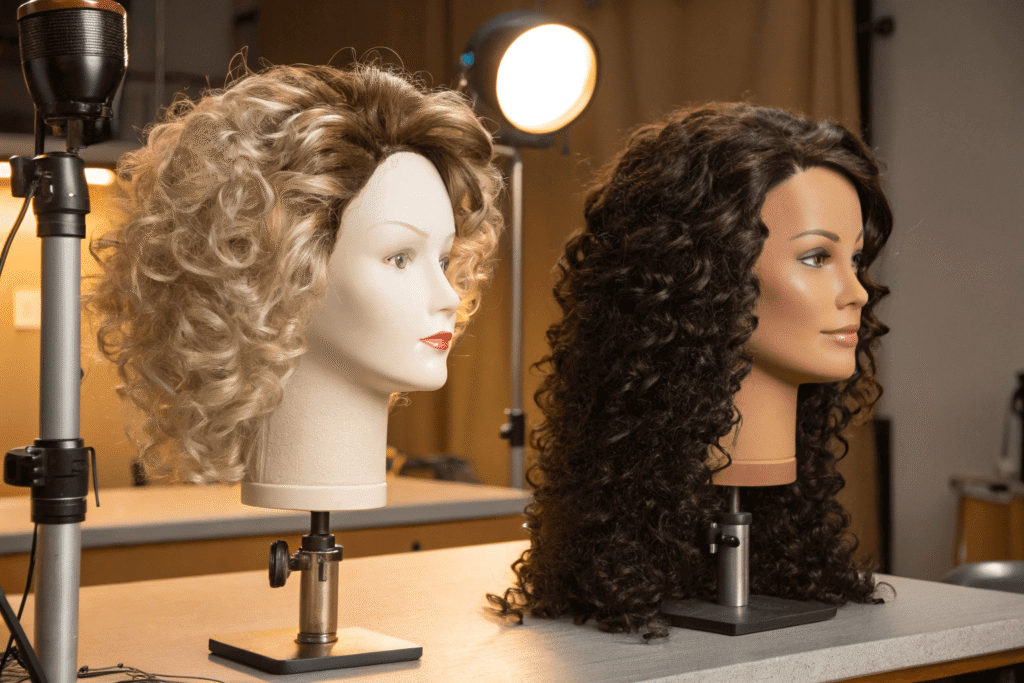
Which cap types give me the best cost-performance in wholesale volumes?
When I’m buying in bulk, I balance three levers: realism (hairline/scalp + movement), longevity (knot security, seam durability, shedding/tangling), and unit margin. Here’s how the common constructions stack up for wholesale:
Best Value Tiers (my go-to picks)
- Hand-tied top + machine-wefted back (aka hybrid/partially hand-tied)
- Why I love it: The hand-tied crown and part give that believable scalp and multidirectional parting customers ask for, while machine wefts in the back keep the price accessible and add volume.
- Fit: Great for hot climates and sensitive scalps—lighter and more breathable than full wefts, but tougher and cheaper than fully hand-tied.
- Margin: Strong. Labor hours drop 40–60% vs. full hand-tied, so you can price competitively and still protect profit.
- Machine-made with a monofilament/skin-top part and lace front
- Why I love it: A natural-looking part plus a lace front sells realism at a mid-tier price. The wefted back boosts density (customers read this as “thicker hair”) and holds up well to daily handling.
- Fit: Ideal for fashion buyers who want easy styling and volume without the hand-tied price tag.
Budget Workhorses
- Full machine-made (wefted) caps
- Pros: Lowest cost, fast production, sturdy seams, less daily maintenance, strong base for higher densities.
- Cons: Less fluid movement, fixed parting, and lace realism usually limited to the front if added.
- Use case: Entry-level lines, seasonal color drops, and impulse fashion buys.
Premium Experience
- Fully hand-tied (100% hand-tied or full mono/silk top with hand-ventilated back)
- Pros: Lightest weight, softest feel, best breathability, most realistic scalp and movement, easy updos and multidirectional parting.
- Cons: Higher price and longer lead times; knots can loosen with friction if care is rough.
- Use case: Medical hair loss, luxury boutiques, clients who prioritize comfort and realism over cost.
Cost-Performance Tip
- Pair hair type to construction for best ROI:
- Hybrid cap + Remy human hair = sweet spot for mid-premium lines.
- Machine-made + heat-friendly synthetic = stylish, low-cost, low-maintenance fashion line.
- Full hand-tied + high-grade human hair (Remy or virgin) = flagship SKUs with premium pricing.
Do machine-made wefts compromise realism compared to full hand-tied caps?
Yes—at close range and in motion, the difference shows. I’ve tested this on camera and under salon lighting.
- Scalp appearance: Hand-tied caps (mono/silk/HD lace) allow individual hair knotting, so the “scalp” reads as real even when the wind lifts layers. Wefts create rows; if density is too low or hair is pulled back, tracks can peek through.
- Movement: Hand-tied strands pivot individually, so swing and bounce feel natural. Wefted caps move in sections; this reads slightly stiffer, especially at lower densities.
- Parting and hairline: Hand-tied tops allow free parting and cleaner zig-zags. Machine-made caps often fix the part or limit changes. Adding a lace front helps, but the transition behind the lace still meets wefts.
- Lace visibility: HD lace on a hand-tied front melts better and tolerates closer scrutiny. On machine-made caps with lace fronts, the lace is convincing at the hairline, but realism drops as soon as you reach the wefted area.
When realism must sell the look (weddings, updos, medical wearers), full or top hand-tied wins. For everyday fashion where viewers are an arm’s length away, a good lace front + mono part on a wefted base can look convincingly natural—at a friendlier price.
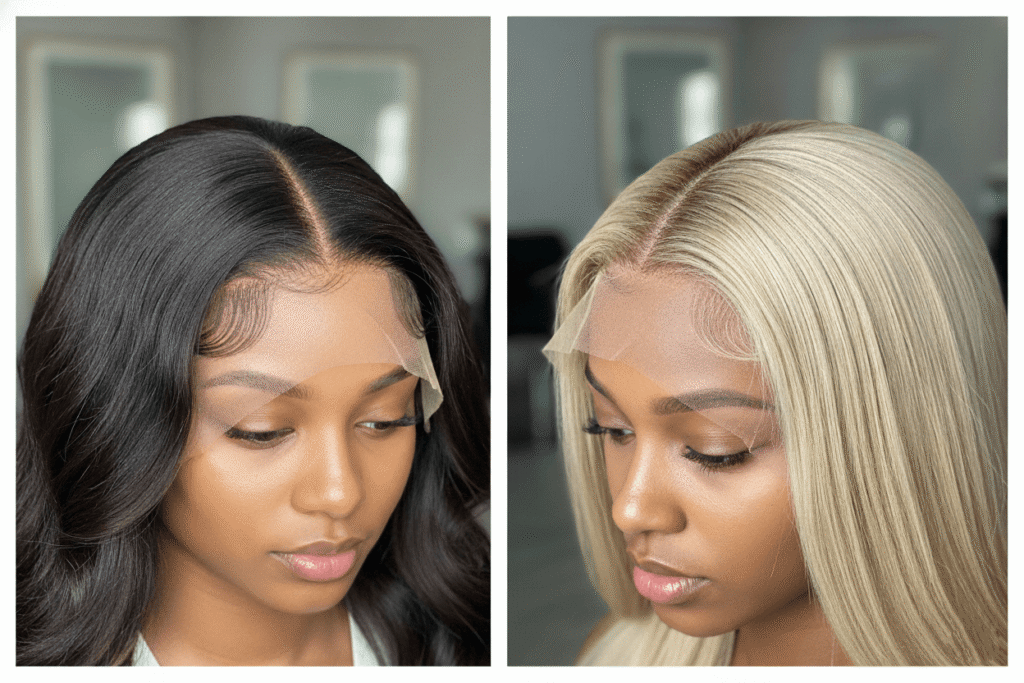
Can hybrid caps balance durability, breathability, and price for my buyers?
Absolutely. This is why hybrids are my volume best-sellers.
Why hybrids work
- Durability: Machine-wefted backs are tough at the seams and handle daily on/off without stressing delicate knots. Less shedding from friction points compared to fully hand-tied backs.
- Breathability and comfort: The hand-tied crown and part remove that “cap pressure” feeling. Airflow improves and heat buildup drops—key for hot climates and sensitive scalps.
- Realism where it counts: Customers judge at the hairline and part. A lace front + hand-tied top nails both. The wefted perimeter provides structural support and density where visibility is low.
- Styling flexibility: You still get multidirectional parting and believable half-up styles. Full high ponytails are easier on 100% hand-tied, but hybrids do everyday upstyles well with strategic density.
Fiber and density choices that elevate hybrids
- Remy human hair at 130–150% density for balance: natural movement without exposing tracks.
- Heat-friendly synthetic for budget lines: holds style, resists daily tangling better than non-heat synthetics at mid densities.
- HD lace front on fair to medium skin tones; transparent/tinted lace for deeper tones to reduce lace visibility complaints.
How should I segment my catalog by construction to meet different markets?
I build catalogs in layers—anchoring entry price points, protecting mid-tier margins, and letting premium shine.
1) Entry / Fashion-forward (price sensitive)
- Construction: Machine-made wefted; optional lace front; mono/skin part for “wow” factor on key SKUs.
- Fibers: Heat-friendly synthetic; select human blends for hero colors.
- Positioning: Trend colors, ready-to-wear textures, low maintenance.
- Buyer concerns to address: Tangling on longer synthetics—offer shorter lengths and detangling spray bundles.
2) Mid-tier / Everyday realism (best-seller zone)
- Construction: Hybrid—hand-tied top/crown + wefted back; lace front standard.
- Fibers: Remy human hair or premium heat-friendly synthetic.
- Positioning: Natural hairlines, flexible parting, breathable, durable enough for daily wear.
- Buyer concerns: Shedding at part—pre-bleached knots or silk top options; density choices (130/150%) to prevent track show-through.
3) Premium / Medical & Professional (comfort-first)
- Construction: 100% hand-tied; mono or silk tops; HD lace front; light ear tabs.
- Fibers: High-grade Remy or virgin human hair.
- Positioning: Ultra-light, soft, cool, realistic in all directions; ideal for sensitive scalps and long wear.
- Buyer concerns: Longevity—educate on gentle wig care (no rough brushing at the knots, sleep caps, low-heat styling).
4) Performance / Salon install (stylist-friendly)
- Construction: Lace front or full lace with reinforced wefted perimeter for installs; hybrid variants for upstyles.
- Fibers: Human hair for heat styling; tighter cuticle alignment to reduce tangling.
- Positioning: Heat styling freedom, reinstall durability.
- Buyer concerns: Lace visibility—offer HD lace shades and pre-plucked hairlines; provide knot-bleaching options.
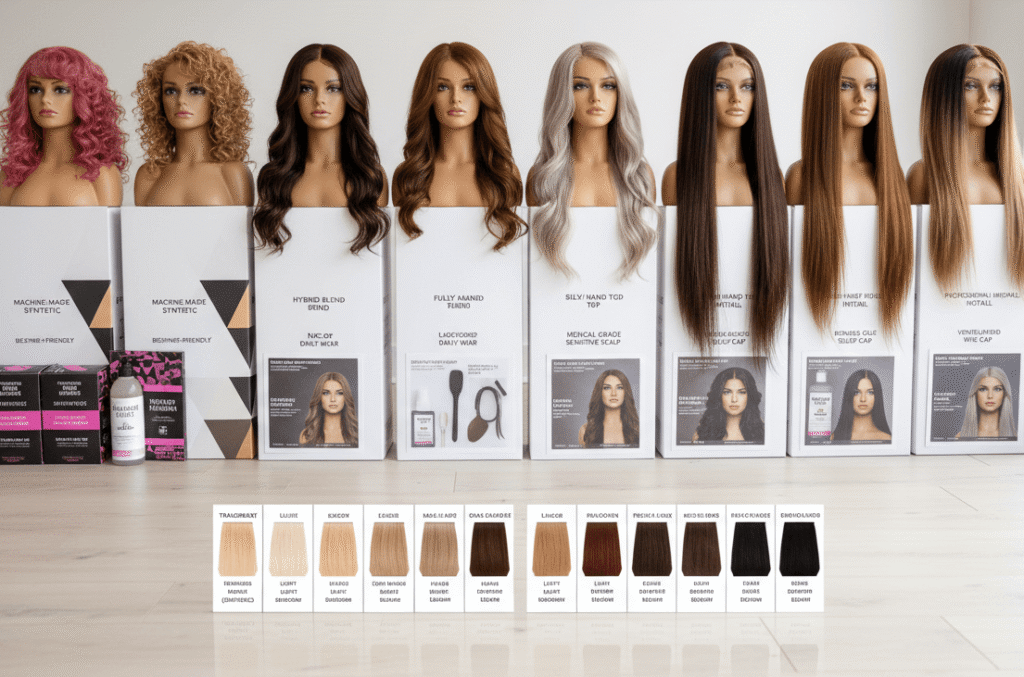
Comparison Table
| Aspect | Machine-Made (Wefted) | Hybrid (Hand-Tied Top + Wefted Back) | Fully Hand-Tied |
|---|---|---|---|
| Realism (scalp/part) | Moderate; fixed part common | High at top/part | Highest, multi-directional |
| Hairline | Lace front optional; good at front, weaker behind | Lace front + natural top | Lace/mono front + seamless throughout |
| Movement | Structured, less fluid | Natural at top, structured at back | Most fluid, strand-by-strand |
| Comfort/Breathability | Warmest | Cooler at crown | Coolest, lightest |
| Durability (seams/knots) | Strong seams; low knot risk | Strong seams + protected top knots | Knots require gentle care |
| Styling Flexibility | Limited parting; easy volume | Free parting at top; easy everyday upstyles | Updos/ponytails and full freedom |
| Maintenance | Lowest day-to-day | Moderate | Highest care standards |
| Cost (wholesale) | Lowest | Mid | Highest |
| Best Use | Entry/fashion lines | Mid-tier best sellers | Medical/luxury flagship |
Conclusion
If you asked me which wig is better, I’d ask: better for whom, and for what? For pure realism and comfort, fully hand-tied wins. For price, sturdiness, and volume, machine-made rules. For wholesale cost-performance that keeps customers happy and protects your margins, hybrid caps are the sweet spot: lace front + hand-tied top for believability, wefted back for durability and price. Segment your catalog by need—fashion value, everyday realism, and premium comfort—and you’ll capture every buyer from budget-conscious to medical and luxury.
FAQ
- Do machine-made wigs last longer than hand-tied?
- Seams on wefted caps are tougher, but hand-tied knots can outlast when treated gently. Rough brushing and friction shorten any wig’s life.
- Which density should I stock to avoid track show-through?
- 130–150% on hybrids and machine-made for everyday wear; go lighter (120–130%) on full hand-tied to preserve movement and comfort.
- Is HD lace worth it?
- Yes for close-up realism and darker roots; match lace shade to skin or tint slightly to minimize visibility.
- What about shedding and tangling?
- Shedding: higher at hand-tied parts if over-bleached or over-plucked. Tangling: longer lengths and lower-quality fibers tangle more—stock quality Remy and include wig care guides and detangling kits.