
I’ve spent years inside factories, on the QC floor, and on calls with brand owners who live and die by how “real” a wig looks out of the box. Density is one of those deceptively simple specs that drives everything—from how a unit reads on camera to how it ventilates on a summer day in Lagos or Los Angeles. I get why buyers agonize over it: your customers want believable hairlines, effortless styling, and all-day comfort, while your margins demand consistency and cost control.
Human hair wig density directly shapes realism, styling options, and comfort. Lower densities (100–120%) look most natural at the hairline and part; medium densities (130–150%) balance daily realism and versatility; higher densities (180–250%) deliver dramatic volume but increase heat, weight, and maintenance. Matching density to bio-hair norms, length, texture, and cap construction prevents a “helmet” look and preserves ventilation.
What follows is how I evaluate density ranges for everyday realism, how to spec volume without adding excess weight, what higher density means for ventilation, and how to balance cost at wholesale without compromising customer experience. I’ll also connect density to face shape, lace type, knot work, maintenance, and styling realities I see across factories in China, India, and Southeast Asia.
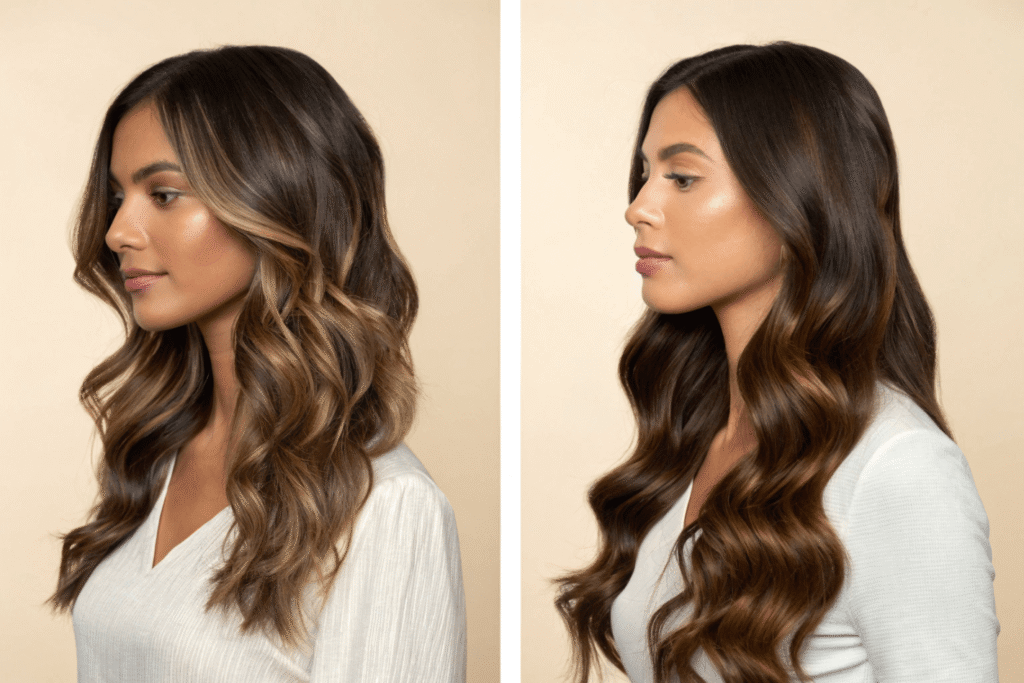
What density range gives me a natural look for daily wear?
The natural baseline
For daily wear, I default to 120–140% depending on length and texture. In practice:
- 100–120% reads like average biological hair—especially believable on short bobs, pixies, and mature clientele.
- 130–140% gives a touch of fullness without turning bulky; it’s my “safe” spec for mid-length straight or wavy pieces.
This aligns with what I’ve consistently observed: lower density wigs look more natural at the hairline and part, reduce bulk, and mimic typical scalp visibility. Medium density around 130–150% hits the sweet spot for everyday realism and styling flexibility. It’s the range that keeps movement natural—lighter densities swing, separate, and recover better after wind or daily handling—while still hiding tracks in most hairstyles.
Match bio-hair norms and age
Realism is contextual. If your buyer base skews older or has naturally fine hair, going 100–120% avoids the instant “too much hair” flag. Younger customers or those accustomed to sew-ins and thick bundles often read 130% as “normal.”
Length and texture interplay
- Short (6–10 inches): 100–120% to avoid puffing at the roots (“mushroom effect”) and to allow ear tucks without thinning.
- Medium (12–16 inches): 130–150% keeps swing and coverage realistic.
- Curly/kinky textures visually amplify volume; a 130% curly unit can look like a 150% straight unit. Choose conservatively for daily realism.
Lace and knots matter
Lower densities make lace and knots easier to conceal. With transparent HD lace, a 120–130% front with properly bleached knots often needs minimal plucking. At higher densities, graduating the front (pre-plucked hairlines, micro-ventilation) is critical to avoid the abrupt “wall of hair.”
How do I choose density for voluminous styles without excess weight?
Higher density definitely creates fuller volume and thicker coverage for dramatic styles like big curls and blowouts—but weight and heat rise fast if you push density indiscriminately. I manage volume through three levers: distributed density, texture choice, and cap engineering.
Distributed density (front/back zoning)
- Light front, fuller back: Keep the hairline at 100–120% and load volume into the mid-back at 150–180%. This preserves realism at the face while delivering body through the lengths.
- Graduated layering: Factory-thinned or razor-layered mids reduce bulk at the roots but allow ends to look plush. This addresses the “helmet” look without sacrificing perceived density.
Use texture to “cheat” volume
Curly and wavy textures provide visual volume without the same fiber count. A 150% loose wave often appears as full as a 180% straight—and it moves more naturally. For big blowouts, consider steam-processed body wave over raw straight; you’ll get bounce without packing the cap with hair.
Cap construction and ventilation
Choose lighter cap bases that tolerate higher visual volume:
- 13×6 lace fronts or 360 lace with strategic weft placement deliver high-impact styles while allowing airflow.
- Avoid stacking dense wefts near the crown; concentrate wefts where you need coverage for updos, keeping crown ventilation open.
Styling skill requirement
High density often requires advanced styling—thinning, layering, and careful plucking—to avoid a bulky silhouette. If your customer base is DIY-light, aim for 150% with pre-layered cuts and pre-plucked hairlines. For stylists, 180% is workable but expect added maintenance and product use.
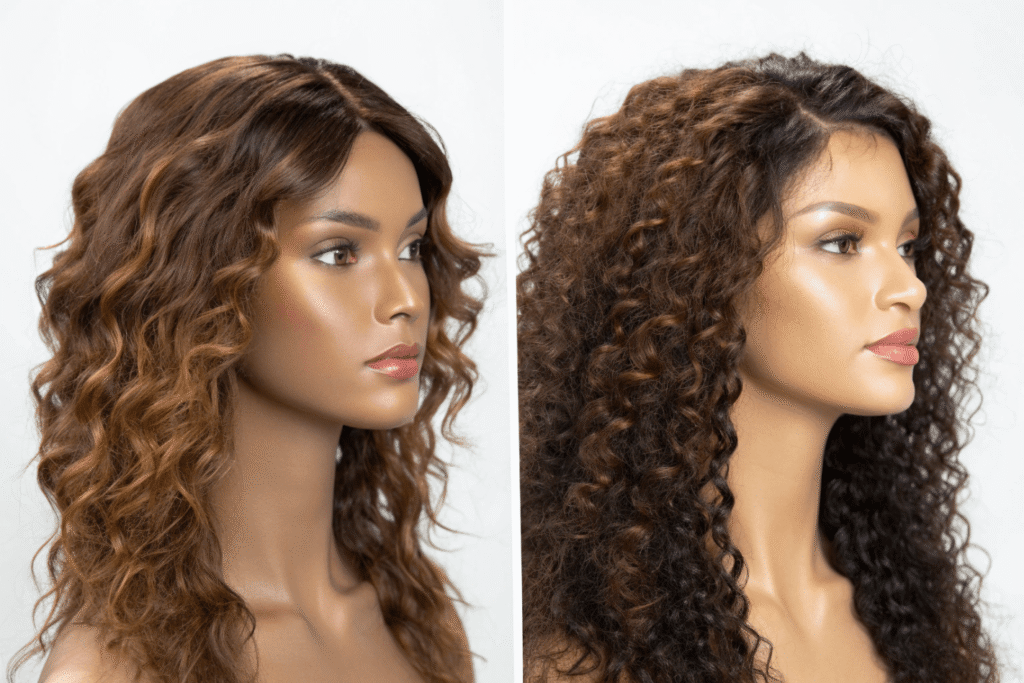
Does higher density reduce ventilation and comfort for my customers?
Yes—and it’s not just anecdotal. Excessive density increases scalp heat, cap weight, and product buildup, all of which translate to reduced comfort over long wear. I see this most in hot climates or for clients wearing units 8–10 hours daily.
What actually reduces comfort
- Fiber load: More strands mean less airflow through the cap and more retained heat.
- Bulk at the crown: Dense weft stacking traps heat right where customers feel it most.
- Maintenance burden: More hair demands greater detangling, heavier conditioners, and periodic thinning—customers equate this with “high maintenance.”
Practical density-to-comfort guidance
| Density % | Comfort Impact | Ventilation Notes | Use Case Guidance |
|---|---|---|---|
| 100–120% | High comfort | Lace conceals easily; airflow is best | Daily wear, short/medium lengths, mature clients |
| 130–150% | Balanced | Adequate airflow if crown is not over-wefted | Everyday glam, mid-lengths, light updos |
| 180%+ | Lower comfort | Ventilation drops; heat rises, especially on closed-top caps | Occasional wear, photoshoots, very long lengths, stylist-managed pieces |
To mitigate comfort issues at higher densities:
- Specify open wefting patterns and avoid dense stacking at the crown.
- Pair higher density with HD lace or larger lace areas for breathability.
- Offer customer guidance on wear time, scalp care, and product use to prevent buildup.
How can I balance density with cost in wholesale selections?
Balancing density with cost starts by distinguishing perceived volume from raw fiber count. Hair is the largest cost driver after lace and cap labor; shaving unnecessary grams while maintaining visual fullness protects margin without hurting customer satisfaction.
Cost levers that don’t hurt realism
- Density zoning: Keep the hairline and parting at 100–120%; add fullness from temple to nape at 130–150%. You cut grams at the front where realism matters and load value where coverage is required.
- Texture selection: Choose body wave or loose curl at 150% instead of 180% straight; you’ll achieve comparable volume with fewer strands.
- Length-dependent density: Spec 130–140% for 12–16 inches; reserve 150–180% only for 18 inches and above to maintain full ends.
Lace, knot work, and QC
- Invest in better knot bleaching and micro-ventilation at the front. Lighter, cleaner hairlines let you run lower density without customers perceiving it as “thin.”
- Ensure consistent weft spacing and even fiber distribution; uneven density forces rework and returns.
- Track batch origins: Indian temple hair versus Southeast Asian ponytails vary in fiber thickness; thicker fibers at the same density can visually look fuller and reduce required grams.
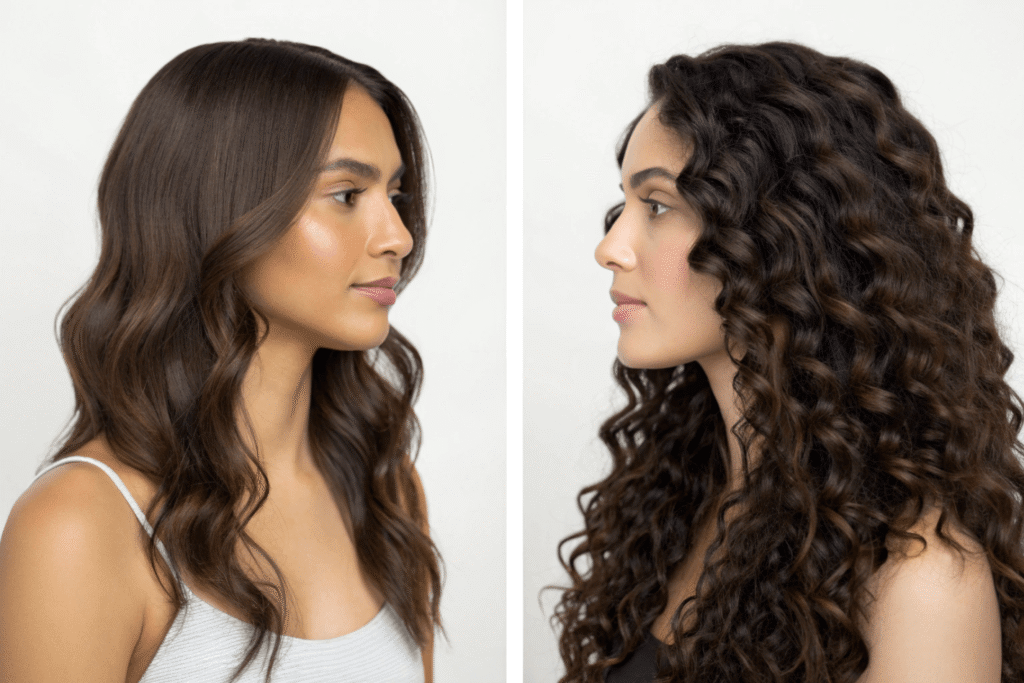
A simple wholesale decision table
| Customer Profile | Length/Texture | Target Density | Cost/Comfort Rationale |
|---|---|---|---|
| Daily wear, realism-first | 10–14″ straight/wavy | 120–130% | Lower grams, high ventilation, minimal styling |
| Everyday glam | 14–18″ straight/wavy | 130–150% | Balanced fullness, manageable weight, hides tracks |
| Long, dramatic styles | 20″+ straight | 150–180% | Full ends; consider 13×6 lace to offset heat |
| Big curls/blowouts | 16–22″ body wave/curly | 140–160% | Texture adds volume; fewer grams than 180% straight |
Final sourcing tips
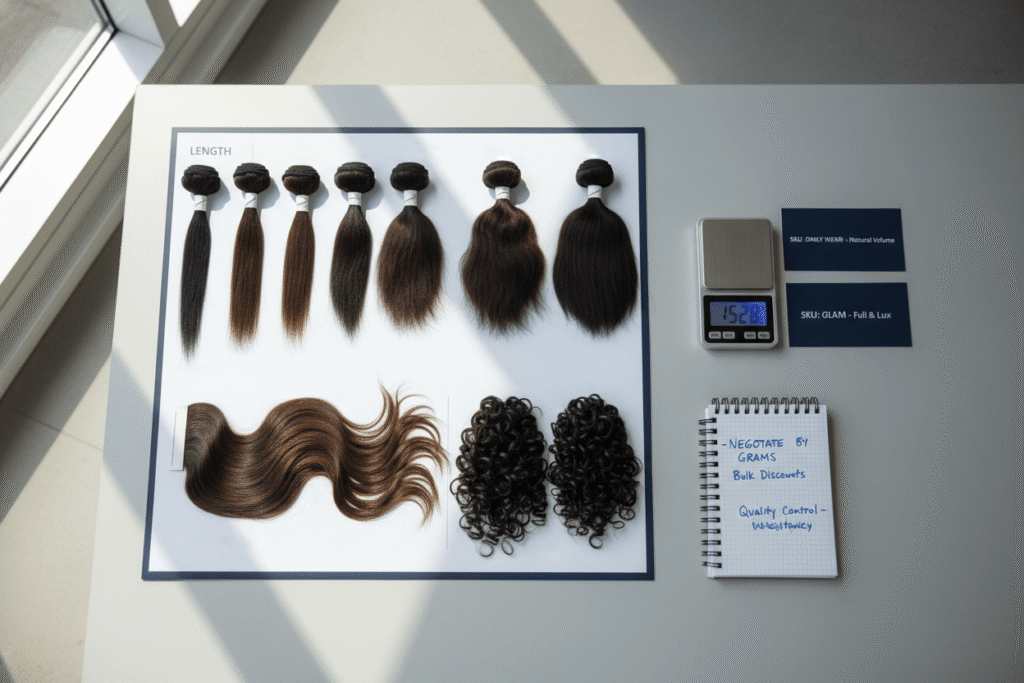
- Negotiate by grams, not only by “density %” labels; factories vary in how they calculate density per cap size.
- Sample with the same cap size, lace type, and fiber origin to get an apples-to-apples cost comparison.
- Build two SKUs per style: a daily-wear SKU (120–140%) and a glam SKU (150–160% texture-forward). You’ll reduce returns and satisfy both segments without bloating inventory.