
I spend my days inside factories, on sourcing calls, and in salons listening to what actually moves for B2B buyers—not just what trends on social. In 2026, I’m seeing the same pain points repeated: slow installs killing chair time, lace detection under bright lights, returns tied to cap discomfort, and the constant tension between realism, durability, and margin. When I audit returns, 70%+ trace to cap fit, hairline/lace visibility, density mismatches, or color tone issues. That’s fixable with smarter cap engineering, better lace selection by use case, and modular SKUs that solve for speed without sacrificing realism.
In short, 2026 rewards brands that ship truly glueless, ready-to-wear units with HD or ultra-thin lace, pre-bleached knots, and believable densities in natural textures and warm dimensional browns. Cap comfort (silk-lined, 3D domes, silicone grips) and flexible parting (13×6/6×6) are now baseline. Offer modular customization—adjustable density, swappable bang pieces—and invest in traceable sourcing and AI-driven fit to reduce returns and lift conversion.
Let me break down what I’m advising wig manufacturers, wholesalers, and brand owners to stock—and why—using factory workflow logic, procurement math, and real QA checkpoints across cap constructions, lengths/colors, textures/densities, and conversion-driving customization.
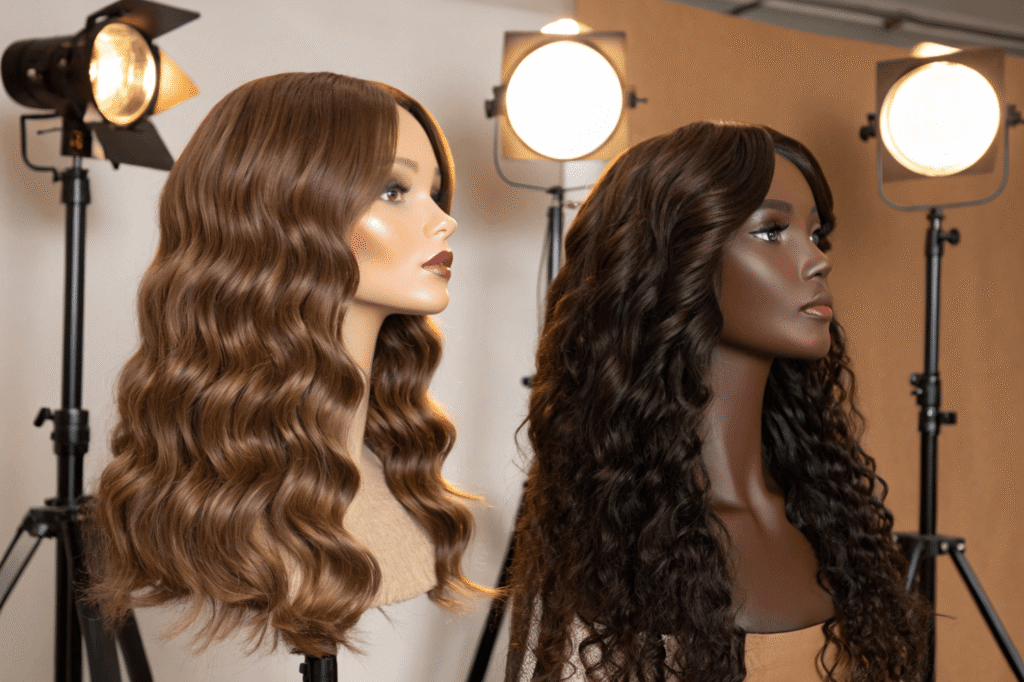
Which 2026 cap constructions will improve my customer satisfaction?
The 2026 cap hierarchy I recommend
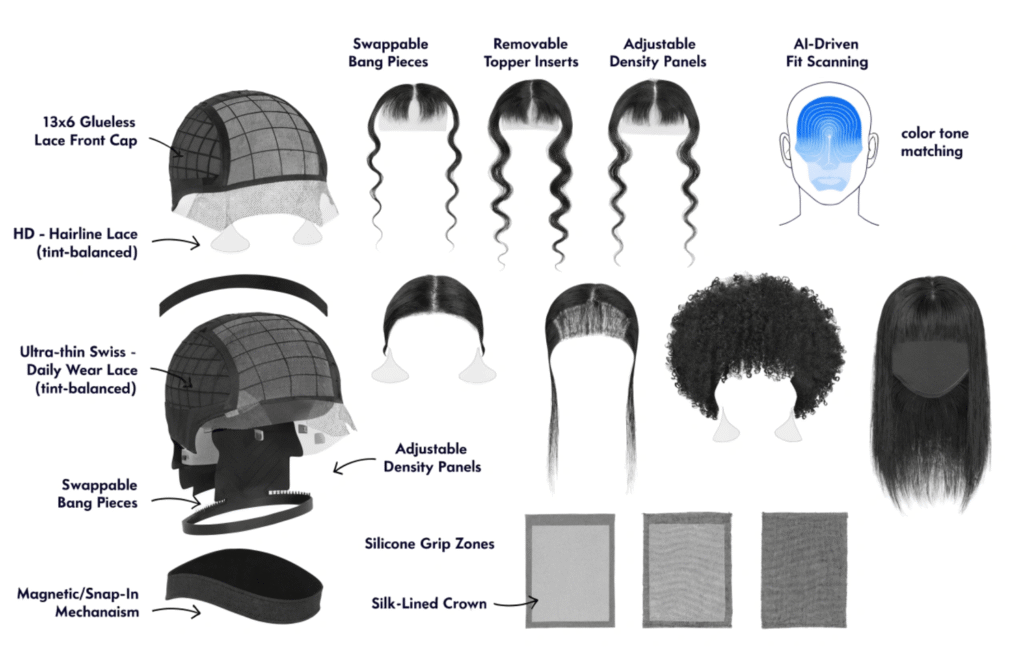
- Glueless, pre-cut lace as default: Pre-cut HD or ultra-thin Swiss lace, pre-plucked hairlines, and pre-bleached/hidden knots are becoming standard. This alone cuts install time by 30–50% in salons and reduces newbie friction for DTC.
- Secure, glue-free systems: Pair adjustable elastic bands with silicone grip napes/temples and 3D dome caps for comfort and slippage control. Drawstring or “fit-lock” glueless mechanisms are trending on 13×6 fronts for quick secure installs.
- Breathability and comfort: Silk-lined or mesh-lined crown panels reduce scalp irritation and protect bio hair, especially for long-wear clients. This is one of the fastest ways to reduce returns for “itchy” or “hot” caps.
Full lace vs lace front: when each wins
- Lace front (13×4 or 13×6) with hand-tied hairline + wefted back: Best cost-to-realism ratio for 80% of customers; faster manufacturing, improved durability, and easier QC on density balance.
- Full lace (fully hand-tied): Highest realism and styling freedom (updos, multi-directional parting) but higher labor hours and return risk if buyers are inexperienced. Reserve for premium tiers and pro-salon clientele.
2026 build spec I use for “low-return” SKUs
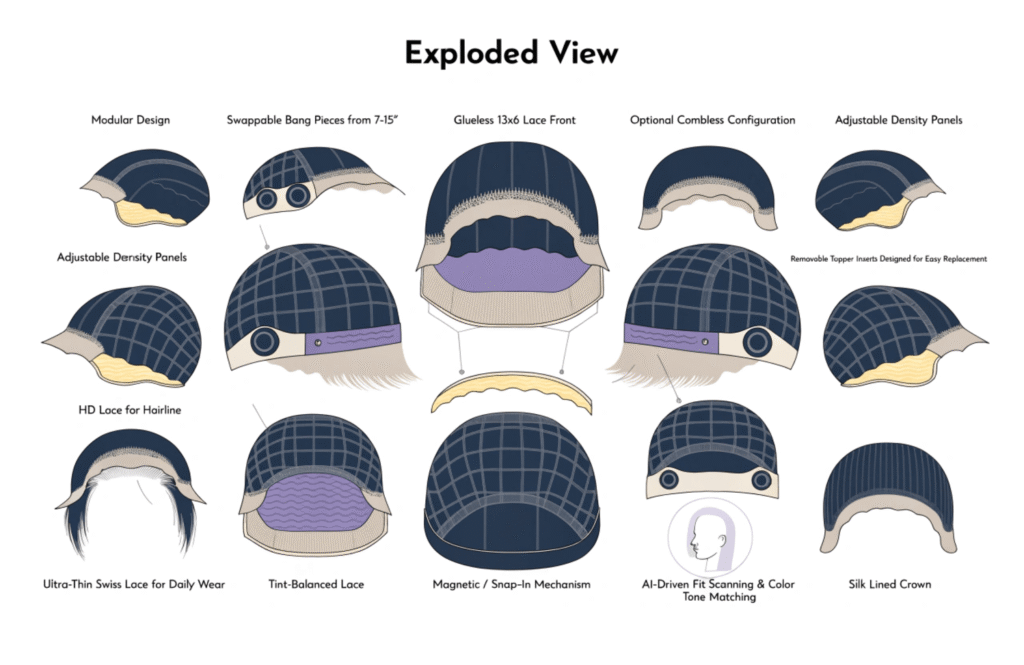
- Cap: Glueless 13×6 lace front, 3D dome, silicone grips, adjustable band, combless optional
- Lace: HD or ultra-thin Swiss, pre-cut, tint-balanced for multiple skin tones
- Hairline: Pre-plucked gradient (temple density reduction), pre-bleached or nano-knots
- Top: Mono or silk top on parting zone for “real scalp” effect
- Lining: Silk or soft mesh on crown; open weft perimeter for airflow
Which lengths and colors are rising on social platforms?
Lengths: polarity rules—short bobs and XXL glam
- Ready-to-wear bobs/lobs (10–14 inches): Especially textured kinky-curly and lived-in wave bobs for “quiet luxury” daily wear. Low maintenance, low tangle, high repeat purchase.
- XXL lengths (26–32 inches): Body wave and straight with airy layers. These are content drivers and upsell anchors but require better cuticle alignment and stronger QA to minimize tangling at the nape.
Colors: warm, dimensional, camera-friendly
- Quiet luxury browns: Chocolate, mocha, cinnamon, espresso are outperforming jet black on social due to softer contrast and better photo/video fidelity across skin tones.
- Subtle dimension: Highlighted balayage, money-piece framing, caramel or copper lowlights. Brands are dialing back heavy bleaching to preserve hair longevity while delivering visible depth on camera.
- Statement shades as seasonal capsules: Burgundy and warm copper variants still move, but as limited drops rather than core.
Color/Length matrix for merchandising
| Use case | Length focus | Color direction | Notes for QA and content |
|---|---|---|---|
| Everyday “quiet luxury” | 12–16″ bobs/lobs | Mocha/chocolate with soft lowlights | Emphasize realism, low density ends |
| Content/statement | 26–32″ layered glam | Rich espresso or burgundy/copper | Reinforce detangling care kit |
| Salon-friendly starter | 14–18″ blowout layers | Warm brown balayage + money piece | Pre-cut lace, 1-minute install reels |
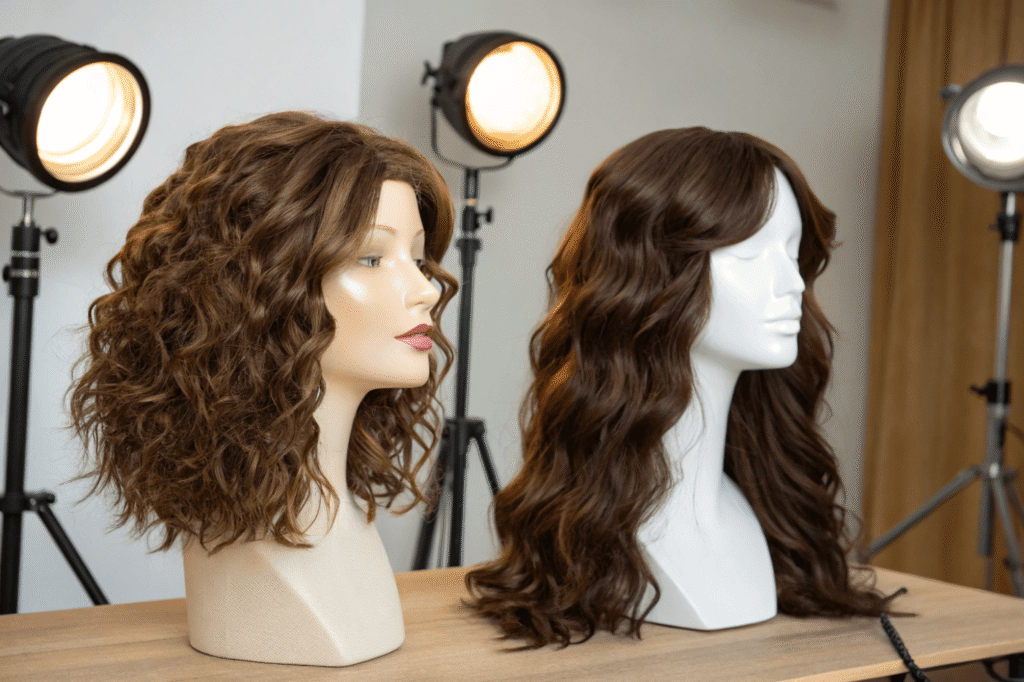
Which textures and densities will my salon and wholesale clients demand most in 2026?
Textures customers call “believable”
- Yaki straight and kinky straight: Top converters because they mimic pressed natural hair; minimal shine, low slip, strong edge blend.
- Soft coily curls (3B–4C spectrum) and natural waves: Authentic curl patterns with slightly irregular curl diameters read “real,” not “wiggy.” Steam-set textures with preserved cuticles outperform acid-processed hair long-term.
Density targets that reduce returns
- Everyday realism: 130–150% for most units; balance perimeter lightness and slightly fuller mid-shaft for movement.
- Coily/afro textures: 150–180% for full-but-believable coil presence. Go higher only for glam capsules.
- XXL lengths: Keep root-to-tip ratio honest. Use double-drawn only where the source hair supports it; otherwise blend single-drawn for movement and reduce blunt, heavy ends that tangle.
Manufacturing checkpoints I enforce
- Cuticle alignment: Mandatory for long lengths; do not accept acid-bath stripped hair for premium SKUs.
- Steam processing: Texture set at moderate temps to preserve tensile strength; avoid over-steam that collapses cuticles.
- Density mapping: Hand-pluck gradient hairlines and de-bulk temple zones to avoid “boxiness.” Randomized knot patterning improves realism.
What customization features (HD lace, pre-bleached knots, pre-plucked hairlines) will raise my conversion rates next year?
Conversion drivers that matter in 2026
- Glueless, pre-cut lace: Reduces install friction; supports “wear & go” claims that perform well in short-form video.
- Pre-bleached or hidden knots + pre-plucked hairlines: Directly impact add-to-cart in A/B tests; widen appeal across skin tones when paired with tint-balanced lace.
- Adjustable density and modular add-ons: Swappable bang pieces, removable toppers, and optional volume inserts let one base unit create multiple looks without inventory bloat.
Comfort features that lower returns
- Silk-lined caps: Reduce friction, improve scalp comfort, and protect hair—especially valuable for protective-style customers.
- Silicone grips + 3D dome fit: Stabilize without adhesives; fewer “cap rides back” complaints and skin irritation tickets.
- Heatless styling compatibility: Promote roller/rod sets and low-heat fibers for longevity; bundle care kits to protect margins.
Feature impact quick view
| Feature | Conversion impact | Return reduction | Notes |
|---|---|---|---|
| Pre-cut HD/ultra-thin lace | High | Medium | Speed + realism on camera |
| Pre-bleached/nano knots | High | High | Less DIY, better scalp look |
| Pre-plucked gradient hairlines | High | Medium | Natural edges; avoid over-plucking |
| Silicone grips + adjustable band | Medium | High | Comfort + security for glueless |
| Silk-lined crown | Medium | High | Comfort, hair health, premium feel |
| Modular bang/topper add-ons | Medium | Medium | Increases AOV without extra bases |
Will HD lace or Swiss lace give my clients better realism and durability in 2026?
- HD lace: Thinnest, most undetectable under 4K lighting; superb for content creators and front-row hairlines. Cons: More delicate; requires careful handling and gentler solvents.
- Ultra-thin Swiss lace (tinted transparent): Slightly more structure, better durability for daily wear, and still blends well across skin tones when tinted correctly.
My 2026 recommendation:
- DTC and influencer lines: HD at the hairline + mono/silk top on parting for realism where cameras focus.
- Salon/core daily wear: Ultra-thin Swiss for the hairline, especially for repeat installs. Offer lace tint options to broaden inclusivity.
Do I need more 13×6 and 6×6 closures for flexible parting this season?
Yes. Flexible parting is now a baseline expectation. Stock:
- 13×6 lace fronts in glueless builds for free parting and deep side parts.
- 6×6 closures for customers who prefer closure installs but still want believable side parts and less maintenance than full frontals.
Operational tip: Pre-mark natural part grids under the lace (subtle dot guides invisible from above) to speed stylist installs and keep density even.
How do I choose between full lace and lace front for styling versatility vs. cost?
- Choose lace front (13×6) for 70–80% of your catalog: Best margin, fast manufacturing, easier returns handling, and adequate styling freedom for most users.
- Reserve full lace for premium SKUs: Market explicitly for updos and multi-directional parting. Price to cover hand-tying labor and higher QA reject rates. Include care education and a repair program to protect CSAT.
Cost engineering: For full lace, standardize on 130–150% densities and limit XXL lengths to manage shedding concerns. For lace fronts, invest savings into better hair quality (true Remy, aligned cuticle) and knot work.
Will breathable, glueless caps reduce returns tied to comfort and fit?
Yes—significantly. Returns tagged “too tight,” “itchy,” “hot,” and “slips without glue” drop when you combine:
- 3D dome cap with elastic memory
- Open weft or mesh back panels for airflow
- Silicone grips at nape/temples
- Adjustable elastic band with low-bulk hardware
- Optional combless configuration to protect edges
I also see lower RMA when we include a fit card (how to adjust bands, where to sit the grip) and a quick QR video on glueless install.
Insights I’m building into 2026 assortments (from factory floors to retail data)
- Glueless, pre-cut lace with pre-bleached knots and pre-plucked hairlines is now the standard, not a premium add-on. It shortens stylist time and slashes newbie anxiety—both convert.
- HD and ultra-thin lace dominate for undetectable hairlines across more skin tones. Pair with smart tinting for universality.
- Ready-to-wear bobs/lobs and shoulder-length units anchor everyday sales; they’re the new “uniform” for quiet luxury.
- Yaki straight, kinky straight, and textured curls lead because they mimic natural patterns and protect bio hair.
- Highlighted balayage, money-piece framing, and soft caramel/copper dimension deliver camera-friendly depth without over-bleaching the fibers.
- Glue-free secure systems (adjustable bands, silicone grips, 3D domes) solve comfort and slippage complaints.
- Heatless styling and low-heat guidance with silk-lined caps protect longevity—bundle care kits to raise AOV.
- Modular customization (swappable bangs, removable toppers, adjustable density) lets one base unit do more, reducing SKU sprawl.
- Ethical sourcing and transparent supply chains are now differentiators. Document origin (India temple, SEA raw single-donor, Eastern Europe double-drawn), processing (steam vs acid), and labor standards.
- AI-driven virtual try-on and head-shape scanning inform cap sizing, density mapping, and color matching. I’m seeing tangible lifts in fit satisfaction and fewer exchange loops.
Procurement and QA playbook for 2026
Sourcing and hair quality
- Prioritize aligned-cuticle Remy from India and SEA for mid/long lengths; reserve Eastern Europe for premium fine textures; avoid acid-bath stripped hair for HD-lace units.
- Specify steam-processing parameters per texture; cap temperatures to preserve tensile strength.
Factory workflow checkpoints
- Knot work: Smaller knots at hairline (single/double split), nano or pre-bleached within safe limits; randomize spacing to avoid grid patterning.
- Density mapping: Light temples, graduated front, honest root-to-tip ratio; audit per size run.
- Lace QC: Shade consistency across batches; elasticity test for tearing; fray control on pre-cut edges.
Assortment math (what to stock)
- Caps: 60% glueless 13×6, 25% 6×6 closures, 10% full lace, 5% specialty mono/silk tops.
- Lengths: 40% 12–16″, 35% 18–22″, 25% 24–32″ (allocate higher QA time here).
- Colors: 50% warm browns with soft dimension, 35% natural 1B/2 with subtle lowlights, 15% burgundy/copper capsules.
Conclusion
2026 belongs to units that are faster to install, easier to wear, and harder to detect. If you invest in truly glueless caps with HD or ultra-thin Swiss lace, pre-bleached knots, smart density mapping, and breathable, silk-lined comfort, your CSAT will climb while install times drop. Merchandise around natural textures (yaki, kinky straight, coils), warm dimensional browns, and a polarized length mix (polished bobs plus XXL glam). Add modular customization and ethical transparency to differentiate your brand, and leverage AI fit and color tools to curb returns. This is how I’m helping manufacturers and brand owners turn trends into margin in 2026—without compromising realism or longevity.