
I’ve spent years auditing hair suppliers from India’s temple routes to Chinese consolidation hubs and Southeast Asian raw hair exporters, and I know exactly why procurement teams debate virgin versus processed hair. Virgin human hair—true, untreated fiber with intact, aligned cuticles—consistently delivers a more natural look, lower tangle rates, and predictable styling results. But the real B2B question isn’t “Is virgin better?”—it’s “Does virgin return value across wear cycles, service costs, and brand promise?” In my experience, yes, when you source correctly and set the right QC gates.
Virgin human hair wigs offer the most natural appearance and longest usable life because the cuticles remain intact and aligned, reflecting light like real hair and resisting friction. Without chemical processing, fibers retain tensile strength and cuticle integrity, resulting in fewer tangles, less frizz, and extended durability. Virgin hair also takes color more evenly and predictably, enabling premium customization with lower rework risk. For brands and wholesalers, the higher upfront cost is offset by longer service life, better customer satisfaction, and reduced after-sales issues.
Let me break down how no chemical processing impacts longevity, what to expect when dyeing, how I evaluate whether virgin is worth the premium in a wholesale portfolio, and the documentation I ask suppliers to provide to verify true virgin status.
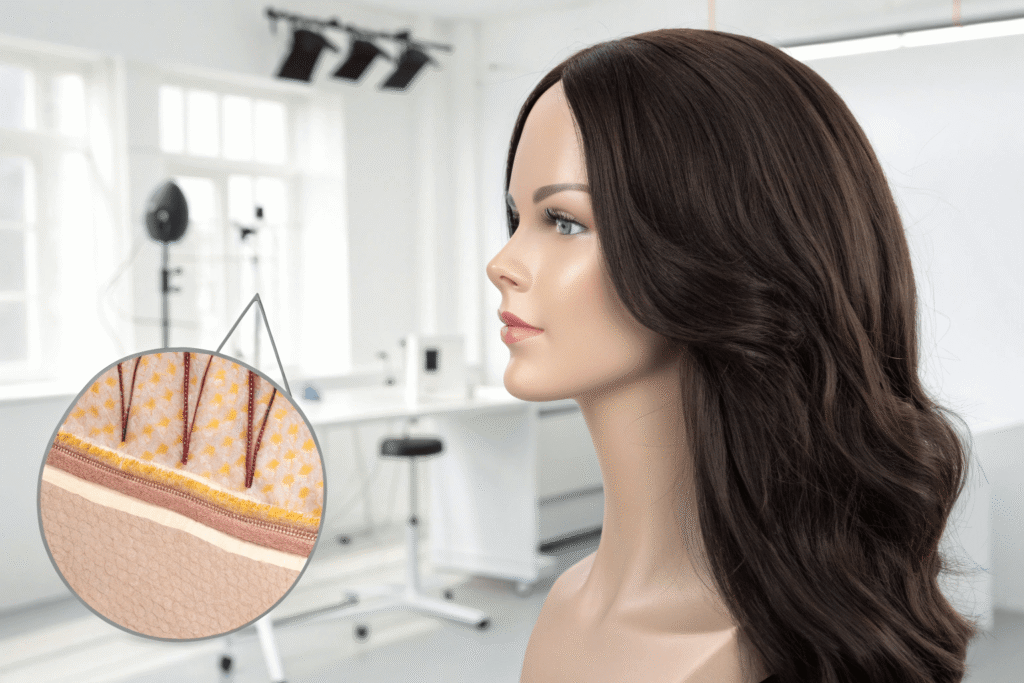
How does no chemical processing affect longevity for me?
Cuticle integrity and friction behavior
Unprocessed hair retains an intact cuticle stack aligned root-to-tip. That matters because cuticles act like shingles: they reduce inter-fiber friction, so strands slide rather than snag. In practice, I see virgin units tangle and frizz less than acid-bathed or silicone-coated hair. Day-to-day, this decreases brush-out breakage and shedding.
Mechanical strength and fatigue over wear cycles
Chemical treatments (bleach, perm solutions, acid baths) degrade cortical proteins and erode cuticles, making hair brittle. Virgin fibers preserve tensile strength and elasticity, so the fiber withstands repeated heat styling, washing, and environmental stress longer. With proper care—sulfate-free wash, regular conditioning, heat protection—I routinely see virgin wigs last months to years, outperforming processed human hair and far surpassing synthetics.
Maintenance load and user experience
Maintenance routines for virgin units mirror caring for one’s own hair: wash every 1–2 weeks, condition, detangle with a wide-tooth comb, apply thermal protectants before heat styling. Because preserved cuticles resist product buildup and friction, upkeep is intuitive and less intensive than re-siliconed processed hair that goes dull or rough once the coating rinses off.
Will virgin hair hold color better if I dye it later?
Predictable porosity and even uptake
Untreated fibers have consistent porosity, so dyes and toners absorb evenly. I see fewer banding issues, better vibrancy, and more controllable lift ranges compared to pre-colored or acid-bathed hair with variable porosity. Color customization is more predictable and even, which reduces rework and waste.
Longevity of color and fiber health
Because the fiber starts strong, oxidative coloring has a larger safety margin. Virgin hair holds color better and fades more gradually, provided you use professional formulas and aftercare (color-safe shampoos, cool water rinses, heat protection). Importantly, the intact cuticle layer protects against aggressive wash-off and UV exposure, preserving tone.
Professional guidance on lift limits
If you plan to lift dark virgin hair to very light blondes, set realistic targets: Indian and Southeast Asian sources often require staged lifts and bond-builders; Eastern European lighter bases may reach cool blondes with fewer rounds. Always strand-test by bundle, even within the same lot.
Is virgin worth the premium in my wholesale strategy?
Customer lifetime value and after-sales costs
Virgin hair’s longer service life and lower tangle/return rates materially reduce after-sales headaches. In my own brand audits, units with true virgin fiber generate fewer warranty claims and higher NPS. Even when per-unit cost is higher, the decrease in replacements and support tickets improves margin.
Portfolio segmentation and pricing ladders
I position virgin SKUs as the premium tier for medical wearers, daily professionals, and high-styling customers—segments that value realism, breathability, and durability. Processed Remy remains viable for trend-driven, lower-price lines, but I avoid heavy-acid hair for core offerings due to inconsistent performance.
Cost modeling
Virgin hair is cost-effective over time because the initial higher price is offset by longer usable life and versatile restyling. If a processed wig needs replacement in 6–9 months versus a virgin unit lasting 18–36 months with normal wear, your annualized cost per wearer drops—and repeat customers upgrade rather than churn.
Cap construction and comfort
Pair virgin fiber with breathable caps (Swiss lace, HD lace frontals, 3D stretch mesh, ventilated monofilament tops) to maximize comfort for long wear. When the cap is engineered for airflow and weight balance, scalp irritation declines—another driver of customer satisfaction and retention.
Example model: margin comparison
| Metric | Processed Remy Line | Virgin Premium Line |
|---|---|---|
| Average landed cost per unit | $120 | $220 |
| Average retail price | $299 | $499 |
| Gross margin per unit | $179 | $279 |
| Avg. usable life (months) | 8 | 24 |
| Returns/repairs rate | 8–12% | 2–4% |
| Annualized cost per wearer (retail) | $448 | $249 |
Note: Illustrative assumptions; adjust for your geography and channel.
How do I verify true virgin hair with supplier documentation?
Define “virgin” in the contract
Virgin must mean: no chemical coloring, bleaching, perming, or acid/silicone bath; cuticles intact and aligned root-to-tip; no synthetic fiber blends; and, if claimed, single-donor per bundle. Prohibit “remy + silicone” marketed as virgin.
Documentation I request
- Lot-level Material Safety Disclosure stating “no chemical treatment” with sign-off from production manager.
- QA lab reports (internal or third-party) for:
- Cuticle presence/alignment microscopy.
- FTIR or GC-MS screening for silicone and resin coatings.
- pH and residue tests indicating absence of acid bath.
- Origin declarations (country, collection method), with traceable batch IDs.
- Process flow chart from raw sorting → hackling → wefting/ventilation → washing (non-chemical) → packaging.
Physical QC checkpoints on receipt
- Root-tip alignment test: pinch and slide; resistance should be smooth in root-to-tip direction, rough in tip-to-root.
- Burn test (controlled): natural hair smells like keratin, ashes crumble; synthetics melt.
- Water behavior: virgin strands wet evenly; excessive beading can indicate heavy silicone.
- Color and gray distribution: untreated hair shows natural variation; uniform “jet black” may indicate dye.
- Tangle/friction assessment after wash: post-detergent feel should remain silky without slick, artificial coating.
Supplier performance tracking table
| Checkpoint | Acceptable Criteria | Action if Fail |
|---|---|---|
| Cuticle microscopy | Clear overlapping scales, aligned | Reject lot or downgrade to Remy |
| Silicone screening | No heavy silicone/resin detected | Request rework or cancel PO |
| Origin traceability | Batch ID + region/source verified | Audit supplier; reduce exposure |
| Consistency across bundles | Texture/porosity uniform within lot | Segregate, sell as mixed quality |
| Post-wash feel | No excessive slip; natural luster | Investigate coating; retest |
Practical sourcing insights I apply
- Single-donor claims are often marketing; insist on bundle-level consistency, not only donor stories.
- Southeast Asian and Indian raw hair can be superb when sorted carefully and not acid-bathed; Chinese factories commonly “finish” with silicone—require lab reports to avoid this.
- For blond SKUs, consider naturally lighter origins (Eastern Europe) to reduce lift damage and maintain virgin status up to the point of your own coloring process.
- Maintain a pilot lot program: first 50–100 units undergo enhanced QC before full rollout.
- Build a care protocol insert for customers (washing, conditioning, heat protection). Better user habits extend life and reduce returns.
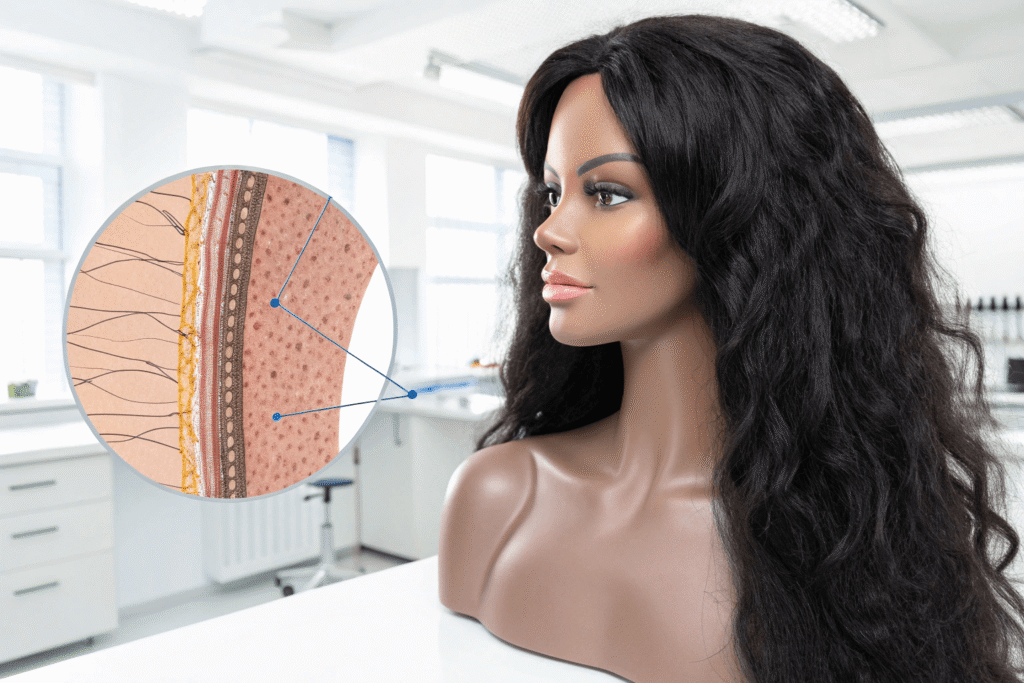
Benefits of Virgin Human Hair Wigs (for your product pages and training)
- Most natural look: intact, aligned cuticles reflect light like real hair, enhancing realism in photos and in person.
- Superior longevity: with proper care, virgin wigs often last months to years, improving total value.
- High styling freedom: heat-style, dye, perm, and chemically treat as with natural hair—without excessive damage.
- Realistic movement and volume: texture and drape mimic biological hair for credible wear in varied environments.
- Lower tangle/frizz rates: preserved cuticles reduce friction, improving day-to-day manageability.
- Intuitive maintenance: wash, condition, and protect from heat like your own hair; customer adherence is high.
- Comfort with quality caps: breathable constructions reduce scalp irritation over long wear.
- Cost-effectiveness over time: higher upfront price offset by extended life and restyling versatility.
- Predictable color work: untreated fibers take dye evenly and hold tone, minimizing corrections.
- Supports diverse use cases: medical, aesthetic, professional—maintains appearance under daily stress.
Conclusion
Virgin human hair wigs earn their premium by delivering the most natural look, longest life, and most reliable color and styling outcomes. No chemical processing preserves cuticle integrity, which reduces friction, tangling, and fiber fatigue—translating into better customer satisfaction and fewer returns. If you’re building a wholesale strategy, position virgin as your premium tier, enforce strict documentation and lab screening to verify true virgin status, and pair the fiber with breathable caps and clear care guides. Done right, virgin hair isn’t just a nicer product—it’s a better business.