
I’ve helped first-time wearers, salon partners, and B2B buyers onboard thousands of new wig users, and the pain points are consistent: installation anxiety, hairline realism, daily maintenance, and density missteps that make a wig feel “too much.” From a manufacturing and sourcing standpoint, I also know how cap construction, knot work, texture processing, and density grading directly impact ease of wear. If you’re new, the right style and construction can turn the learning curve into a quick, confident routine.
The best beginner-friendly human hair wig styles are shoulder-length bobs, body wave lobs, and glueless lace fronts with pre-plucked hairlines and lightly bleached knots. Starting with 13×4 or 13×6 lace fronts, medium density (130–150%), and Virgin/Remy textures reduces customization and maintenance while preserving natural movement. Pre-cut lace and center or soft side parts further simplify daily styling and improve realism for first-time wearers.
I’ll break down style recommendations, installation-friendly constructions, low-maintenance textures, and density selection—grounded in manufacturing reality and first-wearer behavior. Expect practical decision frameworks, trade-offs, and supplier-level details you can use whether you’re buying for yourself or standardizing SKUs for beginner customers.
Should I start with lace front bobs for easy daily styling?
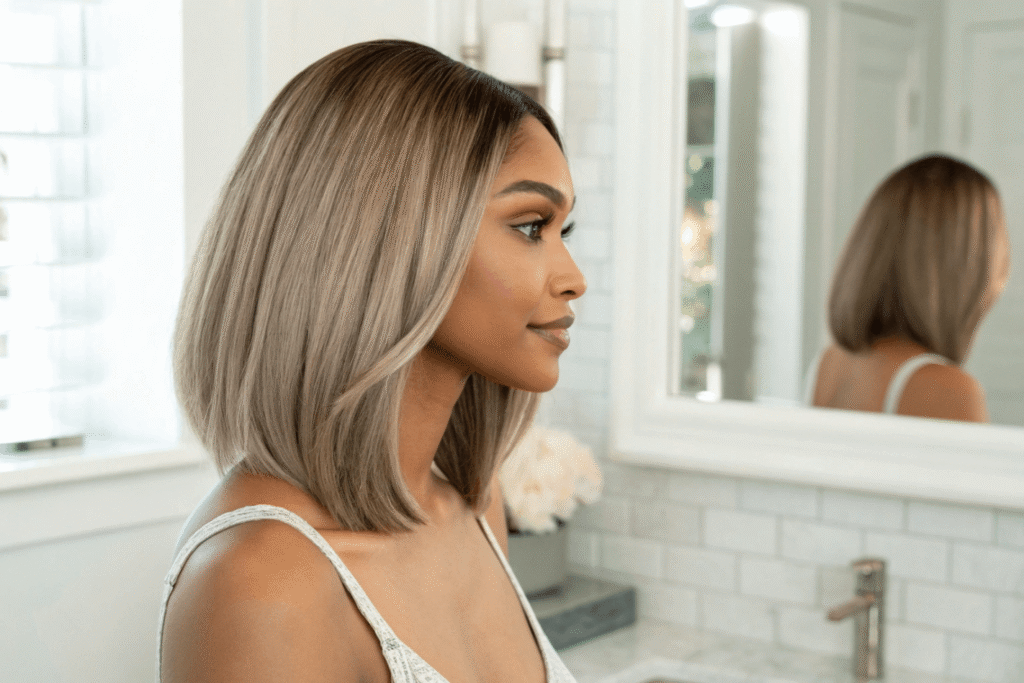
Yes—if I’m designing an entry SKU for beginners (or choosing my first personal wig), I prioritize a lace front bob at shoulder length for its reliability and simplicity.
Why shoulder-length bobs work
- Detangling and nape management: At 12–14 inches, there’s less friction at collars and scarves, so fewer nape tangles and faster morning resets.
- Shape retention: A bob maintains silhouette without advanced hot tools. Round-brushed or air-dried, the look stays neat.
- Faster wash cycles: Shorter hair reduces wash time and drying windows, critical for users who don’t have a wig stand and blow-dryer routine yet.
Lace front advantages over full lace for beginners
- 13×4 or 13×6 lace fronts balance realism and ease. You get a believable hairline and parting space without the full-lace learning curve (more delicate caps, more baby hair management, and longer install times).
- Less risk of over-customizing: Beginners often over-bleach or over-pluck full lace. Lace fronts with factory pre-work remove that risk.
Cap construction I recommend for beginners
- Glueless lace front (13×4/13×6) with adjustable straps, side combs, and a back elastic band for secure, adhesive-free wear.
- Lightly bleached knots at the hairline only, keeping mid-cap knots intact for durability.
- Pre-cut HD or Swiss lace with a soft center or soft side part to minimize visible grid and excess trimming.
Do pre-plucked hairlines and pre-cut lace save me time?
Absolutely. I specify these features for entry-level lines because they reduce three failure points: over-plucking, rough lace trimming, and hairline blending complexity.
What “pre-plucked” should mean in production
- Graduated density at the first 0.5–1 cm of the hairline, not sparse or patchy.
- Soft baby hair trimmed short, not heavy wisps that demand styling gel.
- Consistent contour around temples to avoid boxy corners.
Pre-cut lace: the practical benefit
- Factory-cut lace removes the shakiness of first trims. A clean scallop around the hairline prevents accidental nicks and frays.
- When paired with HD/Swiss lace, you can wear it glueless with a center part—no “melt” needed for everyday realism.
Pre-bleached knots: how much bleaching is enough
- Light bleach at the hairline only (not full cap), targeting visual lift without weakening knots across the cap.
- For durability, I prefer well-tinted lace plus light bleach over heavy bleach. It preserves knot strength and reduces shedding over time.
Which textures require the least maintenance for first-time wearers?
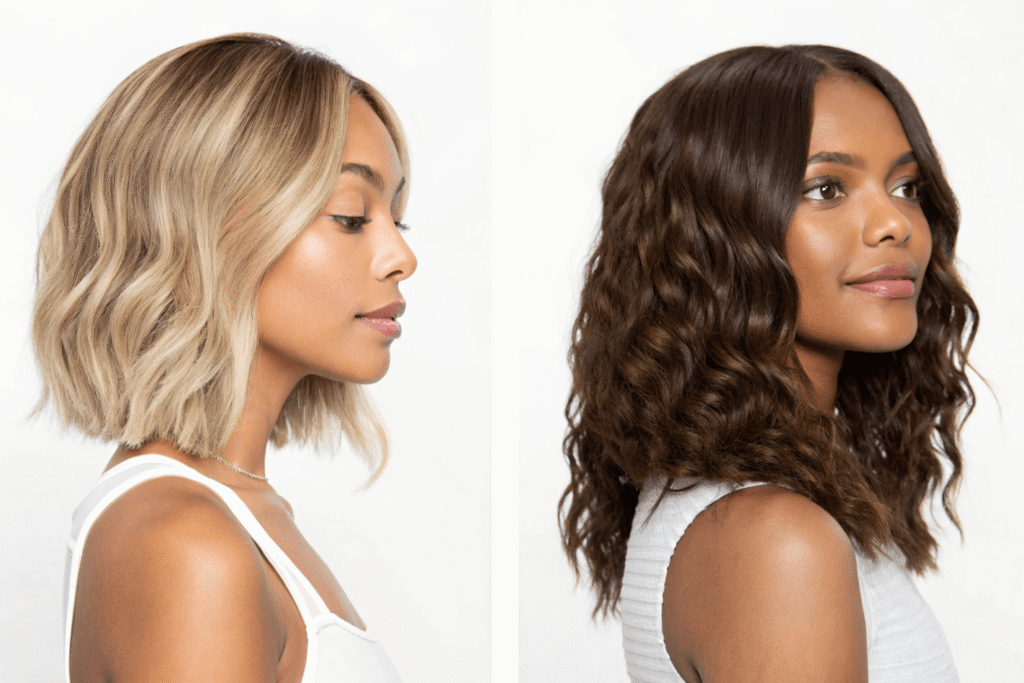
I bias toward straight and soft body wave for new users because both are easy to detangle, style, and refresh without heavy heat or product cycles.
Texture recommendations
- Straight (Virgin/Remy): Lowest daily friction, fast brushing, and easy heat styling if needed. Great for “put-on-and-go.”
- Body wave: Offers movement and volume with minimal heat. Responds well to air-dry and light round-brush work. Holds shape without aggressive curling routines.
Textures I avoid for absolute beginners
- Deep wave/kinky curly: Gorgeous but high-maintenance. Requires defined detangling, hydration, and curl-set routines. Better after you’re comfortable.
- Highly processed curl patterns: If cuticles were compromised (acid bath/over-processing), tangling increases. Choose cuticle-aligned Remy to avoid roughness.
Hair origin and processing notes
- India/SEA Remy: Reliable balance of density, strand strength, and cuticle alignment—ideal for entry-level SKUs.
- “Virgin” (uncolored) or lightly toned hair: Easier restyling and longer fiber life. Heavy lifting (platinum tones) shortens lifespan and increases dryness for beginners.
How do I pick a beginner-friendly density that still looks natural?
Medium density—130–150%—hits the sweet spot. It styles easily, looks believable, and doesn’t feel heavy or hot. Lower than 130% can look thin on darker caps; higher than 150% often overwhelms first-time wearers and increases detangling time.
Density selection guidelines
- 130%: Everyday natural. Ideal for straight bobs and office-friendly looks.
- 150%: Slightly fuller, great for body wave lobs and soft layering.
- 180%+: For drama and volume—skip for first wear unless you’re prepared for maintenance.
Parting and hairline choices
- Center part or soft side part: Minimizes lace management and makes daily alignment intuitive.
- Avoid extreme zig-zag or multiple parting lines at first—they invite more manipulation and visibility of lace.
Quick-start recommendations (pulling it all together)
| Feature | Beginner Recommendation | Why It Works |
|---|---|---|
| Length | Shoulder to mid-length (12–16 in) | Less nape tangling; faster care |
| Texture | Straight or body wave | Minimal detangling; low heat reliance |
| Cap | 13×4 or 13×6 glueless lace front | Natural hairline; easy install |
| Hairline | Pre-plucked + lightly bleached knots | Cuts customization time; improves realism |
| Lace | Pre-cut HD/Swiss | No trimming errors; soft blend |
| Density | 130–150% | Natural look; lighter feel |
| Part | Center or soft side | Simplifies alignment; reduces lace exposure |
| Hair quality | Virgin/Remy, cuticle-aligned | Durability; realistic movement |
Starter SKUs I build or buy for first-time wearers
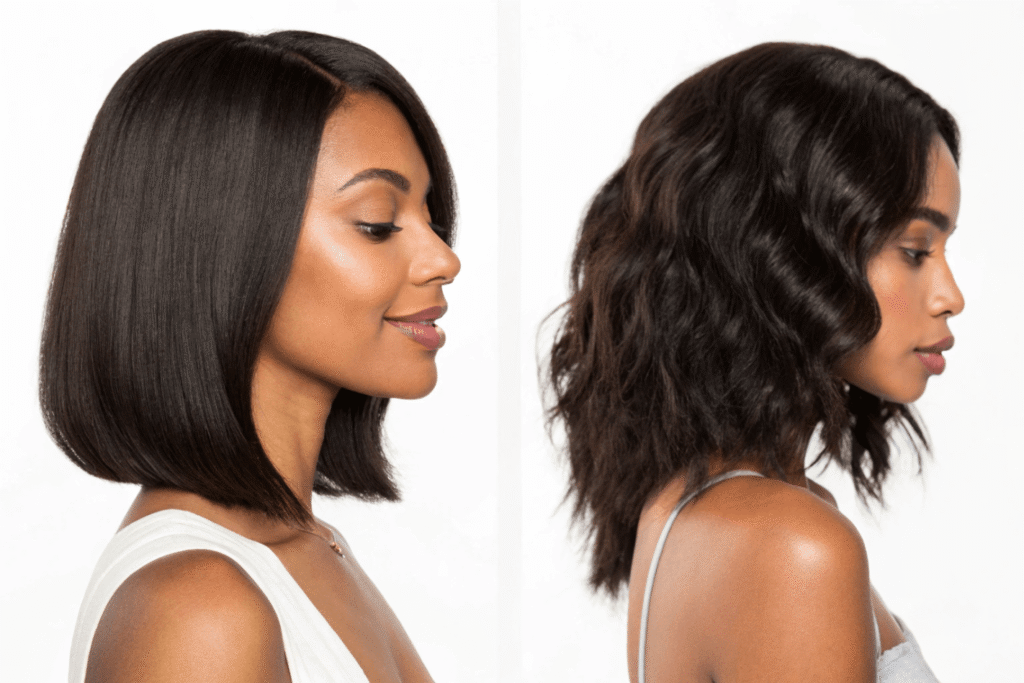
- Straight, shoulder-length bob (12–14 in), 13×4 glueless lace front, pre-plucked, pre-cut lace, 130–150% density, Virgin/Remy.
- Body wave lob (14–16 in) with subtle face-framing layers, 13×6 lace front for flexible parting, medium density, lightly bleached hairline.
- Optional bang variant (no lace management) for users who want zero hairline blending.
Operational tips from the supply side
- QC checkpoints: Verify hairline graduation, knot integrity post-bleach, and lace edge symmetry before shipping. Beginners won’t fix factory mistakes.
- Detangling kits: Bundle a wide-tooth comb, elastic band, and care card. Reduces returns and support calls.
- Nape design: Add a slightly tighter elastic band setting for shorter lengths to prevent cap ride-up—common with first-time wearers.
Conclusion
For beginners, I consistently recommend a straight or body wave, shoulder-length bob or lob on a 13×4 or 13×6 glueless lace front, with a pre-plucked hairline, lightly bleached knots, and pre-cut HD/Swiss lace. Keep density at 130–150% and choose a center or soft side part for effortless alignment. Start with Virgin or Remy, cuticle-aligned hair for durability and realistic movement. This setup minimizes customization, reduces daily maintenance, and delivers a natural look without the overwhelm—whether you’re buying for yourself or standardizing beginner SKUs in your product line.