
Do looser waves resist frizz better than tighter curls?
I’ve spent enough summers walking factory floors in Guangzhou, Chennai, and Lagos to know humidity is unforgiving—on hair and on cap engineering. When brand teams ask me what textures actually perform when the dew point spikes, I look beyond aesthetics to heat load, fiber response, and how the cap breathes under real wear. Procurement wants SKUs that minimize returns for “frizz” and “hot scalp,” factories want predictable processing windows, and wholesale partners want textures that stay camera‑ready from unboxing to end‑user styling with minimal aftercare. My answer blends material science with what I see in QC rooms and customer service tickets every July.
I prefer lightweight human hair in body wave, loose wave, or airy curly patterns paired with breathable lace/monofilament/open‑weft caps. Medium‑to‑low density (120–140%) ventilates better, shorter lengths reduce heat, and HD lace or ultra‑thin Swiss lace with moisture‑wicking liners keeps the hairline cool. Kinky‑curly and yaki/blown‑out textures conceal frizz better than silky straight, while heat‑resistant synthetics can hold pattern but usually feel warmer than equivalent human hair.
Let me unpack the why, with practical direction you can use for assortment planning, technical specs, and aftercare guidance to lower summer‑season complaints.
Texture performance in humidity
- Looser, airy waves vs tight curls
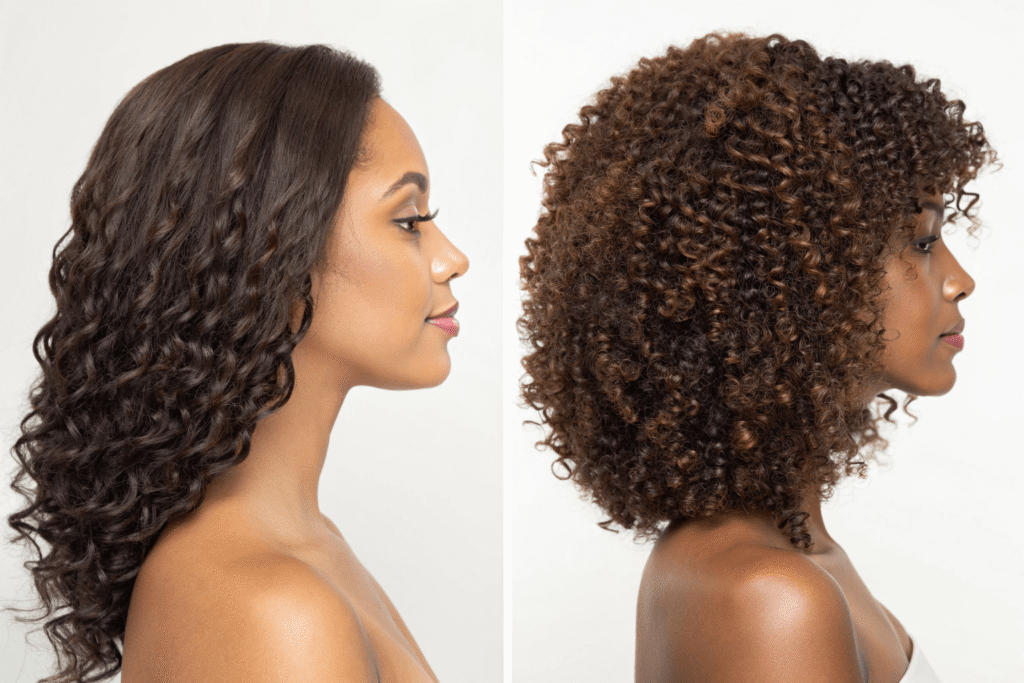
- In my experience, body wave and loose wave human hair maintain shape better than stick‑straight in humidity and require less daily restyling than tight coils. The gentle “S” pattern absorbs swelling without looking limp. Tighter curls (deep curl, kinky‑curly) can expand more, but they disguise frizz visually—end users perceive “volume” rather than “mess.” For mass market, I spec body/loose wave as the default humidity‑tolerant texture; for textured‑hair brands, airy kinky‑curly with larger, open coils works if we keep density and length controlled.
- Straight, especially silky straight, shows flyaways instantly and tends to collapse at the roots in moisture; returns spike for “not holding style.”
- Yaki and blown‑out textures
- Light yaki/blown‑out finishes mimic lightly pressed natural hair—subtle micro‑texture resists visible frizz lines better than glass‑straight without reading “frizzy.” For corporate or uniform looks where waves may feel casual, yaki is a smart compromise.
- Synthetic vs human hair under humidity
- Heat‑resistant synthetic (heat‑friendly) holds pattern consistently but has lower breathability and higher heat feel at the scalp. For outdoor or high‑activity customers, I spec human hair whenever budget allows. If synthetic is mandatory, choose lighter densities, open‑weft caps, and textured patterns (body wave/yaki) to offset heat load.
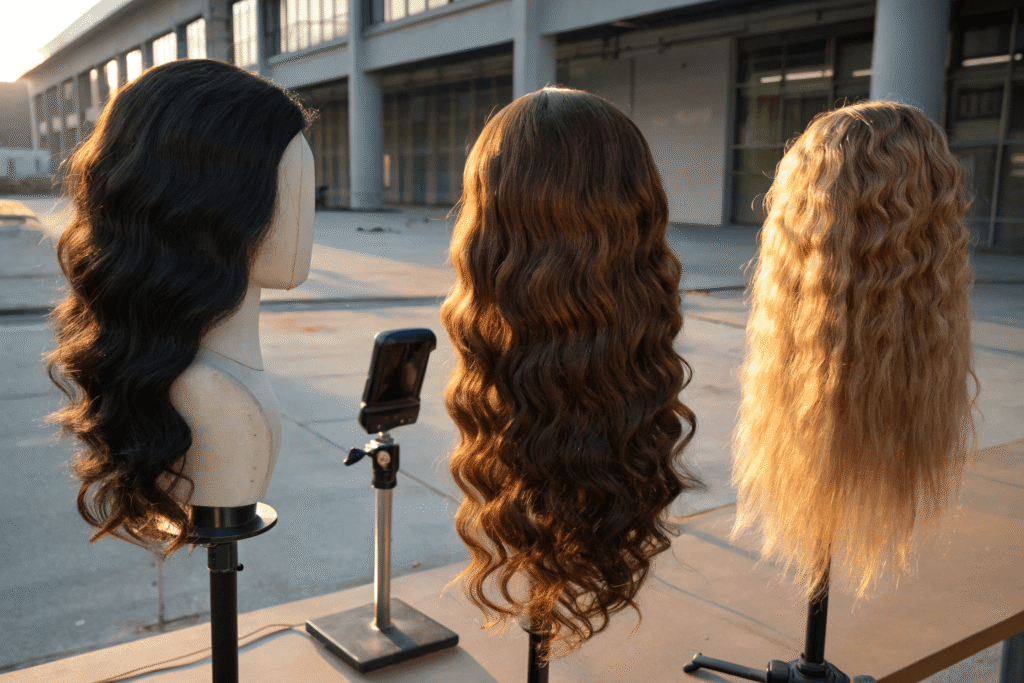
Quick comparison: texture vs. perceived frizz and heat
| Texture category | Frizz visibility in humidity | Heat feel (same density) | Restyling burden | Notes |
|---|---|---|---|---|
| Silky straight | High | Low–Medium | High | Shows flyaways; may look limp at roots |
| Body wave / Loose wave | Low–Medium | Low | Low | Best all‑rounder for humid markets |
| Water wave / Deep wave | Low | Medium | Low–Medium | Holds shape; can feel warmer if dense |
| Kinky‑curly (airy) | Low (conceals frizz) | Medium | Medium | Keep density/light lengths to avoid heat |
| Yaki / Blown‑out | Low–Medium | Low–Medium | Low | Professional look with humidity resilience |
Which density helps ventilation without exposing tracks?
From a factory standpoint, density is the single biggest lever we have for summer comfort. At 150%+ density, even premium European or SEA single‑drawn hair feels warmer because airflow through the cap drops. I spec:
- Front density: 90–110% at the hairline for realism and airflow.
- Overall density: 120–140% for hot climates; 130% is the sweet spot for most head sizes and textures without revealing tracks.
- Texture interaction: tighter curls can hide higher densities; with body/loose wave, 130% remains safe on open‑weft caps. If a buyer insists on 150% for volume, I push for a full‑hand‑tied top or more rows of under‑ventilation to mask wefts.
Cap build matters as much as density
- Lace front + open‑weft back (“capless”) or lace front + monofilament top gives the best ventilation to weight ratio.
- Full hand‑tied caps are the most breathable but increase cost; viable for premium SKUs or medical hair loss lines.
- Strategic ventilation: requesting slightly larger knot spacing in back quadrants and micro‑knotting at the hairline increases airflow without compromising coverage.
Are lighter colors cooler and easier to maintain in summer?
Color affects both heat feel and maintenance, but the impact differs by fiber and processing:
- Heat and color
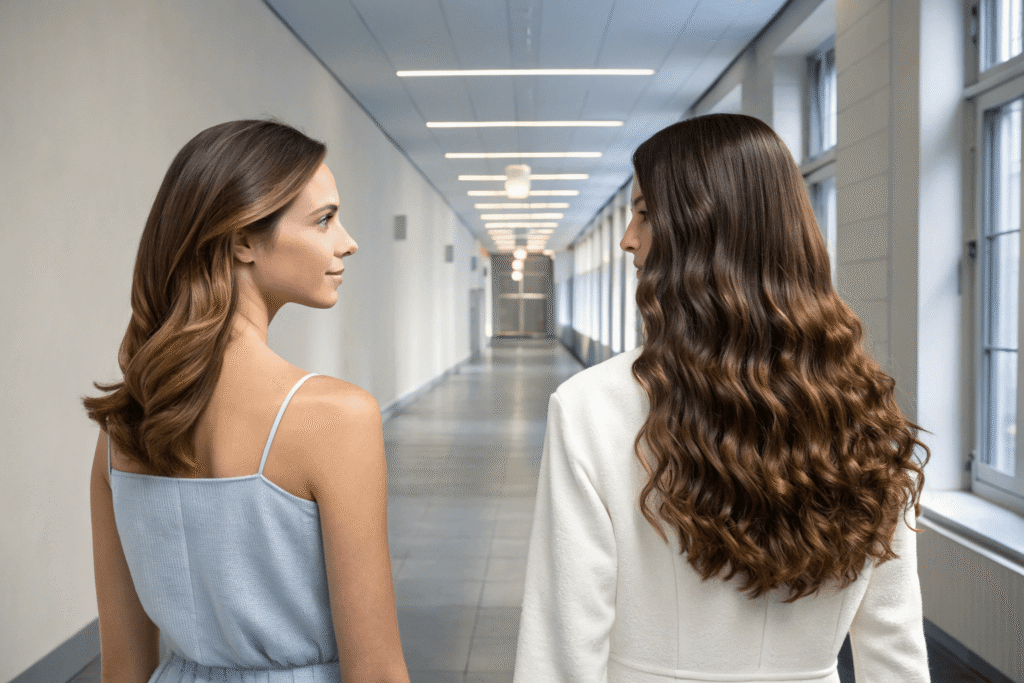
- Lighter shades absorb less radiant heat than level‑1/2 blacks outdoors, but at the scalp the cap’s breathability and density dominate comfort. In wear tests, shifting from 1B to 4 or balayage saved a few degrees under direct sun, but moving from closed‑weft to open‑weft or dropping density by 10% produced a larger comfort gain.
- Maintenance in humidity
- High‑lift blondes require more cuticle sealing (silicones, serums) to avoid swelling and frizz. Conversely, natural browns (2–6) with minimal chemical lift tend to frizz less and need fewer anti‑humidity products.
- For summer assortments, I like medium browns, lived‑in balayage, or low‑lift caramels on body/loose wave—easier upkeep than platinum and cooler feel than jet black under sun.
- Supplier notes
- If you’re sourcing light shades, insist on steam‑set textures over acid‑bath smoothing. Steam processing maintains better cuticle integrity and reduces humidity‑induced fuzzing over the season.
Table: color choice vs summer practicality
| Color family | Relative heat absorption | Upkeep in humidity | Notes |
|---|---|---|---|
| 1–2 (black) | Highest | Low–Medium | Cool look but warmer outdoors |
| 2–6 (browns) | Medium | Low | Best balance for summer SKUs |
| 7–10 (blonde) | Lowest | Medium–High | Keep lift moderate; seal cuticle |
| Highlight/Balayage | Low–Medium | Medium | Visual brightness with moderate maintenance |
Should I choose HD lace for breathability in my climate?
Short answer: yes—with caveats. HD lace (ultra‑thin Swiss) breathes and disappears at the hairline better than standard Swiss or Korean lace, which helps in heat. But durability and knot security are trade‑offs.
- Breathability and feel
- HD lace and other ultra‑thin meshes ventilate sweat away from the forehead and temples where heat concentrates. Paired with a moisture‑wicking liner, customers report fewer “sweaty hairline” complaints.
- Durability and knotting
- The thinner the lace, the more careful we must be with bleach strength and knot size. For hot‑weather SKUs, I spec:
- Single knots at the front 0.5–1 cm for realism and airflow.
- Double knots elsewhere for longevity.
- Lower developer (10–20 vol) or tinting instead of aggressive bleaching to avoid lace weakening.
- Alternatives
- For buyers with durability concerns (e.g., daily gym users), upgraded Swiss lace (slightly thicker than HD) provides close‑to‑HD breathability with better tear resistance.
- Caps to pair with HD lace
- HD lace front + monofilament top + open‑weft back is an excellent summer build. Full lace in HD is breathable but requires careful handling and can run warmer than open‑weft backs if density is high.
My on‑floor sourcing and build recommendations for hot, humid markets
I integrate the following specifications when I set summer assortments for brands and wholesalers:
- Hair origin and processing
- Human hair preferred: Indian temple or SEA double‑drawn for wave textures; keep cuticle aligned, avoid acid baths, and set pattern via steam.
- Textures: body wave, loose wave, or airy curly; light yaki for professional looks.
- Construction
- Lace front (HD or fine Swiss) + mono top + open‑weft back; optional full hand‑tied for premium lines.
- Density: 120–140% overall; hairline 90–110%.
- Lengths: 10–14 inches for core SKUs; cap‑ready for updos if >14 inches.
- Comfort bundle
- Include/upsell moisture‑wicking bamboo or mesh liners, anti‑humidity finishing spray, and lightweight leave‑in for cuticle sealing.
- Synthetic line (if required)
- Heat‑resistant fibers in body/loose wave or yaki; keep to 120–130% density with open‑weft caps; emphasize end‑user that cap liners improve comfort.
- Wearer prep
- Encourage protective cornrows or flat braids under the wig to reduce bulk and improve airflow.
Troubleshooting matrix for summer complaints
| Complaint from end user | Likely cause | Factory/brand fix | End‑user guidance |
|---|---|---|---|
| “Hot scalp/sweaty” | High density, closed wefts | Shift to open‑weft or hand‑tied, reduce density 10% | Use moisture‑wicking liner; rotate wigs |
| “Frizzy/looked messy” | Silky straight in humidity | Offer body/loose wave or yaki | Anti‑humidity serum; avoid humectants |
| “Tracks visible” | Low density with straight texture | Add under‑ventilation rows; raise to 130% | Choose wavier texture or darker root |
| “Curls puffed up” | Tight curls at high length/density | Shorten to 12–14″, reduce density | Use light gel/foam; diffuse on cool |
| “Lace irritated skin” | Thick lace, sweat | Switch to HD/fine Swiss | Liner + shorter wear sessions |
Conclusion
When the air is thick, the best‑performing builds are lightweight, breathable, and forgiving to moisture. In my programs, the top summer performer is a medium‑to‑low density (120–140%) human hair body wave or loose wave, cut to bob or lob lengths, on an HD lace front with a monofilament top and open‑weft back. Airy kinky‑curly and light yaki also score well for clients who want textured looks and frizz camouflage. Lighter colors help a bit outdoors, but cap ventilation and density drive comfort more than shade. HD lace improves breathability at the hairline if you respect its delicacy. Pair the right texture with a moisture‑wicking liner and a light anti‑humidity finish, and you’ll keep customers cool, polished, and out of your returns queue all summer.