
Importing wigs from China can be extremely profitable—if you match cap constructions, lace types, textures, and specifications to what your customers actually buy. The market evolves fast, and the wrong mix can lock up cash in slow-moving inventory. I’ll break down the common wig styles from Chinese suppliers and help you decide which lace constructions, lace materials, textures, and specs (length, density, cap size) fit your target markets, especially the US and Nigeria.
The most common wig styles from China are lace front (13×4, 13×6), full lace, 360 lace, closure wigs (4×4/5×5/6×6), frontal wigs, U/V-part, headband, and glueless wigs. For most retailers, 13×4/13×6 and 5×5 closure wigs are the safest starters; HD or transparent lace works best for US customers, while Swiss/transparent lace suits Nigeria. Top textures: US—body wave, straight, deep wave; Nigeria—kinky curly, Afro/kinky, body wave. Stock 12–30 inches with densities 150–200% and cap sizes S/M/L to optimize turns.
If you’re building an assortment for e-commerce or salons, use the frameworks below to balance trend, price point, and operational simplicity. I’ll also share region-specific insights and inventory planning rules we use with clients.
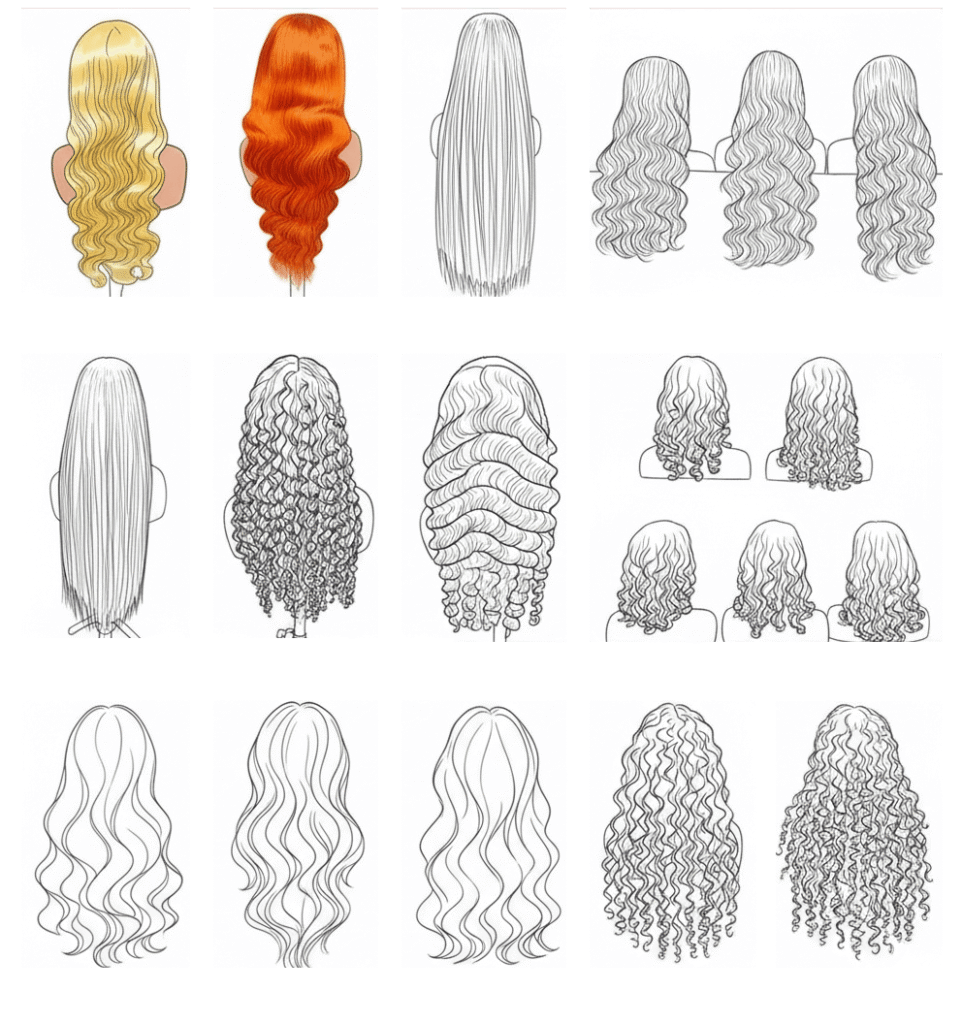
Which lace constructions (full lace, 13×4, 13×6, 360, T-part) fit my market best?
Choosing the right cap construction determines installation time, styling flexibility, and your margin. Each construction targets a different buyer profile.
Most US mass-market buyers prefer 13×4/13×6 lace fronts and 5×5/6×6 closures for value and ease; full lace and 360 lace sell to premium or stylist-led segments; T-part wins on budget. Build your core around lace fronts and closures, then layer 360/full lace selectively.
Core constructions and use cases
- 13×4 Lace Front: Natural hairline, versatile parting (ear-to-ear width, 4″ depth). Bread-and-butter SKU for US and Nigeria. Best for mid-price point.
- 13×6 Lace Front: Deeper parting for more natural styling; slightly higher cost. Popular with US YouTube/TikTok-driven buyers.
- Closure Wigs (4×4, 5×5, 6×6): Defined part with minimal lace; easiest for beginners, low maintenance, great for “glueless” installs. 5×5 is the current sweet spot.
- Full Lace: Lace across the entire cap; maximum styling (updos, braids). High cost, higher return risk if trends shift. Stock sparingly unless you sell premium/custom.
- 360 Lace: Lace perimeter + wefted center; high ponytails without full-lace price. A strong upsell for stylist clients.
- T-Part (middle part): Minimal lace footprint, lowest cost lace look. Good for budget lines and price-sensitive marketplaces.
- U-Part/V-Part: Leave-out blends with natural hair; loved by “no-lace” customers. Great for faster installs and protective styles.
- Headband/Glueless: Elastic band, straps, combs—zero glue, beginner-friendly. High-repeat rate and low return risk.

Cost, margin, and install complexity snapshot
| Construction | Factory cost (10A human hair, 18″, 150%) | Install complexity | Margin potential | Buyer profile |
|---|---|---|---|---|
| 5×5 Closure | $65–$90 | Low | High | Beginners, daily wear |
| 13×4 Lace Front | $85–$120 | Medium | High | Mainstream, influencers |
| 13×6 Lace Front | +$10–$20 vs 13×4 | Medium | Medium-High | Premium mid-market |
| 360 Lace | $110–$160 | Medium-High | Medium | Stylist-led |
| Full Lace | $160–$240 | High | Medium | Premium/custom |
| T-Part | $55–$80 | Low | High | Budget |
Pro Tip: If you’re new, keep 70–80% of inventory in 13×4/13×6 and 5×5/6×6 closure. Allocate 10–15% to 360 or full lace for premium upsell, and 5–10% to T-part or headband for entry price points.
Should I choose HD lace, transparent lace, or Swiss lace for my customers?
Lace type directly affects blend, durability, and price. Your choice should map to skin tone diversity, climate, and install habits.
HD lace melts best on camera and for light-to-medium installs but is delicate and pricey; transparent lace is versatile and cost-effective; Swiss lace balances breathability and strength. US: HD/transparent sell best. Nigeria: Swiss/transparent for durability and heat.
Lace material breakdown
- HD Lace: Ultra-thin, finest denier, best “melt” on lighter to medium skin tones; perfect for content creators and special events. Cons: tears easier, higher cost, shorter lifespan.
- Transparent Lace: Slightly thicker than HD, accepts tinting well for medium to deep complexions, more durable, better price point. Best all-rounder.
- Swiss Lace: Often slightly thicker than transparent; strong, breathable, heat-tolerant. Good for hot, humid climates and frequent wear.
Caution: “HD” is used loosely by some factories. Always request GSM and thread count specs or side-by-side samples. True HD should feel noticeably finer and softer.
Regional recommendations
- United States: Offer HD for premium lines and transparent for core SKUs. Keep lace tint sprays/powders as add-ons.
- Nigeria: Favor Swiss/transparent for strength and longevity in heat/humidity. Keep HD only for premium clients who understand delicate care.
What are the top-selling textures (straight, body wave, deep wave, kinky, afro) in the US and Nigeria?
Textures drive conversion because they signal lifestyle and maintenance. The right mix prevents dead stock.
US sales skew toward body wave, straight, and deep wave with seasonal spikes in curly looks; Nigeria prioritizes kinky curly, Afro/kinky, and body wave for texture match and volume. Keep some yaki/relaxed for “silk press” looks.
Texture performance by market
| Market | Top 1–3 Textures | Notes |
|---|---|---|
| United States | 1) Body Wave 2) Straight 3) Deep Wave | Body wave holds curl and straightens easily; straight dominates work/pro looks; deep wave for glam/social seasons. |
| Nigeria | 1) Kinky Curly 2) Afro/Kinky 3) Body Wave | Texture match to natural hair, volume preference, and humid climate styling. Body wave remains versatile. |
Other textures to consider:
- Loose Wave: Flexible styling, mid-maintenance.
- Kinky Coily/4C and Afro Kinky: High volume, protective styling; hot in West Africa and diaspora.
- Yaki/Relaxed Straight: Mimics silk-press/relaxed hair; strong in professional settings and among low-maintenance buyers.
Pro Tip: For curly/kinky units, specify curl pattern consistency and set method with suppliers (steam-set vs chemical). Ask for post-wash photos/videos and a 72-hour curl retention test.
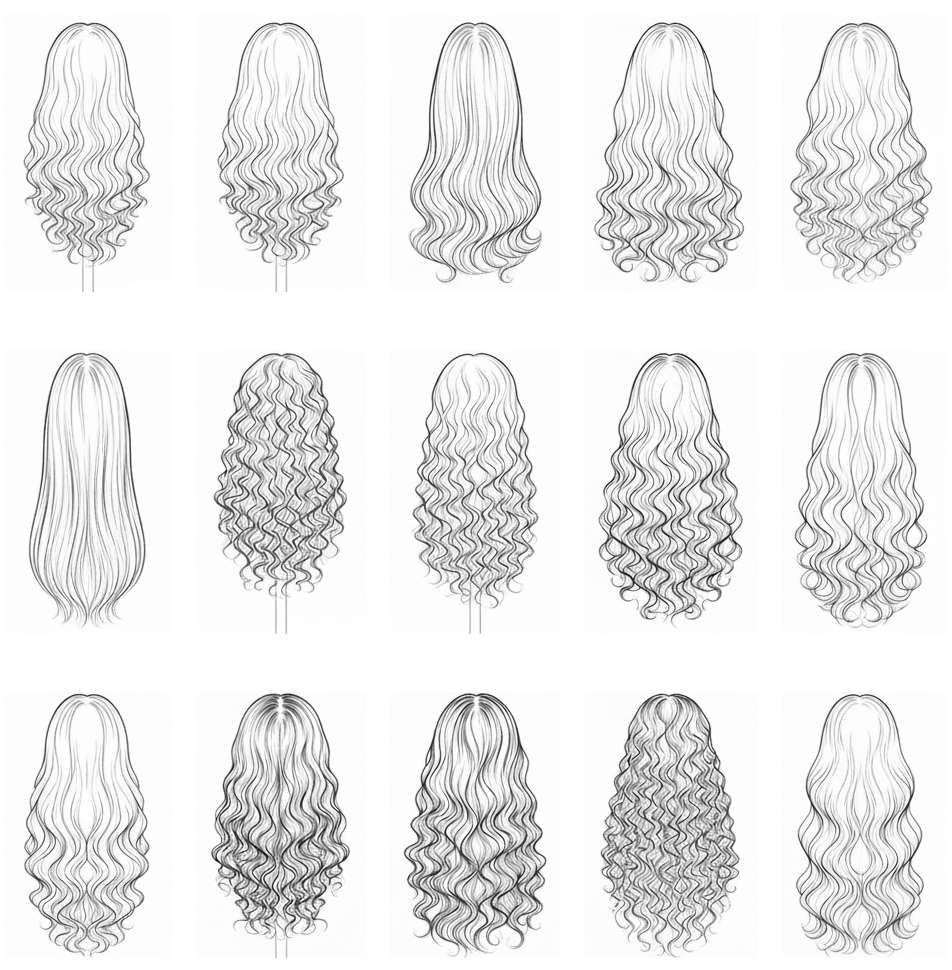
How do I pick lengths, densities, and cap sizes to optimize my inventory turns?
Assortment planning should balance visual appeal, price laddering, and logistics. Longer and denser units sell slower and tie up cash.
Anchor inventory at 14–24 inches and 150–180% density in M caps; sprinkle 26–30 inches and 200%+ for premium. Offer S/M/L caps with adjustable bands. Use ABC inventory tiers and reorder by weekly sell-through.
Length strategy
- Fast movers: 14–22 inches (daily wear, affordable shipping).
- Visible add-ons: 24–26 inches to lift AOV for content-driven buyers.
- Select premiums: 28–30 inches for influencers and custom orders; keep low on-hand, use supplier quick-turn.
Shipping note: Each extra 2 inches adds noticeable weight and cost in express parcels; consider ocean/rail consolidation for bulk long lengths.
Density strategy
- 150%: Natural everyday fullness; best turnover.
- 180%: Glam without excessive weight; strong in lace fronts.
- 200–250%: Premium glam and long lengths; slower-moving, higher return risk if overstocked.
Caution: Some factories overstate density. Request cap-off weight photos and net hair weight disclosure (exclude lace/cap). Spot-check on a scale.
Cap sizes and fit
- Standard size (M): 22–22.5″ circumference suits most buyers.
- Small (S): 21–21.5″ for petite heads; understocking leads to returns.
- Large (L): 23–23.5″ for comfort; important in Nigeria and among protective-style wearers with braids underneath.
- Glueless features: Elastic band + adjustable straps + combs increase fit tolerance and reduce return rates.
Model assortment for a 100-unit starter order (balanced US focus, adaptable to Nigeria)
- Closures (5×5, 6×6): 35 units, 14–24″, 150–180%
- Lace Fronts (13×4/13×6): 45 units, 16–26″, 150–180% (add 10% at 200% for 24–26″)
- 360/Full Lace: 10 units, 18–24″, 150–180% (premium)
- T-Part/Headband/U/V-Part: 10 units for budget and “no-lace” customers
- Cap sizes: 70% M, 15% S, 15% L
- Lace: 60% transparent, 30% HD, 10% Swiss (flip to 60% Swiss/transparent and 10% HD for Nigeria)
Replenishment rule: Track sell-through weekly. Reorder when remaining weeks of cover < 3 for core SKUs. For long/200% units, target 2–3 turns per year; for 150–180% 14–22″, target 6–8 turns.
Visual reference: Wig style taxonomy
- Lace front wigs: Sheer lace at the hairline for natural edges and easy parting.
- Full lace wigs: Lace across the entire cap for multi-directional parting and updos.
- 360 lace wigs: Lace perimeter + wefted center for high ponytails/buns.
- U-part/V-part wigs: U-/V-shaped opening for leave-out blending.
- Headband wigs: Elastic headband attachment—no glue or lace work.
- Glueless wigs: Secure via straps, bands, combs—no adhesive.
- Closure wigs: 4×4/5×5/6×6 defined part with mostly wefted cap.
- Frontal wigs: 13×4/13×6 wider hairlines and deeper middle/side parts.
Conclusion
When you import wigs from China, focus your core on 13×4/13×6 lace fronts and 5×5/6×6 closures, choose transparent or Swiss lace for durability (add HD for premium), and tailor textures to market—body wave/straight/deep wave in the US and kinky/Afro/body wave in Nigeria. Keep lengths 14–24″ and densities 150–180% for fast turns, with limited 26–30″ and 200%+ for margin-boosting upsells. Dial in cap sizes and glueless features to reduce returns and improve customer satisfaction.
Want help building a SKU plan and supplier brief for your next import from China? Contact us for tailored sourcing advice, sample testing checklists, and negotiated factory MOQs that protect your cash flow.