
China dominates global wig production, but not all regions offer the same strengths. If you’re importing wigs for wholesale or brand development, choosing the right manufacturing hub directly impacts quality, lead times, and cost. Below, I break down the leading provinces and cities—what they’re best at, how they operate, and when each makes sense for your specific business needs.
The best regions to import wigs from China are Xuchang (Henan) for volume and price, Qingdao (Shandong) for premium human hair lace craftsmanship, Guangzhou and Shenzhen (Guangdong) for export efficiency and diverse product lines, Yiwu (Zhejiang) for small MOQs and rapid sampling, and Lianyungang (Jiangsu) for human hair collection and high-volume processing. Your choice should align with your quality targets, customization level, and delivery deadlines.
If you’re scaling a wholesale program, want consistent lead times, or need ODM/brand development, picking a region with the right specialization and logistics is as important as selecting the factory itself. Let’s dive into the specifics.
Which Chinese provinces lead in synthetic and human hair wig production for my wholesale needs?
China’s wig supply chain is regionalized—some hubs excel in synthetic fiber processing, others in human hair collection and lace craftsmanship. Understanding these clusters helps you source smarter and avoid mismatches.
Section takeaway: Henan (Xuchang) leads in both synthetic and human hair at scale; Shandong (Qingdao) is strong in premium human hair lace; Jiangsu (Lianyungang) focuses on human hair processing; Zhejiang (Yiwu) and Guangdong (Guangzhou/Shenzhen) are ideal for variety, small MOQs, and fast-moving products.
Regional strengths at a glance
- Henan (Xuchang): The world’s largest wig hub with vertically integrated chains for synthetic and human hair. Strong on bulk orders and competitive pricing.
- Shandong (Qingdao): Premium human hair processing and lace ventilation (lace front/full lace, hair systems). Favored by brands needing craftsmanship.
- Jiangsu (Lianyungang and nearby): Human hair collection, sorting, and high-volume export processing; reliable for base materials and affordable finished units.
- Zhejiang (Yiwu): Dense wholesale markets, flexible customization, and small MOQs; efficient for testing new lines and dropshipping.
- Guangdong (Guangzhou/Shenzhen): Diverse products, fashion and cosplay lines, advanced OEM/ODM, and superior export logistics.
Why this matters for wholesale buyers
- Pricing vs. craftsmanship: Xuchang’s scale lowers costs; Qingdao’s manual lace work elevates unit price but improves hairline realism and knotting durability.
- Fiber vs. human hair: Synthetic hubs typically offer faster cycles and color consistency; human hair regions vary by sourcing channels and processing techniques.
- Supply chain maturity: Regions with established upstream (hair collection) and downstream (export ports) deliver shorter lead times and less variance.
Pro Tip: If you sell both synthetic and human hair, consider split sourcing—synthetics from Henan/Guangdong and premium lace units from Qingdao. Consolidate shipments via a coastal port (Qingdao or Shenzhen) to reduce freight costs.
Should I source lace wigs from Xuchang, Qingdao, or Guangzhou for better quality and stability?
Choosing the right city for lace wigs depends on the balance you need between craftsmanship, volume capacity, and timeline.
For premium lace craftsmanship (lace front/full lace), go Qingdao. For large-scale lace wig production at competitive pricing and stable lead times, choose Xuchang. For fashion-forward lace and fast exports, Guangzhou is ideal.
Xuchang (Henan): Scale with integration
- Strengths: Large lace production capacity; vertically integrated factories (knots, bleaching, ventilation, sewing lines).
- Typical outcomes: Stable lead times for bulk, consistent base materials, aggressive pricing on 13×4 lace fronts and T-part lace.
- Risks: Lace ventilation quality varies widely—factory selection and in-line QC are critical.
Qingdao (Shandong): Craftsmanship for premium brands
- Strengths: Skilled lace ventilation and natural hairline creation; better knot density control, single/double knot strategy, and precise bleach work.
- Typical outcomes: Higher acceptance rates for premium markets (salon-grade, hair system buyers), lower repair/rework rates.
- Risks: Longer lead times; higher cost per unit.
Guangzhou (Guangdong): Design variety and export agility
- Strengths: Trend-driven SKUs, fashion and cosplay lace, broad accessory support (tints, adhesives); excellent port proximity for global shipping.
- Typical outcomes: Faster sampling; good for rapid product refresh cycles and multi-style assortments.
- Risks: Quality consistency depends on vendor tier; more traders mixed among manufacturers—vet carefully.
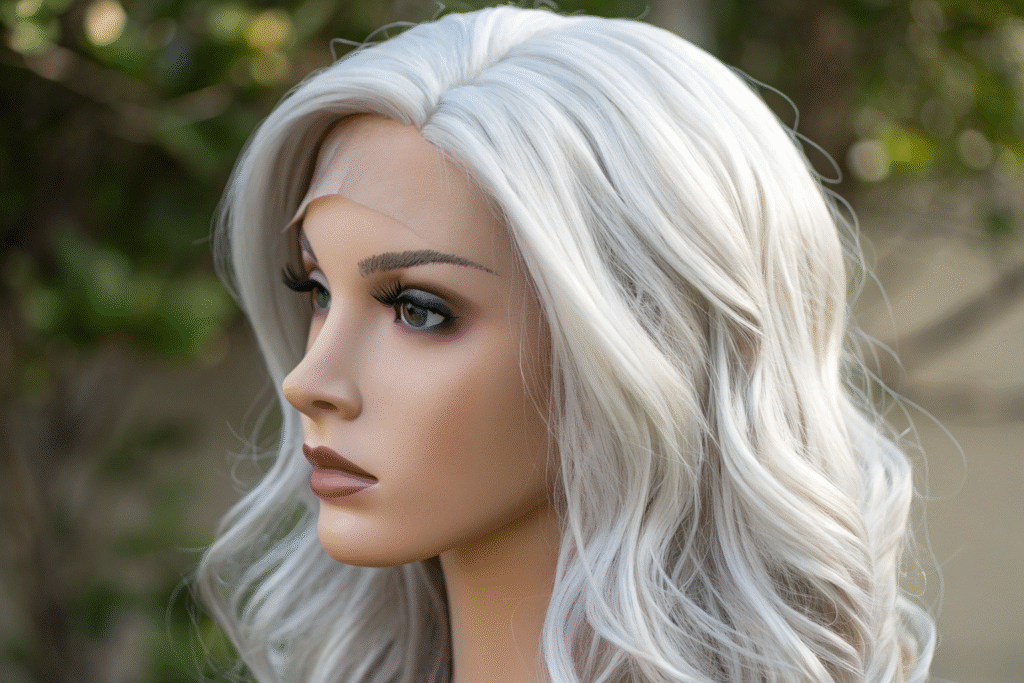
Caution: “Bleached knots” claims aren’t standardized. Request macro photos of knot grids (temple, parting area), specify hairline density (e.g., 70–80% front, 100% mid), and require test washing to check shedding.
Where can I find factories that support ODM and custom wig development for my brand?
If you’re building a brand, you need ODM partners who can translate spec sheets into reliable production—with fast iterations and tech-driven QC.
Shenzhen and Qingdao are top choices for advanced ODM/custom work. Xuchang and Guangzhou provide cost-effective ODM for volume programs, while Yiwu is excellent for small MOQs and quick sampling.
ODM hotspots and capabilities
- Shenzhen (Guangdong): Tech-forward OEM/ODM; CAD cap design, rapid prototyping, digital density mapping, silicone skin bases, hybrid lace/poly systems. Strong IP awareness and documentation.
- Qingdao (Shandong): High-end custom lace systems, realistic hairlines, medical-grade bases; suitable for salon/medical distributors.
- Xuchang (Henan): Broad ODM for mainstream lace fronts, 360 lace, machine-made wigs; competitive pricing and scalable production.
- Guangzhou (Guangdong): Fashion ODM (colors, lengths, cap innovations), influencer collabs, fast sample cycles.
- Yiwu (Zhejiang): Small MOQ, market-ready packaging, accessory bundles; great for DTC testing and seasonal launches.
What to include in your ODM brief
- Cap construction: Lace type (Swiss HD vs. standard), ear-to-ear measurements, parting width, stretch panels.
- Density map: Front-to-back gradient, temple specs; single vs. double knots; pre-plucked hairline standards.
- Hair specs: Origin mix (Chinese/Indian/Eurasian), cuticle alignment, processed vs. virgin, curl setting method (steam vs. chemical).
- Color/processing: Lift levels, tone targets, lace tint matching; heat resistance for synthetics (Kanekalon vs. Toyokalon vs. high-temp fibers).
- Compliance: Product labeling (fiber type, origin), MSDS for adhesives, CPSIA if selling in the U.S. for certain accessories.
Pro Tip: Ask for three prototypes with controlled variable changes (e.g., knot type, bleach time, density map) and run blind wear tests with feedback. ODM factories in Shenzhen/Qingdao respond well to data-driven revisions.
Which regions offer the most reliable lead times and export terms (FOB, CFR, DDP) for my wig orders?
Lead time reliability depends on production capacity and port access. Export terms vary by vendor maturity and logistics infrastructure.
Regions with direct access to major ports—Qingdao, Guangzhou, and Shenzhen—offer faster and more predictable shipments and flexible terms (FOB, CFR, DDP). Xuchang’s inland position is offset by its scale and organized trucking routes; Yiwu excels at quick sampling but may ship via Ningbo or Shanghai.
Lead time patterns by region
- Xuchang (Henan): 10–25 days for synthetic bulk; 20–35 days for human hair lace fronts; full lace can extend to 35–45 days. Strong trucking links to coastal ports.
- Qingdao (Shandong): 20–40 days for premium lace; proximity to Qingdao Port reduces transit time and port congestion risk.
- Guangzhou/Shenzhen (Guangdong): 15–30 days for fashion lines; air and sea options via Baiyun/Shenzhen airports and major ports enable flexible DDP solutions.
- Yiwu (Zhejiang): 7–15 days for sampling; 15–30 days production; exports commonly via Ningbo or Shanghai ports.
- Lianyungang (Jiangsu): Efficient hair processing with 20–30 day cycles; exports via Lianyungang or Shanghai.
Common trade terms by hub
- FOB: Standard across all regions; easy to compare suppliers.
- CFR/CIF: Popular in Qingdao and Guangzhou for sea freight predictability.
- DDP: Most available from Guangdong-based vendors (Shenzhen/Guangzhou) and larger Xuchang factories with established forwarder networks.
Table: Typical lead times and export strengths by region
| Region | Typical Lead Time (bulk) | Port Access | Common Terms | Best Use Case |
|---|---|---|---|---|
| Xuchang, Henan | 10–35 days | Via Qingdao/Shanghai | FOB, DDP | Large-volume synthetic + human hair programs |
| Qingdao, Shandong | 20–40 days | Qingdao Port | FOB, CFR/CIF | Premium lace, hair systems, stable craftsmanship |
| Guangzhou, GD | 15–30 days | Guangzhou/Shenzhen | FOB, DDP | Fashion/cosplay, fast assortment changes |
| Shenzhen, GD | 15–30 days | Yantian/Shekou ports | FOB, DDP | Tech-driven ODM, rapid prototyping |
| Yiwu, Zhejiang | 15–30 days (bulk) | Ningbo/Shanghai | FOB | Small MOQs, quick sampling, DTC pilots |
| Lianyungang, JS | 20–30 days | Lianyungang/Shanghai | FOB | Human hair processing and cost-effective export |

Caution: Lunar New Year (Jan–Feb) and “Golden Week” (early October) add 7–20 days to production and trucking. Book capacity early and consider buffer stock.
Cost and stability trade-offs
- Inland vs. coastal: Inland hubs may have lower ex-works pricing but slightly higher domestic logistics costs; coastal hubs save transit time and reduce risk of delay.
- DDP convenience: Great for first-time importers, but ensure the forwarder properly declares HS codes (typically 6704.x) and handles hair/fiber-specific compliance.
Table: Fiber type considerations and regional fit
| Fiber/Hair Type | Regional Fit | Notes |
|---|---|---|
| High-temp synthetic | Henan, Guangdong | Fast cycles; stable color matching |
| Kanekalon/Toyokalon | Guangdong, Henan | Confirm heat resistance and sheen control |
| Virgin human hair lace | Qingdao, Shenzhen | Better knotting/bleach; higher QA standards |
| Processed human hair | Lianyungang, Xuchang | Cost-effective; clarify origin and cuticle alignment |
Pro Tip: For U.S./EU markets, pre-align on labeling requirements (fiber content, origin) and request batch photos and weight slips pre-shipment to prevent customs queries.
Conclusion
To import wigs from China effectively, match your region to your business goal:
- Bulk, competitive pricing, short cycles: Xuchang (Henan)
- Premium lace fronts/full lace and hair systems: Qingdao (Shandong)
- Fashion diversity and export agility: Guangzhou/Shenzhen (Guangdong)
- Small MOQs and rapid sampling: Yiwu (Zhejiang)
- Human hair processing and volume: Lianyungang (Jiangsu)
By aligning your sourcing strategy with these regional strengths, you’ll improve quality consistency, stabilize lead times, and optimize total landed cost. Contact us for tailored sourcing advice—we can shortlist vetted factories by region, quality tier, and trade terms to accelerate your import program.