
I’ve spent the last few years working with wig manufacturers and fiber suppliers who are trying to pivot from petroleum-based synthetics to bio-based alternatives without sacrificing salon performance or margin. I know the pressures: customers want vegan, cruelty-free solutions, retailers want credible sustainability claims, and factories need fibers that run on existing lines with minimal retooling. My goal here is to cut through hype and share what’s actually working across PLA, bio-PBT/PTT, and plant-derived blends in real production environments.
Bio-based fibers in wigs are moving from pilot to early scale, led by PLA, bio-based PBT/PTT, and bio-nylon blends that cut fossil reliance and lower life-cycle emissions while targeting salon-grade heat resistance. The most reliable route today is blending bio-based with conventional synthetics to balance softness, sheen, durability, and cost, supported by credible certification and targeted testing for heat styling, frizz control, and chemical safety. Expect higher material costs short-term, improving over 2–4 years as feedstocks diversify and supply matures.
In the sections below, I map the fiber types you’ll encounter, how I evaluate them for manufacturability, which brands are piloting them and the outcomes, how certification and supply affect your launch calendar, and the exact test plan I use to validate durability and safety in salons.
How do I assess emerging PLA, bio-PBT, or plant-derived blends for my lines?
When I evaluate bio-based fibers for wigs or extensions, I anchor on four dimensions: processing compatibility, performance in wear, sustainability claims, and cost-to-scale.
Fiber classes you’ll see in the wig supply chain
- PLA (polylactic acid): Corn/sugarcane-derived; good sustainability profile; moderate heat tolerance after crystallization; can be brittle without impact modifiers.
- Bio-PBT/PTT (polytrimethylene terephthalate; often branded as “bio-based PTT”): Made from bio 1,3-propanediol; elastic recovery, better resilience and frizz resistance than PLA; heat tolerance similar to premium synthetics when engineered.
- Bio-nylon (PA 6/10/11 from castor or other plant sources): Higher toughness, improved abrasion resistance; heat resistance depends on grade; good for high-wear wefts and lace-support yarns.
- Plant-derived blends (banana/pineapple/protein composites): Softer handfeel and strong sustainability narrative; typically blended with synthetics for strength, sheen control, and heat performance.
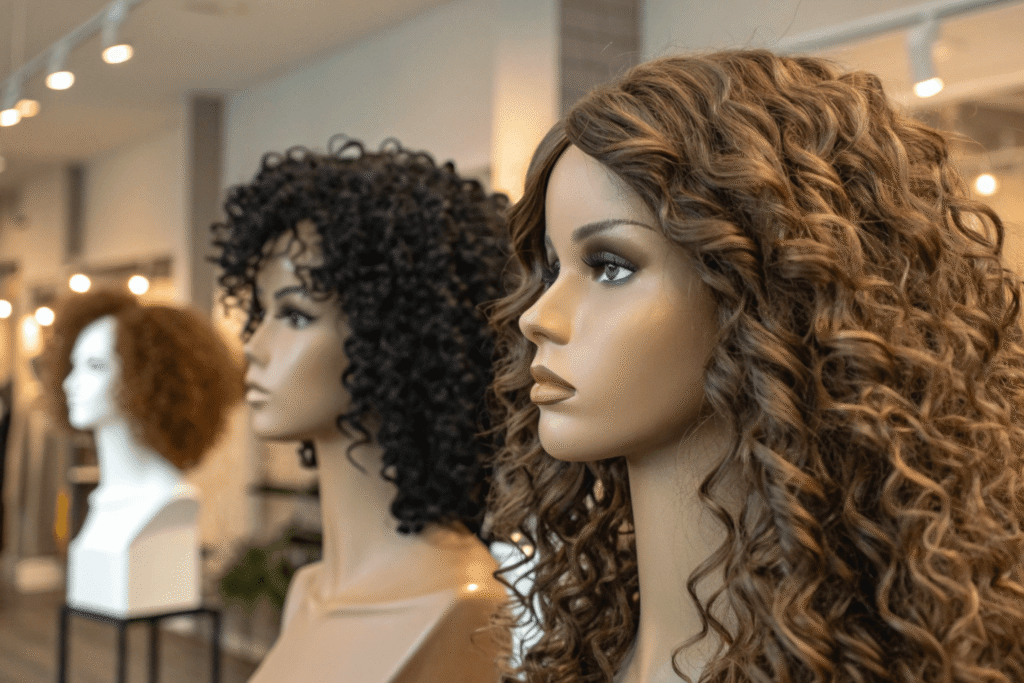
What I look for in material data sheets
- Heat resistance: Target 140–180°C tolerance for salon curling irons; look for “maintains curl” claims at moderate temps and steam-set stability.
- Cuticle-mimicking surface: Low static and controlled sheen; bio-based polymer engineering and surface treatments now reduce frizz and halo.
- Moisture management: Fibers that don’t puff in humidity and retain lay; PTT/bio-PBT typically outperform PLA here.
- Processing fit: Can your current drawing, crimping, and denier ranges be met without new equipment? Ask for pilot runs on your filament specs (typically 30–120 denier for wig fibers).
- Blending strategy: Many brands blend bio-based with standard synthetics to achieve softness and durability while lowering the environmental footprint.
Practical decision guide
- If you need heat styling comparable to premium synthetics: Prioritize bio-PBT/PTT or bio-nylon blends; consider PLA only if crystallized grades and additives are validated.
- If your brand leans hard on eco messaging: Plant-derived composites (banana/pineapple) or high bio-content PLA provide strong claims; plan for blend reinforcement to avoid breakage.
- If you run high-volume fashion colors: Confirm dye/dispersion stability and UV resistance; bio-based polymers can yellow without stabilizers.
Comparison table: Fiber selection trade-offs
| Fiber type | Heat styling tolerance | Frizz/Humidity control | Handfeel/Sheen control | Processing compatibility | Relative cost today |
|---|---|---|---|---|---|
| PLA (engineered) | Medium (120–150°C) | Medium | Soft, can be shiny | Good with adjustments | Higher |
| Bio-PBT/PTT | Medium–High (140–180°C) | High | Natural sheen, resilient | Strong fit | Higher |
| Bio-nylon (castor) | High (grade-dependent) | High | Slightly firmer hand | Strong fit | Higher–Premium |
| Plant-derived blends | Low–Medium | Medium | Very soft, matte | Needs blending | Higher |
Start with a 30–50% bio-based blend in your core SKUs to manage cost, validate performance, and build supply resilience, then increment bio-content as material pricing improves over the next 2–4 years.
Which brands are piloting bio-based fibers and what results can I expect?
Adoption is fastest in Europe and Japan due to stricter sustainability standards and consumers who value eco labeling. North America is following via specialty retailers and DTC brands.
Early pilots I’ve seen
- Premium synthetic lines in Japan and the EU are using bio-PBT blends to maintain curl memory and reduce frizz under moderate heat tools. Results: styling versatility comparable to premium petro synthetics with improved moisture management.
- Boutique brands blending plant-derived fibers (e.g., banana/pineapple) with synthetics report softer handfeel and stronger vegan positioning. Results: excellent comfort, lower scalp irritation, but require reinforcement in high-tension applications (tight braids, frequent restyling).
- Vendors offering bio-nylon for lace and cap structures: Results show better abrasion resistance and lifespan, supporting an “eco-upgrade” narrative beyond the hair fibers themselves.
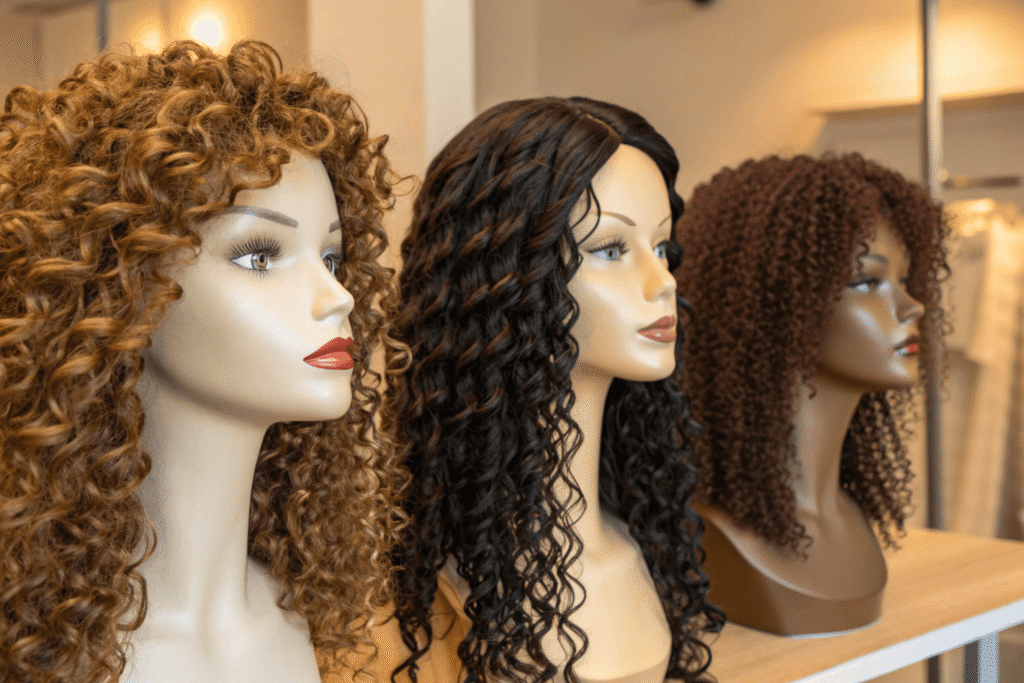
Performance outcomes you should expect
- Heat-resistant bio-based fibers now maintain curl and shape at moderate temperatures—think salon curling at 140–160°C—without plasticky shine.
- Frizz resistance and moisture management are improving via polymer engineering and surface treatments tuned for hair: reduced static, better lay in humid climates.
- Blended constructions help balance softness, sheen control, tangling resistance, and tensile strength; fully bio-based fibers can be too soft or prone to breakage without support.
- End-of-life pilots (mechanical recycling and chemical depolymerization) are emerging, but contamination and infrastructure remain real hurdles—plan your claims carefully.
Quick benchmarking table: Typical pilot KPIs
| KPI | Baseline petro synthetic | Bio-PBT/PTT blend | PLA high-bio blend | Plant-derived composite blend |
|---|---|---|---|---|
| Curl retention (160°C) | 8/10 | 8–9/10 | 6–7/10 | 5–6/10 |
| Frizz after 8h humidity | 6/10 | 7–8/10 | 6/10 | 6–7/10 |
| Tangling after 20 cycles | 7/10 | 7–8/10 | 6/10 | 6–7/10 |
| Customer “soft feel” | 7/10 | 7/10 | 8/10 | 9/10 |
How do supply stability and certification affect my launch timeline?
Supply and certification can add 8–16 weeks to timelines if you don’t plan upfront. I design launches around three levers: feedstock diversity, supplier credentialing, and label claim approval.
Supply stability realities
- Feedstocks: PLA depends on sugar/corn; bio-PBT uses bio-propanediol; bio-nylon relies on castor. Diversified feedstocks reduce price volatility and allocation risk.
- Regional adoption: Europe and Japan have built-in demand and supplier presence; North America is accelerating via specialty channels but may face longer lead times on certain grades.
- Cost trajectory: Bio-based fibers are currently priced above conventional synthetics; expect narrowing over 2–4 years as capacity scales and procurement widens.
Certifications that influence go-to-market
- Biobased content: ASTM D6866 for percentage verification; use it to substantiate “X% bio-based” claims.
- Chemical safety: OEKO-TEX Standard 100, REACH compliance, and toxicology screens for heavy metals and carcinogens—these are critical differentiators given recent scrutiny.
- Compostability/biodegradability: ISO 17088/EN 13432 may apply to some fibers, but be cautious—hair products rarely meet real-world composting conditions; align claims with end-of-life realities.
- LCA and carbon footprint: Third-party life-cycle assessments and cradle-to-gate emissions are increasingly requested by retail partners.
Launch planning checkpoints
- Pre-qualification: Request certificates and recent test reports before committing tooling.
- Claim alignment: Marketing claims must match certifications (e.g., “30% biobased,” “REACH compliant,” not “fully compostable” unless you control the recovery pathway).
- Buffer lead time: Add 4–6 weeks for certification review and label approval; 6–10 weeks for material confirmation and pilot runs.
What testing is needed to confirm durability and safety in salons?
I won’t greenlight a bio-based fiber without a targeted test plan. The goal is to replicate salon stress: heat, humidity, repeated styling, and exposure to hair products.
Mechanical and styling tests
- Heat tolerance: Curl at 140–180°C, hold for 30 seconds, repeat for 10 cycles; evaluate shape memory and color shift.
- Steam set stability: 100–120°C steam for 20 minutes; assess curl retention over 72 hours.
- Tensile and abrasion: ASTM D882/D4966 analogs for filament; check weft integrity under comb-out cycles.
- Frizz/humidity chamber: 80% RH for 8 hours; score frizz index and static buildup.
- Tangling and slip: Standardized brush-through cycles; compare to your best-selling petro synthetic SKUs.
Chemical safety and salon use
- Heavy metals and restricted substances: Screen for lead, cadmium, chromium, and PAHs; align to OEKO-TEX/REACH thresholds.
- VOCs/off-gassing: Assess odor and volatile emissions post-heat styling.
- Product compatibility: Test with common salon sprays, mousses, and neutral shampoos; check residue interaction and fiber degradation.
- Skin contact irritation: Patch tests for lace/cap materials and fibers, particularly with plant-derived blends.
Color and appearance
- UV stability: Accelerated weathering to prevent yellowing; confirm stabilizer package.
- Sheen control: Glossmeter comparisons to human hair targets; adjust surface finish treatments accordingly.
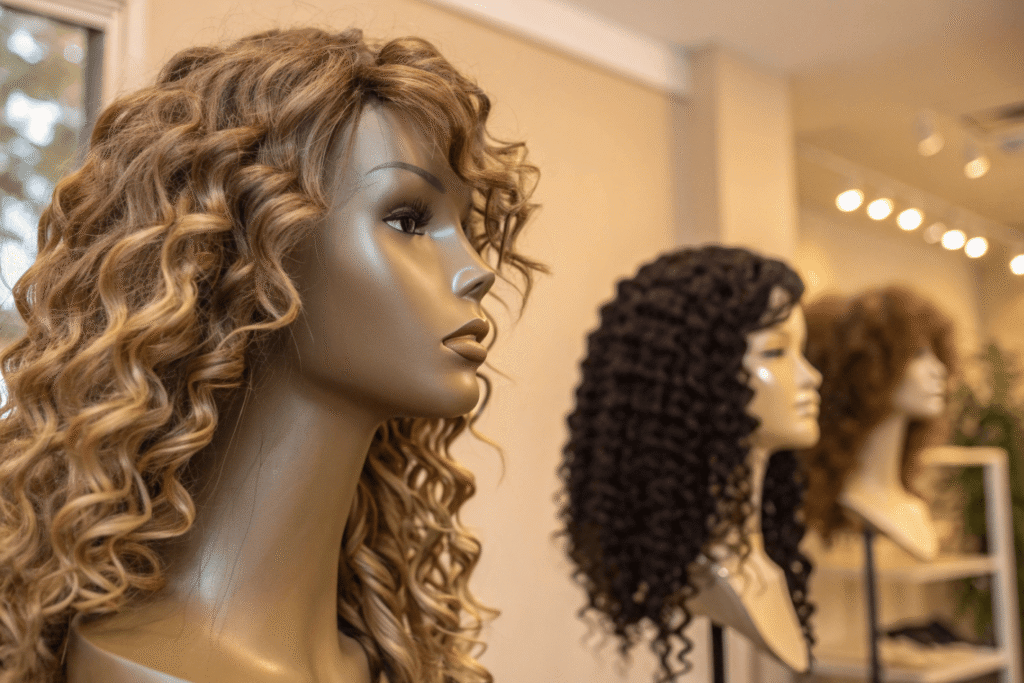
Validation workflow I recommend
- Material screening: Review datasheets, certifications, and sample swatches.
- Pilot extrusion/drawing: Run on your denier and crimp specs; produce 20–50 sample units.
- Lab testing: Execute the protocol above; set pass/fail gates.
- Salon field trial: 4–6 weeks across humidity/heat conditions; collect stylist feedback.
- Claim finalization: Lock biobased percentage, safety labels, and care instructions based on results.
Final takeaways for manufacturers and brand owners
- Start with blended constructions to balance performance and sustainability; push bio-content up as you validate salon outcomes.
- Use certifications as sales tools but keep claims grounded in end-of-life realities—recycling and depolymerization are promising but not turnkey yet.
- Build a cross-functional timeline: supply qualification, certification review, pilot production, and salon testing typically requires 12–20 weeks.
- Focus on frizz resistance, moisture management, and moderate heat styling—these are the make-or-break attributes in mid-range and premium segments.
Bio-based synthetics are no longer a niche experiment—they’re becoming a credible path to reduce fossil dependence and elevate brand reputation, provided we engineer the blends and validate performance with rigor.