
As a supplier who has engineered and shipped hundreds of thousands of wear-and-go units to salons, marketplaces, and DTC brands, I’ve seen the category transform from a “convenience” novelty into a serious revenue driver for wholesalers and retailers. Today’s wear-and-go wigs are built for speed, consistency, and consumer confidence. For distributors, manufacturers, and private label buyers, that means faster turns, fewer returns, and less reliance on salon labor to educate end users. If you’re planning a product line or refreshing your assortment, this guide breaks down the construction details, SKUs that sell, and the operational details that protect margin at scale.
Wear-and-go wigs are pre-styled, pre-plucked, and often pre-bleached, with pre-cut lace and a glueless, elasticized cap that installs in minutes. For true “out-of-the-box” success, prioritize HD/translucent lace, pre-sized ear tabs, stabilized hairlines (pre-plucked + pre-bleached within safe fiber thresholds), and 3D elastic bands integrated into a breathable cap. Pair those specs with beginner-friendly textures (YK-straight, body wave, light yaki, and 16–18-inch bobs), densities of 130–150%, and clear insertable instructions. The result: improved first-time install rates, fewer returns, and reduced salon dependency for your retail buyers.
From a sourcing perspective, I focus on three pillars: 1) cap engineering that’s truly glueless, 2) hairline prep that balances realism with durability, and 3) packaging and education that removes friction for first-time users. In the sections below, I’ll detail cap patterns, elastic placements, lace choices, and QC gates. I’ll also show how to select textures and densities that minimize styling skill, and how to package instructions so your customers can literally put on a unit in under five minutes. If you’re weighing OEM vs. ODM vs. private label, I’ve included procurement checklists, price benchmarks, and inventory mix recommendations.
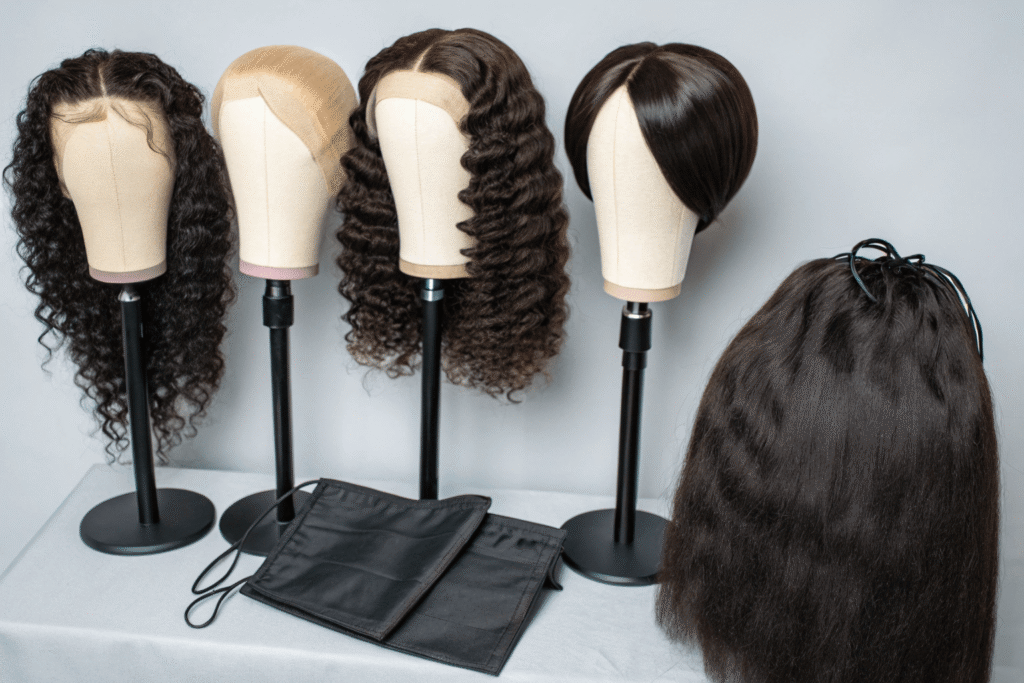
1) What Are Wear-and-Go Wigs, and Are They Easy to Install?
Wear-and-go wigs are pre-styled, pre-customized lace units engineered for quick, glueless installation. They’re designed to eliminate the most error-prone steps—cutting the lace, plucking the hairline, bleaching knots—so a consumer can unbox, adjust, and go. For B2B buyers, the headline is conversion and satisfaction: fewer steps mean fewer reasons to return.
Key characteristics I recommend standardizing:
- Pre-cut HD or ultra-thin Swiss lace with rounded corners at the temples to prevent lifting.
- Pre-plucked hairline with a graded density (light at the edge, gently increasing 0.5–1.0 cm behind the line).
- Pre-bleached or tinted knots within safe levels (more on QC later).
- Glueless cap construction featuring:
- A wide, soft 3D elastic band (1.5–2.5 cm) anchored at the temple-to-temple seam.
- Adjustable back straps with multi-notch or hook-and-eye positions.
- Breathable mesh with strategic stretch panels for size tolerance (e.g., medium cap fits 21.5–22.5 inches).
- Optional combs or silicone perimeter strip for additional grip, depending on target market.
Are they easy to install? In practice, yes—3 to 5 minutes for most consumers:
- Flatten hair (braids or low ponytail), wear a cap if desired.
- Position unit, align pre-plucked line, adjust elastic band.
- Brush through, add optional powder or edge control.
- Go.
From a returns and CS perspective, the ease-of-use reduces “support tickets” around lace cutting and hairline mistakes—two of the biggest causes of negative reviews for beginners. When we tightened QC on pre-cut lace and standardized band elasticity, we saw first-time success rates rise above 90% in our DTC client cohort.
2) How Do I Design Pre-Plucked, Pre-Cut Lace and Elastic Bands for True Wear-and-Go?
If you’re building or specifying a line, these are the engineering decisions that move the needle on comfort, realism, and repeat purchase.
Lace Choices: HD, Swiss, and Tint Strategy
- Lace types:
- HD/translucent HD: Best for melt and camera-friendly appearance. Slightly more delicate; require tighter QC on pre-cut edges.
- Swiss lace (light brown/medium brown): More durable; good for everyday wear and value SKUs.
- Tinting vs. bleaching:
- Pre-bleach small knots carefully (single knots preferred on hairline) to reduce visual grid without compromising integrity.
- For darker knots, consider tint lace + light bleach or lace mousse foundations in packaging to accommodate multiple complexions.
- Pre-cut shape:
- Soft U-curve over the forehead with rounded temple corners reduces lifting.
- Keep cut line 0.5–1.0 cm from the densest hairline area to avoid unraveling and shedding.
Hairline Plucking That’s Realistic—But Durable
- Density gradient (reference spec):
- 0–3 mm: 80–100% hair reduction from base density.
- 3–8 mm: 50–60% of base density.
- Beyond 8 mm: Return to base density.
- Avoid over-plucking at the widow’s peak and temple corners; it speeds up shedding complaints.
- Parting definition:
- Pre-define a center or free part with a light hot-comb pass. For mass-market lines, a soft center part tests best for first-time users.
Elastic Band Engineering for Glueless Stability
- Band width: 1.5–2.5 cm; wider improves stability without cutting into the scalp.
- Placement: Sew into the cap from temple to temple (ear-to-ear), slightly forward of the crown, so it applies gentle downward pressure over the hairline.
- Elastic grade:
- Soft-stretch, low-rebound elastics reduce headaches and slippage.
- Offer two tension variants for small/medium and medium/large caps.
- Adjustment system:
- Back straps with triple hook positions or ladder locks.
- Optional micro-Velcro patch for precise tension control in premium SKUs.
Cap Construction Details That Increase Comfort
- Mesh: Breathable stretch mesh at the crown and nape; lace only where visibility is needed.
- Ear tabs: Pre-shaped and lightly boned for contour without poke.
- Lace perimeter length: Keep minimal on true wear-and-go. For “value lace” units, pre-trim to 2–5 mm beyond the hairline.
- Optional silicone strip: A thin medical-grade silicone strip around the perimeter enhances grip for active users. Use sparingly; some customers dislike the feel in hot climates.
Knots, Bleach, and Longevity—Finding the Safe Zone
- Hairline knots: Single knots at the first two rows; double knots behind. Bleach only the first 0.8–1.0 cm to limit weakening.
- Bleach timing: 10–20 minutes depending on developer strength and hair type. Over-bleach causes breakage claims at month 2–3.
- Alternative: Use micro-knots + lace tint mousse in the accessory kit for sensitive lines.
Manufacturing QC Gates (What I Use)
- Gate 1: Lace cut template check—laser template for uniform shape.
- Gate 2: Hairline density audit—visual grid check with transparent ruler.
- Gate 3: Elastic tension test—5-point tension measurement (temple, crown, nape).
- Gate 4: Shed and tug test—20-stroke brush test pre-ship.
- Gate 5: Fit test—random AQL sampling on mannequin heads sized 21, 22, 23 inches.
Spec Table—Recommended Build for Wear-and-Go Flagship
| Component | Recommended Spec (Premium) | Recommended Spec (Value) |
|---|---|---|
| Lace | HD/translucent, 13×4 or minimal front | Light Swiss, 13×4 or 5×5 closure |
| Pre-cut shape | Rounded temples, soft U curve | Straight curve, rounded corners |
| Hairline | Pre-plucked gradient, single knots | Moderate pluck, mix knots |
| Knots | Light bleach + optional tint | Light tint only or partial bleach |
| Elastic band | 2.0–2.5 cm soft-stretch, ear-to-ear | 1.5–2.0 cm soft-stretch |
| Back straps | Triple hook + ladder lock | Triple hook |
| Cap mesh | Breathable stretch + anti-slip option | Breathable stretch |
| Combs | Optional sides + nape | Nape comb only |
| Size tolerance | 21.5–22.5″ standard, S/M/L options | 22″ standard |
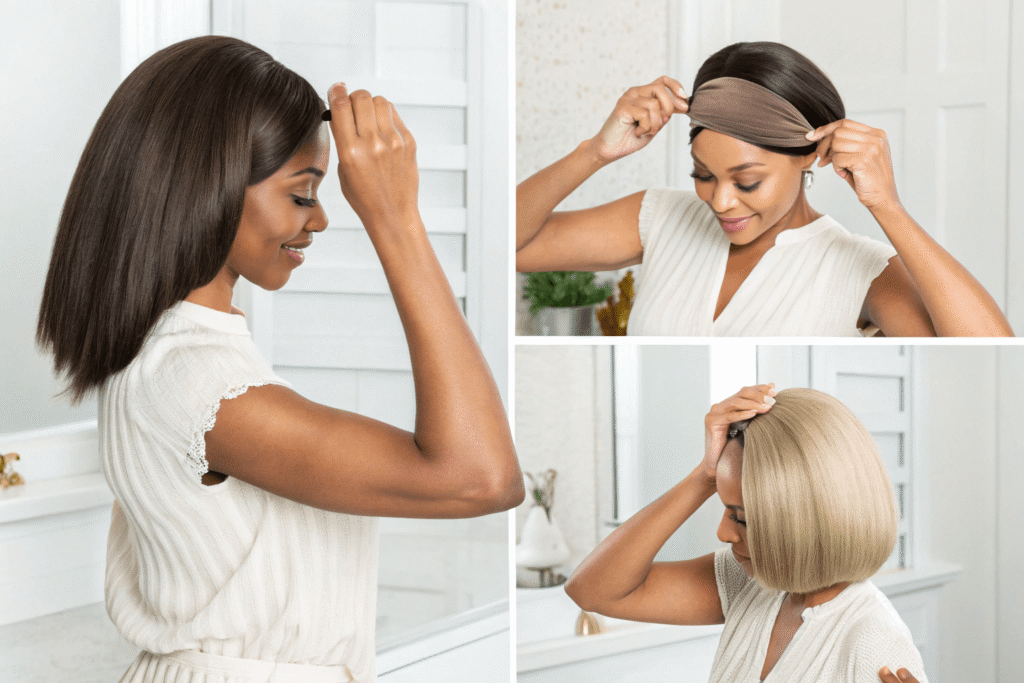
3) Will Wear-and-Go Units Reduce Salon Dependency for My Retail Buyers?
Yes—if you design and bundle them correctly. The promise of wear-and-go is convenience without compromise. When the construction is right and the instructions are crystal clear, end users can self-install and maintain with minimal pro help.
Where Retailers See the Biggest Impact
- Lower barrier to trial: First-time wig wearers are more likely to purchase a glueless, pre-cut unit.
- Fewer service tickets: Without glue, there’s no “melting” learning curve or lace-cut mishaps.
- Faster repeat sales: Customers who succeed on the first install convert to long-term buyers, especially for bob and shoulder-length SKUs.
When Salons Still Add Value
- Custom color services, balayage, highlights.
- Advanced styling for events (up-dos, precision pressing of kinky straight).
- Repairs and refresh (deep conditioning, lace replacements, re-plucking after months of wear).
Data-Driven View (From Our Retail Partners)
- First-time install success rates exceed 85–92% when:
- Pre-cut lace is uniform.
- Elastic tension is comfortable.
- Instructions include a QR video.
- Returns drop 15–30% versus traditional lace fronts that require cutting and glue.
- Average ticket increases when retailers upsell:
- Edge-control + powder combo.
- Satin storage accessories.
- Heat-protection sprays for heat-friendly synthetics or human hair.
What to Include to Maximize DIY Success
- Clear size labeling (S/M/L) and circumference chart.
- “Zero-tools” promise: Emphasize that no glue is needed; suggest optional powder.
- QR-based video tutorial tailored to the exact cap type and parting (not a generic video).
4) What Textures and Densities Make Wear-and-Go Most Beginner-Friendly?
The easier the hair behaves out of the box, the higher the satisfaction. I always advise starting assortments with manageable lengths, beginner-safe densities, and forgiving textures.
Textures That Sell—and Perform
- Yaki Straight / Light Yaki: Mimics relaxed/natural blowout; minimal tangling; easy brush-through.
- Body Wave: Soft movement; tolerates beginner-level brushing; styles without heavy product.
- Natural Wave: Air-dry friendly, looks good with minimal manipulation.
- Kinky Straight (beginner variant): Choose a finer fiber finish; requires light hot combing but gives superb volume.
For true first-timer success, avoid very long deep waves or tight curls unless you provide a detangling guide and wide-tooth comb in the box.
Density Recommendations by Length
- 10–14 inches: 130% looks full without bulk.
- 16–18 inches: 130–150% for a polished daily look.
- 20–24 inches: 150% if fiber quality is high; otherwise, 130% to reduce tangling complaints.
- Curly units: Add +10–20% nominal density to account for curl compression but keep ends light to avoid pyramid shape.
Lengths and Cuts for Maximum Ease
- Bobs (10–14 inches): Highest success rate; minimal tangling; easy travel and gym wear.
- Lob/shoulder (14–16 inches): Great middle ground for volume and manageability.
- Avoid 26+ inches for beginner collections unless it’s a premium line with 9A+ human hair or high-grade heat-friendly synthetic.
Fiber Guidance (Human Hair vs. Synthetic)
- Human hair (8A–10A+): Best realism and longevity; higher price, lower complaint rates.
- Heat-friendly synthetic: Cost-effective for large-volume retail; cap construction must manage heat; include strict heat tool guidance.
- Blends: Offer value with better sheen control than basic synthetic; ensure transparency in labeling to prevent returns.
Beginner-Friendly SKU Matrix (Suggested Core Range)
| SKU Type | Texture | Length | Density | Lace Type | Notes |
|---|---|---|---|---|---|
| Daily Bob | Light Yaki | 12–14″ | 130% | Pre-cut HD | Top seller for first-time users |
| Office-Ready | Body Wave | 16″ | 130–150% | Pre-cut HD | Versatile, low maintenance |
| Natural Everyday | Natural Wave | 14–16″ | 130% | Swiss (tinted) | Great value line |
| Volume Straight | Kinky Straight | 16–18″ | 150% | Pre-cut HD | Needs a light hot-comb pass |
| Travel-Friendly | Light Yaki | 10–12″ | 130% | Swiss | Compact, durable, gym-friendly |
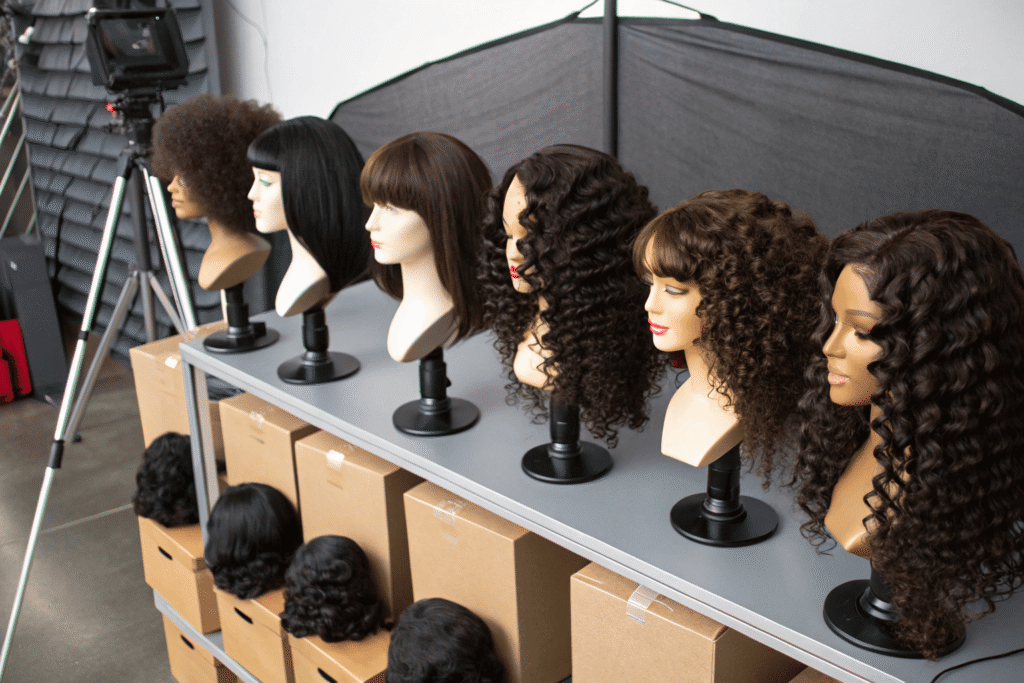
5) How Can I Package Instructions to Improve First-Time Install Success?
Instructional packaging is not an afterthought—it’s a conversion tool. The right insert can reduce returns, speed onboarding, and differentiate your brand.
The 60-Second Card (Front)
- Headline: “Wear. Adjust. Go.”
- Three pictograms:
1) Flatten and cap (optional).
2) Position and adjust band.
3) Brush and blend powder (optional). - Micro-copy: “No glue. No cutting. 3–5 minutes.”
The 3-Minute Guide (Back)
- Step 1: Prep (30 seconds)
- Tie hair, put on wig cap if desired, smooth edges with edge-control.
- Step 2: Fit (60 seconds)
- Place wig front to back, anchor elastic, adjust back straps.
- Step 3: Blend (45 seconds)
- Light powder at parting; finger-comb or brush ends.
- Step 4: Care (45 seconds)
- Detangle from ends up; store on satin bag or stand.
Add a QR code linking to:
- A 90-second install video for that exact cap model.
- A 4-minute care tutorial (detangling, washing schedule).
- A troubleshooting micro-guide (slippage fix, lace blending tips).
Multilingual and Accessibility Considerations
- Offer EN/ES/FR at minimum for North America and EU; add DE/IT as needed.
- Include clear icons and high-contrast instructions for visibility.
- Provide a short captioned video for hearing-impaired customers.
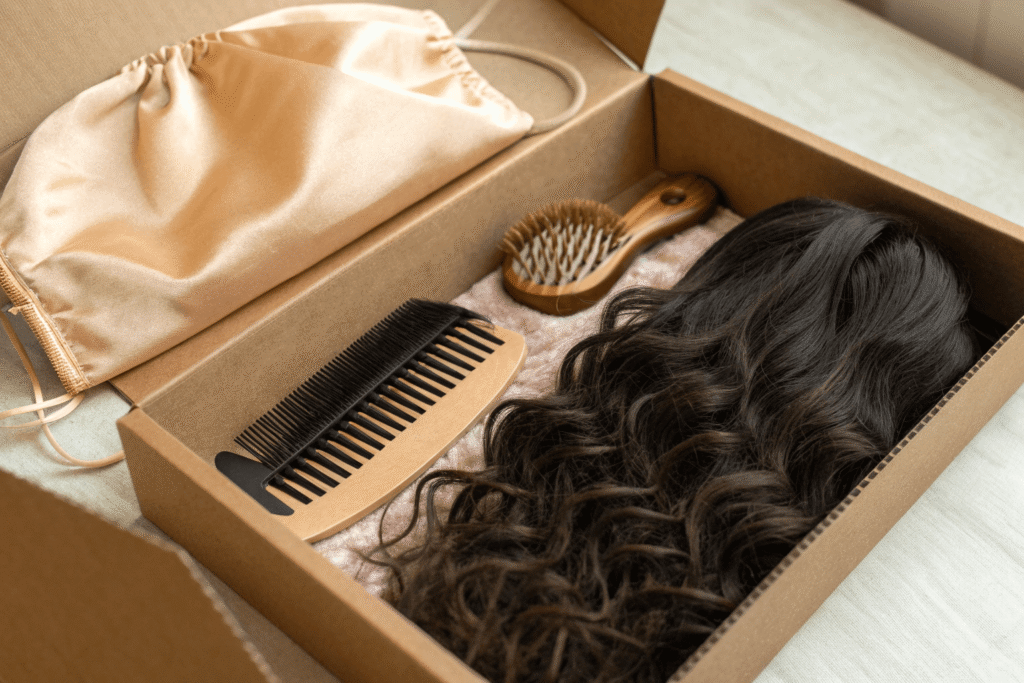
In-Box Toolkit for Tiered SKUs
- Value line: Wig + instruction card + satin bag.
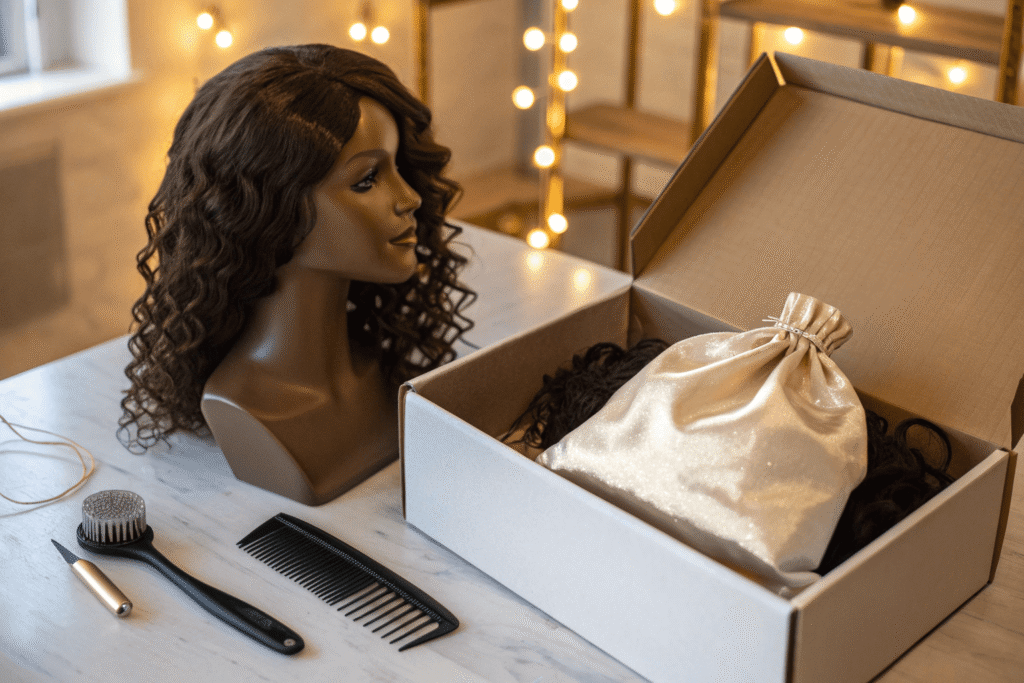
- Mid-tier: Add travel brush, edge-control mini, powder puff, and parting comb.
- Premium: Add wide-tooth comb, heat-protectant sample (for human hair or HF synthetic), and a spare elastic band.
Post-Purchase Automation for Retailers and DTC Partners
- Day 0 email/SMS: 90-second install video.
- Day 7: Care and styling guide + accessory upsell.
- Day 21: Maintenance reminder; offer discounted refresh service or conditioning kit.
Additional Sections for B2B Readers
6) Advantages and Trade-Offs for B2B Sourcing
Wear-and-go wigs can anchor your assortment, but the economics depend on construction choices and channel.
- Pros:
- Reduced training burden for store staff and salon partners.
- Lower return rates vs. DIY lace units.
- Faster merchandising rotation and seasonal drops.
- Cons:
- Higher production cost for pre-processing (plucking, bleaching, precision cutting).
- Fragility of HD lace requires careful packing and QC.
- Needs more SKUs in sizes and lace tints to cover broad demographics.
Pricing Benchmarks (Indicative, ex-factory)
| Model | Human Hair Grade | Length | Density | Ex-Factory Range (USD) |
|---|---|---|---|---|
| Pre-cut HD Bob (Light Yaki) | 9A–10A | 12–14″ | 130% | $58–$95 |
| Pre-cut HD Body Wave | 9A–10A | 16″ | 130–150% | $85–$130 |
| Swiss Lace Value (Natural Wave) | 8A–9A | 14–16″ | 130% | $48–$78 |
| Kinky Straight Premium | 9A–10A | 16–18″ | 150% | $98–$155 |
| HF Synthetic Bob (Pre-cut) | HF Synthetic | 12–14″ | N/A | $22–$38 |
Notes:
- Add $3–$6 for silicone perimeter.
- Add $2–$4 for upgraded elastic and ladder lock.
- Add $1–$2 per unit for accessories kit in mid-tier.
7) OEM, ODM, or Private Label: Sourcing Strategy
- ODM (fastest to market):
- Choose factory templates; customize lace tint, bands, and packaging.
- Lead time: 10–25 days for 200–500 units.
- OEM (fully custom):
- Provide cap templates, elastic specs, density charts, and hairline maps.
- Lead time: 25–45 days; higher MOQs but strong differentiation.
- Private Label:
- ODM base with branded boxes, inserts, and QR tutorials.
- Best balance of speed, margin, and brand equity.
Checklist I use when auditing a factory:
- Lace inventory and quality consistency across batches.
- Plucking lines standardized with jigs or trained leads.
- Elastic band procurement (supplier-grade verification).
- Bleach process SOPs with time/temp logs.
- AQL sampling plan and mannequin fit tests.
8) Quality Control Program You Can Operate at Scale
- Incoming materials: Lace roll inspection under 5x magnification; reject visible defects (snags, uneven weave).
- In-line QC: Hairline density checks on every 10th unit.
- Final QC: 100% visual of pre-cut edges; 10% random brush test; 5% try-on for fit tolerance.
- Packaging drop-test: Simulate last-mile; prevent lace deformation.
- Traceability: Lot codes on inner tags; link returns to production batch to fix root causes.
9) Inventory Planning and Merchandising
- Core assortment (60%): 12–16″ light yaki/body wave, 130–150% density, M cap.
- Growth assortment (25%): 18–20″, kinky straight, color variants (1B/2/4 + subtle balayage).
- Experimentation (15%): Seasonal textures, copper/bronde highlights, low-commitment fringe units.
Seasonality:
- Q2/Q3: Lighter densities, shorter lengths.
- Q4: Rich colors and gift-ready kits; premium packaging with satin bag and comb.
10) Compliance, Labeling, and After-Sales
- Label clearly: hair origin/type, density, cap size, lace type, heat limits (HF synthetic).
- Care guides include wash frequency: every 8–12 wears (human hair); 10–15 wears (HF synthetic) with cool water and mild, sulfate-free products.
- Warranty: 30-day fit and workmanship guarantee drives confidence.
- Spare elastic bands: Ship replacements on request to reduce returns.
FAQ: Quick Answers for Buyers and Retail Teams
- Are wear-and-go wigs truly glueless? Yes—when elastic, cap fit, and lace design are correct. Optional combs and silicone add grip.
- Do they fit all head sizes? Offer S/M/L or adjustable bands with size tolerance around 21–23 inches.
- Will they reduce salon dependency? Yes—expect fewer install appointments, but salons remain valuable for color and styling upsells.
- Which textures are best for beginners? Light yaki, body wave, and 12–16″ bobs/lobs at 130–150% density.
- What about maintenance? Detangle after wear, store in satin bag, wash gently, avoid high heat on HF synthetic.
Conclusion: Your Wear-and-Go Playbook for Higher Conversion and Lower Returns
Wear-and-go wigs win because they eliminate the hardest parts of lace-wig ownership: cutting, gluing, and perfecting the hairline. As a B2B buyer, your edge comes from getting the construction right—pre-cut HD or Swiss lace with rounded corners, a measured pre-pluck, safe knot processing, and a properly placed elastic band—then packaging it with clear, visual instructions and a QR video. Pair those specs with beginner-friendly textures and densities, and you’ll see higher first-time install success, fewer returns, and greater customer loyalty.
If you’re planning an ODM or private label launch, I can share cap templates, elastic grades, and hairline density maps that have performed best across retail, marketplace, and salon channels. Contact us to request samples, review our AQL/QC checklist, or see the full wear-and-go catalog. Let’s engineer your next bestseller.