
Synthetic wigs are a cornerstone of the modern wig market, especially for wholesalers, salon chains, beauty supply distributors, e-commerce marketplaces, and medical retailers seeking scalable product lines with reliable margins. In B2B channels, synthetic hair solutions enable fast assortment rotation, consistent styling outcomes across SKUs, and predictable replenishment cycles—all at price points that convert first-time buyers and support private-label growth. I’ve spent years helping buyers evaluate fiber types, set quality standards with OEM/ODM factories, and optimize inventory care to extend lifetime value. In this guide, I’ll unpack exactly what a synthetic wig is, how to differentiate it from human hair, what fibers matter for styling and heat resistance, typical lifespan expectations in salon and retail environments, and professional care protocols that reduce returns.
A synthetic wig is a hairpiece made from engineered fibers (commonly Kanekalon, Toyokalon, or heat-friendly synthetics). These wigs are pre-styled, retain shape after washing and in humidity, and generally cost less than human hair while requiring less daily styling. Traditional synthetics are not heat-tolerant; heat-friendly fiber blends accept limited heat within a specified temperature range. They cannot be dyed because the fibers do not absorb color, so colorways depend on factory production. With correct care—cool-water washing, fiber-safe products, air-drying on stands—and attention to friction-prone zones (nape, ends), typical daily-wear lifespan ranges from a few months to about a year, influenced by fiber grade and usage intensity.
As you weigh assortment decisions, focus on matching fiber specification to customer use-cases (medical wearers vs. fashion buyers vs. cosplay markets), establishing clear QC criteria with suppliers (shine index, fiber denier, cap construction, and heat thresholds), and training your sales and stylist teams on care protocols that prolong shelf appeal and reduce returns. Below, I’ll outline the practical frameworks we use with B2B clients—what the fibers do, how to test them, and how to set expectations for margins, longevity, and post-purchase satisfaction.
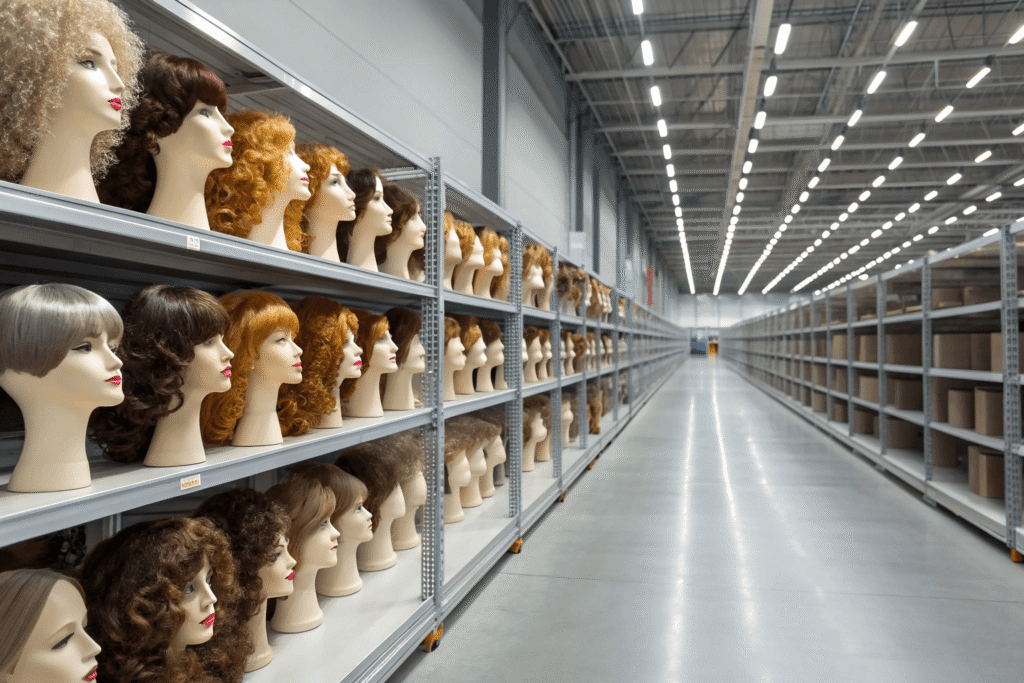
What Does “Synthetic Wig” Mean?
A synthetic wig is a hairpiece made from man-made fibers—typically petroleum-derived polymers like acrylic, nylon, or polyester—that are engineered to simulate human hair’s look, drape, and movement. In wholesale catalogs, you’ll see fiber families like Kanekalon, Toyokalon, and proprietary heat-friendly blends. These fibers are extruded into filaments, textured, tapered, and sometimes crimped to mimic cuticle behavior, then fixed into pre-set styles (straight, body wave, curl patterns) that resist humidity and reset after washing.
Key advantages for B2B buyers:
- Consistency at scale: Pre-styled SKUs maintain a uniform look from batch to batch.
- Lower unit cost: Enables competitive entry price points and bundle promotions.
- Reduced styling overhead: Faster turn on retail floors; fewer styling returns.
- Market agility: Easier color and style refreshes across seasons.
Limitations to manage:
- Heat tolerance varies: Traditional synthetics don’t accept heat; heat-friendly blends require strict max-temp control.
- No dyeing post-production: Color changes require factory-made colorways.
- Longevity: Generally shorter than human hair; inventory care impacts perceived quality.
How Do I Tell if My Wig Is Synthetic or Human Hair?
Many B2B teams need fast, reliable checks at inbound QC or store level. Here’s the method we train staff to use—non-destructive where possible—to determine fiber type and set customer expectations.
Quick Visual and Tactile Checks (Non-Destructive)
- Shine and light bounce:
- Synthetic: Has a controlled sheen; low- to mid-grade fibers can look slightly glassy under bright retail lighting. High-grade synthetics reduce unnatural gloss with matte texturizing.
- Human hair: More diffused, organic luster; looks different in daylight vs. LED store light.
- Fiber uniformity:
- Synthetic: Highly uniform diameter and color; ends often laser-cut smooth.
- Human hair: Natural variance in strand thickness and cuticle direction (if Remy).
- Style memory:
- Synthetic: Returns to the preset style after washing and air drying.
- Human hair: Loses styling with washing; needs heat restyling.
Water and Friction Tests (Low Risk)
- Cool water drape test:
- Synthetic: Retains shape; curls snap back after drying.
- Human hair: Becomes limp when wet; restyling required afterward.
- Friction at nape:
- Synthetic: More prone to static and frizzing at contact points with collars/scarves.
- Human hair: Less static; tangling relates more to cuticle alignment and care.
Heat Strand Test (Only on loose fibers, not on finished retail stock)
- For suppliers or inbound QC labs, pull one shed fiber from a comb-out:
- Traditional synthetic: Will soften/melt at lower temps; may ball up.
- Heat-friendly synthetics: Tolerate controlled heat up to labeled max (commonly 275–325°F / 135–165°C), but will still deform above threshold.
- Human hair: Tolerates higher heat; smells like burning hair when singed, not melting plastic.
Note: Do not perform high-heat tests on retail-ready units; rely on documentation plus non-destructive checks.
Documentation and Labeling
- Check swing tags, inner labels, and spec sheets. Legitimate manufacturers state fiber family, heat tolerance, and care instructions. For private label, ensure your OEM includes this on pack-outs and line sheets to reduce customer-service friction.
What Fiber Types Are Used in Synthetic Wigs, and How Do They Affect Look and Heat Resistance?
The fiber blend determines appearance, heat behavior, longevity, and price point. Below is the framework I use when helping retailers build a balanced assortment.
Core Fiber Families
- Kanekalon:
- Look/feel: Soft hand, natural movement, reduced artificial shine when high grade.
- Heat: Traditional Kanekalon is not heat-safe; some sub-lines offer limited tolerance.
- Use-cases: Everyday fashion, medical wearers, conservative markets needing realism.
- Toyokalon:
- Look/feel: Silky, slightly bouncier curl definition; can appear glossier.
- Heat: Usually non-heat; confirm factory spec for any “heat set” claims.
- Use-cases: Curly and wavy preset styles, glam looks, theatrical retail.
- Heat-Friendly Synthetics (HFS) / Heat-Resistant:
- Look/feel: Blends engineered to accept low-to-moderate heat; good style flexibility.
- Heat: Typical max 275–325°F (135–165°C). Some premium blends claim up to 350°F (177°C), but I advise staying at or below 300°F (150°C) in salon settings to preserve fiber integrity.
- Use-cases: Salon-driven retail where stylists customize face-framing or bang trims and do light heat touch-ups.
- Proprietary matte fibers / low-luster blends:
- Look/feel: Reduced shine for photo-realism under bright retail or studio lighting.
- Heat: Varies; often non-heat.
- Use-cases: E-commerce photography, influencer partnerships, medical clients seeking discretion.
Fiber Attributes That Matter to B2B
- Denier and tapering: Thinner denier with feathered tapering looks more realistic but can be more delicate at ends.
- Crimping/texture memory: Impacts how curls rebound after washing and how humidity affects flyaways.
- Static management: Some fibers receive anti-static or silicone micro-coatings; balance slip with longevity (too much coating can wash off and alter texture).
- Color technology: Pre-blended highlights, rooted effects, balayage prints. Remember: synthetics cannot be dyed post-purchase—color depth must be right out of the box.
Practical Heat Guidance for Merchandisers and Stylists
- Publish a one-page heat policy per line:
- Example: “HF Collection: Max 300°F/150°C, pass once, slow pace, use heat protectant designed for synthetics.”
- Train staff to test heat at the nape’s innermost wefts first.
- Avoid blow dryers and steamers on non-heat fibers; even warm air can distort curl memory.
Comparative Overview of Common Fibers
| Fiber Type | Typical Heat Tolerance | Visual Shine | Style Memory After Wash | Typical Use Cases |
|---|---|---|---|---|
| Kanekalon (standard) | Not heat-safe | Low to moderate | Excellent | Medical wearers, daily fashion |
| Toyokalon | Not heat-safe | Moderate to higher | Excellent (especially curls) | Glam curls, theatrical, cosplay |
| Heat-Friendly Synthetic | 275–325°F (135–165°C)* | Low to moderate | Good, but heat may be needed to refresh | Salon-customized retail |
| Proprietary Low-Luster | Varies (often non-heat) | Low | Excellent | E-comm photography, natural look lines |
*Always follow the manufacturer’s specified maximum.
How Long Can a Synthetic Wig Last With Typical Salon or Retail Use?
Longevity is a function of fiber grade, wear frequency, style, environmental friction, and care compliance. In B2B contracts, I encourage setting customer-facing expectations conservatively and training staff to coach care behaviors that prevent premature frizzing.
Typical Lifespan Ranges
- Daily wear (8–10 hours per day):
- Entry to mid-grade synthetics: 2–4 months before significant frizzing at nape/ends.
- Premium synthetics / HFS: 4–8 months with diligent care.
- Intermittent wear (2–3 times per week):
- Entry to mid-grade: 4–6 months.
- Premium synthetics / HFS: 6–12 months.
- Light use or rotation collections (occasional wear):
- Many units retain presentability for 12+ months.
These windows assume proper washing (cool water), detangling, and low-friction clothing. The “first to fail” zone is nearly always the nape, where fibers rub against collars and seat belts.
Factors That Shorten Lifespan
- Heat misuse: Exceeding recommended temperatures or frequent passes on HFS strands.
- Rough brushing: Using metal bristles or pulling from roots instead of working from ends up.
- Environmental stress: High static environments, coarse scarves/collars, frequent car commutes.
- Product overload: Oils, human-hair serums, and alcohol-heavy sprays can gum fibers or cause clumping.
Extension Strategies for Retailers and Salons
- Offer a care bundle: Fiber-safe shampoo, spray conditioner, wide-tooth comb, detangler, and a satin-lined storage bag. Bundle margin is often >30%.
- Nape triage service: Quick in-salon refresh with steam-only methods for HFS or warm-water reset for non-heat fibers (no direct heat). Light trim of frizzed ends extends visual life.
- Rotation education: Encourage customers to rotate two units; this doubles perceived longevity and spreads wear.
Lifecycle Planning for Buyers
- Forecast reorder points based on average daily-wear lifespan; build coverage for peaks (holiday, prom, cosplay seasons).
- For private-label lines, align warranty/return windows with realistic lifespan claims to reduce disputes.
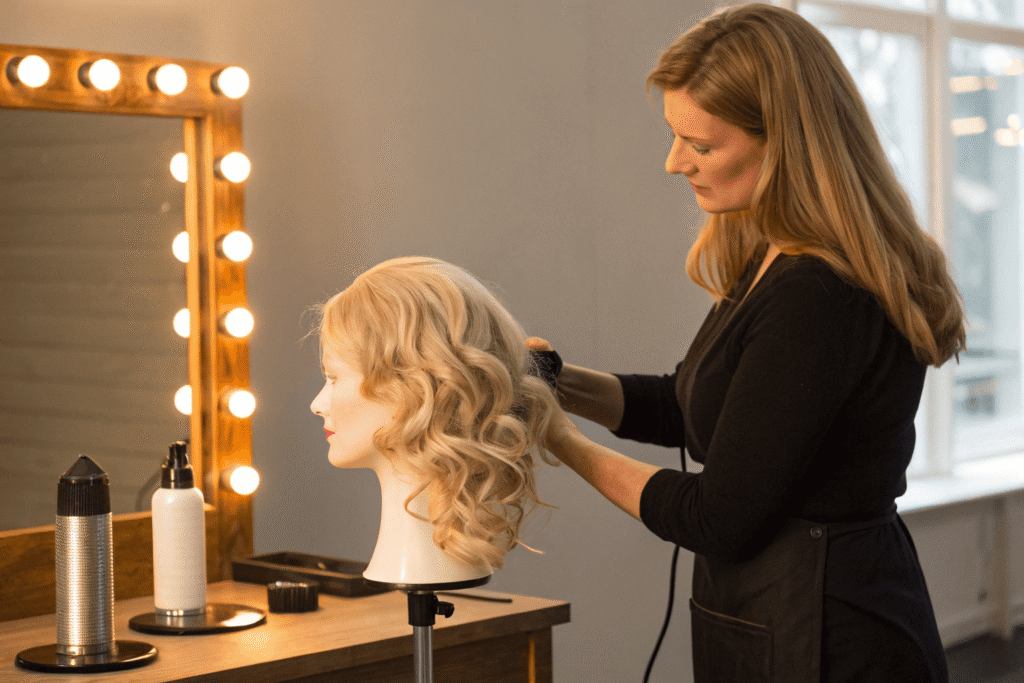
How Should I Wash and Store a Synthetic Wig to Keep Its Style and Shine?
Care protocols are the easiest lever for reducing returns. When we onboard retailers, we standardize one-page care cards to place in every box.
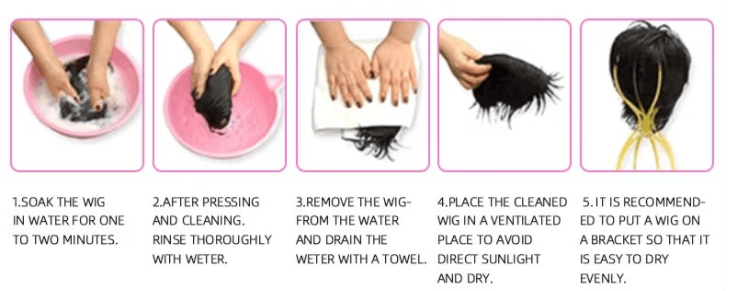
Washing Protocol (Non-Heat Synthetic)
Detangle dry:
- Place on a wig stand or hold at the cap; use a wide-tooth comb.
- Start from ends, work upward. Avoid yanking at knots.
Prepare bath:
- Cool water in a basin. Mix fiber-safe shampoo (no sulfates, no heavy oils).
Cleanse:
- Submerge and gently swirl 2–3 minutes. Do not rub or twist.
- Spot-clean cap interior with fingers if needed.
Rinse:
- Cool water until clear. Support fibers to avoid stretching.
Condition:
- Apply fiber-safe conditioner or detangling spray. Avoid rooting the cap to prevent loosening knots on hand-tied sections.
- Rinse lightly or leave-in per product instructions.
Dry:
- Blot with microfiber towel—never wring.
- Air-dry on a ventilated wig stand, away from heat and sunlight.
- Do not brush while wet; once dry, shake gently to revive style.
Washing Protocol (Heat-Friendly Synthetic)
- Same as above, but:
- After full dry, use minimal heat only if needed to refresh ends or bangs.
- Do not exceed manufacturer’s max temperature; use a heat guard spray designed for synthetic fibers.
Storage Protocol
- Use a ventilated wig stand for short-term parking.
- For longer-term or inventory:
- Place hairnet over the style to preserve curl pattern.
- Bag in breathable packaging or satin-lined pouch.
- Store away from direct sunlight, heaters, or radiators.
- Retail tip: Satin-backed display heads reduce friction and preserve finish for floor samples.
Friction Management in Daily Use
- Recommend satin collars or scarf liners for heavy nape friction wearers.
- Encourage shoulder-length styles for customers who drive often; longer lengths see more nape distress.
- Provide a small detangling spray for on-the-go touch-ups.
Types of Synthetic Wigs for Bulk Orders
Selecting the right mix of constructions and lengths will determine sell-through velocity and return rates across your channels. Below, I map common constructions to use-cases and margin opportunities.
Cap Constructions
- Basic Wefted Cap (Machine-Made)
- Pros: Best unit cost, good ventilation, strong SKU breadth.
- Considerations: Less natural hairline; rely on bangs or face-framing to conceal.
- Ideal for: Value lines, promotional bundles, costume/cosplay, high-turnover outlets.
- Lace Front
- Pros: Natural hairline, better camera/retail mirror appeal.
- Considerations: Slightly higher cost; requires customer education on trimming and adhesive/tape (if used).
- Ideal for: Fashion-forward retail, e-commerce photo/video content.
- Full Lace / 360 Lace (Synthetic variants)
- Pros: Styling versatility (limited compared to human hair but improved realism).
- Considerations: Highest cost in synthetic category; ensure fiber density matches cap to avoid bulkiness.
- Ideal for: Premium synthetic lines, influencer collaborations, editorial looks.
- Monofilament / Hand-Tied Top
- Pros: Realistic parting, comfort for sensitive scalps (medical market).
- Considerations: Higher labor cost; protect knots during washing.
- Ideal for: Medical boutiques, long-wear customers, conservative markets.
Length and Density Strategy
- Short to Mid-Length (8–14″):
- Lower friction, longest lifespan, top satisfaction scores.
- Mid to Long (16–24″):
- Higher fashion appeal; plan for slightly higher customer support load due to tangling/frizz at ends.
- Density:
- 120–130% for realism in professional markets.
- 150%+ for glam markets and cosplay; train staff on detangling protocols.
Curl Patterns
- Straight and Body Wave: Broad appeal, easy care.
- Deep Wave and Curly: Strong visual impact; recommend specialized detanglers and net storage.
- Pre-permed synthetic curls: Maintain pattern after wash; avoid brushing—use fingers or wide-tooth comb.
Advantages and Disadvantages for B2B Sourcing
Advantages
- Cost Efficiency:
- Lower cost of goods vs. human hair; expands accessible price tiers.
- Style Consistency:
- Pre-styled memory reduces salon time and improves customer success.
- Inventory Flexibility:
- Wide color range and seasonal refreshes available from factories.
- Faster Time-to-Market:
- Shorter production cycles than human hair lines, especially for ODM/private label.
Disadvantages and Mitigations
- Heat Limitations:
- Mitigate with a heat-friendly sub-collection and clear max-temp labeling.
- Color Customization:
- Since fibers cannot be dyed, build color ladders thoughtfully (roots, lowlights, mixed tones) at factory level.
- Longevity vs. Human Hair:
- Set expectations; train on care and introduce rotation discounts or subscription replenishment for repeat buyers.
How to Choose the Right Supplier or Product Line
Selecting the right manufacturing partner is as important as choosing the fiber. I’ve seen margin vanish due to inconsistent shine or mislabeled heat tolerance. Here’s the due diligence playbook.
Supplier Vetting Checklist
- Fiber Transparency:
- Ask for detailed specs: fiber family, denier, heat tolerance, coatings, color method.
- Batch Consistency:
- Require golden samples and retain them for future batch comparisons.
- Cap Construction Quality:
- Inspect weft spacing, knotting density on mono/hand-tied areas, lace quality and softness.
- Shine Index:
- Under standardized LED lighting, compare natural luster. Avoid high-gloss unless targeting cosplay.
- Heat Tolerance Verification:
- For HFS, request lab test reports and conduct in-house strand testing at conservative temps.
OEM, ODM, and Private Label Strategies
- OEM (Your Specs, Their Production):
- Best for established retailers who understand their customer profiles and want granular control: density, color codes, lace tint, and packaging.
- ODM (Their Designs, Your Brand):
- Faster launch; negotiate minor customizations. Good for testing new segments.
- Private Label:
- End-to-end branding. Ensure templates for care cards, QR codes linking to video tutorials, and consistent SKU naming conventions.
Contract and QC Terms
- AQL (Acceptable Quality Level):
- Define defect categories: shine variance, tangle threshold, lace defects, incorrect color codes.
- Incoming Inspection:
- Randomized sample checks per shipment; document with photos.
- Labeling:
- Heat max, care icons, fiber type, and wash instructions must be clear. This reduces chargebacks and CS tickets.
Packaging Considerations
- Retail-Ready Boxes:
- Windowed boxes can introduce light exposure; add UV disclaimers or choose opaque packs with inside photography.
- Sustainability:
- Recyclable inserts and eco-inks appeal to modern consumers; verify factory’s compliance.
Caring and Storage Tips for Large Inventories
Inventory care directly affects sell-through—not just end-user care. Synthetic fibers react to store conditions and handling.
Warehouse Environment
- Climate:
- 18–24°C (64–75°F), 45–55% humidity recommended. Avoid heat sources and direct sunlight.
- Storage:
- Keep units boxed with hairnets. If displayed, rotate mannequins weekly to reduce dust and friction wear.
- Handling:
- Train staff to use wide-tooth combs and to avoid excessive try-ons without hairnets.
Floor Sample Maintenance
- Weekly Reset:
- Light detangle, cool-water mist (not soak), and air-dry to refresh fiber memory.
- Nape Care:
- Trim flyaways on samples to maintain visual appeal; samples sell the story.
Bulk Packing and Transit
- Use anti-static bags or inserts for long-distance shipping.
- Prevent compression on long curls by coiling ends in hairnets.
Price Positioning and Margin Planning
Use fiber and cap construction to tier your assortment with predictable margins.
| Tier | Fiber/Construction | Typical MSRP Range (USD) | Ideal Channel | Notes |
|---|---|---|---|---|
| Value | Wefted cap, standard Kanekalon | $29–$69 | Discount retail, online promotions | High turnover, limited heat features |
| Mid | Lace front, Kanekalon or Toyokalon | $69–$129 | Beauty supply, salon retail | Strong visual realism, low returns |
| Premium | Lace front/mono top, HFS blends | $129–$229 | E-comm, medical boutiques, salons | Educate on heat limits |
Adjust by region and branding. Always maintain accessory attachment rate (care kit + mannequin stand) to lift profitability.
Merchandising Playbook for B2B Buyers
- Build Color Ladders:
- Natural blacks/browns, mixed brunettes, dimensional blondes, fashion accents. Because synthetics can’t be dyed, your matrix must be right at launch.
- Size and Fit Diversity:
- Average caps dominate, but include petite and large options for medical retailers and improved conversion online.
- Education Assets:
- QR codes linking to 60–90 second care videos; printable one-page guides included in each box.
- Seasonal Drops:
- Shorter bobs and low-friction textures for summer; long waves for fall fashion; costume/cosplay spikes for Halloween.
Troubleshooting and After-Sales Support
Reducing returns is all about fast, clear solutions.
- Complaint: “Ends are frizzy after 3 weeks.”
- Response Kit: Teach detangling + end trim; supply a complimentary travel detangler on first incident; review clothing friction.
- Complaint: “Curl fell after washing.”
- Response Kit: Confirm cool-water wash and air-dry; for HFS, suggest a low-heat refresh under max temp.
- Complaint: “Color is too shiny under lights.”
- Response Kit: Recommend anti-shine powder at part line; suggest matte fiber collections for next purchase.
Compliance and Labeling Essentials
- Care Labels:
- Icons for cool wash, no heat (or heat max), no dye, air-dry only.
- Materials Disclosure:
- Fiber type listed (e.g., Kanekalon, heat-friendly synthetic).
- Country of Origin:
- Comply with local customs and retail regulations.
- Safety:
- Ensure glues/adhesives (if included) meet cosmetic safety standards; MSDS on file.
Training Your Salon and Retail Teams
- 30-Minute Micro-Modules:
- Identifying fiber types; safe detangling; setting heat tools for HFS; storage best practices.
- Tools Checklist:
- Wide-tooth combs, fiber-safe products, microfiber towels, satin-lined caps for try-ons.
- KPI Tracking:
- Return rate by style; CS tickets by issue type; accessory attach rate; average lifespan reported by customers.
Frequently Asked B2B Questions (Concise)
- Can synthetic wigs be dyed?
- No. Fibers don’t absorb color. All colorways must be factory-produced.
- Are heat-friendly synthetics as versatile as human hair?
- No. They accept limited, controlled heat only; overuse reduces lifespan.
- How often should customers wash a synthetic wig?
- Every 6–10 wears, or sooner if product build-up occurs; always cool water and fiber-safe products.
- What’s the most common failure point?
- Nape frizz due to friction; manage with detanglers, satin fabrics, and periodic trims.
Sample Care Card Template (For Your Boxes)
- Wash: Cool water + fiber-safe shampoo. Swirl gently, no rubbing.
- Condition: Fiber-safe conditioner; rinse lightly or leave-in per instructions.
- Dry: Blot; air-dry on stand. Do not brush wet.
- Style: Non-heat synthetics—no heat. Heat-friendly—max 300°F/150°C, minimal passes.
- Store: Hairnet + stand or satin pouch; avoid heat/sunlight.
- Tip: Reduce nape friction with satin collars and gentle detangling.
Conclusion
Synthetic wigs deliver scalable value for B2B buyers by combining consistent style memory, competitive pricing, and fast product refresh cycles. Understand your market’s fiber needs—Kanekalon for realistic daily wear, Toyokalon for expressive curls, and heat-friendly blends for limited customization—and set clear heat and care expectations to maximize customer satisfaction. Longevity typically ranges from a few months to about a year depending on wear intensity and care; protect margins with strong QC, accurate labeling, and customer education.
If you’re building or refreshing your synthetic portfolio, I’m happy to:
- Share golden samples across fiber types and cap constructions.
- Provide OEM/ODM roadmaps, including color ladders and packaging templates.
- Prepare store-team training kits and care card designs to cut returns.
Contact us to request samples, review our private-label catalog, or schedule a sourcing call. The right fiber, construction, and care program will turn your synthetic assortment into a high-turn, low-return profit center.