
Many stylists and buyers ask why some synthetic wigs take a curling iron while others turn gummy at the slightest heat. If you manage inventory or educate clients, the difference between “heat-friendly” and regular synthetic can make or break product performance, returns, and brand trust.
Heat‑friendly synthetic wigs use specially engineered thermoplastic fibers designed to tolerate controlled heat—typically in the 250–350°F (120–175°C) range—so you can curl or smooth them with digital-temperature tools. You’ll find terms like “heat resistant,” “HD,” “thermo‑fiber,” or a stated max temp on tags and product pages. They’re more style-flexible than standard synthetics but still vulnerable to overheating, prolonged contact, or non‑precision heat sources.
Understanding the safe heat window, tool selection, and fiber care helps salons reduce service risks and helps B2B buyers source with confidence. From a manufacturer’s standpoint, we specify fiber families, test for deformation and gloss change, and train partners on practical styling and maintenance so the end user gets consistent results.
How do I confirm the safe heat range (°C/°F) on product specs and labels?
As a wig manufacturer, here’s how we document and how you should verify:
Where to look
- Hang tag or box: Phrases like “Heat Friendly,” “Heat Resistant,” “HD Fiber,” “Thermo‑fiber,” plus a maximum temperature (e.g., “Max 300°F/150°C”).
- Inner cap label or product page: Fiber content and heat statement. Look for “modified acrylic/modacrylic heat‑friendly,” “polyester thermofiber,” or specific trade names.
- Care insert/QR: Styling guidance, approved temperature window, tool recommendations, and warnings (“no steam,” “avoid hot water”).
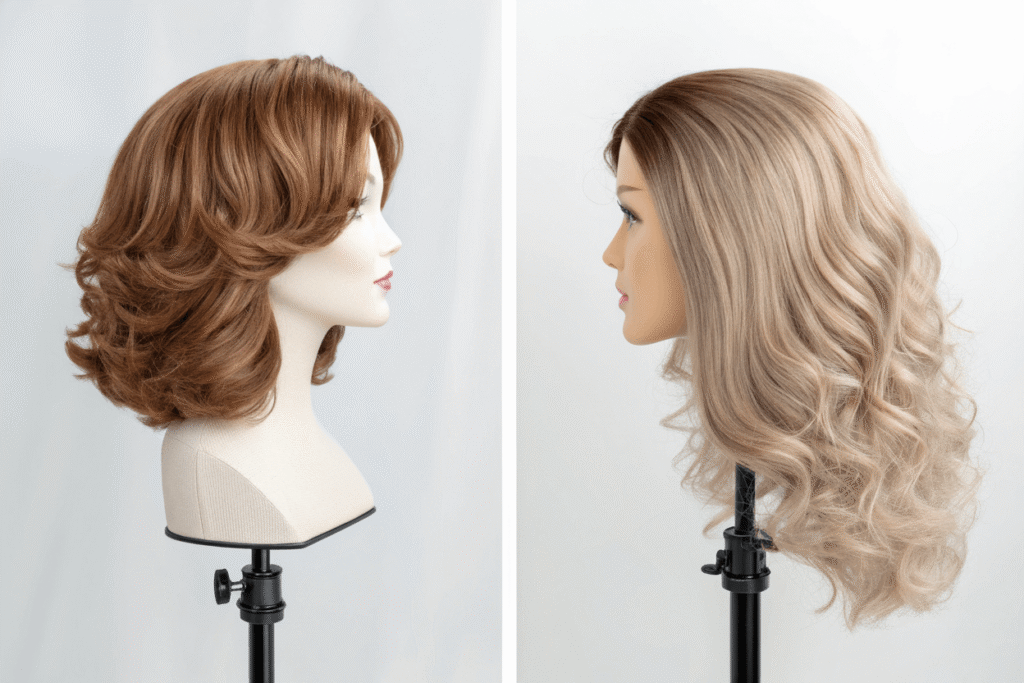
The practical confirmation workflow
- Record the stated max temp in both °F and °C.
- If specs lack a number, request a technical datasheet or supplier declaration with a validated range (common: 250–350°F / 120–175°C; many brands cap at 300°F / 150°C).
- Perform a controlled strand test:
- Use a digital iron set at the lowest recommended temp.
- Test an inconspicuous underside strand for 2–3 seconds.
- Check for softening without gloss loss, kinking, or stickiness. If deformation appears, lower heat or treat as non‑heat‑friendly.
Red flags
- Vague claims like “styleable” without a temperature.
- Care instructions that say “no heat,” “cold set,” or “roller‑only”—that indicates standard synthetic.
- “Burn tests” are unsafe and unnecessary; rely on labeling and controlled strand tests at low heat.
Typical manufacturer guidance (for quick reference)
- Safe styling window: 250–350°F (120–175°C)
- Common cap: 300°F (150°C)
- Always cool to set style and use synthetic‑safe heat protectant
What styling tools and temperatures should I use to avoid fiber damage?
Heat‑friendly does not mean heat‑proof. Fiber is a thermoplastic: it softens, shapes, and then sets on cooling. Precision and timing matter.
Recommended tools
- Digital flat iron or curling iron with 5–10°F increment control
- Blow dryer with concentrator nozzle and a cool shot button
- Thermometer strip or infrared gun for verification (salon backbar)
- Sectioning clips, 1-inch sections, and a wide‑tooth comb
- Synthetic‑safe heat protectant spray; low‑sulfate wig care products
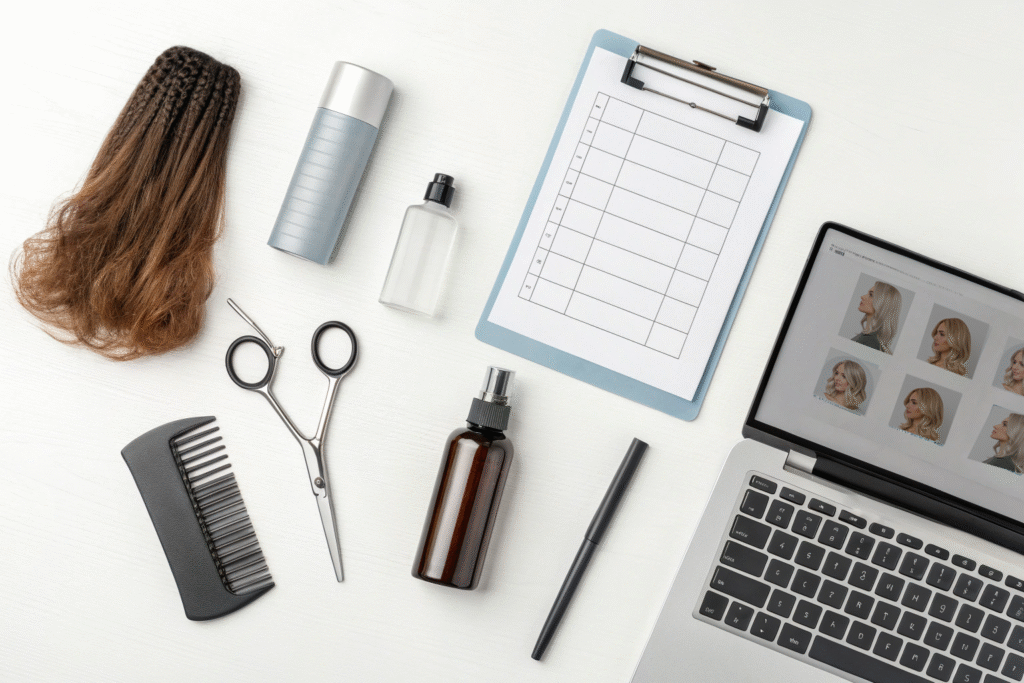
Temperature and technique
- Start low: 250–270°F (120–132°C). Increase only if the fiber is not responding.
- Cap the temp: Do not exceed the brand’s max—often 300°F (150°C).
- Contact time: 2–5 seconds per section; do not clamp and hold in one spot.
- Set the curl: Pin or hold on the tool until fully cool to lock shape (style memory relies on cooling, not heat duration).
- Blow‑drying: Use medium heat with constant motion; finish with cool shot.
- Avoid: Steam, hot water, ovens, car interiors on summer days, radiators, or non‑regulated tools.
Common mistakes and professional fixes
- Mistake: Holding the iron too long to “force” a curl.
- Fix: Increase temperature by 10–15°F within the safe window and reduce contact time; always cool to set.
- Mistake: Using human‑hair serums or heavy silicones.
- Fix: Switch to synthetic‑specific protectants to prevent buildup and dust attraction.
- Mistake: Skipping cooling.
- Fix: Clip curls until fully cool; this is critical for heat‑friendly fibers.
- Mistake: Brushing while warm.
- Fix: Wait until fiber is cool; brushing warm sections can cause drag and distortion.
How do heat‑friendly fibers compare to regular synthetics in longevity and maintenance?
From years of supporting salons and wholesalers, the trade‑off is clear: heat‑friendly offers styling versatility but requires more upkeep and may have a shorter service life.
Fiber behavior and feel
- Heat‑friendly: Finer denier, smoother hand, more natural drape; may tangle more due to softness and friction.
- Regular synthetic: Higher style memory out of the box; more set‑and‑forget, less prone to friction frizz at the same rate.
Longevity expectations
- Heat‑friendly synthetic: Often 2–4 months of frequent wear with routine smoothing and careful heat. Heavy heat use shortens life.
- Regular synthetic: 4–6+ months if treated gently; limited restyling but better shape retention.
Maintenance differences
| Attribute | Heat‑Friendly Synthetic | Regular Synthetic |
|---|---|---|
| Styling heat | Yes, 250–350°F (120–175°C), often capped at 300°F (150°C) | No heat; cold‑set rollers only |
| Style memory | Requires cooling to set; shorter than human hair | Strong factory set; limited restyle |
| Tangle/frizz | Higher at friction points; periodic heat‑smoothing needed | Lower; responds to steam-free detangling |
| Care products | Synthetic‑safe heat protectant; low‑sulfate cleansers | Standard synthetic cleansers; avoid heat |
| Lifespan (typical) | 2–4 months with regular wear | 4–6+ months with regular wear |
| Risk factors | Overheating, prolonged contact, steam exposure | Accidental heat exposure (stoves, dryers) |
Pro tips to extend life
- Smoothing pass: After 3–5 wears, do a quick 260–280°F glide at ends.
- Wash cadence: Every 6–8 wears with wig‑safe shampoo; detangle before washing.
- Storage: On a stand, away from sunlight and heat sources.
- Friction control: If the style is shoulder‑length, consider a silk scarf or fabric softener sheet lightly on collars to reduce snags.
What certifications or test reports should I request from my supplier?
If you’re buying for a brand, retailer, or OEM program, ask for documentation that proves the fiber can tolerate stated heat and is safe for consumers.
Supplier documentation checklist
- Fiber specification sheet: Polymer family (e.g., modified acrylic/modacrylic, polyester thermofiber), denier range, Tg/softening behavior.
- Heat tolerance report: Lab test showing deformation threshold and recommended styling window (e.g., 120–175°C), method used (hot plate/iron dwell time).
- Care and safety instructions: Max temperature, tool guidance, “no steam/boiling water” warnings, cooling requirements.
- Colorfastness and gloss stability: Ensures heat does not cause visible tone shift or unnatural shine.
- Flammability compliance: Relevant textile standards (e.g., 16 CFR Part 1610 for apparel textiles—many brands cite this for consumer safety; confirm applicability for wig fibers).
- Chemical safety declarations: REACH compliance (EU), Prop 65 (California) disclosure if applicable for accessories and adhesives.
- Quality consistency: Batch/lot control statement, tolerance on denier and curl set.
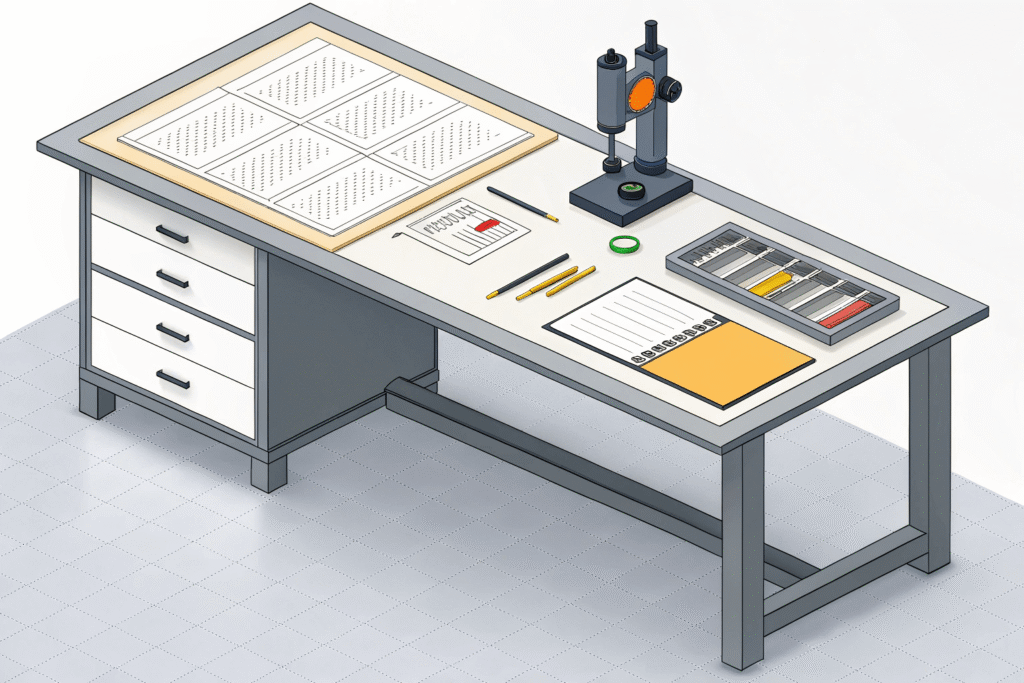
How we test in manufacturing
- Step 1: Incremental temperature ramp (110–180°C) with 2–5 second dwell, checking for softening, sticking, and surface gloss change.
- Step 2: Curl set and cool test—measure angle retention after 24 hours.
- Step 3: Repeated heat cycles—simulate consumer use to assess cumulative degradation.
- Step 4: Friction/tangle simulation—evaluate end frizz and recovery with a smoothing pass.
Purchasing signals for B2B buyers
- Clear max temp stated in both °C and °F.
- Consistent fiber naming across hang tag, spec sheet, and web PDP.
- Availability of MSDS or safety info for care products bundled with the wig.
- Willingness to share third‑party lab results on heat tolerance and flammability.
Quick identification guide: heat‑friendly vs non‑heat‑friendly
| Indicator | Heat‑Friendly | Non‑Heat‑Friendly |
|---|---|---|
| Tag/label wording | “Heat Friendly,” “Heat Resistant,” “HD,” “Thermo‑fiber,” max temp listed | “No Heat,” “Cold Set,” “Rollers Only,” no max temp |
| Fiber hand | Smoother, finer; lower gloss | Often higher gloss; firmer strand |
| Styling result | Responds at 250–300°F; sets on cooling | Melts, kinks, or fuses under heat |
| Care sheet | Includes heat protectant and cooling steps | Advises against any heat tools |
Step‑by‑step: safe first styling on a new heat‑friendly wig
- Detangle gently with a wide‑tooth comb.
- Light mist of synthetic heat protectant; let dry 1–2 minutes.
- Set iron at 260–270°F (127–132°C).
- Work in 1-inch sections; glide for 2–3 seconds.
- Form curl or smooth, then clip until fully cool.
- Release, comb lightly, and reassess. If needed, increase by 10–15°F—never exceed the stated max.
- Finish with a cool shot and minimal fiber‑safe spray for hold.
Conclusion
Heat‑friendly synthetic wigs provide real styling flexibility when handled within a controlled temperature window and cooled to set. For salons and consumers, the payoff is customizable looks; for B2B buyers, it’s a clear value proposition if you insist on proper labeling, verified heat ranges, and realistic lifespan guidance. If you’re a salon or distributor, bake these standards into your product training and vendor contracts—your clients will notice the difference, and your returns will drop.