
I’ve spent years auditing wig factories and hair suppliers across China, India, Southeast Asia, and Eastern Europe, and I know the anxiety buyers feel when shopping online: you’re betting on hair quality you can’t touch, cap specs you can’t try on, and photos that may be styled or filtered beyond recognition. In my experience, the gap between listing and reality usually comes down to vague specs, inconsistent density, and lace that doesn’t blend under normal lighting. Procurement teams and brand owners need a way to decode listings quickly, verify fiber authenticity, and reduce the risk of blended or processed hair that won’t hold up in the market.
The fastest way to buy confidently is to validate the fiber type (100% human, Remy/Virgin with cuticles aligned), match cap construction and lace quality to your end-customer use case, and demand proof: unedited machine tests, indoor/outdoor videos, and clear return guarantees. Sellers who publish density, cap type, lace grade, knotting details, and origin—backed by samples and lab options—consistently deliver predictable results. Before bulk orders, I always request 1–2 pre-production units or sample bundles, review density against hairline realism, and run basic water/comb-through tests to catch synthetic blends or acid-processed hair.
Below, I break down how to read product specs for cap type, density, and lace quality; which seller guarantees actually lower blend risk; what photo/video assets matter for realism; and when sample units are non-negotiable. I’ll also share specific checkpoints I use in factory visits and remote QA, tailored for B2B buyers.
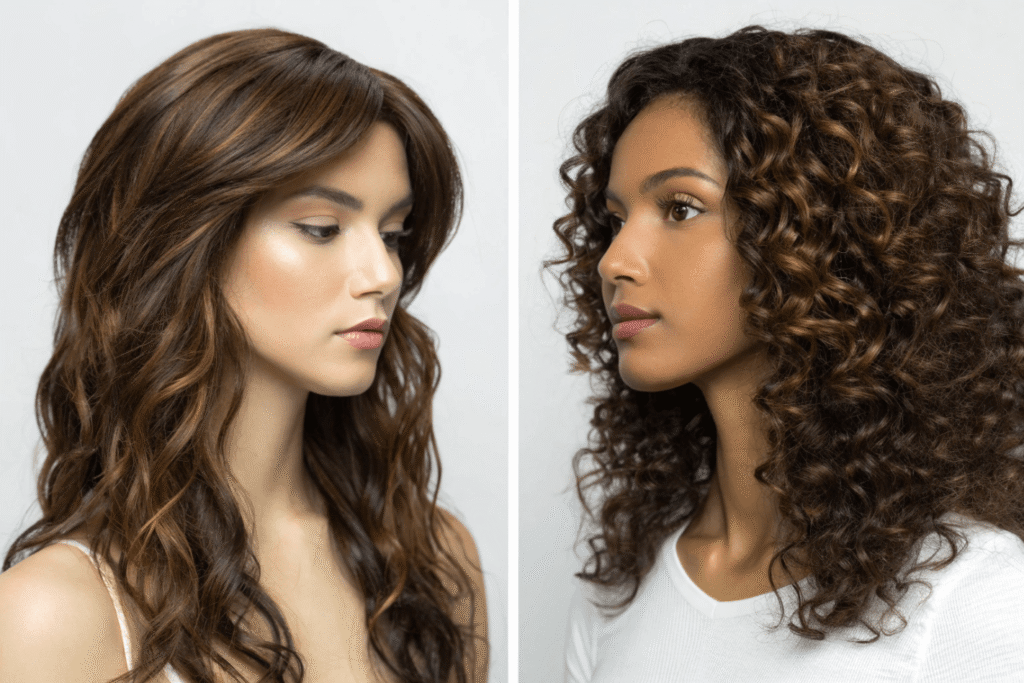
How do I read product specs for cap type, density, and lace quality?
When I audit a listing, I treat the specs like a technical data sheet. Anything vague gets flagged.
Cap construction: realism, ventilation, and parting
- Lace front: Natural frontal hairline with machine wefts at the back; good value and daily wear-friendly.
- Full lace: Hand-tied across the entire cap; best for multi-directional parting and styling but higher cost and maintenance.
- 360 lace: Lace around the perimeter with wefts in the center; enables ponytails/updos with cost savings versus full lace.
- Monofilament top: Individual knotting at the crown for realistic scalp appearance and flexible parting; often paired with lace fronts.
- Adjustable features: Small/Medium/Large cap sizes, elastic bands, combs/clips; these affect comfort, security, and returns.
Tip: If the listing only says “lace wig,” ask for the cap map (top view diagram) and construction breakdown. Breathability matters for daily wear; monofilament tops plus lace fronts strike a strong balance for retailers.
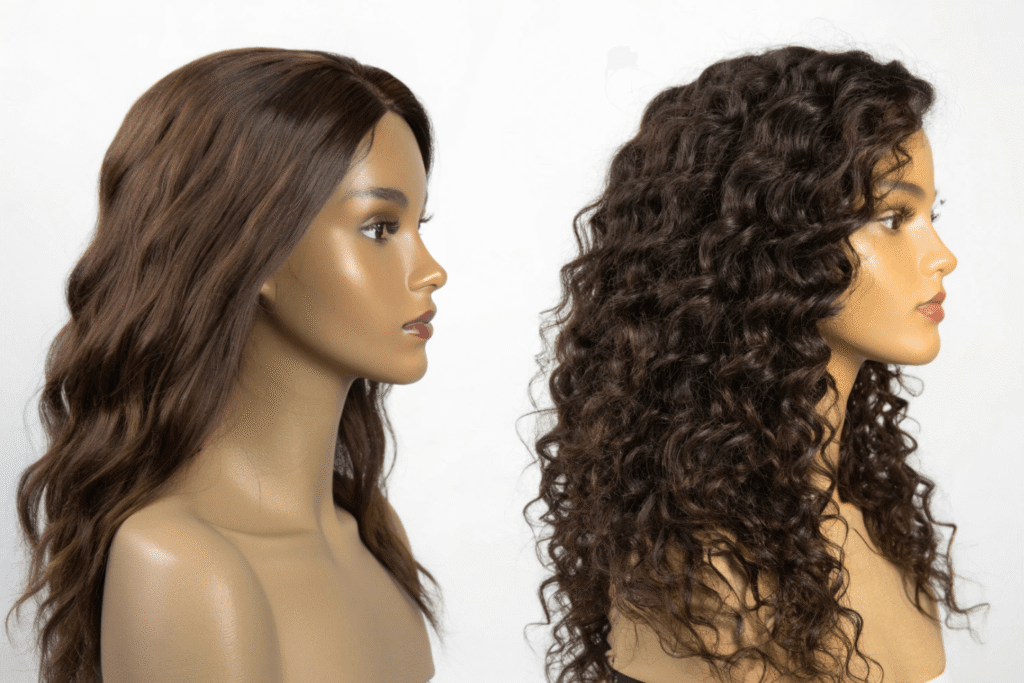
Density: match fullness to natural hairline behavior
Common densities include 130%, 150%, 180%. I look for:
- Gradient density: Lighter at the hairline and crown to avoid the “helmet” look; denser from mid-length to ends.
- Consistency: Even weft spacing and no sparse patches behind the hairline.
- Intended style: Curly and wavy textures look fuller; straight hair shows density more literally.
If a 180% listing looks flat in videos, it’s either over-processed or under-vented. I request strand count per square centimeter at the hairline vs. mid-cap for predictability.
Lace quality and knotting details
- Lace types: HD (ultra-thin, blends well but delicate), Swiss (durable, slightly more visible), Transparent/Brown tint options.
- Knots: Pre-bleached and pre-plucked hairlines reduce time-to-wear. Inspect for uniform bleach (no orange knots) and natural recession.
- Tints: Transparent lace is safer for in-salon tinting; tinted lace saves time if matched to your customer base.
If a seller claims HD lace but the edge looks thick on macro photos, it’s likely standard Swiss labeled as HD. Ask for caliper measurements (microns) or a side-by-side photo.
Hair type and origin: authenticity and longevity
- Fiber: 100% human. Listings should specify Remy (aligned cuticles) or Virgin (uncolored, minimally processed).
- Origins: Indian temple hair (strong, slightly coarser), Chinese/East Asian hair (strong cuticle, often straighter), Southeast Asian (Cambodian/Vietnamese—durable, varied textures), Eastern European (fine, premium), South American (varied, less standardized).
- Processing: Minimal acid bath, controlled steam processing for curl/wave; avoid silicone-heavy coatings that wash off and reveal dryness.
Red flag: Terms like “real hair” or “natural hair” without “100% human” and cuticle alignment. Ask for a cuticle direction statement and QC notes.
Practical spec checklist (what I confirm before purchase)
| Spec Area | Must-Have Detail | Why It Matters |
|---|---|---|
| Hair Type | 100% human, Remy or Virgin, cuticle aligned | Reduces tangling and matting |
| Cap Construction | Lace front/full lace/360/mono; cap map provided | Predicts realism, parting, breathability |
| Density | 130/150/180 with hairline gradient | Natural hairline, consistent fullness |
| Length & Cut | Accurate length, layered vs. blunt | Curl affects perceived length; style realism |
| Lace & Knots | HD vs Swiss; pre-bleached/plucked | Hairline blend and time-to-wear |
| Fit & Adjustability | Cap size, elastic band, combs | Comfort, shift prevention, lower returns |
Which seller guarantees reduce my risk of receiving blended fibers?
Blended fibers (low-grade human mixed with synthetics or animal hair) show up when specs are vague and guarantees are weak. I prioritize sellers who back claims with testable commitments.
Guarantees and proofs that matter
- Fiber authenticity guarantee: Written “100% human hair, Remy/Virgin” plus replacement/refund if lab test fails.
- Transparency on processing: Disclose acid bath, steam setting, coloring; offer non-silicone-coated samples.
- Return/exchange policy: Clear windows (7–30 days), reasonable restocking fees, and acceptance of returns on non-worn units.
- Photo truth clause: Confirmation that listing photos are of actual units, not only editorial models.
Evidence on demand
- Machine test videos: Comb-through from root to tip, slow-motion shake, water drench to show absorption and movement.
- Indoor/outdoor lighting: Near-window daylight and indoor warm light clips to reveal lace tint and color fidelity.
- Close-up knot photos: Macro shots of bleached knots and hairline plucking density.
- Batch consistency: Serial or batch codes on tags linking to QC records.
If a seller refuses water-test videos or provides only studio-lit, heavily styled shots, I assume higher blend/processing risk. For enterprise accounts, I add a clause allowing third-party lab testing (e.g., fiber burn test, microscopy) with cost-sharing.
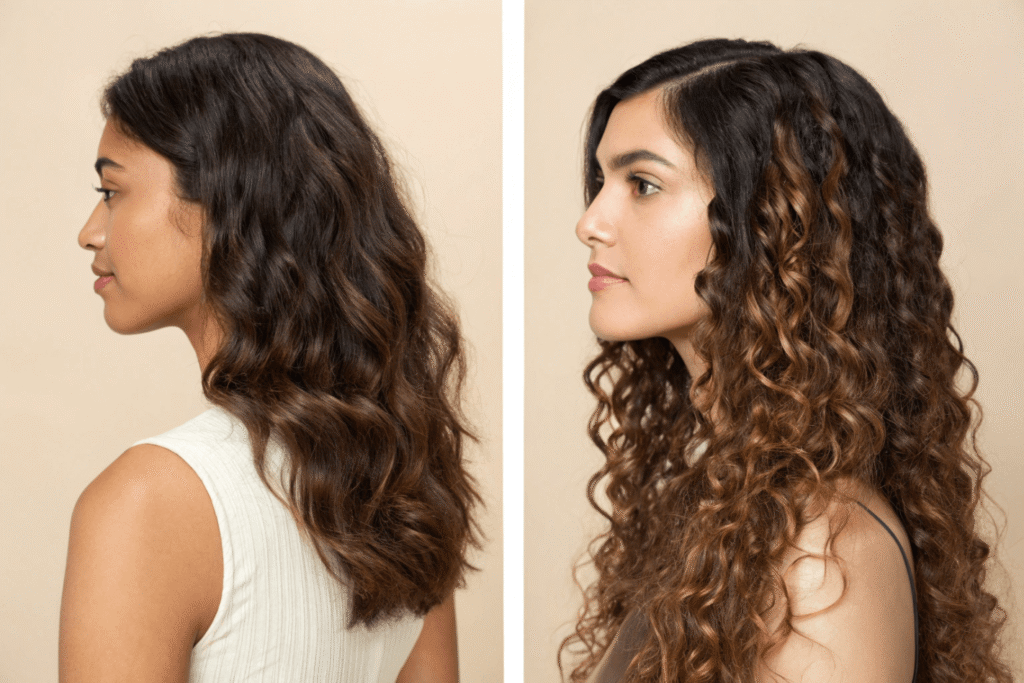
Policy details I scrutinize
| Policy/Guarantee | Strong Signal | Weak/Red Flag |
|---|---|---|
| Authenticity | Refund/replacement if lab test fails | “Real hair” claims without remedy |
| Returns/Exchanges | Clear terms, low restocking, QC-friendly | High fees, vague exclusions |
| Photo/Video Standards | Actual unit photos, raw clips, no filters | Only model shots or stock images |
| Support & Customization | Responsive tech support, cap/density customization | Slow replies, templated answers |
| Reviews & Consistency | Verified multi-platform reviews, batch tracking | Inconsistent descriptions across listings |
What photos and videos help me verify realism before checkout?
I request a predictable set of visuals to judge a unit like I’m on the factory floor.
Must-have assets
- 360° unstyled video: Hairline, crown, nape, parting—no baby hairs added. Shows ventilation and density transitions.
- Comb-through test: From lace edge through lengths; catches snagging from misaligned cuticles or synthetic fibers.
- Water test: Lace line and first 2–3 inches of hair soaked; human hair absorbs and darkens uniformly, synthetics bead.
- Lighting diversity: Side-by-side indoor (3000–4000K) and daylight (near 5500K). Confirms color tone and lace visibility.
- Macro shots of knots and lace: Look for uniform bleaching, no overburned knots, lace thickness confirms HD vs Swiss.
- Fit visuals: Cap interior with size tag, elastic band, comb placements; helps predict comfort and secure wear.
Specs to cross-check with visuals
- Length: Pull hair straight in video; curly textures can read 1–2 inches shorter than listed.
- Layering vs. blunt cut: Layers should taper naturally; blunt cuts show a clean baseline.
- Density at hairline: Slight recession and feathering are realistic; uniform bulk at the line is a giveaway.
If your catalog targets diverse skin tones, request lace-on-forehead photos across different complexions with no makeup to judge blend.
Should I request sample units before placing bulk orders?
Yes—especially for private-label or wholesale programs. I always run a small sample plan to validate consistency and customer experience before locking in volume.
My sampling protocol
- Units: 1–2 pieces per key spec (e.g., 150% density lace front, HD lace full lace).
- Tests: Water/comb-through, heat styling at 160–180°C, wash cycle with sulfate-free shampoo, shedding check (gentle pull test at hairline).
- Wear simulation: 3–5 days of normal use; track tangling at nape, lace fray, and color fade.
- Fit validation: Cap size and adjustability feedback from models or staff across head sizes.
What I evaluate post-sample
- Tangling behavior: Misaligned cuticles or acid processing show rapid matting.
- Shedding: Excess at crown/hairline signals poor knot sealing.
- Lace durability: HD should blend but not tear under careful handling.
- Styling limits: Hair should tolerate moderate heat without melting or excessive dryness.
For long-term contracts, I recommend batch QC with serialized tags and pre-shipment video per batch.
Practical buying checklist (apply before checkout)
- Verify 100% human, Remy/Virgin with aligned cuticles in writing.
- Confirm cap type (lace front/full/360/mono), cap size, and adjustable features.
- Validate density (130/150/180) and hairline gradient; request crown close-ups.
- Check length accuracy and whether it’s layered or blunt; consider curl pattern impact.
- Review lace type (HD vs Swiss; brown vs transparent) and knots (pre-bleached/plucked).
- Demand raw machine tests (comb-through, water) and indoor/outdoor lighting clips.
- Scrutinize return/exchange policy and any restocking fees; confirm photos are of actual units.
- Factor maintenance needs, heat limits, shedding risk, and care budget.
- Choose vendors with consistent reviews, detailed specs, and responsive customization support.
Conclusion
Buying human hair wigs online doesn’t have to be a gamble. In my workflow, I translate listings into technical specs, request unedited proofs, and validate with samples before scaling. When a seller can document fiber authenticity, cap construction, density, lace quality, and processing—with real videos and fair guarantees—you reduce blend risk and deliver a more predictable, natural result to your customers. The extra diligence pays for itself in fewer returns, stronger reviews, and a catalog you’re confident to stand behind.