
I spend a lot of my time inside wig factories and upstream depots, translating what buyers think they’re purchasing into what’s actually moving through the supply chain. I know the pain points you deal with: inconsistent textures between batches, “Brazilian” that behaves like Indian steam‑body wave, lace units that shed after two installs, suppliers who promise Remy but deliver silicone shine that vanishes after two washes. Behind every great or disappointing wig is a chain of sourcing, sorting, chemical decisions, and labor constraints that determine real quality, durability, and ethics.
Most human hair wigs originate from Asian supply chains—primarily India and China—with additional volumes from Southeast Asia, South America, and Eastern Europe. Hair is collected via temple auctions, door‑to‑door buying, and salon/comb waste; then it’s sorted, graded, chemically processed (or not), and manufactured into wefts and lace units. The upstream steps that matter most for quality are cuticle alignment (Remy vs non‑Remy), chemical load (acid, bleach, silicone), and batch consistency in color/texture—each shaped by regional sourcing and factory practices. Transparent suppliers with traceable procurement, documented processing, and audited partners are the most reliable for B2B buyers.
In this article, I’ll unpack how hair is collected, sorted, and graded; which supply‑chain steps influence texture and durability; why regional differences show up in color behavior; and how I audit upstream sources for reliability. I’ll share what I look for on factory floors, in temple auction lots, and in broker warehouses, and I’ll give you practical checks you can apply in procurement and QA.
How is hair collected, sorted, and graded before production?
The dominant sourcing channels I see
- India and China supply the majority of global volume. In India, a significant stream is “temple hair” from religious tonsuring; temples collect, sort, and auction to licensed buyers. In China and Southeast Asia, hair is aggregated via door‑to‑door buying, salon sweep/comb waste collection, and bulk purchases from individual sellers.
- Eastern Europe and South America provide scarcer, higher‑value ponytails, often lighter or medium‑brown, which are blended sparingly into premium SKUs due to cost.
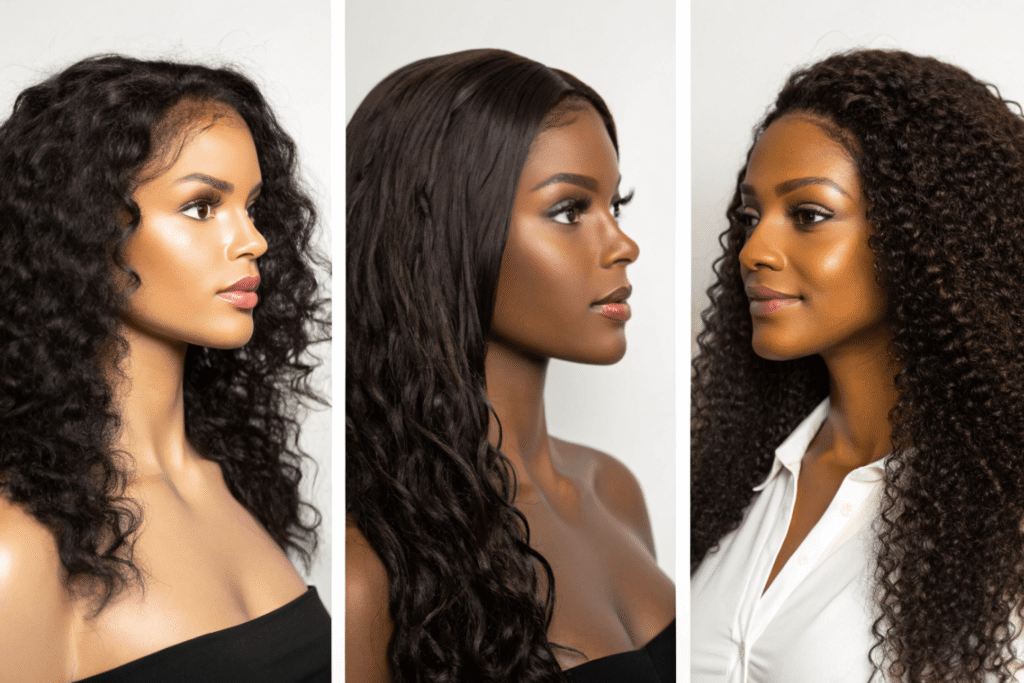
Collection types and quality implications
- Single ponytail, cut‑to‑order (true Remy, single‑donor): Cuticle remains aligned; minimal tangling; higher color integrity; premium cost and limited length availability (24”+ is rare).
- Temple bundles (multi‑donor Remy or near‑Remy): Typically aligned if shaved and bundled correctly; good tensile strength; strong value for mid‑premium wigs.
- Non‑Remy (salon/comb waste): Roots and tips mixed; requires acid de‑cuticling and silicone to mask roughness; initially silky but degrades after washes.
Sorting and pre‑processing workflow in factories
1) Receiving and quarantine
- Visual contamination check (threads, lice eggs, nits, metal clips).
- Moisture content measured to detect water‑weight fraud (I target ≤12%).
2) Primary sorting - By origin lot, length (2–3 cm increments), texture (straight/wavy/curly), natural color (levels 1–6+), and condition (virgin vs previously dyed).
3) Hackling and alignment - Hackling removes short fibers; for Remy, directional combing is preserved; for non‑Remy, alignment is moot.
4) Grading - Factory grades are not standardized. I verify with three metrics:
• Length ratio: percentage of long fibers in bundle (e.g., 18” bundle with ≥65% true 18” is premium).
• Cuticle integrity: microscope check for intact scales.
• Tensile strength: sample pull test (N) and wet elongation (%).
5) Cleaning and chemical decisions - Non‑Remy often enters an acid bath to strip cuticles, then heavy silicone coating; Remy limits chemicals to deep cleanse, mild conditioning, and optional low‑pressure steam‑setting for texture.
6) Color batching - Natural color grouped by ¼–½ level; darker lots destined for lift require oxygen reserve testing to predict bleaching response.
Table: Practical grading cues I use on the floor
- Length ratio: Premium ≥60–70%; Standard 40–55%; Economy <40%
- Cuticle direction: Consistent root‑to‑tip vs mixed
- Chemical odor/feel: Neutral to faint vs heavy solvent/silicone slip
- Shedding on pull: ≤2–3 fibers/10 pulls vs >5/10 pulls
- Moisture content: 8–12% vs >14% (risk of mold/fraud)
What supply chain steps affect texture and quality for me?
The three quality levers that decide service life
- Cuticle alignment (Remy vs non‑Remy): Misaligned cuticles cause interlocking and matte tangling; factories “solve” this with acid stripping, but longevity drops sharply.
- Chemical burden: Acid baths, aggressive bleaching, and thick silicone coats create a honeymoon finish that fails after 2–6 washes. Low‑chem Remy or raw hair maintains integrity through multiple color cycles.
- Mechanical handling: Over‑hackling and high‑tension wefting break fibers; hand‑tied lace with correctly sized knots outlasts machine‑injected units when fiber quality is equal.
How processing choices change texture outcomes
- Steam processing vs perming:
• Steam: Uses heat/moisture to set body wave/deep wave; minimal chemical change; pattern relaxes gradually.
• Perm solutions: Stronger curl memory but more cuticle damage; can lift color unintentionally. - Silicone coatings:
• Thin micro‑coats on Remy can improve slip without masking; heavy coatings on non‑Remy conceal acid damage and wash off quickly, exposing rough fiber. - Weft construction:
• Double‑drawn bundles (high length ratio) feel fuller at the ends; tight needle density reduces shedding but increases stiffness if the stitch is too compressed.
Table: Expected durability by construction and processing (assumes proper care)
- Raw/Remy, hand‑tied lace front: 9–18 months+; can recolor; low shedding
- Remy, machine‑wefted + steam texture: 8–12 months; moderate recolor
- Non‑Remy, acid + heavy silicone: 4–10 weeks of “new” feel; poor recolor
- Blended origins, medium silicone: 3–6 months; inconsistent behavior
Do regional differences impact color consistency I get?
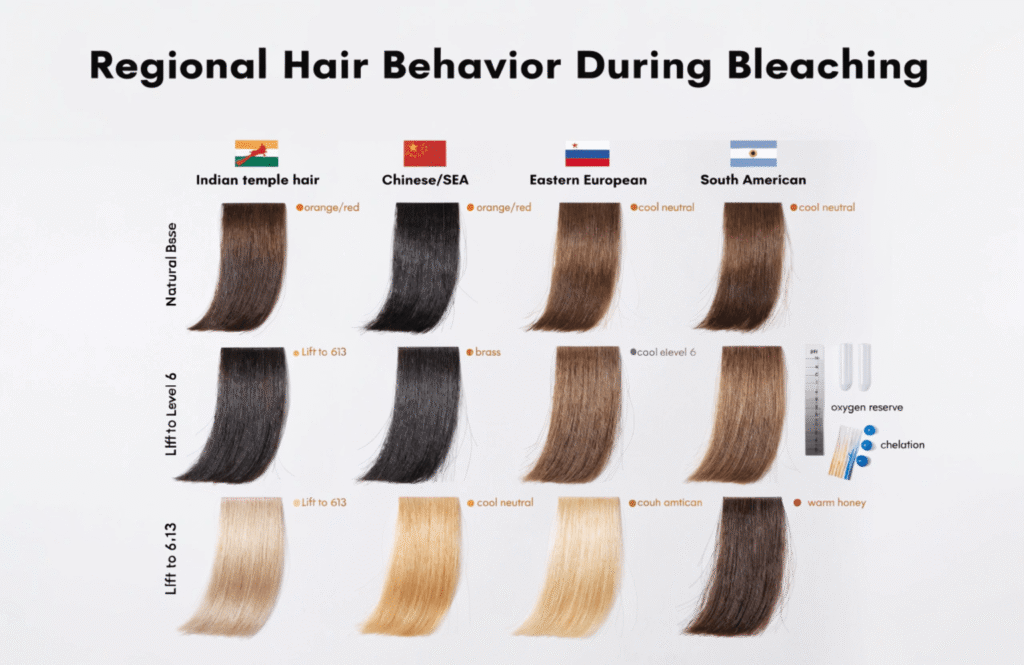
Yes—and I plan color strategy around origin because melanin type, prior lifestyle exposure, and collection method influence lift and tone.
Typical regional behaviors I see
- Indian temple hair:
• Darker base (level 1–3), robust cortex, good tensile strength.
• Lifts to brown/caramel predictably; to 613 requires staged lifts; orange/red undertone common—needs blue/green‑based neutralization. - Chinese and Southeast Asian hair:
• Often coarser medulla, very dark eumelanin; some lots previously sun‑oxidized or diet‑impacted.
• Resistant to bleaching; can brass at level 5–6; 613 achievable but at higher damage cost unless using select finer lots from SEA (e.g., Vietnamese, Cambodian). - Eastern European:
• Naturally lighter (level 4–7), fine diameter, low cumulative processing.
• Takes tone evenly; great for ash/cool palettes; scarce and expensive. - South American (marketed as Brazilian/Peruvian):
• Medium to coarse, strong cortex; lifts better than typical Chinese but warmer than Eastern European.
• Good for honey and caramel blondes; deep ash requires careful chelation and slow lift.
Why labels mislead
Country names are often marketing shorthand for texture profiles processed in China. I verify with pre‑dye swatches and oxygen reserve tests rather than label claims. Mislabeling is common; “virgin Brazilian” may be Indian temple hair steam‑textured and relabeled.
How can I audit upstream sources for reliability?
My audit framework (what I actually check)
- Source verification
• Paper trail: Temple auction invoices, lot numbers, export docs; for door‑to‑door, aggregated purchase logs and payer IDs.
• Sample traceability: Randomly pull bundles across a lot; check cuticle direction and microscopic scale integrity. - Process transparency
• Chemical register: Acid types, pH ranges, dwell times, bleaching protocols, silicone product MSDS.
• Wastewater and ventilation: Look for neutralization steps and effluent documentation. - Quality controls
• Length ratio measurement on 10% of bundles.
• Moisture content and mold inspection on receipt.
• Tensile and knot‑slip tests on both raw fiber and finished wigs. - Labor and ethics
• Worker contracts, shift lengths, eye/hand protection for ventilators.
• For temples: disclosure of auction revenues and stated social programs; presence of donor consent notices (even if ritualized). - Consistency proof
• Retained sample library by lot; color lift swatches archived.
• Reorder reproducibility target: ΔE color variance ≤2.0 within the same SKU.
Vendor red flags I don’t ignore
- Heavy solvent/silicone odor on “virgin Remy.”
- Moisture content >14% on arrival, or weight variance >3%.
- Refusal to disclose acid/bleach steps “for proprietary reasons.”
- Perfectly uniform jet‑black from mixed origins (often re‑dyed).
- “Single‑donor 24–30 inch” available in large monthly volumes.
Practical sourcing playbook for B2B buyers
- Segment SKUs by fiber class:
• Premium: Temple‑verified or true single‑donor Remy; minimal chemicals; hand‑tied lace fronts.
• Core: Multi‑donor Remy with steam textures; controlled silicone micro‑coat.
• Value: Clearly disclosed non‑Remy with realistic care guidelines and shorter warranty. - Contract terms I use:
• Lot‑locked reorders; substitution requires written approval and pre‑shipment swatches.
• Incoming QC rights and failure thresholds (length ratio, shedding rate, ΔE color, tensile).
• Audit/visit rights and corrective action plans. - Certifications and partners:
• There is no universal gold standard yet, but supplier audits, documented temple sourcing, and third‑party social compliance checks materially reduce risk. Work with brands that disclose origin, processing, and labor practices in writing.
Quick comparison: Hair classes and business impact
| Attribute | Raw/True Remy (Temple/Single-Donor) | Non-Remy (Salon/Comb Waste) |
|---|---|---|
| Cuticle alignment | Aligned, intact | Mixed, often acid-stripped |
| Chemical load | Low; steam textures | High; acid + heavy silicone |
| Color performance | Predictable lift; better recolor | Unpredictable; poor recolor |
| Durability | 8–18+ months | Weeks to a few months |
| Cost & availability | High, limited lengths | Low, abundant |
| Best use | Premium wigs, repeat clients | Promotional/value SKUs |
Conclusion
Behind the scenes, most human hair wigs begin in Asia—especially India and China—moving through temple auctions, door‑to‑door aggregators, and salon sweep networks before landing in processing hubs where sorting, grading, and chemical choices decide your end quality. The biggest drivers of performance are cuticle alignment, chemical burden, and construction method; regional origins influence lift behavior and color consistency. Labels like virgin, Remy, or “Brazilian” are often inconsistently verified, so I rely on audits: documented origin, processing registers, lab‑style QC, and ethical checks. If you segment SKUs by fiber class, lock reorders by lot, and enforce measurable QC (length ratio, tensile, ΔE), you’ll stabilize texture, reduce returns, and protect your brand while sourcing more responsibly.