
I’ve sat on both sides of this conversation—as the supplier who has to deliver camera-proof hair and as the strategist advising brand owners on how to scale “celebrity” results for retail and wholesale. What I hear from stylists, tour managers, and producers is consistent: 4K/HD cameras are unforgiving, schedules are brutal, and brand images can’t risk a bad hair day. Custom human hair wigs solve these realities with natural hairlines, fast restyling, and rock-solid fit—while protecting the wearer’s own hair from heat and chemical stress. For B2B buyers, that means the playbook is clear: invest in the right hair inputs, lace technology, and QC, then operationalize maintenance that holds up under sweat, lights, and travel.
More celebrities are switching to custom human hair wigs because they deliver hyper-realism on 4K/HD cameras, protect natural hair, and enable rapid, risk-free style changes tailored to exact head measurements and brand image. With ultra-thin lace, micro-ventilation, bespoke density, and precise color-work, these units blend seamlessly with skin and makeup, cut on-set retouching, and stay secure through long shoots, tours, and live events.
In this article, I break down the technical “why” behind celebrity adoption and show exactly how to emulate those results: the lace and ventilation decisions that make a hairline disappear, the density and face-framing that build flattering silhouettes, the wholesale custom pathway to replicate marquee looks, and the maintenance routines that keep red-carpet wigs flawless week after week.
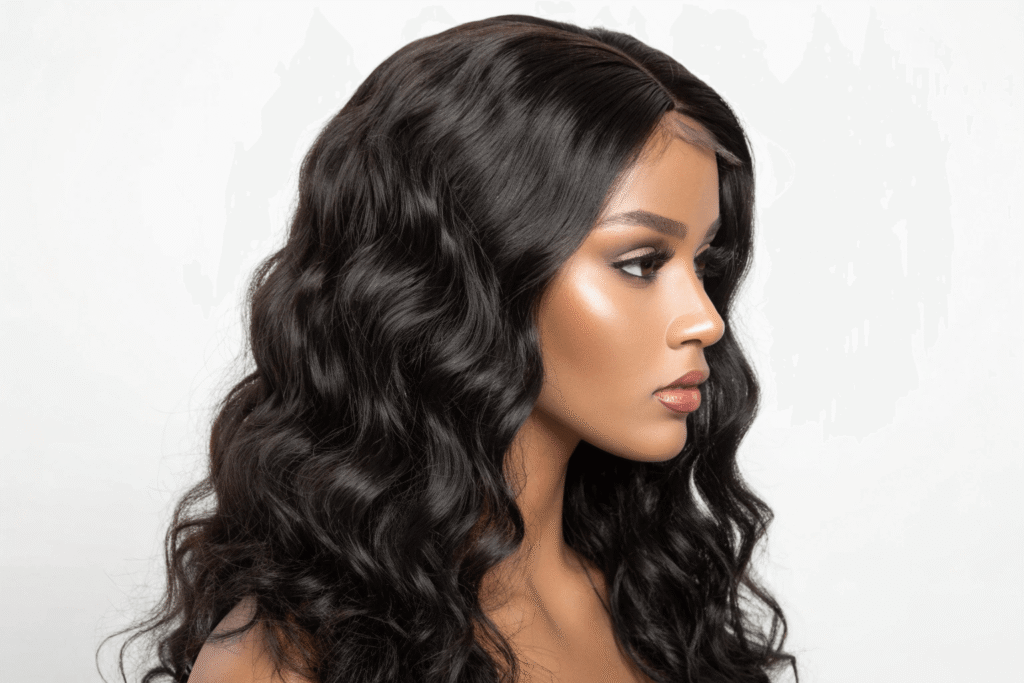
Do ultra-thin lace and micro-ventilation drive realism on camera?
Absolutely—and not just as a trend, but as a measurable quality lever. In my experience, realism under 4K/HD hinges on three factors: lace visibility, knot profile, and hairline geometry.
- Lace selection and visibility
- HD/film lace: Ultra-thin, soft-hand mesh that collapses into the skin under powder; best-in-class for close-ups but more delicate. Ideal for lace fronts and temple zones.
- Swiss lace: Slightly sturdier than HD, still fine enough for hairlines and parting; better for daily wear or touring schedules.
- Transparent vs. tinted: Transparent can gray-out or flash under cool lights. I often request factory-tinted lace or post-tint to the wearer’s undertone.
- Micro-ventilation and knotwork
- Micro-ventilation (single-hair, 1–2 hairs per knot at the hairline) creates a staggered, low-bulk edge that reads like new growth. I specify finer denier hair for the first 0.5–1.0 cm and gradually increase density.
- Bleached or reversed knots: For dark hair, partial bleaching at the first 1–2 cm reduces dotting; beyond that, use double knots for durability.
- Directional ventilation: Slight irregularity (cowlicks, widow’s peak, micro-swirl) prevents the “helmet line” look.
- Hairline geometry and pre-pluck strategy
- Pre-plucked, irregular hairlines mimic natural recession and baby hair patterns; I prefer a soft contour at temples with sparser density.
- Color-matched knots and lace reduce post-production retouching, especially in tight glamour shots.
Key sourcing takeaway: Ask factories for HD or fine Swiss lace on the front perimeter with micro-ventilation specs and a denser, sturdier mesh at the crown/nape for longevity. Insist on consistent knot bleaching and quality checks under both warm and cool lighting.
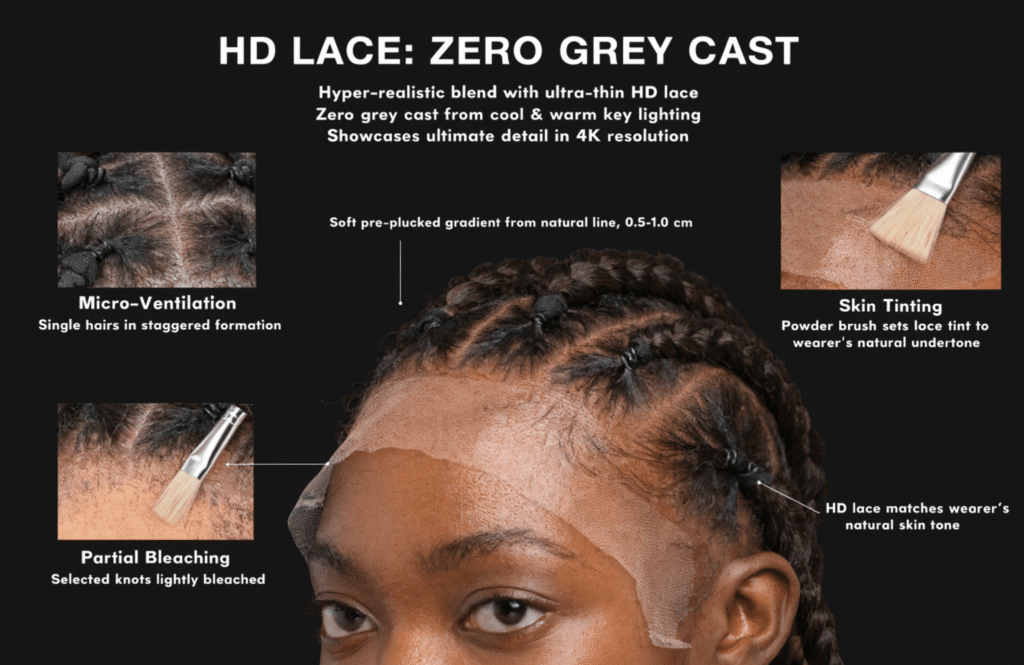
Quick spec guide for camera realism
- Lace: HD at hairline; fine Swiss on parting; sturdier Swiss or stretch mesh elsewhere
- Ventilation: 1–2 hairs per knot at hairline; 2–3 behind the line
- Hairline: Pre-plucked gradient 0.5–1.0 cm; irregular temple density
- Knots: Partial bleach for dark hair; color-reversed or unbleached for light hair
- Finish: Lace tinted to undertone; powder set post-install
How does bespoke density and face-framing enhance looks?
Density and shaping are where “celebrity” moves from good to great. The goal is silhouette control: strong enough for presence on camera, light enough for scalp realism and movement.
- Baseline density targets
- Everyday realism: 130–150% density reads natural on most faces and moves cleanly in wind or under stage fans.
- High-glam/long length: 150–180% at mid-lengths and ends, with a 130–140% top to avoid bulky roots.
- Strategic zoning
- Hairline zone (first 1 cm): 70–90% of base density for a fade-in effect.
- Crown/part: Moderate density to avoid track shine-through with spotlights.
- Ends: Slight bump in density for fuller silhouette on camera.
- Face-framing and camera angles
- Long face/frontal-heavy lighting: Soft, cheekbone-skimming layers to add horizontal balance.
- Round face: Longer face-framing to elongate. Center parts or gentle off-centers reduce width.
- Jawline emphasis: Internal layering to remove bulk while keeping surface fullness.
- For lace-front units, I ask for a pre-shaped halo layer at 10–12 inches to keep facial framing consistent after multiple heat stylings.
- Color and knot-work integration
- Subtle lowlights at the root (root shadow) and micro-highlights around the face break up uniformity and hide knots better under flash.
- Color-matched knots + lace tint to undertone reduces grey cast at the perimeter.
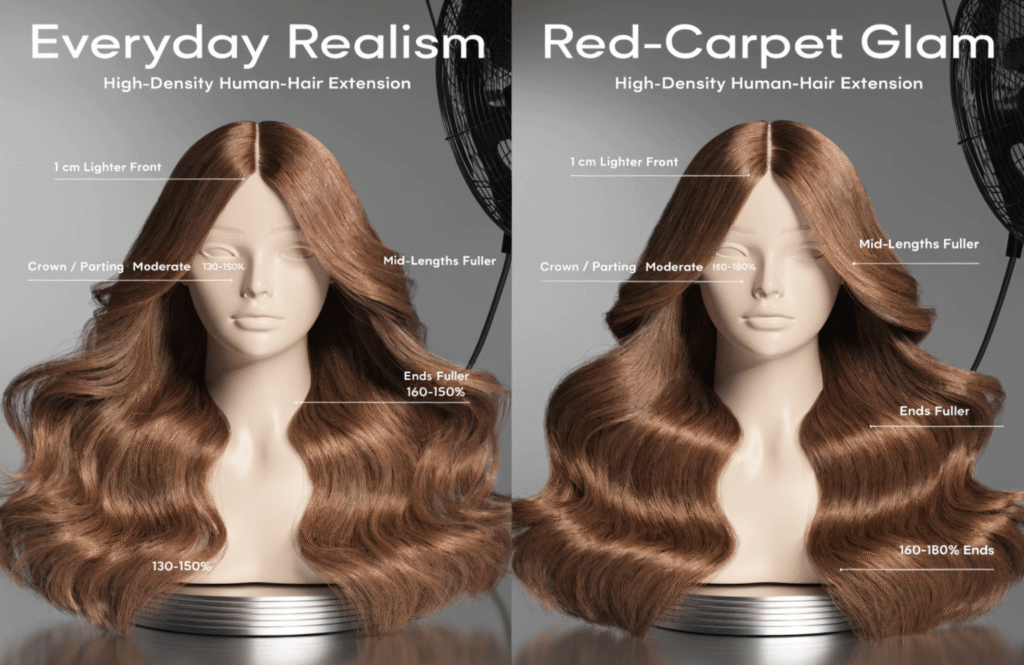
Recommended density matrix
| Use case | Top/Crown density | Perimeter (first 1 cm) | Mid-lengths/Ends | Notes |
|---|---|---|---|---|
| Everyday realism | 130–140% | 70–90% of base | 130–150% | Best for “own-hair” look |
| Red carpet/high glam | 140–160% | 80–100% of base | 160–180% | Keep top lighter to avoid bulk |
| Active/performance | 130–150% | 70–90% of base | 150–160% | Prioritize secure cap + ventilation |
Can I replicate celebrity styles with wholesale custom orders?
Yes—if you manage inputs, measurements, and QC like a film department. The supply chain matters as much as the styling.
- Hair inputs and classifications
- Remy human hair: Cuticle-aligned, reliable for most builds; balances quality and cost.
- Virgin human hair: Unprocessed, best for color work and longevity; premium pricing.
- Origins: India and SEA (durable, versatile wavy), Chinese (strong shaft, good for straight/high heat), Eastern Europe (finer denier, premium for blonde), South America (medium-fine, soft wave). Match origin to desired texture and color plan.
- Lace and cap engineering
- Lace front or full lace with HD front for realism; consider 13×6 frontals for deep parting.
- Bespoke caps measured to the head form (circumference, front-to-nape, ear-to-ear fore/back, temple-to-temple, nape). Add elastic band and silicone-lined ear tabs for security on-stage or at events.
- For active wear, request lightweight, ventilated caps with stretch panels at the crown and reinforced nape.
- Measurement and ordering workflow (wholesale)
1) Approve master spec: hair origin, length, texture, color plan, lace type, density map, baby hair strategy.
2) Submit measurement sheet + mold (when possible) for marquee clients.
3) Pilot run: 1–3 units for fit test and on-camera test under cool and warm lights.
4) QC checklist: lace gauge, knot density, bleach uniformity, shedding test, wet/heat test, color fastness.
5) Scale order: lock BOM codes, assign batch hair origin lots, and schedule AQL inspections.
6) Logistics: ship on ventilated forms, netted, with silica and care cards. - Emulation shortcuts for smaller buyers
- Select Remy or virgin hair with pre-plucked HD lace front and bleached knots.
- Choose 130–150% density for realism; request strategic face-framing layers and a soft root shadow.
- Include spare hairline panels for repairs, and order duplicate units for continuity across shoots.
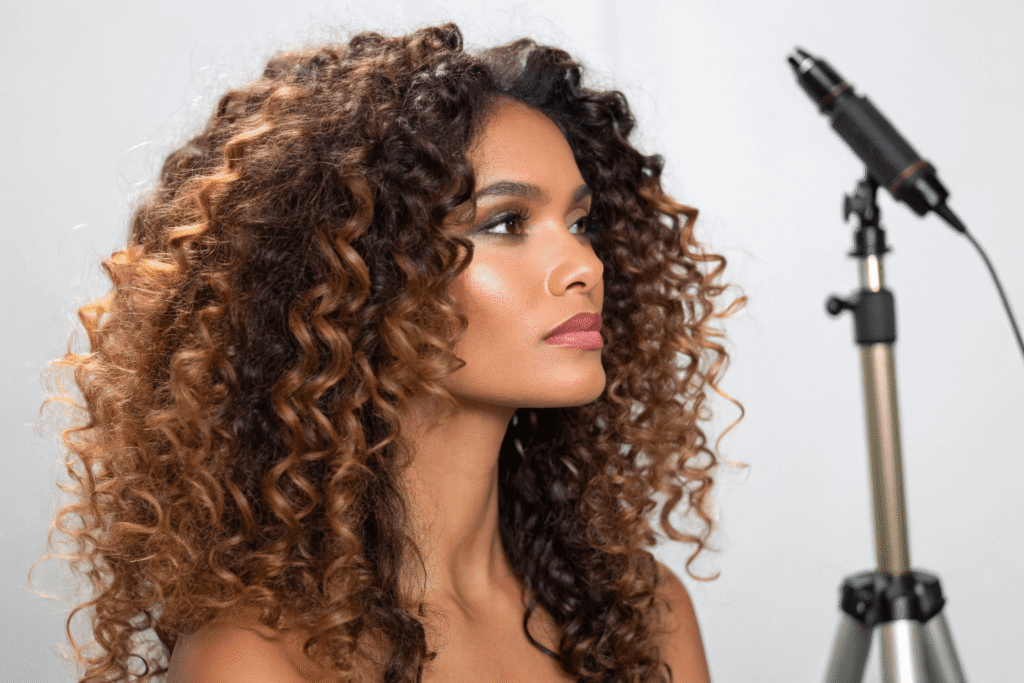
Suggested BOM for “celebrity-ready” builds
| Component | Spec recommendation |
|---|---|
| Hair | Virgin or high-grade Remy; origin matched to texture goals |
| Lace (front) | HD, micro-ventilated 1–2 hairs/knot; pre-plucked gradient |
| Lace (body) | Fine Swiss or stretch mesh; reinforced nape |
| Density | 130–150% base; ends +10–20% for presence |
| Knots | Partial bleach 1–2 cm; double knots beyond for strength |
| Cap fit | Full custom measurements; elastic band; silicone tabs |
| Finish | Lace tinted to undertone; baby hairs ventilated sparsely |
What maintenance routines keep red-carpet wigs flawless?
Sustained performance is a maintenance problem, not a manufacturing one. Here’s the regimen I build into talent schedules and care cards:
- Pre-install and install
- Clean scalp and hairline; skin-safe adhesive only on oil-free skin.
- Tint lace to undertone; set with powder. Elastic band melt for 15–20 minutes for flat lay.
- Braid pattern flat and even; avoid bulky cornrows that distort the cap.
- Use alcohol-free edge products; avoid glue creep into the lace.
- Wash and condition
- Frequency: Every 6–10 wears or when product buildup dulls movement.
- Products: Sulfate-free shampoo, acidic pH (4.5–5.5) conditioner; deep-condition mid-lengths/ends only.
- Rinse cool; never rough-towel. Blot and air-dry 70% before blow-drying with heat protectant.
- Heat styling and finishing
- Always heat-protect; 160–185°C for most Remy/virgin hair. Minimize passes.
- Steam-setting for curls improves longevity without scorching.
- Re-cut perimeter flyaways periodically; ventilate a few baby hairs where needed for realism.
- Storage and transport
- Store on ventilated canvas block with pins at ear tabs and nape (not hairline).
- Use silk/satin covers; include silica gel for humidity control on tour.
- Travel with a repair kit: lace patches, matching thread, knot sealer, mini steamer.
- Longevity checks
- Monthly: Inspect lace fray at temples and part line; re-knot or patch as needed.
- Adhesive hygiene: Break from glue at least 24 hours between installs to protect scalp.
- Color upkeep: For light shades, purple mask sparingly; avoid over-toning which weakens cuticle.
Conclusion
From my vantage point across sourcing, build, and on-set outcomes, celebrity movement toward custom human hair wigs is a rational response to HD realism demands, hair health, and brand control. The technical edge comes from ultra-thin lace and micro-ventilation at the hairline, density and layering calibrated to face and camera, and a cap that’s engineered to the head for comfort and security. You can emulate these results at scale by specifying Remy or virgin inputs, pre-plucked HD lace with bleached knots, 130–150% density with strategic face-framing, and a disciplined maintenance protocol—wash sulfate-free, deep-condition, heat-protect, and use an elastic band melt with lace tinted to undertone. Do this consistently, and your wholesale custom program will deliver red-carpet credibility with fewer retouches, fewer failures under lights, and more repeatable on-camera excellence.