
Choosing human hair bundles can feel confusing—weights, lengths, weft types, “Brazilian vs. Indian,” Remy vs. non-Remy, and how many bundles you actually need. Whether you’re a first-time buyer or a salon owner planning inventory, understanding the specs and install methods will save money and deliver better styling results.
Human hair bundles are tracks of 100% human hair sewn at the top (the weft), typically sold by weight—about 100 g/3.5 oz per bundle—and available in lengths from 8–30 inches. They’re used for sew-ins, quick weaves, ponytails, and custom wigs. Remy/virgin/raw bundles offer the best longevity, can be colored and heat-styled, and, when properly maintained, can be reused multiple times.
For consumers, the right bundle specs ensure natural-looking fullness and a style that lasts. For stylists, correct weft type and texture choices make installs cleaner and faster. For hair retailers and emerging wig brands, consistent QC and packaging are the difference between repeat purchases and returns. Let’s break down exactly what to expect and how to get the most from your human hair bundles.
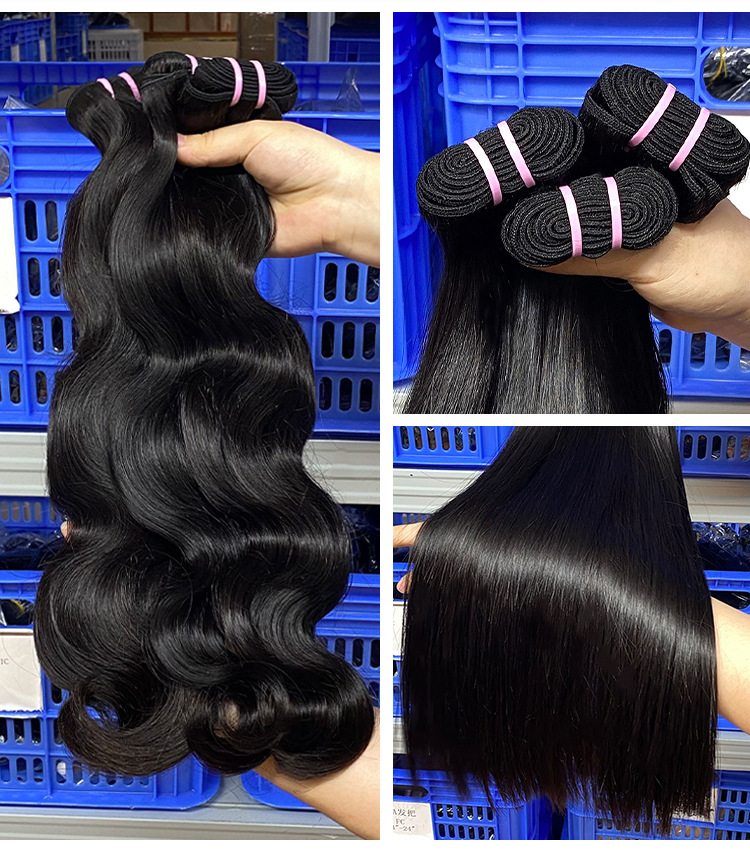
What does one bundle include in weight, weft type, and length?
Standard bundle specs (what you should expect)
- Weight: Most premium human hair bundles weigh 100 g (≈3.5 oz). A typical tolerance is ±5 g. Wholesale buyers should see weight printed on the label and confirmed on the packing list.
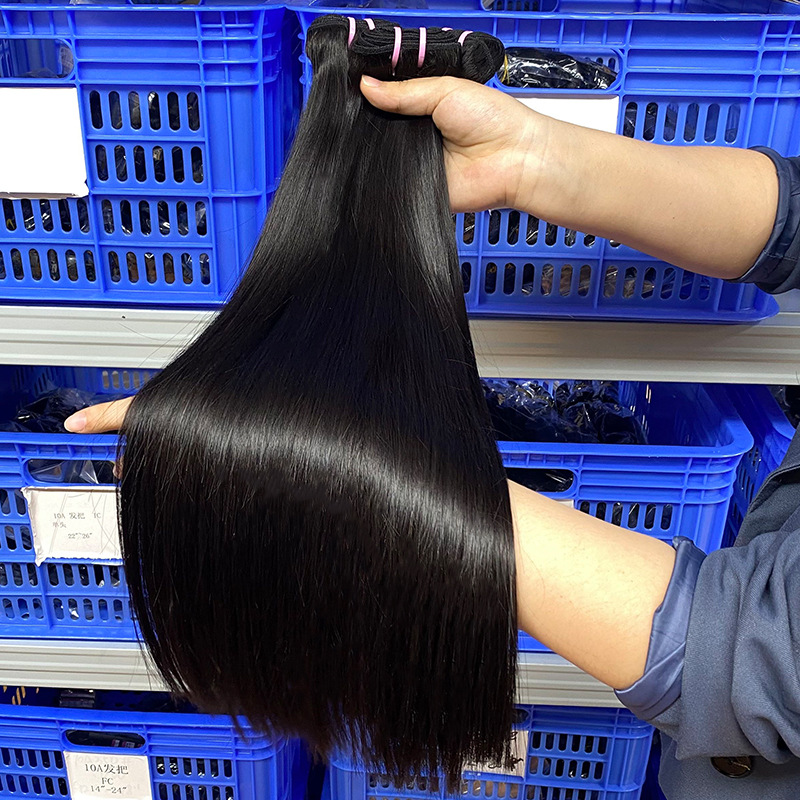
- Length: Common lengths range from 8″–30″. Longer lengths appear thinner at the ends, especially with single-drawn hair, so you usually need more bundles at 22″+ to achieve the same density.
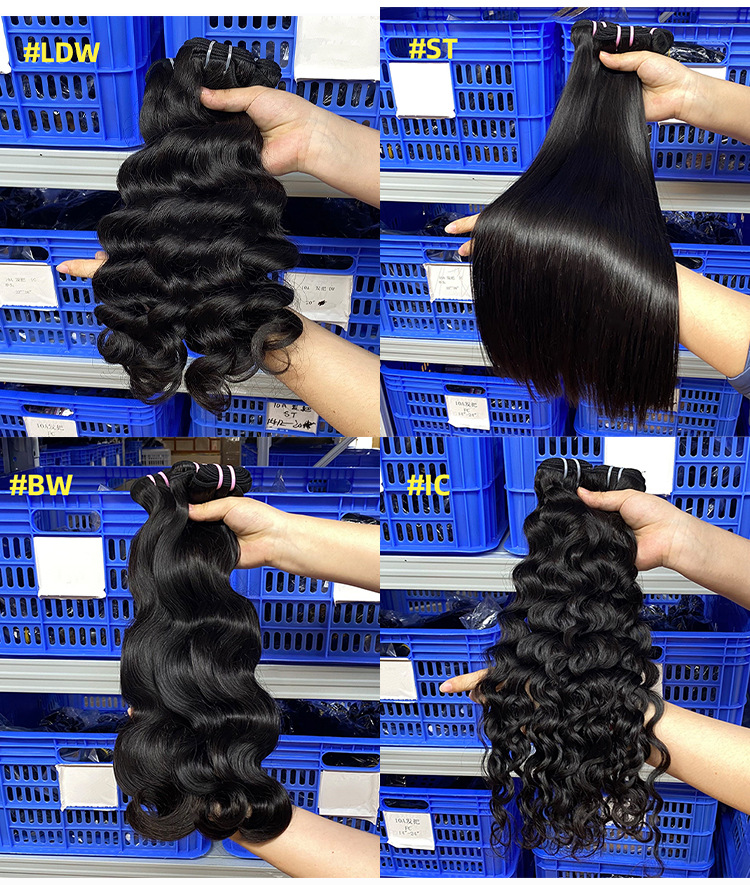
- Texture options: Straight, body wave, deep wave, loose wave, curly, kinky curly/coily. “Brazilian/Peruvian/Malaysian/Indian” usually describe texture and processing style rather than a true geographic origin.
- Color: Natural black/brown (1B) is standard. Some vendors offer factory-colored bundles, but unprocessed virgin or raw bundles color more predictably.
- Wefts: Bundles are most commonly machine double-wefted for durability. Hand-tied and flat/genius wefts are thinner for low-profile installs, but require more careful handling.
Weft types (how they affect installs and shedding)
- Machine double weft: Most common. Durable, slightly thicker, good for sew-ins and wig-making. Minimal shedding if the weft seam is intact.
- Hand-tied weft: Ultra-flat, undetectable in very fine hair. Cannot be cut freely (must be sealed) or it will unravel.
- Flat/genius weft: Thinner than machine wefts, cuttable, low bulk—good for sleek installs with less risk of unraveling than hand-tied.
- Bulk hair (no weft): For braiding, micro-links, or custom ventilating. Not “bundles” in the strict sense but often confused with them.
Hair quality vocabulary (lifespan and styling results)
- Raw hair: Highest grade, cuticles fully aligned from a single donor or few donors, no chemical processing, often steam-textured only. Longest lifespan with proper care.
- Virgin hair: Unprocessed in color/chemicals but can be collected from multiple donors; usually cuticles aligned (Remy). Colors and lifts well.
- Remy hair: Cuticles aligned in one direction to reduce tangling. May be steam-textured. If truly Remy, it maintains luster and softness longer.
- Non-Remy: Cuticles misaligned; often acid-washed and silicone-coated. Looks shiny at first but may tangle and dull quickly after a few washes.
Hair Type Comparison
| Hair Type | Quality | Lifespan | Can Be Colored | Notes |
|---|---|---|---|---|
| Raw Hair | Highest | 1–3+ years | Yes (lifts cleanly) | Most natural, premium price |
| Virgin Hair | High | 1–2 years | Yes | Great balance of value and performance |
| Remy Hair | Medium-High | 6–12+ months | Limited to moderate | Good day-to-day wear, varies by source |
| Non-Remy | Medium-Low | 1–6 months | Not recommended | Prone to tangling after silicone wears off |
How do I install bundles for sew‑ins, quick weaves, or making a custom wig?
Before any method: prep your bundles
- Cleanse: Co-wash or wash with a gentle, sulfate-free shampoo to remove factory residue. Rinse thoroughly and air-dry.
- Condition: Use a light conditioner and a leave-in to prevent dryness.
- Weft sealing: Apply a thin weft sealer along the stitch line to reduce shedding (especially if you plan to cut tracks).
- Color testing: If you plan to dye, test a small section first. Use professional color lines for predictable results.
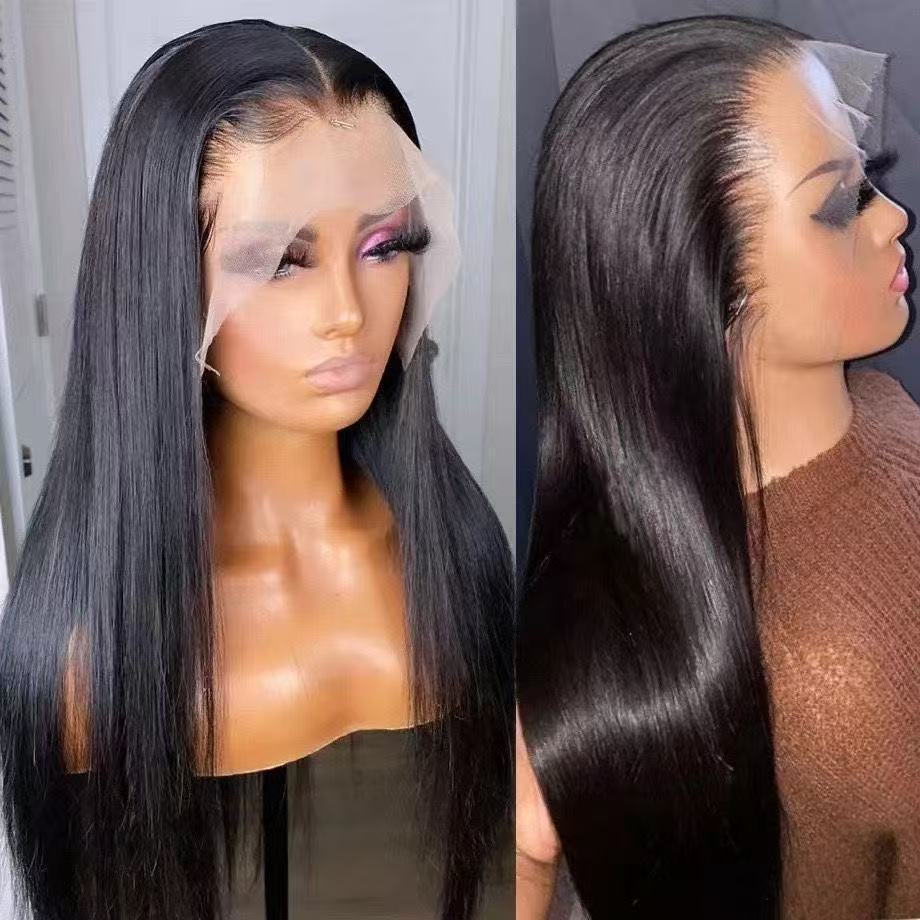
Sew-in installation (longer-lasting, protective)
- Braid base: Create neat, secure cornrows tailored to the style (leave-out or closure). Keep tension firm but not tight to protect edges.
- Net (optional): A weaving net can distribute weight evenly and reduce tension on natural hair.
- Stitching: Using curved needle and weaving thread, sew the weft onto the braids. Start at the nape and work upward. Space tracks closer at the crown for fullness.
- Flip vs. cut: Fold/flip tracks at the ends to minimize shedding. If cutting, always reseal the cut ends.
- Blend and finish: If using a closure/frontal, install and secure the lace. Press roots, trim layers, and style. Use light serums—not heavy oils—near the weft to avoid loosening stitches.
Longevity: 6–8 weeks per install to protect your scalp and new growth. With proper care, high-quality bundles can be reused multiple times.
Quick weave (fast, budget-friendly)
- Protect: Mold natural hair flat with gel or wrap foam; cover with a protective cap or apply a liquid cap protectant.
- Bonding: Apply weft bond/glue to the track and place on the cap starting at the nape, layering upward. Blow-dry to set.
- Cut/Style: Shape, add layers, and blend. Avoid excess glue near the hairline.
- Removal: Saturate with oil-based remover or conditioner; do not pull. Expect 2–4 weeks of wear.
Custom wig making (maximum versatility and reusability)
- Choose your base: Dome cap for machine-sewn wigs, or lace closure/frontal/360/ full lace for a natural hairline.
- Measurements: Take circumference, front-to-nape, ear-to-ear, and nape measurements for a snug fit.
- Track placement: On a canvas block, secure cap and sew tracks from nape upward. Install closure first (or frontal) for accurate placement.
- Hairline work: For lace pieces, lightly pluck and bleach knots (optional) for realism. Add an elastic band and combs for security.
Lace options for wig builds:
| Lace Type | Appearance | Durability | Cost | Best Use |
|---|---|---|---|---|
| HD Lace | Most invisible | Lower | Higher | Photoshoots, special events, natural hairlines |
| Transparent Lace | Natural | Higher | Moderate | Everyday wear, good balance |
| Brown/Tinted Lace | Natural on deeper tones | High | Moderate | Everyday wear with minimal tinting |
How many bundles do I need? (Quick guide)
- Short (8–14″): 2 bundles for a natural look; 3 for very full.
- Medium (16–20″): 3 bundles standard.
- Long (22–26″+): 3–4 bundles, especially for straight/body wave; curly patterns may need 4 for full density.
- With closures/frontal: Add 2–3 bundles with a closure; 3–4 with a frontal for fullness at longer lengths.
- Head size and desired volume also matter. Thicker or double-drawn bundles can reduce the count.
Recommended Bundle Count by Length and Texture
| Final Length | Straight/Body Wave | Deep Wave/Curly | With Closure | With Frontal |
|---|---|---|---|---|
| 8–14″ | 2–3 | 2–3 | 2 | 2–3 |
| 16–20″ | 3 | 3 | 2–3 | 3 |
| 22–26″ | 3–4 | 3–4 | 3 | 3–4 |
| 28–30″+ | 4 | 4 | 3–4 | 4 |
Aftercare to extend lifespan
- Wash weekly or biweekly with sulfate-free shampoo; deep condition every 1–2 weeks.
- Detangle from ends to roots with a wide-tooth comb while damp and conditioned.
- Minimize daily heat; always use a heat protectant.
- Sleep with a satin bonnet/scarf or on a satin pillowcase; braid or twist curls at night.
- Avoid heavy oils at the weft and lace; use light serums mid-shaft to ends.
- Expect well-maintained Remy/virgin bundles to last 6–12+ months; raw hair can exceed 1–2 years with proper care.
Can I mix different lengths or textures in my bundles to get a layered look?
Absolutely—mixing lengths and textures is a pro technique for dimension and movement. The key is planning your layering and staying consistent in quality level (e.g., mixing all Remy or all raw).
Mixing lengths (for layers that look intentional)
- Straight/body wave: Use 2″ gaps for subtle layers and 4″ gaps for dramatic layers.
- Examples: 14/16/18 for natural layers; 18/20/22 or 20/22/24 for more length; add a 12″ closure for extra crown fullness on shorter sets.
- Curly/textured: Curls “shrink,” so consider going closer in length (e.g., 18/20/22) to keep balanced volume. If you want a pronounced shape, place the shortest bundle higher on the head.
- Double-drawn vs. single-drawn: Double-drawn gives fuller ends, so you can sometimes use fewer bundles or larger length jumps without stringy tips.
Pro tip: For a seamless flow, place the longest bundle at the nape and the shortest near the crown. Trim micro-layers after install to blend.
Mixing textures (how to blend without a mismatch)
- Slight variations blend best: Straight + body wave, or body wave + loose wave. Use a curling iron or wand to unify the pattern.
- For curly looks: Keep curl families consistent (e.g., deep wave with water wave is doable; tight kinky curly mixed with loose wave can look disjointed).
- Leave-out considerations: Match the bundle texture to your leave-out. If your natural hair is relaxed/straightened, blend with straight/body wave rather than tight curls.
- Quality matching: Don’t mix raw with non-Remy; the behavior after washing will be inconsistent. Stick to the same processing level and, ideally, the same vendor and batch.
Color tip: If coloring, tone all bundles together before install for a uniform shade. Always strand-test first.
What packaging and QC details should I expect if I buy bundles wholesale?
Wholesale buyers and stylists need consistent specs to reduce returns and build brand trust. Your supplier should meet clear packaging and quality control standards.
Packaging essentials (professional presentation and protection)
- Each bundle individually bagged (poly bag) with:
- Hairnet protecting the bundle
- Length tag and barcode/SKU
- Texture, color, and weight clearly labeled (e.g., 100 g ±5 g)
- Batch/lot number for traceability
- Outer cartons:
- Moisture-resistant poly liners; desiccant pack if shipping in humid climates
- Bundle count and packing list matching P.O.
- Tamper-evident seals for larger orders
- Marketing inserts (optional but helpful):
- Care card with washing/maintenance instructions
- Brand label or hangtag, authenticity/QR code for traceability
QC checklist (what we check before shipments)
- Weight: Random scales checks confirm 100 g per bundle within tolerance.
- Length accuracy: Measure stretched length from weft to tip; verify against label. “True-to-length” means the majority of hairs reach the stated length.
- Draw ratio: Confirm single-drawn vs. double-drawn consistency (fullness at ends).
- Cuticle alignment: Slide test should feel smooth root-to-tip and slightly rough tip-to-root, indicating aligned cuticles (Remy/virgin/raw).
- Shedding test: Gentle tug at the weft and comb-through; minimal to no shedding if weft is properly constructed.
- Tangling test: Comb on a white cloth both dry and after light misting; no matting or residue.
- Odor/chemical residue: No harsh chemical smell; raw/virgin should not be heavily silicone-coated.
- Texture consistency: Steam patterns should match across bundles within a batch; curls should recover after wetting.
- Color uniformity: Natural 1B may vary slightly; factory-colored stock should match the swatch.
- Weft integrity: Tight stitches, no gaps, no excessive bearding, securely folded ends for non-cut wefts.
Wholesale QC Summary
| Checkpoint | Method | Pass Criteria |
|---|---|---|
| Weight | Digital scale | 100 g ± 5 g |
| Length | Tape measure (stretched) | True-to-length |
| Draw Ratio | Visual/hand feel | Matches order (single/double) |
| Shedding | Comb + tug test | Minimal to none |
| Tangling | Dry/wet comb test | No matting |
| Odor/Residue | Smell/hand feel | Neutral, clean |
| Texture Match | Side-by-side | Uniform pattern |
| Weft Quality | Visual + pull | Tight, intact stitches |
Supplier documentation to request:
- Written spec sheet per SKU (weight, length tolerance, draw ratio)
- Batch/lot numbers on each bundle
- Return/replacement policy for defects
- Lead times and capacity for reorders
- Optional: Pre-shipment inspection reports (AQL 1.0–2.5 for key defects)
Storage tip for salons/retailers: Keep bundles in their nets and bags, avoid compression, and store away from heat/sunlight to prevent dryness.
Quick FAQs
- How long do human hair bundles last? With proper maintenance, Remy/virgin bundles typically last 6–12+ months; raw hair can exceed 1–2 years. Install cycles should be 6–8 weeks for sew-ins to protect your natural hair.
- Best products to use? Sulfate-free shampoos, lightweight conditioners/leave-ins, heat protectants, and minimal silicone serums mid-shaft to ends.
- Can I color my bundles? Yes—virgin and raw hair color and lift best. Always strand-test and deep condition after chemical services.
Key maintenance checklist (for consumers and stylists)
- Detangle gently, ends to roots, especially after workouts or wind exposure.
- Wash weekly/biweekly; deep condition regularly and air-dry when possible.
- Use low heat; set tools to 300–350°F for most styles and always use a protectant.
- Wrap or bonnet at night; braid/twist curls to preserve pattern.
- Avoid heavy oils near the weft or lace. Re-seal cut wefts.
Conclusion
Human hair bundles are versatile, professional-grade tools for adding length, volume, and style—whether you’re installing a sew-in, building a quick weave, or crafting a custom wig. By understanding bundle specs (weight, weft type, length), choosing the right quality level (raw/virgin/Remy), and following proper installation and care, you’ll achieve a natural look that lasts. For salons and hair businesses, consistent packaging and QC standards protect your brand and ensure repeat customers.
Futher Reading: https://biwinco.com/human-hair-bundles-ultimate-buying-guide/