
I’ve spent years helping salons, stylists, and everyday shoppers separate amazing hair from “pretty at first, headache later.” I know the worries: Will it shed? Will it tangle after the first wash? Is the texture consistent root to tip? Does “virgin” really mean virgin? And most importantly—am I getting value for my money? The good news: with a few quick tests and the right vendor questions, I can spot quality before I commit to a full order.
To evaluate human hair bundle quality before you buy, I test cuticle alignment, odor, weight, weft construction, and strand resilience on a small sample. I do simple at‑home checks (directional feel, elasticity, light heat, and controlled strand burn) and verify labeling like “100% virgin human hair” with intact cuticles. I also weigh bundles (~100g each), inspect drawn ratio (fullness to the ends), and ask vendors direct questions about sourcing, processing, and quality control. Choosing the best supplier comes from comparing samples side-by-side and scoring performance versus price and policy.
In this guide, I’ll show you the exact quick tests I use, how I judge wefts and fullness, the vendor questions that reveal real quality, and a simple scoring system to compare suppliers. Whether you run a salon or you’re buying your first bundles, you’ll be able to make confident, informed decisions that save time, money, and stress.
What quick tests can I do for cuticle alignment, smell, and smoke at home?
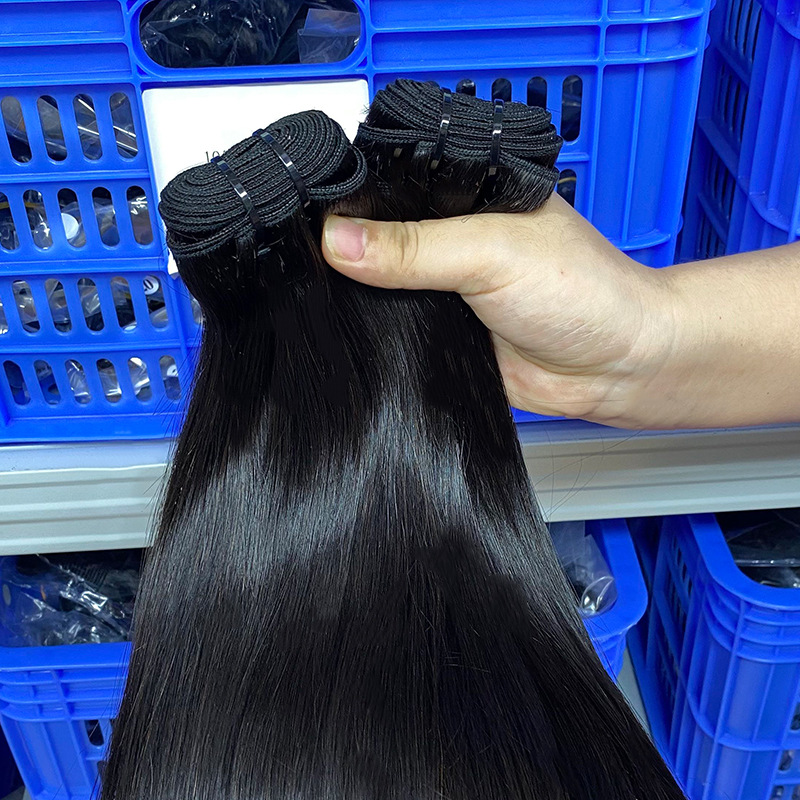
1) Cuticle direction and alignment
- How I test: I pinch a small section and gently slide my fingers down (root-to-tip) and then up (tip-to-root).
- What I expect: Smooth root-to-tip and slightly rougher tip-to-root. That “one-way smoothness” signals aligned, intact cuticles (Remy/virgin).
- Red flag: Feels similar both directions, or snags both ways—often a sign of misaligned or stripped cuticles, which leads to tangling and matting.
2) Smell (odor check)
- How I test: I take a clean, dry sniff, then lightly mist the hair with water and smell again.
- What I expect: Neutral to mildly clean. Natural hair may smell like clean hair.
- Red flag: Strong chemical, corn-chip, or harsh silicone smell—often indicates heavy processing (acid baths, coatings) that can mask issues.
3) Smoke/burn test (single-strand, safety first)
- How I test: I remove 1–2 strands and, over a nonflammable surface with tweezers, quickly touch the end to a flame, then blow it out.
- What I expect: Real human hair singes, smells like burnt hair, and turns to a soft, crushable ash.
- Red flag: Synthetic fibers melt into hard beads and smell like plastic. Blends can behave inconsistently. Always use caution and ventilation.
4) Elasticity and snap
- How I test: I gently stretch a single strand when dry and again when slightly damp.
- What I expect: A little stretch that returns to shape without snapping quickly—sign of a healthy cortex and good moisture retention.
- Red flag: Immediate breakage or gummy overstretch—often compromised or over-processed hair.
5) Silicone slip and water behavior
- How I test: I rub a few strands between my fingers and then rinse under warm water with a drop of mild shampoo.
- What I expect: A soft, natural slip that still feels like hair; after washing, it shouldn’t turn squeaky-dry or drastically different.
- Red flag: Super-slippery “glass” feel that disappears after a wash—often heavy silicone coating that can wear off, revealing dryness.
6) Heat and dye spot tests
- Low heat: One slow pass of a flat iron at low heat (300–320°F/150–160°C) on a small strand.
- Good sign: Strand stays intact, minimal smell, no melting.
- Dye patch: Apply a tiny dab of semi-permanent or developer-based color on a cut strand.
- Good sign: Even uptake without extreme dryness or immediate breakage.
- Note: “Virgin hair” should take color predictably; pre-dyed/processed hair may resist or lift unevenly.
Quick At-Home Quality Test Cheat Sheet
| Test | How I Do It | Good Sign | Red Flag |
|---|---|---|---|
| Cuticle direction | Slide fingers R→T, then T→R | Smooth R→T, slight drag T→R | Snaggy both ways / same both ways |
| Odor | Dry sniff + misted sniff | Neutral/clean | Strong chemical/silicone |
| Burn (single strand) | Quick singe with caution | Soft ash, hair smell | Hard bead, plastic smell |
| Elasticity | Gentle stretch dry + damp | Slight stretch, rebounds | Snaps quickly or turns gummy |
| Heat pass | Low temp, single pass | No melting, holds integrity | Melts, sticks, smells plastic |
| Dye patch | Tiny strand test | Even uptake, minimal dryness | Blotchy, brittle, refuses color |
| Water/silicone | Rinse + light shampoo | Natural slip remains | Slippery then squeaky-dry |
Pro tip: Hair labeled “100% virgin human hair” with intact, aligned cuticles is my baseline. Mixed fibers or over-processed bundles are more likely to shed, tangle, and age quickly.
How do I check weft construction, drawn ratio, and true weight for my bundles?
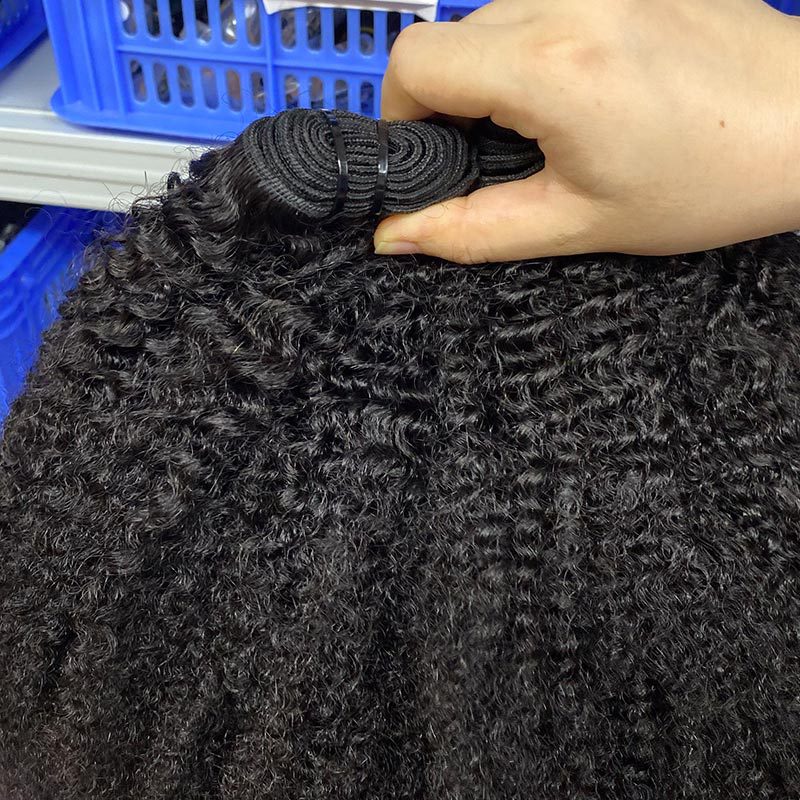
Weft construction and shedding control
- Stitching: I look for tight, even, double-stitched wefts with no gaps or frayed threads. Neat stitching reduces shedding and extends install life.
- Beard/return hairs: A tidy, short “beard” that lays flat is normal; long, prickly returns can irritate and shed.
- Tug test: I gently run my fingers or a wide-tooth comb through the bundle 3–4 times.
- Good sign: Minimal to no shedding.
- Red flag: Several full-length strands pull out each pass—often weak wefts or poor sealing.
Drawn ratio (fullness to the ends)
- Single drawn: Natural taper; more short hairs mixed in. Cheaper, but ends are thinner.
- Double drawn: Fuller from weft to ends; higher labor cost, better density for blunt cuts and bobs.
- How I check: I hold the bundle up to the light and compare midshaft thickness to the ends. Even density indicates better sorting and less short hair.
True weight and consistency
- Standard weight: Most quality bundles are ~100g (3.5oz) each. I verify on a kitchen scale (tare the packaging).
- Length vs. fullness: Longer lengths (22”+) spread the same 100g over more inches, so they naturally look less dense. I plan extra bundles for long installs.
- Batch consistency: I weigh multiple bundles. Consistent weights and similar fullness across the batch indicate reliable sorting.
Bonus checks that save me money later
- Weft flexibility: I gently bend the weft. If it’s overly stiff, it can lift or be uncomfortable.
- Split ends/dryness: I inspect the last 2–3 inches. Too many splits or a crunchy feel suggests prior damage or acid processing.
- Luster: Healthy, medium luster (not overly shiny) reads most natural. High glassy shine often means silicone.
What should I ask vendors about sourcing, processing, and QC for my orders?
Clarify the hair type (in simple terms)
- Raw hair: Minimal to no processing (other than sanitation). Coarser feel, excellent longevity, takes color well.
- Virgin hair: From human donors, not previously dyed/chemically processed; cuticles intact and aligned.
- Remy hair: Cuticles aligned in one direction (reduced tangling). Can be dyed or steam-textured.
- Non-Remy hair: Mixed directions, often acid-treated and silicone-coated—cheaper, typically tangles sooner.
- Single donor vs. multi donor: Single donor can provide superb consistency; multi donor is common but should still be well sorted.
Questions I ask directly:
1) Is the hair raw, virgin Remy, or non-Remy? Are cuticles intact and aligned?
2) Has the hair been acid-washed or silicone-coated? If “no,” can you confirm in writing?
3) Is the texture steam processed or natural? At what temperature and duration?
4) What origins are available (Brazilian, Peruvian, Indian, Cambodian, Vietnamese, Burmese)? How do they differ in coarseness and luster?
- Example: Cambodian/Vietnamese often feel slightly coarser with great strength; Indian can be versatile; “Brazilian” is a trade style—focus on feel and consistency over labels.
5) What’s the drawn ratio (single/double) for each length? How are short hairs controlled?
6) What’s your bundle weight standard and tolerance (e.g., 100g ± 3g)?
7) What QC steps do you perform per batch (checking shedding, tangling, odor, gray hairs, split ends)? Can you share a short QC video?
8) Do you offer sample kits and can you guarantee re-order consistency? Do you track lots/batches?
9) What’s the return/exchange policy for shedding, tangling, or weight discrepancies?
10) Lead times, shipping options, and support for stylists/resellers (photos, education, after-sales care).
Why I ask: Clear answers about sourcing and processing help me predict longevity, dye performance, and customer satisfaction. Vendors confident in their QC and policies are far easier to build a long-term relationship with.
How do I compare samples and choose the best value supplier for me?
Standardize your test so results are fair
- Order the same specs from each vendor (e.g., 14” body wave, double drawn, 100g).
- Run the same at-home tests: cuticle direction, odor, tug/shedding, wash/air dry, low-heat pass, tiny dye patch, and weigh-ins.
- Track performance after first wash and again after a week on a mannequin or clip-in test.
Scorecard I use with salons and online sellers
| Vendor | Price/Bundle | Weight (g) | Ends Fullness (Drawn) | Shedding (0–5) | Tangling (0–5) | Odor (0–5) | Dye Test (0–5) | After-Wash Feel (0–5) | Policy (0–5) | Lead Time | Overall Value |
|---|---|---|---|---|---|---|---|---|---|---|---|
| A | $ | Single/Double | |||||||||
| B | $ | Single/Double | |||||||||
| C | $ | Single/Double |
- Scoring tip: Lower shedding/tangling is better, so reverse the scale (5 = excellent). Add notes on luster, softness, and texture consistency.
- Policy matters: A slightly higher price with a strong return policy and consistent batches often outperforms cheaper, unpredictable suppliers.
Match the hair to your clients and use
- Everyday wearers and first-time buyers: Virgin Remy with medium luster and reliable density is a safe bet.
- Color-heavy salons: Raw or high-quality virgin with proven dye performance.
- Coarse/natural looks: Cambodian/Vietnamese or Indian wavy/curly often blend beautifully with textured leave-outs.
- Sleek looks and blunts: Double drawn bundles give the fullness you need without excessive overbuying.
How many bundles and the true cost of ownership
- 12–16”: Usually 2–3 bundles for a full install (add a closure/frontal as needed).
- 18–22”: Often 3 bundles.
- 24”+: Plan for 4 bundles to maintain density.
- Longevity = value: A bundle that lasts 9–12 months with minimal shedding can cost less per wear than a cheaper bundle that degrades in 6–8 weeks.
Quick Buyer’s Checklist (printable)
- Label says “100% virgin human hair” with cuticles intact and aligned.
- Consistent 100g weight per bundle; minimal shedding on comb-through.
- Ends are reasonably full; double drawn where fullness is critical.
- Neutral smell; no heavy silicone “glass” feel that vanishes after washing.
- Passes elasticity, low-heat, and small dye tests without damage.
- Wefts are tight, even, double-stitched; beard lies flat.
- Vendor answers sourcing/processing/QC questions clearly and offers a fair return policy.
- Reviews with real photos show consistency across lengths and textures.
Conclusion
When I evaluate human hair bundles, I rely on simple, repeatable tests: cuticle direction, smell, single-strand burn, elasticity, heat, dye spot, and a real look at wefts, weight, and ends. I verify claims like “100% virgin human hair” by how the hair behaves, not just how it’s labeled. Then I pressure-test vendors with clear questions about sourcing, processing, and QC, and I compare samples side-by-side using a scorecard. Do this, and you’ll avoid low-quality hair, reduce returns, and lock in suppliers who deliver the texture, longevity, and value your clients—and your business—deserve.
Futher Reading: https://biwinco.com/human-hair-bundles-ultimate-buying-guide/