
I get this question every week from stylists, salon owners, and first-time buyers: “How many grams are in a bundle—and why does it feel different at longer lengths?” I’ve worked with raw, virgin, Remy, and steam-processed hair from Brazilian, Cambodian, Vietnamese, and Indian origins, and I know it’s not just the number on the label that matters. Weight, drawn ratio, texture, and strand diameter all play into how full your install looks, how many bundles you need, and whether your clients feel they’re getting value for money. If you’ve ever noticed a 24-inch bundle looks “skinnier” than a 12-inch one—even when both are 100 grams—this article is for you.
Most human hair bundles are 100 grams (about 3.5 ounces). The gram weight doesn’t change with length, but longer bundles include fewer, longer strands, so they appear less full. To compare bundles across suppliers, convert ounces to grams (oz × 28.35), and weigh your bundles on a digital scale, subtracting packaging weight. For volume, add extra bundles at longer lengths or choose double drawn hair for fuller ends.
In the sections below, I’ll break down standard bundle weights, how length and drawn ratio change perceived thickness, how to compare grams across suppliers accurately, and whether you should buy heavier bundles or simply add more. By the end, you’ll be able to order confidently, budget correctly, and deliver full, natural-looking installs every time.
What is the standard bundle weight and why does it matter for me?
Most quality human hair bundles—raw, virgin, Remy—are sold in 100-gram units. You’ll also see 3.5 ounces on packaging, which equals roughly 100 grams. In my experience, reputable vendors allow a small tolerance (±3–5 grams) because hair absorbs ambient moisture and the weft stitch contributes minimally to total weight.
Why it matters:
- For stylists and resellers: Consistent 100-gram bundles make ordering, pricing, and inventory planning easy. If a supplier quietly drops to 80–90 grams, you’ll need more bundles per install and your margins shrink.
- For end consumers: The weight per bundle tells you how many you’ll likely need and helps you spot underfilled bundles that won’t deliver the fullness you expect.
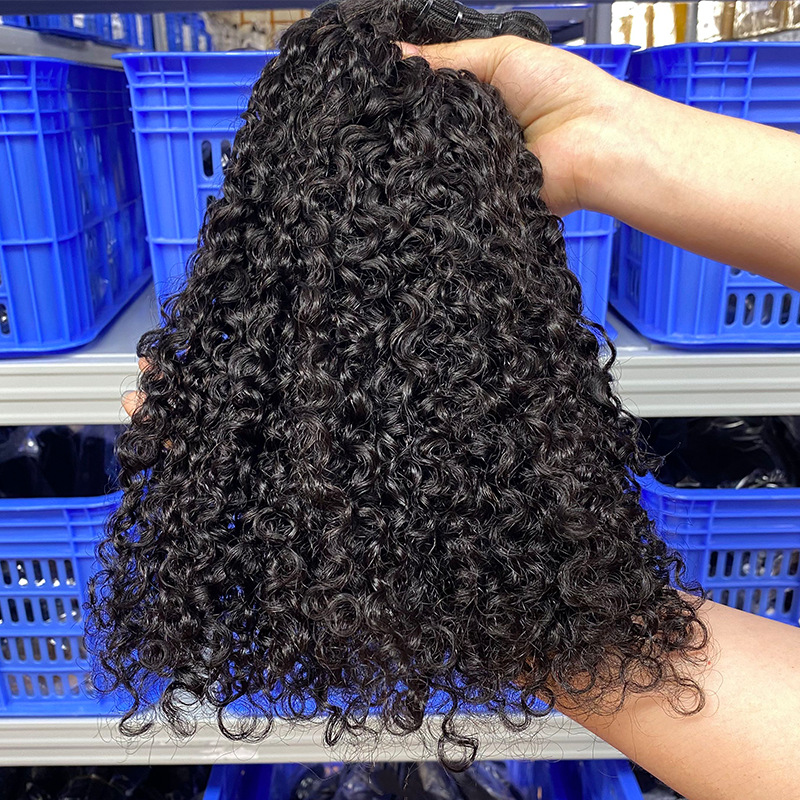
Quick conversions and labels to know
- 3.5 oz ≈ 99.2 g (rounded to 100 g)
- If your bundle is labeled in ounces, multiply by 28.35 to convert to grams.
- Use a digital kitchen scale at home and subtract packaging (tare) to get the net hair weight.
Table: Common bundle labels and gram equivalents
| Label on Package | Weight Stated | Grams (Approx.) | Notes |
|---|---|---|---|
| “100 g” | 100 g | 100 g | Standard unit; slight variance is normal |
| “3.5 oz” | 3.5 oz | 99–100 g | Most common alternative label |
| “3.2–3.6 oz range” | 3.2–3.6 oz | 91–102 g | Check if price reflects the lower end of the range |
| “120 g” (heavier) | 120 g | 120 g | Fewer bundles needed; usually costs more |
Pro tip: Always ask whether the stated weight is “net hair weight.” It should exclude tags, bands, and outer packaging. The weft thread contributes very little (usually under 1–2 g), but good vendors will be transparent.
How do length and drawn ratio affect my perceived thickness per bundle?
Here’s the part that confuses most buyers: a 12-inch and a 26-inch bundle can both be 100 grams, but the longer one looks thinner. That’s because 100 grams of shorter hair contains more individual strands (they’re shorter), while 100 grams of longer hair contains fewer, longer strands—so the bundle appears less dense.
Drawn ratio (single vs double drawn) and fullness
- Single drawn: More natural taper—thicker near the root, thinner toward the ends. It looks realistic but less full at the tips, especially at longer lengths.
- Double drawn: Ends are trimmed and equalized so a higher percentage of strands are the target length. It looks much fuller from root to tip and often reduces the number of bundles needed for long installs.
In my installs, double drawn Cambodian or Vietnamese raw bundles at 22–26 inches often deliver end fullness that single drawn Brazilian virgin bundles can’t match at the same length and weight.
Texture and origin also change perceived volume
- Curly/kinky curly textures appear fuller than straight at the same gram weight because the curl pattern adds volume.
- Strand diameter varies by origin: Burmese and Cambodian hair can feel coarser and denser; Indian hair often feels finer and silkier. At 100 grams, denser strands can “read” fuller.
- Heavily processed or colored bundles may weigh the same but look thinner due to fiber damage and breakage that reduces end density.
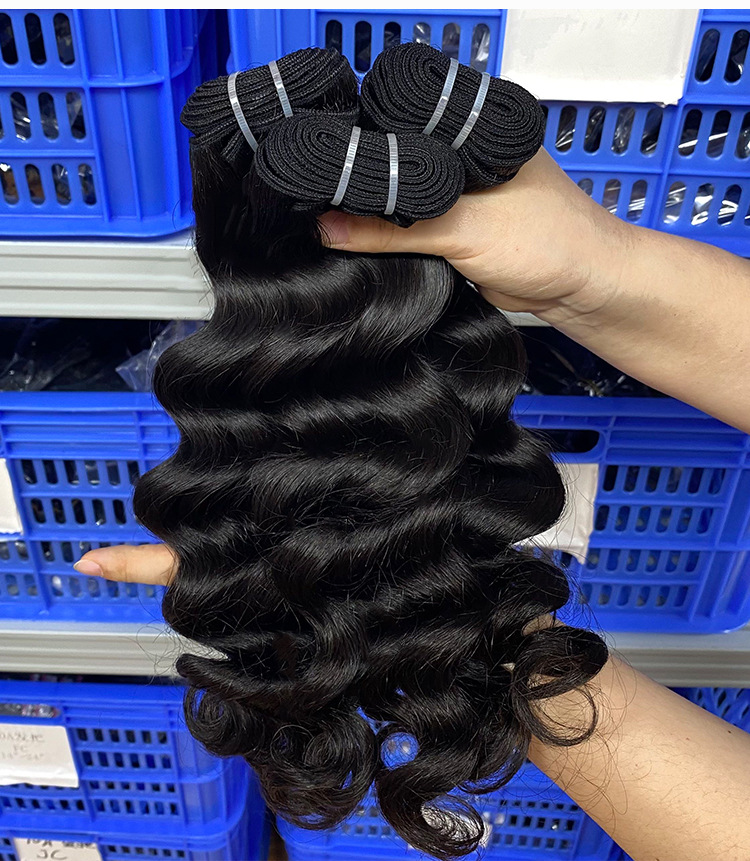
Table: Length vs perceived fullness and typical bundle count (straight hair)
| Length (inches) | Perceived Fullness per 100 g | Typical Bundles for Full Head | Notes |
|---|---|---|---|
| 8–14 | High | 2–3 | Shorter lengths maintain fullness easily |
| 16–20 | Medium | 2–3 (double drawn) / 3 | Double drawn can keep ends looking thicker |
| 22–26 | Lower | 3–4 | Add bundles or choose double drawn for volume |
| 28–32 | Lowest | 4+ | Expect to add bundles for glam-length fullness |
Remember: Curly, deep wave, and kinky textures may need fewer bundles than straight for the same visual volume. Always account for the texture’s natural expansion.
How can I compare grams per bundle across suppliers accurately for my orders?
I’ve learned to be methodical. A 100-gram label doesn’t guarantee the same fullness across vendors or textures, so here’s how I compare apples to apples.
Step-by-step comparison
- Confirm the unit: Ask for net hair weight in grams. If they quote ounces, convert (oz × 28.35).
- Check tolerance: Reliable suppliers disclose their tolerance (e.g., 95–105 g).
- Verify length measurement method: For curly/kinky textures, confirm the stretched length (not just “visual” length).
- Ask about drawn ratio: Single vs double drawn dramatically affects end fullness per bundle.
- Request strand origin and texture details: Cambodian/Vietnamese raw double drawn can deliver more tip density than standard Brazilian virgin single drawn at the same weight.
- Ask for scale photos: A bundle on a digital scale, plus one photo of the hair stretched, tells you a lot about actual content and taper.
- Weft construction and weft length: Denser, tighter wefts don’t change hair grams much but can influence install feel; prioritize hair quality and end density.
- Evaluate processing: Heavily bleached or permanent-colored bundles often shed and look thinner over time—buy an extra bundle for insurance.
- Inspect quality markers: Minimal shedding/tangling, aligned cuticles (Remy/raw), low split ends, good luster, and soft but resilient feel.
- Test at home: Weigh with a kitchen scale and subtract packaging (tare). Air-dry hair before weighing for consistency.
What I look for in real orders
- Consistency across lengths: If 24-inch looks dramatically skinnier than 20-inch from the same vendor, I plan for an extra bundle.
- Texture match: For clients wanting silky straight, I calculate more bundles for long lengths; for curly glam, I can often keep it to three.
- Honest specs: If a supplier won’t disclose drawn ratio or tolerance, I proceed cautiously.
Should I buy heavier bundles or add extra bundles for volume and value for me?
I’ve tried both strategies—ordering heavier 120-gram bundles and adding an extra 100-gram bundle—and the best choice depends on your style, budget, and install method.
When heavier bundles make sense
- You want fewer bundles overall (e.g., 2 × 120 g instead of 3 × 100 g for a mid-length install).
- You prefer fuller ends without increasing weft count (useful for quick installs or minimal leave-out).
- You’re working with double drawn hair where the added weight truly improves tip density.
When adding extra bundles is smarter
- Long lengths (22 inches+) in straight or body wave textures, where fullness drops at the ends.
- You want flexibility: adding a third or fourth bundle lets you customize rows without over-bulking a single weft.
- Budget control: sometimes 3 × 100 g is more cost-effective than 2 × 120 g while giving you more placement options.
Practical guidelines I use
- Short to medium (8–18 inches): 2–3 bundles are usually enough.
- Long (20–26 inches): Plan for 3–4 bundles for straight/body wave; 3 may suffice for curly/kinky curly.
- Double drawn upgrades: If the goal is thick ends on long lengths, double drawn can reduce your bundle count by one.
- Processed/colored hair: Add one extra bundle to offset potential breakage and shedding over time.
- Client comfort: Very heavy installs can feel bulky; distributing volume across more wefts often feels lighter and looks more natural.
Care tips to protect your investment
- Wash and condition gently; hydrate mid-shaft to ends to prevent dryness and split ends.
- Use heat responsibly; raw and virgin hair handles heat well, but repeated high heat reduces longevity.
- Store bundles flat or in breathable bags; avoid tight rubber bands that cause kinks and breakage.
- Detangle from ends upward with a wide-tooth comb; this reduces shedding and maintains end density.
Conclusion
Most human hair bundles weigh 100 grams (about 3.5 ounces), but fullness isn’t just about the number on the label—it’s about length, drawn ratio, texture, strand origin, and hair quality. Shorter lengths look fuller at the same gram weight; longer lengths need double drawn hair or extra bundles to achieve thick ends. To compare suppliers, convert ounces to grams, verify net hair weight, ask about drawn ratio, and use a digital scale with tare for accuracy. For value, choose heavier bundles when you want fewer wefts, or add extra 100-gram bundles at long lengths and in straight textures to build volume. With these checks and strategies, you’ll order smarter and deliver the lush, long-lasting installs your clients love.
Futher Reading: https://biwinco.com/human-hair-bundles-ultimate-buying-guide/