
I spend most of my week inside factories and supplier warehouses, comparing bundles under different lights, running cuticle alignment checks, and stress-testing units after processing. Texture isn’t just a marketing descriptor—it’s the result of fiber structure, origin, chemical/steam treatment, and how a wig maker sets and finishes the pattern. I know the pain points: textures that don’t match end-customer routines, curl patterns that frizz by day three, “dense” units that read flat once installed, and procurement challenges when the texture you approved in samples doesn’t hold through production.
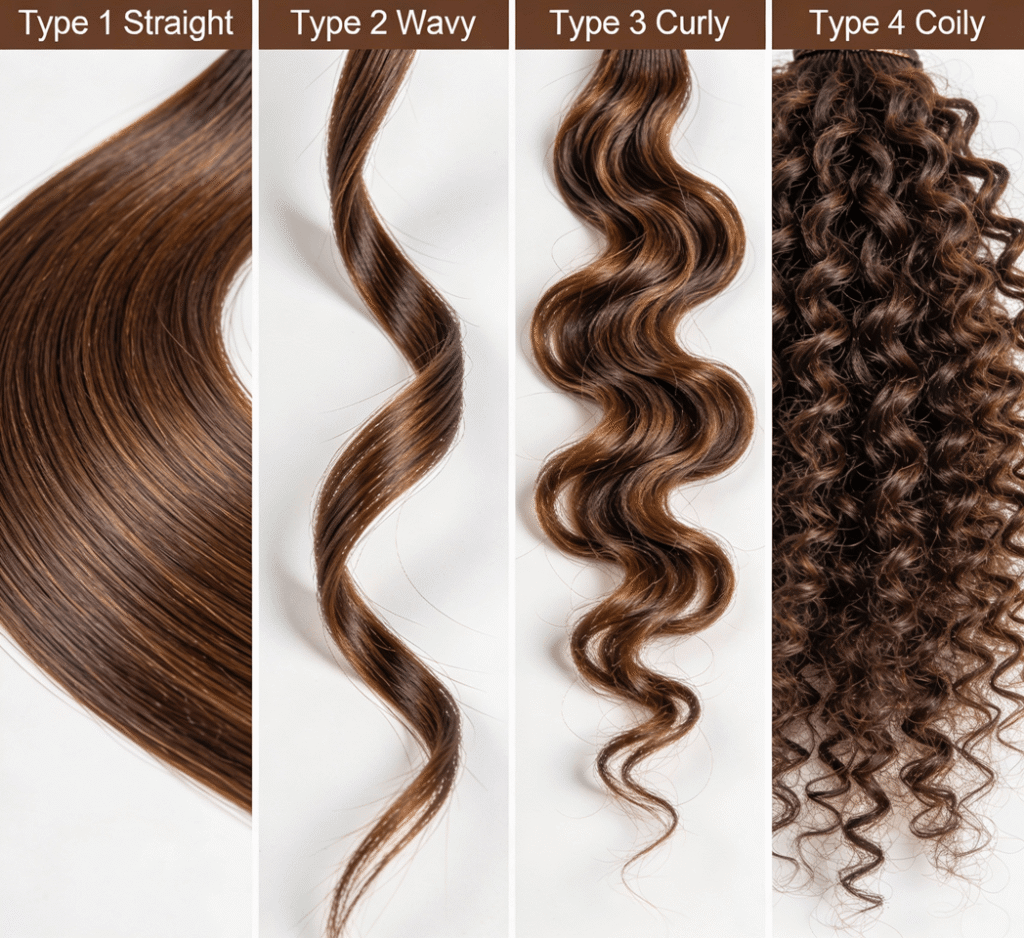
Understanding straight, wavy, curly, and coily textures starts with fiber behavior, cuticle condition, and setting method. Straight has aligned cuticles and higher light reflection; wavy shows gentle S-curves with added movement; curly builds defined ringlets with more diffuse shine; coily (Type 4) forms tight coils or Z-patterns with high shrinkage and perceived density. Choosing the right texture means aligning care capacity, styling skill, climate, and desired silhouette.
In this guide, I break down how textures are created and how they behave in daily wear, then map them to styling skill and routine. I’ll also cover frizz prevention in curlier patterns, how texture impacts perceived density and volume, and the practical care differences between wavy and coily units—so you can spec products accurately and set realistic expectations for your customers and teams.
Which texture matches my daily routine and styling skill?
What each texture demands day-to-day
- Straight: Minimal detangling, faster morning routine, but frequent smoothing to control flyaways and redistribute oils along the shaft. Works well if you heat style lightly and prefer sleek silhouettes.
- Wavy: Moderate maintenance; benefits from light leave-in hydration and scrunching to maintain S-pattern. Good for users who like movement without committing to full curl care.
- Curly: Higher touch routine; needs hydration layering (leave-in + gel/cream) and pattern-friendly detangling. Best for those confident with curl techniques and product cocktailing.
- Coily: Most intensive; requires rich moisture, patient detangling on wet, conditioned hair, and careful handling to protect fragile coils. Suits wearers who prioritize texture authenticity and can commit to protective routines.
Matching lifestyle and skill—my procurement advice
- Short morning routine, low product usage, frequent office wear: straight or loose body wave.
- Moderate time, some product skill, likes air-dry definition: water wave or loose curl (3A–3B).
- High texture literacy, comfortable with sectioning, gels/creams: deep wave, 3C.
- Protective styling mindset, weekly hydrating sessions, low manipulation: kinky curly/afro kinky (4A–4C).
Key insight from the production floor
Wigs with tighter curl sets require stricter QC on cuticle integrity and steam set consistency. If your customer base isn’t adept at curl care, prioritize wavy textures with stable S-patterns—they deliver perceived volume with fewer returns for “frizz” or “pattern loss.”
How do I prevent frizz in curlier patterns I wear?
Frizz mechanics by texture
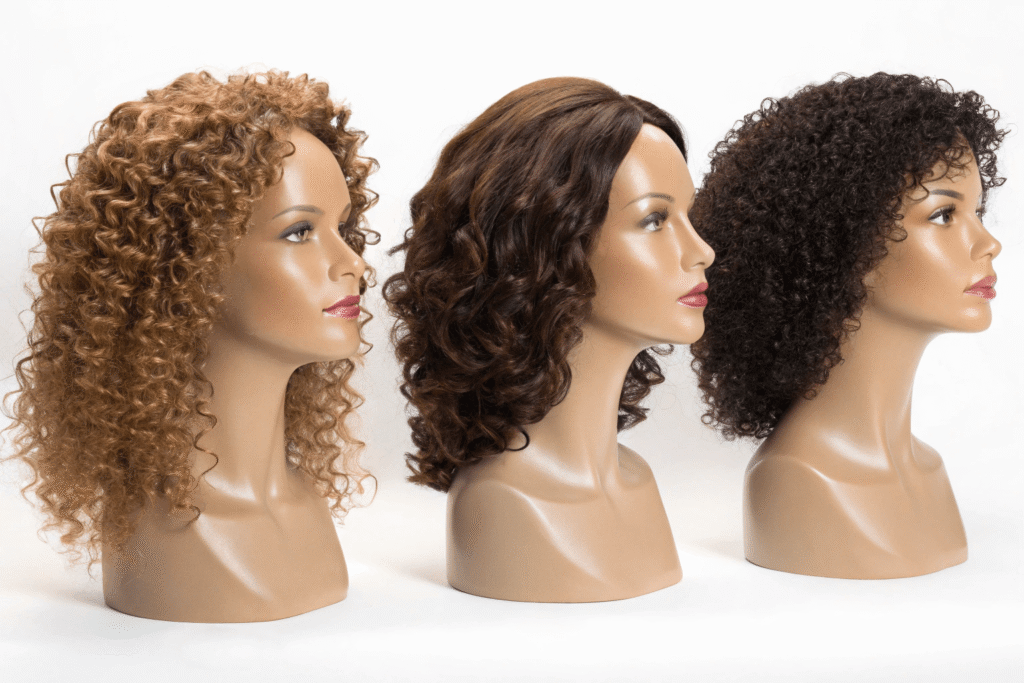
- Curly and coily patterns have more lifted cuticles and micro-gaps after processing, leading to faster moisture exchange and halo frizz.
- Diffuse light reflection on curls makes frizz visually louder than on straight hair.
My field-tested anti-frizz protocol
- Prep: Co-wash or gentle sulfate-free cleanse; apply a silicone-free leave-in for hydration, then seal with a lightweight serum for curly, richer butter/oil blend for coily.
- Set: Work in sections while wet; finger-comb or wide-tooth comb only. Apply curl cream/gel with a praying-hands motion to align strands; avoid rough towels—use a microfiber wrap.
- Dry: Air-dry or use a diffuser on low heat; do not disturb curls until fully dry. Touch-ups use mist + scrunch, not brushing.
- Refresh: On day 2–4, mist with water + conditioner (10–20%), re-scrunch. For coily, rehydrate in sections and stretch gently to reduce tangling.
Processing considerations that impact frizz
- Steam-set curls hold better than acid-bath processed hair. Acid baths strip cuticles; you’ll see faster frizz and tangling. Specify Remy, intact cuticle hair for curly/coily SKUs.
- Cuticle-aligned wefts with minimal split ends reduce static and fuzz. Ask suppliers for pre-install cuticle direction reports.
Detangling standards
- Curly/coily: Finger-detangle or wide-tooth comb on wet, conditioned hair only; work from ends upward. Straight/wavy: Can detangle damp or dry with a brush from ends upward.
Does texture affect density and volume choices for me?
Yes—perceived fullness changes with curl pattern, shrinkage, and light reflection.
How texture shifts the visual equation
- Straight: Reflects more light, lies flatter; at equal density, looks slimmer. You may need higher factory-listed density for a sleek look.
- Wavy: Adds body through S-pattern; moderate density reads fuller than straight.
- Curly: Ringlets create air space and stack; looks volumized at lower density.
- Coily: High shrinkage and coil stacking maximize apparent fullness; lower density often looks abundant.
Practical density planning
- Straight, long lengths (20″+): Consider 150–180% to avoid a flat silhouette, especially with middle parts.
- Wavy (12–18″): 130–150% typically sufficient for everyday volume.
- Curly (14–20″): 120–150% reads full depending on curl tightness.
- Coily (10–16″): 100–130% often looks full; go higher only for intentional Afro silhouettes.
Table: Texture vs. perceived volume and typical density
| Texture | Light reflection | Shrinkage | Visual fullness at equal density | Typical density range |
|---|---|---|---|---|
| Straight | High | Minimal | Lowest | 150–180% for sleek, long looks |
| Wavy | Moderate | Low–Moderate | Medium | 130–150% |
| Curly | Diffuse | Moderate | High | 120–150% |
| Coily | Low | High | Highest | 100–130% (more for Afro looks) |
Note: Always correlate density with length—long straight units need more grams to maintain line-of-sight fullness from crown to ends.
What care differences matter between wavy and coily units?
Core differences
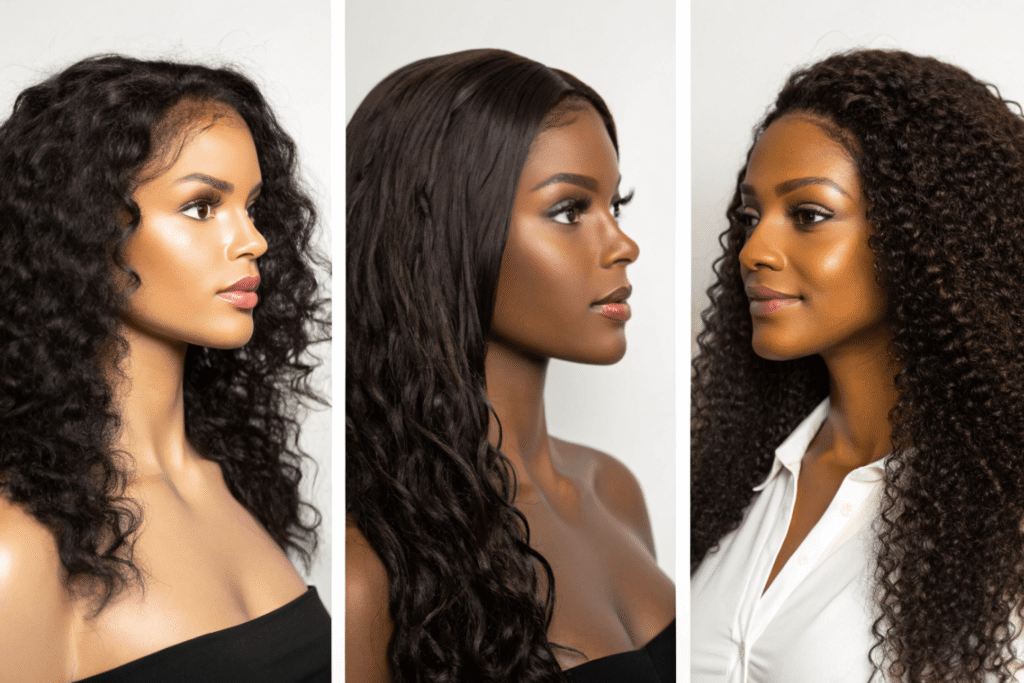
- Hydration level: Wavy needs lightweight hydration; coily requires richer moisture and sealing to combat high shrinkage and fragility.
- Handling: Wavy tolerates occasional dry detangling; coily should be detangled only when wet and conditioned, in sections.
- Pattern preservation: Wavy can be refreshed with light mist and scrunch; coily often needs rehydration, sectioning, and gentle stretching to prevent knotting.
- Heat risk: Coily is more prone to heat damage and pattern loosening; use low heat, always with protectants. Wavy is more forgiving but still benefits from protectant.
Table: Wavy vs. Coily care checklist
| Care step | Wavy (Type 2) | Coily (Type 4) |
|---|---|---|
| Wash cadence | Moderate (every 5–8 wears) | Less frequent; prioritize co-wash and deep condition |
| Detangling | Ends-up, damp or dry, soft brush | Wet + conditioned, finger/wide-tooth, sectioned |
| Product weight | Light leave-in, foam/soft gel | Rich leave-in, cream, butter/oil sealant |
| Drying | Air-dry or low heat; minimal touching | Air-dry or low heat diffuser; zero manipulation until dry |
| Night care | Loose braid/pineapple optional | Pineapple/banding; satin bonnet mandatory |
| Refresh | Water + light conditioner spritz | Sectioned rehydrate, seal, gentle stretch |
Texture fundamentals (from my sourcing and factory checks)
- Straight hair wigs have smooth cuticle alignment that reflects more light, appearing shinier and flatter with minimal natural bend.
- Wavy hair wigs form gentle S-shaped patterns that add body and movement without tight ringlets, offering a versatile middle ground between straight and curly.
- Curly hair wigs feature defined loops or ringlets with tighter S or loose spiral shapes, increasing volume and reducing natural shine due to diffuse light reflection.
- Coily hair wigs (Type 4) have tight coils or Z-patterns with high shrinkage and density, appearing shorter and fuller than their true length when dry.
- Straight textures are lower maintenance for detangling and daily styling but may require more frequent smoothing to manage flyaways and oil distribution.
- Wavy and curly textures need routine hydration and curl-friendly products to preserve pattern definition and minimize frizz, while coily textures require richer moisture and gentle handling to prevent breakage.
- Texture choice affects face framing and silhouette: straight elongates and sleeks, wavy softens angles, curly adds roundness, and coily maximizes fullness at the crown and sides.
- Heat styling has different risks by texture; tighter patterns (curly/coily) are more prone to heat damage and pattern loosening, so low heat and heat protectants are critical.
- Detangling method should match pattern: straight/wavy can be brushed from ends upward when dry or damp, while curly/coily should be finger-detangled or wide-tooth combed when conditioned and wet.
- Density and length selection should complement texture: straighter textures look thinner at equal density, while curly/coily look fuller, so lower density often suits coils and higher density may be needed for sleek straight styles.
Conclusion
Texture choice is a supply-and-care equation: cuticle integrity, processing method, and pattern set on the factory side; routine, skill, climate, and silhouette preference on the wearer side. Straight maximizes shine and speed; wavy delivers movement with moderate effort; curly offers volume with disciplined hydration; coily celebrates fullness but needs rich, gentle care. Align texture with realistic daily habits, specify density by pattern and length, and insist on Remy, cuticle-aligned input hair—especially for curlier sets—to minimize frizz and maintain pattern over time. That’s how I keep both procurement teams and end customers satisfied, with fewer returns and better wear outcomes.