
I’ve spent years auditing wig factories, testing care routines on color-treated lace units, and advising procurement teams on aftercare SKUs that actually reduce returns. The biggest pain point I see isn’t the wig hair itself—it’s the wrong products used post-purchase: sulfates that strip color, heavy silicones that suffocate the fiber, and clarifiers that rough up cuticles on already-processed hair. In B2B terms, suboptimal care compounds into higher refurbishment costs, shorter lifecycle, and customer dissatisfaction—especially on premium textures and high-density units.
The best shampoos and conditioners for human hair wigs are sulfate-free, color-safe formulas designed for wigs and extensions, with gentle surfactants and lightweight hydration that won’t build up on lace or knots. Use moisturizing shampoos with mild amphoteric surfactants (like cocamidopropyl betaine) and pair with silicone-light conditioners, adding weekly deep masks and leave-ins with UV/heat protection. Avoid clarifying formulas unless removing heavy buildup, and limit protein to light, periodic use for processed hair.
To keep this practical, I’ll break down what to buy (and why), how to balance moisture vs. protein by texture, where salon-grade SKUs do and don’t justify the spend, and a safe testing protocol that won’t jeopardize inventory or customer units. I’ll integrate product picks and the lab-level reasoning behind them so your team can standardize care across SKUs and regions.
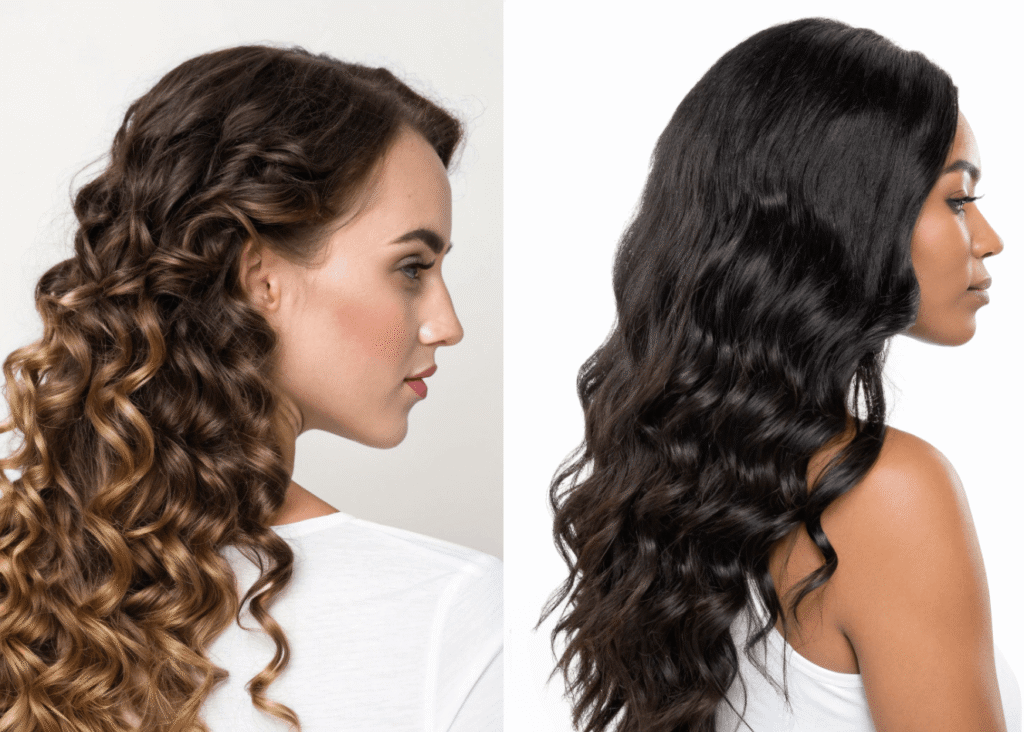
Should I choose sulfate-free formulas for color-treated units?
Sulfates (SLS/SLES) are effective cleansers but too aggressive for color-treated wig hair, which lacks scalp sebum and is typically pre-bleached or dyed in the factory. In my audits across China and India-based suppliers, I’ve seen sulfates accelerate fading, create cuticle lift, and amplify frizz—especially on high-porosity units like 613 or ash-toned balayage.
- What works best:
- Sulfate-free, color-safe shampoos with mild amphoteric surfactants (e.g., cocamidopropyl betaine) maintain smoothness and reduce dye leaching.
- Moisturizing bases that mimic scalp oils (argan, shea) are helpful, but keep them lightweight to avoid lace buildup.
- Wig/extension-labeled formulas are engineered to rinse clean and protect knots, reducing shedding risk.
- When to use clarifying:
- Only for heavy residue removal (strong hold sprays, adhesives). Follow immediately with a deep mask. Routine clarifying on processed wig hair is a fast track to dryness and tangling.
Recommended categories:
- Best overall restoration: Olaplex No. 4 & No. 5 (bond repair for chemically treated units).
- Best drugstore moisture: SheaMoisture Raw Shea Butter (rich hydration for textured hair).
- Best wig-specific: Milano Collection Essentials (clean rinse, knot-safe).
- Best detangling: Design Essentials Wigs & Extensions (high slip for nape tangles and residue).
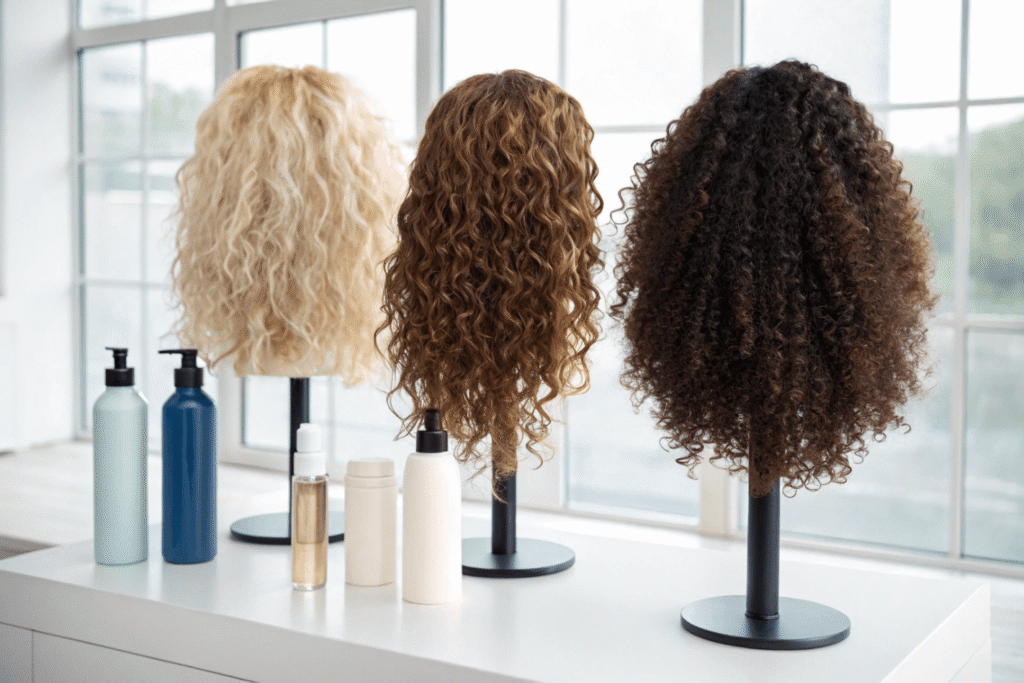
Which protein vs moisture balance suits my texture?
Human hair wigs vary by origin and processing intensity; that drives how much protein vs. moisture they need. Processed hair (bleached, dyed, steam-textured) often has compromised bonds and raised cuticles. Virgin or minimally processed Remy hair is more resilient.
- Moisture-first rule: Wig hair has no natural oil supply. Prioritize hydration to maintain softness and reduce friction/matting.
- Protein sparingly: Use lightweight protein conditioners or masks to reinforce weakened strands—especially for bleached or color-treated units—but avoid over-proteinizing, which makes hair rigid and prone to snapping.
Texture-specific guidance:
- Straight, fine, silky (often South American/Eastern European origins): Favor lightweight hydration; protein only when ends feel limp or “stretchy” when wet.
- Wavy to curly (2B–3C, often SEA/Indian origins): Moisture-forward routines with humectants; occasional protein to maintain curl integrity; avoid heavy silicones that weigh down pattern.
- Coily/kinky (3C–4C, often Indian temple hair or textured via steam): Richer moisture systems with oils/butters; protein once monthly to prevent over-softness and maintain strand strength.
Weekly cadence:
- Deep conditioners/masks designed for human hair wigs once per week for softness and manageability.
- Leave-in conditioners with UV and heat protection between wash days to reduce environmental wear.
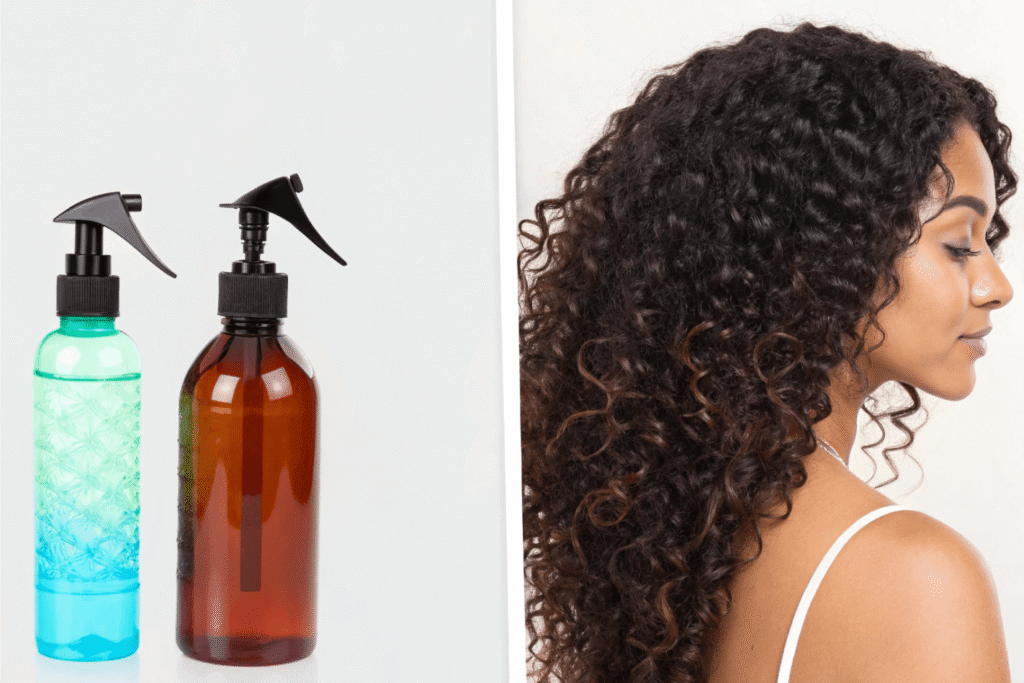
Moisture vs. Protein Quick Reference
| Wig Texture / Condition | Primary Need | Protein Use | Notes |
|---|---|---|---|
| Fine straight, color-treated | Lightweight moisture | Light, every 3–4 washes | Avoid heavy silicones; focus on cuticle-smoothing. |
| Wavy/curly, porous | Moisture + slip | Moderate, every 2–3 washes | Humectants and oils help; detangle wet with conditioner. |
| Coily/kinky, dry | Rich moisture | Light monthly | Butters/oils ok; watch lace buildup; rinse thoroughly. |
| Bleached/613 | Moisture + bond repair | Moderate, paired with bond system | Cool water, minimal heat; UV protectants recommended. |
Do salon-grade products justify the cost for my usage?
Often yes for high-value units and chemically treated hair, but not universally. The ROI depends on your SKU mix, wear frequency, and customer expectations.
- When salon-grade is worth it:
- Bond repair systems (e.g., Olaplex No. 4/5) for bleached/colored wigs show measurable reductions in frizz and breakage, extending the usable life and reducing returns.
- Color-safe, low-residue formulas that protect lace knots can cut shedding-related complaints.
- When drugstore suffices:
- Hydration-focused, sulfate-free options like SheaMoisture perform well on textured units where moisture is the primary need.
- For rental or high-turnover styling environments, consistent mid-tier wig-specific lines (Milano, Design Essentials) balance cost and performance.
Procurement tip:
- Standardize two tiers: a salon-grade kit for premium/color-treated SKUs and a cost-effective wig-specific kit for daily maintenance.
- Negotiate bulk pricing and request batch documentation on surfactant systems to ensure consistency across shipments.
Cost-Justification Snapshot
| Use Case | Recommended Tier | Why It Pays Off |
|---|---|---|
| Premium lace, bleached/colored | Salon-grade (Olaplex) | Extends lifecycle; fewer color-fade returns; better customer satisfaction. |
| Textured units, moderate use | Drugstore moisture (SheaMoisture) | High hydration at lower cost; acceptable slip; strong user familiarity. |
| Beginner customers, knot-sensitive | Wig-specific (Milano/Design Essentials) | Clean rinse protects knots; reduces shedding complaints. |
How can I test new products without risking my wig?
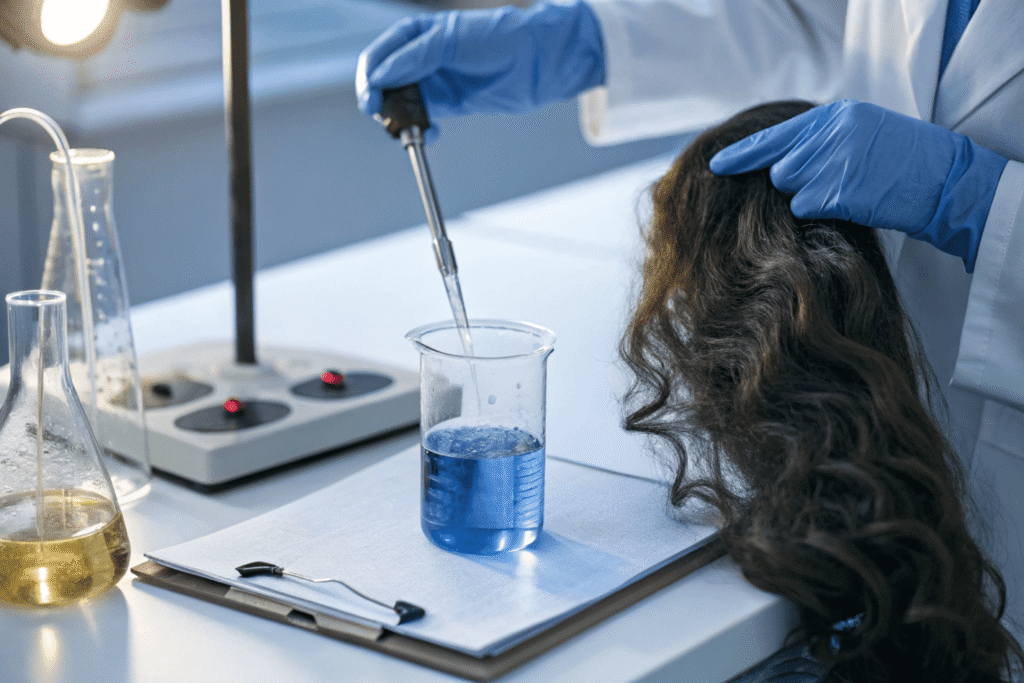
I run all vendor samples through a controlled “Dip Method” protocol to prevent friction and protect lace integrity.
Step-by-step testing protocol:
- Create a control strand: Reserve a small weft or a nape section for first contact. If buying wholesale, request a 10–20 g sample weft specifically for product testing.
- Dilute shampoo: Mix a small amount in cool-lukewarm water. Dip, swish, and evaluate slip and rinse clarity. Avoid scrubbing.
- Mid-shaft conditioning: Apply conditioner from mid-length to ends; keep product off knots/root to prevent loosening and shedding.
- Rinse-in, rinse-out timing: Start with shorter dwell times to gauge residue; extend only if hair feels rough.
- Drying check: Towel blot (no wringing), air-dry on a stand. Assess frizz, tangling at the nape, and weight/film feel.
- Escalate use: If the strand passes, move to a partial section before full-unit wash.
Operational guardrails:
- Wash frequency: Every 8–12 wears, adjusted for product load and environment. Over-washing dries processed hair.
- Clarify only for heavy buildup; follow with a deep mask.
- Maintain a test log: Record product, batch, dwell time, water temp, and results to inform procurement decisions.
Product Picks Aligned to These Standards
| Category | Product Name | Best For |
|---|---|---|
| Best Overall (Restoration) | Olaplex No. 4 & No. 5 | Chemically treated, colored, or damaged wigs that need repair. |
| Best Drugstore / Hydrating | SheaMoisture Raw Shea Butter (Moisture Retention Shampoo & Restorative Conditioner) | Dry, textured, or curly wigs needing heavy moisture. |
| Best Wig-Specific | Milano Collection Essentials (Hydrating Shampoo & Conditioner) | Gentle, safe maintenance engineered for wigs; minimal knot buildup. |
| Best for Detangling | Design Essentials Wigs & Extensions (Sulfate-Free Conditioning Shampoo) | Removing glue residue and detangling stubborn knots. |
Pro-care guidelines I enforce with clients
- Use cool to lukewarm water; hot water lifts cuticles and increases frizz.
- Conditioner stays mid-shaft to ends; keep roots/lace clean to preserve knot integrity.
- Leverage leave-ins with UV and heat protection to extend fiber life between wash days.
- Avoid high alcohol content sprays and heavy non-evaporating silicones that cause buildup.
Ingredients to Prefer vs. Avoid
| Prefer | Why | Avoid | Why |
|---|---|---|---|
| Cocamidopropyl betaine (mild amphoteric) | Effective cleanse with low cuticle lift | SLS/SLES sulfates | Strip moisture and accelerate color fade |
| Lightweight silicones (amodimethicone) in rinse-out | Controlled slip, rinse clean | Heavy, non-evaporating silicones | Build up on lace; attract debris |
| Humectants (glycerin, propanediol) | Moisture retention without weight | High alcohol content sprays | Dry out fibers; increase brittleness |
| UV/heat protectants | Reduce environmental damage | Frequent clarifiers | Roughen cuticle; increase tangling |
Conclusion
I choose sulfate-free, color-safe systems with gentle surfactants and light, build-free conditioning for human hair wigs because they preserve the cuticle, protect color, and keep lace knots intact. Moisture is the baseline—protein is a periodic tool, especially for processed hair. Salon-grade products are worth the investment on premium, color-treated SKUs, while wig-specific and select drugstore options cover daily maintenance cost-effectively. If you implement the testing protocol above and standardize by SKU, you’ll extend unit lifecycles, reduce returns, and deliver a consistently soft, tangle-resistant experience to your end customers.